Up next in 10


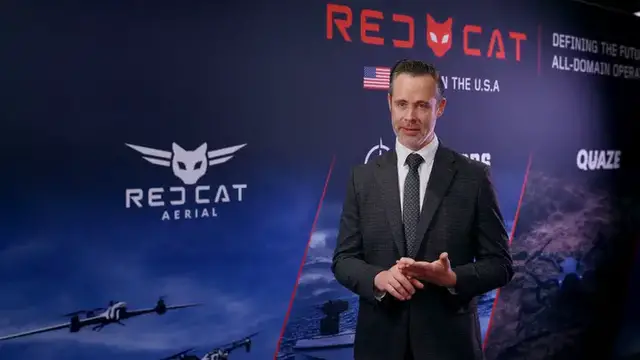
Red Cat highlights new aerial and maritime unmanned systems, upgraded drone capabilities and efforts to scale production for the U.S. military.
Show More Show Less View Video Transcript
0:00
So being able to deliver at scale is critical because number one, you have to be able to deliver on time
0:05
You have to be able to deliver in very high volumes and you have to do it quickly
0:10
That's not always easy when you're trying to push a next generation product
0:19
There's a lot that's new. If you take a look around the booth, we've got several new platforms that have launched this year
0:26
We've got the new Variant 7 USV. We've got APM swarming. We've got new charging capability
0:32
And then we've got new platforms that we're offering as well. We've got the Hellcat, which is on display
0:38
That's our GPS denied solution that we've been using internationally. And then we've got a new payload for our Black Widow, which is the SRR winner from last year
0:47
And we've also launched our new fixed wing asset, which is called the Tricon
0:52
So vertical takeoff, landing, higher mission endurance, etc. Those are all new items that you can see this year that weren't here last year
0:59
In terms of being able to accomplish the mission of the warfighter and accommodate those needs we going to have to have supply chain resilience We going to have to have manufacturing bench strength We going to need to continue to iterate with our engineering teams and we going to have to be able to deliver at
1:13
scale. So being able to not just field solutions in a prototype form, but able to get them into
1:19
production, scale them rapidly and deliver to the end customers is really what will put us in a good
1:24
position to serve the needs of the warfighter. I would say a couple highlights on the aerial side
1:29
are we have a much better camera payload that we deliver. So previously I had an 8x zoom
1:35
Now we've got a three camera payload with a wide angle lens. It can go up to 50x
1:40
That's available on both our Black Widow and our Hellcat platforms. And it's also backwards compatible
1:46
So when we talk about, you know, that modular architecture, we're able to take that improvement
1:51
and you can actually put it on fielded units so you don't have to buy a whole new air vehicle
1:55
You can just upgrade the payload. So that's one that I would say is critical
1:59
because you can use that across all of our products as well. We continue to improve in endurance
2:04
So we've got better battery technology. Those types of improvements are also being rolled out on our fixed wing assets So similar types of radios similar payloads with enhanced ruggedness So I would say those are a couple areas to where we delivering better
2:19
payloads, we've got better endurance, and the platforms are more rugged and can operate in GPS
2:24
and eye environments as well. In terms of initiatives we're rolling out, we always do our
2:28
best to try and collaborate with the Army and the other branches of the military to ensure that
2:33
we're developing products that they need or that they think they're going to need in the future
2:38
That's really what we've tried to do with the products that we're launching today. We also work in collaboration with our partners to see what needs to change and get real-time feedback to see how the system performs, how we can improve it
2:50
So it's really how do we continue to iterate? How do we ensure that we're understanding the future requirements, not just the current requirements
2:58
Building that platform, launching the supply chain, being able to have the manufacturing bench strength to deliver that at scale when the Army needs it
3:07
So being able to deliver at scale is critical because, number one, you have to be able to deliver on time
3:12
You have to be able to deliver in very high volumes and you have to do it quicker That not always easy when you trying to push a next generation product And so that where it comes back to are we building things that are backwards compatible that are modular in nature so that if you have an improvement you can snap it on an existing
3:30
platform, you can start to produce it at scale, you can provide new units, but you can also
3:35
retrofit existing units in the field. That's really the solution and the capability that
3:40
we're looking to offer for the Army and for the Lorefighter. So the Variant 7 is our unmanned
3:45
surface vehicle. It's our maritime platform. And what it does is it's about 25 feet long and it
3:50
provides excellent range versus what we have on our aerial assets. So the intent there is you're
3:56
able to take aerial assets that will go onto a boat or counter aerial assets. You're able to get
4:01
it to the place in the world that you need and you're able to actually launch from a boat. And so
4:06
what you may have had in terms of, you know, five to 10 miles of range in the past, you're able to
4:12
expand that and go thousands of miles on these boats. So really you can reach anywhere in the
4:16
world and you're able to use the existing aerial platforms that you have and they can complete
4:21
a significant increase in terms of mission set capability
news