Up next in 10



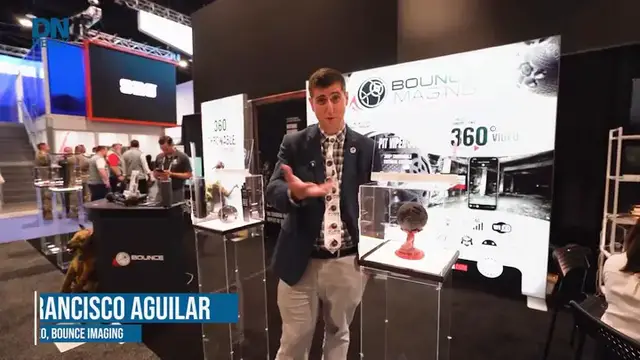
New systems seen at SOF Week include one-way drones made of lightweight material, and a camera you can throw into a room for a full-spectrum view.
Show More Show Less View Video Transcript
0:00
What is the camera
0:02
What is the camera? What is the camera? A pan-simidium with thermal cameras that look in all directions
0:10
So if you want to go into a dangerous space, you can know what's on the other side. So that can be purely visual, so like traditional cameras looking in all directions
0:18
Or it can be in heat or in thermal, just like a snake would see
0:23
which is this is the first fully panoramic thermal camera that can stitch together many thermal views
0:30
one panoramic vision that looks kind of like this. So you can look around in space and see that
0:35
there's a person there because the heat from their body is visible. You can also do this with normal
0:40
cameras. We can also be used as a communications relay. So a robot can drop the cameras and monitor
0:47
what's going on in space but also receive signal over that camera and go further into a target
0:51
So this is six image sensors in one camera in a rubber package that you can throw through a window
0:58
and or toss into the air that always stay stable no matter how the camera is rotating or moving
1:03
and gives a full 360 view to anyone who connected to it It weighs under a pound and it about the size of a baseball Yeah so it very intuitive to use People quickly pick up on how to use it We put them on poles to use as a full camera put them on magnets on the wall
1:18
lower them into tunnels with a rope. The most classic use case is throwing this into a room to get a 360-degree view
1:24
in a hostage situation or if you want to clear. So you throw it into the room, and you know that the person's to the right
1:29
and you know how many windows and how many doors and how many people inside the space
1:33
More clever users have used these to throw up in the air and look over buildings and look over walls
1:37
They've been dropped from drones, they've been dropped from robots, they've been used in nuclear silos for the Air Force
1:44
they've been used in all sorts of different environments, ship boarding. Teams are really clever in how they apply them
1:49
but anywhere that you have confined spaces or you need to have a payload
1:54
it's been used quite broadly in special operations around the world. So this is Design's Group 1 Blitz. It's a fixed wing Group 1 aircraft. It's about 15 pounds
2:11
can carry four pounds four to five pounds of payload four pounds of payload in the nose and we got modular payloads on the wingtips and a SOCOM mod 1 backpack here so this actually comes right off and if you got a payload that needs to run antennas or anything out to the wings you can pass
2:29
it through these channels here and the nose comes off so you can swap your
2:33
payloads right here pop whatever you want in here and it just has these pin
2:38
connectors with an open ICD so you can 3d print your own payloads at the edge
2:42
this comes out goes back in you can see all these other things pop out and go
2:46
back in as well. The vehicle actually comes apart and fits in this box right
2:51
here so that's one of the modifications we made based on user feedback that it's
2:57
hard to carry around a box that fits this whole thing and so you can take it apart. We've got some other videos that show it coming together in less than two
3:03
minutes from a field assembly perspective completely tool-less. You can see all these pin connectors and so the other thing when we look at the
3:10
modularity here like this is another GNSS module so you can put different types
3:15
of GPS in here depending on the mission and the mission requirements is users
3:20
really wanted modularity right so whether the minute you know depending on what the mission calls for is it ISR you can put a nice gimbal camera on here or something else is it a kinetic strike you can fly with the warhead We flown with other warheads before Is it EW deception something else And so you put it either in the backpack or in the nose cone The
3:39
vehicle is designed for one-way, a treatable, low-cost. It's actually made out of molded foam, so kind of leveraging some of the other designs you see in
3:49
more of the hobby space. And vehicle has a range depending on what kind of battery
3:54
you're flying with between 80 and 150 kilometers. So it's designed for that mid-range strike
3:59
And that's where the fixed wing design versus a multi-rotor gives you the opportunity to really meet
4:05
the mission requirements. Go much further, carry that five pounds of payload
4:11
to that distance. With an extended range batter, we've flown it over 150 kilometers today
4:18
So we're happy to release it here at SoftWeek. It's a group one, 15 pounds in total
4:22
five pounds of payload, very modular, mod one backpack, et cetera. So it can meet all your multi-mission requirements
4:29
EW, strike, deception, et cetera
news