Up next in 10



With demand rising for advanced interceptors, Lockheed debuts a missile it says improves on earlier generations of weapons.
Show More Show Less View Video Transcript
0:00
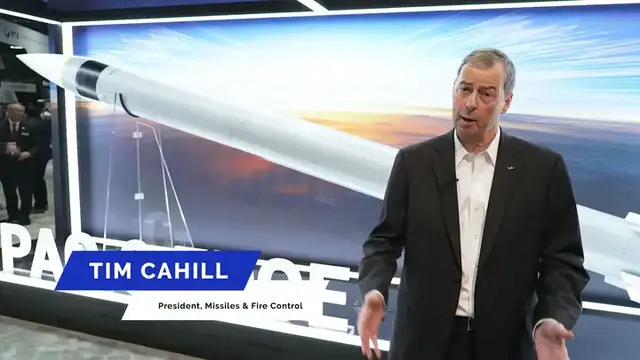
So this is the next generation of the famous PAK-3 MSE missile that you've heard about in Ukraine and the Middle East
0:08
Fundamentally, it's a matter of not the gaps today, but the gaps tomorrow
0:12
So, MSE is incredibly capable and it's addressing the threats that the Army is facing
0:16
But like any service, you look forward and you say, well, the adversaries are going to get better, they're not standing still
0:21
We're not standing still either. either. It's designed to go farther, faster, and higher than the MSE designed so that in the future
0:29
just like today, none of the advanced thrusts can get through. Each of the three layers
0:34
PAC-3 ACE, MSE, and then now EDGE, each one of those in succession has a little bit more
0:40
capability, a little bit more range, a little bit more altitude, a little bit more speed. Having all of those different tools in your toolbox, this could be critically important
0:49
because you don't know exactly what the adversary might throw at you. Even though we say this is a new missile
0:54
this has got incredible pieces of the MSE proven in combat still with it So while we going to upgrade the solid rocket motor the seeker to increase some capabilities fundamentals in it are the backbone of the MSE
1:08
So it's high rate production already. It's highly capable. We know it works. It's got a supply chain
1:14
that's already established. So basically this is something that we can bring to market really
1:19
quickly. And just by changing out a few of the components, we can make it incredibly capable
1:23
We are applying, of course, things like additive manufacturing. We're applying AI systems, digital systems to drive the development cycles down
1:32
That's one way. So all across the board, all of our systems are getting faster, faster, faster turns, getting maturity faster
1:38
But the other thing we do from a real practical standpoint is we take proven parts, proven software, proven systems
1:45
and then we mix and match them, and we upgrade only certain ones so that you never actually have to start from just paper
1:51
So you can wander around these halls at AUSA, and you can see a lot of paper
1:55
They make nice models but you see a lot of paper This isn paper There real hardware that works So the Army is going to decide exactly what their deployment is and it be based upon a lot of things To first order we would expect that somewhere in the 2031 2032 range that that is when they will land
2:12
We can put together a Grizzly in about a month. That's how fast we can put it together
2:15
So it's a small, relatively small container. It holds eight missiles of the Hellfire class
2:21
So what we call Hellfires, Longbows and Jagams. When you hear those three terms, those are those relatively short, smaller, cheaper missiles
2:29
but incredibly capable missiles still for their size. We put those in a container, ship it out, it hooks into whatever command and control system is out there
2:36
We have a command and control system very capable called Sanctum, but it also connects into other nations' command and control systems
2:43
and put it on a UAV, particularly to those fast-moving Shahid-style UAVs that you see out there
2:49
that you hear about a lot, these things turn those into dust. You can hide it in trees, you can leave it on a flatbed
2:56
It looks a lot like other containerized things that are out there And so it really easy to hide it really easy to move it really easy to place it doesn take a long time to move from from place to place
3:06
so it's perfect for the modern warfare that we are facing where you always got hunter killer drones
3:12
out there looking for you you can be moving around you can be hiding in different places so this is
3:17
the kind of this kind of innovation that we're bringing to market this missile behind you will
3:21
go into a canister system a little bit bigger but you can put it on a flatbed 18 wheeler truck and
3:26
drive it down the road and nobody would know what's inside of it. Paint
3:30
whatever you want on the side of it, right? So this is kind of a future
3:33
flexibility that we anticipate all of our systems will have. By the time we get
3:37
done for this year, you'll have looked back and seen probably eight or nine systems that we will have shown, offensive, defensive, all tied together
3:45
with a high Mars flex, all from the lower end for the cheaper systems all the
3:49
way to the exquisite. And so it's an exciting time. We are innovating
3:54
every single day and we're moving fast
news