Up next in 10



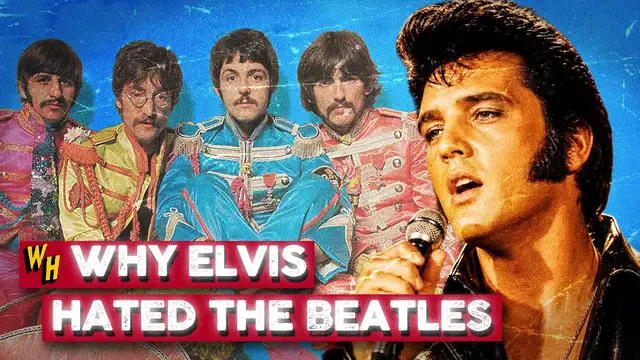
To the four young musicians from Liverpool who would become The Beatles, Elvis Presley was more than just the King of Rock ’n’ Roll, he was their hero. But the feeling was far from mutual. Behind the scenes, Elvis grew increasingly bitter toward the band he inspired and what began as mutual admiration turned into resentment, jealousy, and even outright hostility.
Show More Show Less View Video Transcript
0:00
Elvis Presley was the king of rock and roll, and to the four young Liverpudlians who would form the Beatles, he was their idol
0:08
But the feeling would not turn out to be mutual. In fact, the man who inspired the Beatles would end up resenting and even hating them
0:18
Why? Well, as it turns out, there's some weird history there. So, today we're breaking down why Elvis hated the Beatles
0:30
Elvis Aaron Presley was born in Tupelo, Mississippi in 1935. At the age of 13, his parents moved him to Memphis, Tennessee
0:40
where in 1953, the same Elvis who got a C in music class
0:44
decided he was going to be a musician. To that end, in August of that year
0:48
he went to producer Sam Phillips' Memphis Recording Service to record what he described as a gift for his mother
0:55
That gift was a two-sided acetate disc, which featured Elvis singing the songs My Happiness and That's When Your Heartaches Began
1:03
It also came complete with one of the biggest and most successful careers in the history of music
1:09
So, good luck topping that next Mother's Day. Anyway, Elvis' sound, which was a blend of some of his earliest musical influences
1:16
was known as rockabilly, and it was a fusion of country music and rhythm and blues
1:21
It also made him the perfect vehicle for Phillips, who was always looking for ways to bring African-American music to a wider, or more accurately, wider, audience
1:32
Elvis would cut a few songs for Phillips' Sun Records, before his manager, Colonel Tom Parker, arranged for his contract to be sold to RCA Victor
1:41
In January of 1956, that label would release his single, Heartbreak Hotel, which would become his first number one
1:49
Within a year, he would sell over 10 million records. As that happened, Elvis' public persona proved divisive
1:56
Some saw his sexually provocative style as a threat to the moral well-being of the youth of America
2:02
Others saw him as the inspiring harbinger of an integrated youth culture
2:07
And most people probably found it to be somewhere in between, because he's currently the third highest grossing musician of all time
2:15
We'll get to first place later. But his meteoric rise in the 1950s as a global icon came to a screeching halt the moment Elvis
2:23
tried to silence his critics by joining the United States military. After returning from the service
2:29
he all but gave up live performances to crank out a steady stream of Hollywood films and their
2:34
accompanying soundtracks. This shift frustrated many fans, leading to comments like, Elvis died
2:40
the day they put him in the army. Who said that? Oh, right. It was John Lennon
2:46
Now, if you're someone who's good at keeping track of dates, first of all, congratulations
2:54
But secondly, if you run the numbers, Elvis' decline lines up quite neatly with the meteoric rise of a little band called The Beatles
3:02
The group featured John Lennon on rhythm guitar, Paul McCartney on bass, George Harrison on lead guitar, and Ringo Starr on the drums
3:11
And yes, as measured by record sales, they are the number one recording artists of all time Their first single Love Me Do hit number one in the US in 1964 just as Elvis relevance was fading It also kicked off a lazily named phenomenon known as Beatlemania
3:29
and for pretty much the rest of the decade, the Beatles dominated the charts, even holding five
3:34
of the Billboard Top 10 singles at once. When they were booked on The Ed Sullivan Show
3:39
their appearance drew 50,000 ticket requests, dwarfing the 7,000 that requested tickets for
3:45
Presley's debut on the same program. Perhaps even more impressive is that an unprecedented
3:50
73 million people tuned in to see the Fab Four that night. But the sheer scale of their fame
3:56
shouldn't have been the cause of any bad blood. In fact, early on, the Beatles were quick to
4:01
credit Elvis as one of their key inspirations, and over the years, they covered more than 30
4:06
Elvis songs in live performances. Moreover, the same John Lennon who delivered that spicy
4:12
Army-era diss also said there would be no Beatles without Elvis. And Paul McCartney called Elvis
4:18
the Messiah, which is pretty good as far as nicknames go. Maybe that's why, for years
4:24
the Beatles wanted to meet Elvis. They tried a number of times, but they only ever got to meet
4:29
Colonel Tom Parker, who would give them some Elvis souvenirs. You'd think that would bother them
4:35
but according to McCartney, we didn't feel brushed off. We felt we deserved to be brushed off
4:40
After all, he was Elvis, and who were we to dare to want to meet him
4:45
Nonetheless, a meeting would happen. So let's set the stage. The Beatles were hot off of performing for 73 million people on TV
4:54
as well as attracting a mind-boggling 55,000 fans to Shea Stadium during their tour
4:59
Elvis, meanwhile, was hot off of appearing in 12 films in five years
5:03
which is pretty impressive, even by Nick Cage standards. All that was left was for these legends to meet each other for the greatest jam session of all time
5:18
On August 27th, 1965, the Fab Four, who were staying in a Beverly Hills mansion they rented from actress Zsa Zsa Gabor
5:27
received an invitation to come meet Elvis at his place in Bel Air
5:30
but there would be rules. Specifically, no press, no pictures, and no recordings. Each side also
5:38
brought along some of their closest friends, including Colonel Tom Parker, Priscilla Beaulieu
5:44
Jerry Schilling, Marty Lacker, and Larry Geller. The Beatles, for their part, were kind enough to
5:50
invite manager Brian Epstein, press officer Tony Barrow, and even Ringo. No, just kidding. We love
5:57
you, Ringo. Anyhow, when the time for the meeting came, the Beatles' side was, quote
6:02
nervous as hell. So it was probably quite a moment for them when Elvis personally answered the door
6:08
Or did he? He came to the door, which is a matter of dispute because we did this story once and
6:13
Ringo said, no, he didn't. He was sitting on the couch. I said, no, he didn't. He came to the door
6:20
Paul's memory is notwithstanding, most who were there that night, including George
6:25
seemed to recall Elvis was sitting on a couch, watching a huge color TV with the sound off
6:30
while playing a bass guitar. After what was called a weird silence
6:35
Elvis teased, if you damn guys are gonna sit here and stare at me all night I gonna go to bed Awkward At that point Lennon allegedly attempted to break the ice by asking Elvis why he been churning out soft fluffy ballads
6:50
for his movies, asking, what happened to good old rock and roll? Elvis and Colonel Parker then explained
6:55
that the film formula was basically the only guaranteed way not to lose money
7:01
spoken like a true artist. From there on, things get a little mysterious
7:07
According to John, the Beatles actually jammed with Elvis. So we just got in there and played with him
7:13
We all plugged in what was ever around and we all played and sang. According to some of the people who were there, they sang Chuck Berry songs
7:20
And Elvis even played bass on the Beatles' I Feel Fine. There are even reports that bodyguard Mal Evans had to break plastic spoons in the kitchen to make picks for the jam
7:30
And Ringo, not having an instrument to play, tapped out the beat with his fingers on wooden furniture
7:34
The mere idea of Elvis and the Beatles throwing down for a jam is enough to make any real rock and roll fan swoon
7:43
And if a tape of it existed, it would be worth untold zillions of dollars
7:48
But there's probably no tape, because despite what John told the media, that jam session might never have happened
7:56
Why do we say that? Well, because that's what the other three Beatles seem to say. I never jammed with Elvis at all. No
8:03
John said he'd... John jammed with Elvis. Yeah, it must have been when we went out of the room
8:08
Secretly at night. That interview was given around the time of the release of the Beatles anthology
8:12
and it's impossible to imagine all three surviving members forgot the night they got to jam with their idol
8:18
So we can rule out the version of the story John told. We can't rule out that John jammed with Elvis alone
8:25
But, given his penchant for fabulizing and myth-making, we'd take it with a grain of salt
8:30
For what it's worth, Elvis' close friend Jerry Schilling also denied it ever happened, saying
8:36
They never jammed together. That was just wishful thinking. Whatever the case, the Beatles' biggest moment of all wasn't over anything musical
8:43
And it wasn't over Elvis' massive wealth, mansion, or memorabilia. It was his remote-controlled television
8:50
He had the first remote television channel changer that we'd ever seen
8:56
You know, because it was that year when they came out. And he was just aiming it at the TV and the channels were changing
9:04
Whoa, he is indeed the mighty God. Okay, so there was no jam session
9:10
But it still sounds like everything went well and a good time was ultimately had by all, right
9:15
Well, maybe. Based on existing accounts, we can guess that the one and only meeting between Elvis and the Beatles went
9:26
shall we say, well enough. But one thing we know for sure is that after the meeting, Elvis still hated the Beatles
9:35
Well, hate's a strong word. He just tried to get them banished from America using his FBI connections
9:42
Yes, it was around this point that Elvis began presenting a different side of himself
9:47
the ultra-patriotic icon. Through a series of Americana-heavy films and performances like American Trilogy, he leaned hard
9:55
into themes of American pride. He also became noticeably more conservative, aligning himself with the silent majority and the political establishment In 1970 he even hand a letter to the Nixon White House requesting a meeting so he could offer his help combating drug culture
10:11
and restoring respect for the flag. Based on his enormous appetite for drugs
10:16
we're not sure Elvis was the man for that particular job. Don't even get us started on how awful his handwriting was
10:24
Nine will be here for as long abs to... Yeah, that's not legible
10:35
The letters incoherence aside, it did result in a meeting. And during that meeting, Elvis grew emotional
10:42
and assured Nixon that he was on his side. So yeah, Elvis was not the threat to the moral well-being of the youth of America
10:51
he once was perceived as. He was a guy who shrugged off the Beatles, cried meeting Nixon, and requested an FBI badge so he could be a federal agent at large
11:02
Although, in all fairness, he just wanted government credentials so he had the ability to carry guns and drugs across international borders
11:09
Is that really so bad? Anyway, according to official White House notes, Elvis told Nixon he believed the Beatles were a real force for anti-American spirit
11:19
accusing them of earning their money in the U.S. only to return home and promote drug use and political protest
11:27
Frankly, we're not sure the Beatles would have disputed any part of that. But the point is, Elvis' private complaints about the Beatles
11:33
ran much deeper than simple dislike. His FBI file echoed similar sentiments
11:39
recording statements in which he claimed the band had laid the groundwork for many of the problems we are having with young people
11:45
through their unkempt appearance and suggestive music. He also argued that the hippie movement and the Beatles' drug experimentation
11:54
were tools of communist brainwashing. The Beatles, for their part, were genuinely hurt
12:00
when they eventually learned how Elvis had spoken about them behind the scenes
12:04
Paul McCartney said he felt betrayed after reading the Nixon transcripts, joking that while Elvis criticized their drug use
12:11
he was caught on the toilet full of them. Ringo Starr called it heartbreaking that Elvis had tried to use his FBI connections
12:17
to get them banished from America, saying, This is Mr. Hips, and he felt we were a danger
12:24
And yet, despite the disappointment, the Beatles never stopped admiring him. Paul McCartney summed it up best
12:30
It was sad, but I still love him. He was very influential on me
12:34
Elvis' inner circle still insists the relationship wasn't as icy as history makes it seem
12:40
even though the public and private narratives never quite lined up. On the surface, Elvis' camp projected friendliness
12:47
Colonel Tom Parker even sent a telegram when the Beatles first arrived in America
12:52
But behind closed doors, several friends and colleagues recall that Elvis felt deeply threatened by Beatlemania
12:58
so much so that they knew better than to mention the Beatles around him
13:02
One account even claimed he initially refused to meet them, saying, Hell, I don't want to meet those sons of a*****
13:08
Nonetheless, the aforementioned Jerry Schilling has always insisted Elvis genuinely liked the Beatles
13:14
and that their 1965 night together really was great, pointing to Elvis' recordings of many of their songs
13:21
as proof of at least professional admiration. Maybe that will quiet those suspicious minds