Up next in 10



Language is constantly changing, and many of the common terms and phrases we use in everyday conversation have much deeper meanings than we realize. Numerous statements still in use have evoked controversy and reassessment, while others continue to find new applications.
Show More Show Less View Video Transcript
0:00
Whether you realize it or not, the languages we speak are changing every day
0:05
And as the English language evolves, many of the words and phrases we use become antiquated
0:10
Their meanings are seemingly lost to time. Some evoke controversy and require reassessment while
0:17
others have found whole new applications. Today, we're going to revisit some age-old
0:22
terms and phrases and explain where they came from and what they mean
0:26
Okay, don't run amok, because we're about to cover that. Do you have the time to listen to us whine about how Green Day used the term basket case
0:40
But decades before Billy Joe Armstrong was even in a baby basket
0:44
the term basket case was being used in a not-so-catchy-and-fun way. The term was originally used to describe World War I soldiers who had lost limbs during battle
0:54
The reasoning behind the term basket case was implying that these now immobile soldiers
0:59
would have to be carried around in a basket. While it's unclear if this ever actually happened
1:04
to a wounded soldier, the term was so widespread that the Surgeon General eventually had to step in
1:09
and deny any foundation for stories of basket cases in any hospital he knew about
1:14
Eventually, the term stopped being exclusive to World War I soldiers and became a catch-all phrase
1:20
to apply to anyone who lacked emotional coping skills. It's the perfect word to describe everyone on the road who isn't you
1:31
It shouldn't surprise anyone that the word moron is derived from the Greek word for foolish
1:36
Another great word to describe the guy who rode your ass all the way to work. But what might surprise you is the extremely blunt way the word moron was used in the medical
1:44
field to describe substandard intellectual abilities. Dr. Henry H. Goddard had some pretty crummy views of mental disabilities when he coined
1:53
the term in the early 20th century. He separated mental disabilities into two groups, idiots and
1:59
morons. Idiots being mentally challenged people who do not have children, while morons continued
2:05
the race with a line of children like himself. Goddard's words. Goddard and his eugenicist
2:12
cronies had some other views that could be described as incredibly uncool. Today, the word
2:17
moron has ceased to be a disability diagnosis and has more or less gone back to its foolish roots
2:23
Hypothetically, if a rhinoceros were to escape the zoo and destroy the city, we might say that rhino
2:32
was running amok downtown. Or we might say, there's a rhinoceros! Ah
2:38
Depending on our proximity to the rhino. The phrase, which typically evokes images of homicidal
2:44
or violent behavior, actually originated with 16th century Indonesian warriors called the amuko
2:50
According to a 16th century merchant, Duarte Barbosa, the Amuco were ingenious and subtle, cunning and treacherous
3:00
They were daring in their mischief and valiant fighters who would go out onto the streets and kill as many persons as they meant
3:07
English poet Andrew Marvell used a similar phrase in his 1672 satirical book, The Rehearsal Transposed, writing
3:14
He runs amok as they call it there stabbing every man he meets Exactly like a hypothetical escaped rhino The scourge of every shy kid at a large gathering
3:29
the phrase, cack at your tongue, has been long used as a way to state, hey, you're quiet
3:35
The suspiciously specific phrase was coined in either ancient Egypt or the 17th century
3:40
depending on who you ask. Some versions of this origin story say the phrase is referencing the literal punishment
3:46
of cutting out tongues and feeding them to cats in ancient Egypt. Others say the phrase comes from the 17th century British Navy
3:53
as a way to mock fellow sailors who were whipped by a cat-o'-nine tail. The punishment was reportedly so painful that hapless victims
4:00
were left unable to speak for some time afterward. Being grandfathered in means someone can keep operating
4:10
as they always have despite status quo changes. You could be exempt from new laws, get a great deal on apartment rent
4:17
or even retain your cheaper mobile service after your provider realized how unprofitable unlimited data
4:23
is for them. The phrase itself has its basis in legal context
4:26
related to 19th and 20th century voting restrictions. Sometimes, as an attempt to disenfranchise voters
4:33
the right to vote had literacy requirements, poll taxes, and residency or property restrictions
4:39
But you could avoid all that rigmarole so long as your grandfather was exercising his right
4:44
Yeah, if you had a grandpa who voted before the Civil War, you could skip all the requirements
4:49
and sashay yourself to the front of the voting line. The idea wasn't to restrict anyone from voting
4:54
but more to ensure that illiterate whites wouldn't be excluded from their civic duty
4:58
This blocked many African Americans from voting in many parts of the rural South
5:03
Eventually, the 15th Amendment would make it illegal to discriminate based on race
5:07
However, the Grandfather Clause had other requirements that allowed the law to be circumvented
5:11
Thanks a lot, Grandpa. We've all been in a situation where we unexpectedly run into one of our old high school acquaintances and have absolutely nothing to say
5:25
That's when it's time to reach into your back pocket and pull out the old reliable, long time no see
5:30
Its origin has actually been traced back to various non-English speaking groups
5:34
Though who exactly started it is up for some debate. A dictionary of catchphrases, American and British, claims the phrase was introduced by the U.S. by British merchants in the early 20th century
5:46
Theories say the phrase is a Chinese translation of hachou mei chien guo
5:51
which directly translates to long time no see. The phrase first appeared in print in 1900 in a popular novel by author William F. Drannan
6:01
His attribution is to a Native American character who says, Good morning. Long time no see you
6:07
Later that year, long time no see was used by another Native American character in the book
6:12
Tales of the Sierras, by Jeff W. Hayes. To describe something as hoit is to call out foolish behavior
6:23
The word is not used so much anymore, but in the 17th century
6:27
journalist Sir Roger Lestrange coined the phrase after watching people enjoy dancing
6:32
Thus you can assume, Lestrange hated fun and described women, he says
6:36
changing and jigging to every tune they heard and all upon the hoity-toity
6:41
like mad wenches of 15. The end of the 18th century saw the meaning shift away from describing boisterously annoying people Today the phrase is usually presented to people who are haughty and snobbish You hear that Lestrange
6:54
Who's hoity-toity now? Hmm? If someone has ever accused you of something
7:03
to avoid getting blamed themselves, then we're sorry to say you have been thrown under the bus
7:10
The phrase first appeared in a 1980 issue of the Financial Times
7:14
Author Eleanor Goodman used it in reference to the political turmoil happening in England at the time
7:20
Except over there, they call buses coaches. Since then, thrown under a bus has been used in any context
7:27
where someone is put into a vulnerable position. Rock star Cyndi Lauper may be the first to use the phrase
7:33
in its current context in 1984, as she remarked to the Washington Post
7:37
you are either the bus or you're under it. Still, others claim the phrase actually originated in minor league baseball
7:44
and their penchant for transporting players to away games via bus. We can only assume minor league players were routinely run over
7:55
We know Fuzzy Wuzzy was a bear, and we have some information about his hair situation
8:00
But aside from that, where did the original phrase come from? The origin is from a poem, but not that poem
8:08
Rudyard Kipling's poem, Fuzzy Wuzzy, originally coined the phrase when his British soldier character
8:14
referred to the indigenous men he faced as Fuzzy Wuzzy. The people referenced were the Hadandoah, who
8:20
had dark skin and curly hair. Today, mentions of Fuzzy Wuzzy are usually
8:25
pretty complimentary. But the term and its connection to the physical appearance
8:29
of the fighting Sudanese warriors still remain to this day. During the early 20th century, the United States saw an influx of Irish immigrants flocking to the
8:42
land of opportunity. What they also saw an influx of was Irish discrimination based on
8:47
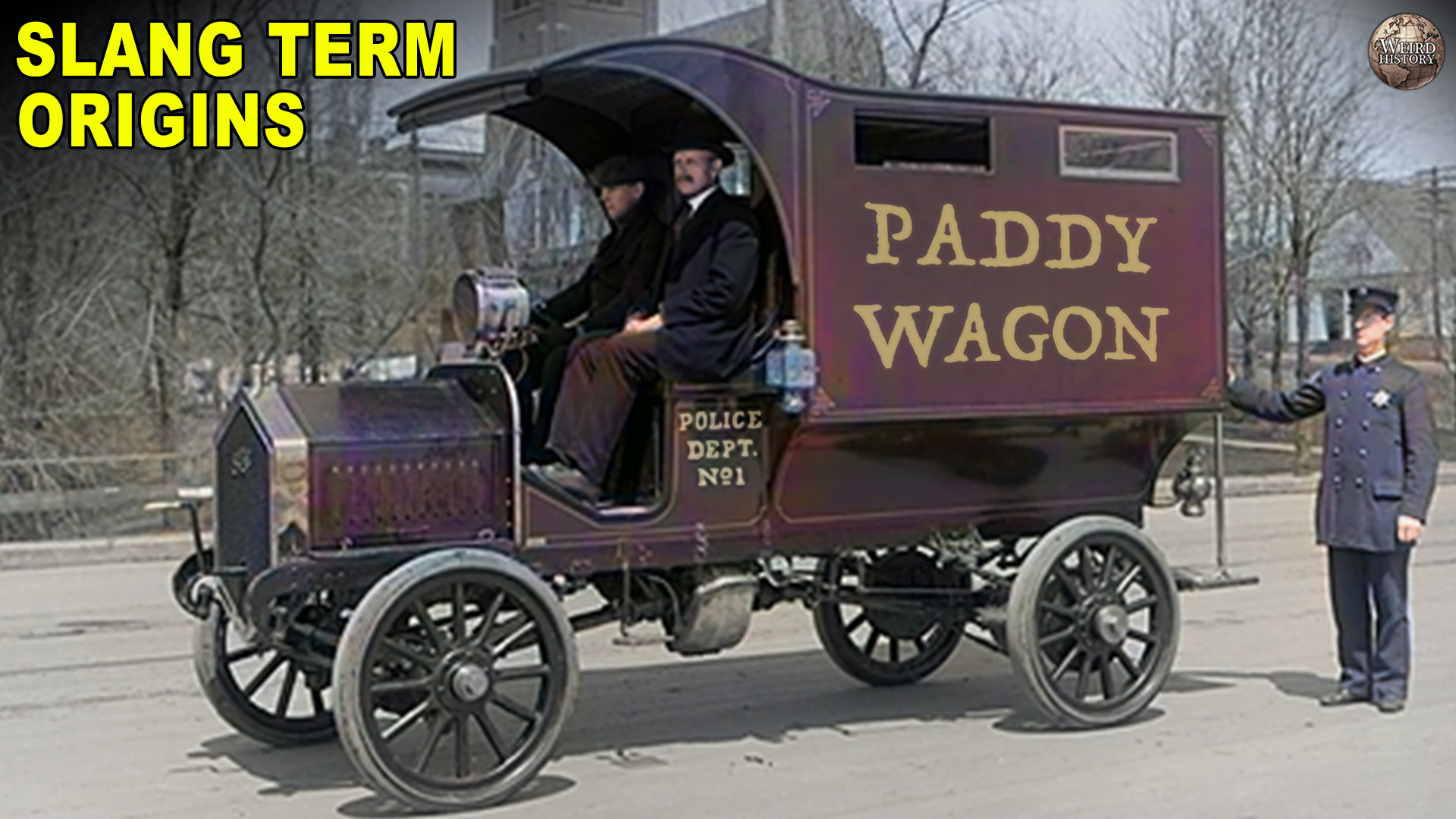
the perception of criminal behavior by those who hail from the Emerald Isle. Around 1909
8:52
it wasn't out of the ordinary for policemen to round up these patties into the back of something
8:57
called a wagon. Can you see where we're going with this? Ever since then, pretty much any large vehicle capable of transporting any variety of criminal
9:05
can be referred to as a paddy wagon. No Irish need apply. If you are planning to catch a tiger by its toe, you better make sure you equip your eenies
9:18
meanies, minies, and moes. While the spelling of the rhyming words may vary, the nursery rhyme is the same the whole
9:24
world round. According to scholar Adrian Raphael, the rhyme can be traced back to England and Wales
9:31
and the methods used by shepherds when they were counting sheep just before they fell asleep
9:35
The precise origins of eeny, meeny, miny, moe have been lost to time
9:40
but the sounds and cadence from the rhyme have transitioned into actual sentences and melodies over time
9:49
You may associate it with annoying people sitting in cheap seats while being loud and belligerent
9:55
If you're a bit older, you may remember it as the kids section on the Howdy Doody show in the 40s and 50s
10:01
You may even relate it to Charlie Brown and the gang. But the origin of peanut gallery predates all of that all the way back to 1867 The first documented use of the phrase was found in a review for a vaudeville show that described content that made individuals in the peanut gallery to blush
10:20
The phrase included some racial references as well as other controversial connotations
10:24
that make the use of peanut gallery a negative thing to call a group of people
10:28
Not a weird history, though. We rely on our comment section peanut gallery to keep things running around here
10:33
Keep those comments cranking. We know what you're going to say. You know all about the rule of thumb and how it relates to that old wife's tale
10:45
You know, the one that says there was an ancient legal provision that a husband could beat his wife with a rod or stick no thicker than his thumb
10:52
Well, aside from no evidence of that ever having been the case, nothing even comparable to it even appeared until the 17th century
11:00
But despite that made-up backstory, the framework of that belief stuck around well into the 18th century
11:07
when it became a piece of the conversation about any kind of punishment at all
11:11
Aside from that, the best anyone can assume is that the rule of thumb was related to the actual length of your thumb, for some reason
11:21
Hip, hip, hooray. That cheer has been linked to many possible origins
11:27
One theory says that the phrase is rooted in anti-Semitism, pointing out the similarities
11:32
between hip-hip and hep-hep, which references Jerusalem's destruction in 135 CE. The original version of the phrase continued on through the Middle Ages and even into the
11:42
early 20th century. But others say it's nothing so horrible and is in fact meant to be a more cheerful cry
11:49
Sailors in the early 17th century were known to shout hip-hip-hurrah, which may be an early
11:54
prototype of today's version. Historians also placed another militaristic version of Hep Hep Hooray on drill sergeants
12:01
who had successfully trained their cadets and wanted to shout about it. When you're feeling exasperated, no one could fault you for shouting
12:12
now wait just a cotton-picking minute, especially if you threw in some yeehaws
12:17
and maybe a couple, what a tarnation, for good measure. The origin of this phrase comes from, no surprise here
12:24
the actual picking of cotton, one of the most tedious and least exciting parts of cotton production
12:30
Picking cotton all day was pretty rough on the fingers, which would become raw and eventually develop rough calluses
12:37
So naturally, cotton picking became associated with bad vibes. Cotton picking is an old game, and the phrase
12:43
can be traced back to sometime around the 17th century. But the racially negative connotations of the phrase
12:49
can be found in the US starting in the 19th century. When someone gets way too deep into a thing
12:59
we like to joke around that they've drank the Kool-Aid. Because who doesn't love a good joke
13:04
When Kool-Aid has been consumed, the insinuation is that the decision-making had been completely taken
13:10
out of a situation, and the subject will blindly follow any orders given
13:14
This phrase sees its unfortunate origin in the events that led up to the Jonestown Massacre in Guyana
13:19
in 1978. Cult leader Jim Jones instructed his followers and their families to down a fruit drink
13:25
laced with cyanide. Some were willing, many were forced. The final death toll was around 900
13:33
We have to admit, that's not quite as fun as the Kool-Aid man's catchphrase