Up next in 10



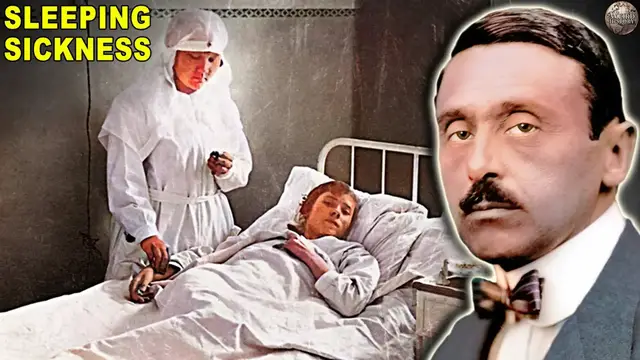
Medical science has come a long way in the last hundred years, but that doesn't mean every medical mystery has been solved. The cause of the mysterious sleeping sickness that struck New York in the 1920s, Encephalitis lethargica, remains unsolved to this day.
Show More Show Less View Video Transcript
0:00
In the 1920s, a mysterious sleeping sickness struck New York
0:04
Some believed it was a manifestation of a concurrent flu epidemic, while others theorized it was related to polio
0:11
And while medical science has come a long way in the last 100 years
0:15
the cause of the sleeping sickness, or encephalitis lethargica, remains unknown to this day
0:20
So today, we're going to take a look at the mysterious sleeping sickness
0:24
that plagued New York in the 1920s. Whatever you do watching this video, don't fall asleep
0:36
In 1917, World War I was taking lives like the world had never seen
0:41
And as if that wasn't enough, two epidemics began tearing their way through the already
0:46
shell-shocked world. The first, and far more deadly of the two, would become known as the Spanish flu of 1918
0:53
And it remains one of the worst pandemics in human history. We did a video on that, so give it a watch when you can
1:00
Before it had run its course, the Spanish flu would wipe out an estimated 50 million people
1:04
and affect somewhere in the neighborhood of a half a billion more. While this crisis understandably took precedence
1:11
it was accompanied by a lesser known but far more perplexing virus, the sleeping sickness
1:16
Through the practice of a retrospective diagnosis, medical historians have identified possible outbreaks
1:22
of encephalitis lethargica going all the way back to at least 1580
1:26
However, the 20th century outbreak is believed to have originated in Romania in 1915
1:32
World War I disguised its true impact in Europe, but it became more noticeable in New York
1:37
and doctors scrambled to identify the disease. There was plenty of confusion, but no clear answers
1:48
Due to the varied presentations of encephalitis lethargica, the overwhelming demands of World
1:53
War I and the appearance of other epidemics around the same time, many doctors treated
1:58
individual cases of sleeping sickness without realizing they were dealing with a wholly new
2:02
illness. In fact, it took the work of Austrian neurologist Konstantin von Economo to fully
2:09
isolate and categorize the disease. Economo was a wealthy aristocrat and something of a
2:14
Renaissance man. To wit, he was the first Austrian man to hold the equivalent of a pilot's license
2:19
and he was trained as an engineer before he moved on to psychiatry
2:23
After doing exhausting research on the topic, Economo gave the disease its name based on
2:28
what he determined to be its principal manifestation, lethargy and catatonia. In a series of monographs that are studied to this day, he argued his case on the nature
2:37
of the disease from its categorization as encephalitis, which is an illness resulting
2:42
from inflammation of the brain to its varied pathologies. The sleeping sickness prompted among other things an examination of the nature of sleep and the difference between sleep and catatonia However there was a wide array of experiences reported
2:56
some of which were quite pleasant. Take, for example, an account by Eleanor Carey
3:01
who suffered from the illness in 1923. She wrote, After two months of illness, I was in little pain
3:06
In fact, it was so heavenly just to be allowed to sleep. But these people around me seemed determined
3:12
to prevent my being comfortable. According to Carey, even after she realized that she couldn't sleep forever and would eventually
3:18
have to wake, she found it to be a physical impossibility. She wanted to awaken, but no
3:23
matter how hard she tried, she just couldn't. Other victims reported dreams and vivid hallucinations
3:29
Doctors found that in many cases, it was possible to wake the patient, but only for a few moments before they succumbed to sleep again
3:36
During the course of the epidemic, most doctors kept and compared rigorous notes
3:46
This allowed them to examine a variety of case histories. Although because of the wide range of
3:51
symptoms, it was still difficult to derive clarity from them. However, one thing that did emerge from
3:56
the collected observations was the highly unpredictable nature of the sleeping sickness
4:01
One case study detailed the symptoms of a woman who suffered from encephalitis lethargica in 1917
4:07
She went to a clinic exhausted and then quickly slid further and further into a state of sleepiness
4:13
Her symptoms were also accompanied by a fever and paralysis of her right arm
4:18
All things being equal, the woman turned out to be relatively lucky, and her condition slowly improved
4:23
Two months later, she was discharged from the hospital with no signs of fever or paralysis
4:29
Unfortunately, she passed away a month later due to pneumonia. Not everyone was lucky enough to stage even a partial recovery
4:37
One young boy was brought to a clinic on April 20th, already in a comatose state
4:42
Despite the doctor's best efforts, he passed away eight days later. Cases of both types were common and terrifying
4:48
There was no reliable way to tell who might survive and who might not
4:52
During its acute phase, encephalitis lethargica caused somnolence, lethargy, paralysis, fever, and sometimes it ended the life of the patient altogether
5:04
Some patients, however, made a full recovery, and amazingly, it often happened without any
5:09
treatment at all. While a quick recovery was, no doubt, a huge relief, it didn't mean the disease was necessarily
5:15
finished with them. In fact, after recovering, many patients developed some form of Parkinson's disease, a progressive
5:22
nervous disorder that often causes the loss of muscular control. Parkinson's can include a wide variety of symptoms
5:29
And one of the most extreme forms was often seen in survivors of the sleeping sickness
5:33
akinesia. Essentially this means total body paralysis Some of these patients remained in a paralytic coma for many years Movie fans of a certain age might remember Leonard Lowe a real person played by Robert De Niro in Penny Marshall fact 1999 drama film Awakenings
5:52
Leonard was exactly this sort of patient. Frighteningly, it is possible for a patient to fall into a deep, akinetic coma at pretty
6:05
much any point during a case of encephalitis lethargica. This uncertainty often came back to haunt people who thought they had completely survived
6:13
the disease, only to develop a worsening case of Parkinson's years later that culminated
6:19
in a coma. Since the cause of the disease was unknown, these comas were thought to be irreversible
6:25
and those who suffered them were largely forgotten, as long-term coma patients often are
6:30
However, as shown in the aforementioned awakenings, when the renowned British neurologist Oliver
6:35
Sachs began treating them with a drug called L-DOPA, some of them were able to interact with
6:40
the world for the first time in 40 or more years. Overshadowed as it was by the Spanish flu and
6:46
World War I, the sleeping sickness didn't really come to the public eye until Oliver Sachs wrote
6:51
his groundbreaking story in Awakenings, a book that movingly detailed his interactions with
6:56
patients who suffered from the disease. Sachs was responsible for the proliferation of L-DOPA
7:01
the medication that awakened many of these patients. And in the book, he described the challenges of bringing people from the 1920s into the 1960s
7:09
The book was a massive success and is still considered one of the best pieces of medical nonfiction ever written
7:16
A fictionalized version of Sacks himself was featured in the movie adaptation and was played by none less than Robin Williams
7:23
After it was released, Roger Ebert wrote, what both the movie and the book convey is the immense courage of the patients and the profound
7:30
experience of their doctors. Ebert believed the characters in the story and through them
7:35
the audience, re-experienced what it means to be born, to open your eyes and discover to your astonishment that you are alive
7:48
Despite Oliver Sacks' groundbreaking work with L-DOPA, there remains no complete cure for
7:53
encephalitis lethargica, as the medication often only provides temporary relief. It is perhaps
7:59
unsurprising that there is no cure because scientists don't really understand what causes
8:04
the sleeping sickness in the first place. During the outbreak, there were many different theories
8:08
as to the cause. When the disease first appeared in England, doctors believed that it was a form
8:13
of botulism. However, botulism is the result of detectable bacteria, and the bacteria simply was
8:19
not present. Many other theories have been proposed, but at the end of the day, the truth
8:24
is simply unknown To this day papers are still written advancing various new theories but none have been proven or widely accepted Because of all the uncertainty surrounding the illness it is difficult to truly define when it began and ended It is also
8:39
difficult to identify whether there have been any new cases, although the conventional wisdom says
8:44
that at least a few more cases have popped up. In 2015, a paper was published about a young boy
8:50
who had contracted HIV. When he came to the hospital, he quickly developed symptoms similar
8:55
to encephalitis lethargica, lethargy, mutism, and muscular weakness of the optic nerves
9:01
There are numerous other examples of similar cases, but cautious doctors are reluctant to label them as sleeping sickness
9:13
Adolf Hitler may be one of the most overdiagnosed and overyzed individuals in human history
9:18
Due to his morphine addiction, his illness-plagued youth, and his general status as the genocidal
9:23
douche of World War II, modern doctors love to retroactively diagnose him with everything from
9:28
borderline personality disorder to irritable bowel syndrome. While most of these assumptions
9:33
are sensationalist and based on wild guesses, there has emerged something of a consensus that
9:39
the German dictator could well have suffered from Parkinson's disease. If that's true
9:44
it is likely that he also suffered from sleeping sickness in his youth. Due to the relatively late
9:49
onset of his Parkinson's disease and his age at the time of the epidemic, the sleeping sickness
9:54
makes a great deal of sense as the source of his Parkinson's. A medical paper also makes the case
9:59
based on his symptoms. According to the research, Hitler had a deviation of the eyes only associated
10:05
with post-encephalitic Parkinsonism. In addition, he had dystonic facial spasms, polylelia, and a
10:12
sleep disorder, phenomena more likely to be associated as post-encephalitic than endopathic
10:18
Parkinsonism. Again, it is always dicey to retroactively diagnose historical figures
10:30
due to both the lack of contemporaneous material and our own modern biases. And this is made doubly
10:36
difficult in the case of someone like Woodrow Wilson, who had a battalion of health issues
10:41
independent of whatever we may diagnose him with today. However, that, not surprisingly
10:46
hasn't stopped a number of modern doctors and pathologists from using historical sources and
10:51
medical records to diagnose Wilson as a sufferer of encephalitis lethargica. Edwin Weinstein
10:58
one of Wilson's most prominent biographers, believes that a complicated series of medical
11:03
disasters accounted for Wilson's famously altered behavior during the peace negotiations at the end
11:08
of World War I. Weinstein believes that after a number of strokes throughout his life, Wilson
11:14
contracted the flu, which left him vulnerable to the sleeping sickness. Regardless, Wilson didn't
11:19
have long to live after the 1919 peace conference. He passed five years later in 1924
Neurological Conditions
Sleep Disorders
Public Health