Up next in 10



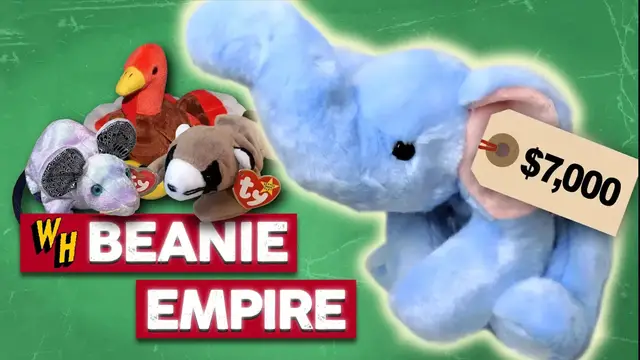
When former toy salesman Ty Warner introduced a line of small stuffed animals called Beanie Babies to the world in 1993, there was no indication that over the next few years the cute plush toys would be at the center of one of the oddest economic bubbles that coincided with the rise of the internet. No one imagined adults would be scrambling madly to collect as many of the toys as they possibly could - especially the rarer versions like Peanut the Royal Blue Elephant - in the belief that their value would reach thousands of dollars.
Show More Show Less View Video Transcript
0:00
Any list of things only 90s kids will remember is guaranteed to include
0:04
Ty's familiar stuffed toys, the Beanie Babies, right alongside Tamagotchis and the Macarena
0:10
But those of you who are Gen Z or younger, or anyone who needs a refresher on the Clinton era
0:15
may not remember how batshit crazy thousands of fans went trying to track down the plushies because of their supposed value as collectibles
0:23
So what the heck came over everyone? Well, today we're answering the sobering question
0:28
Why were Beanie Babies so valuable? Get your bean counters ready. After failing to make it as a Hollywood actor in the late 1970s
0:41
Ty Warner moved home to Chicago and started working as a salesman for the same company that employed his father, the plush toy maker Dakin
0:49
He was fired from Dakin in 1980 by some accounts for trying to sell
0:53
the company's clients on his own toys and designs. Hey, it's like Wayne Gretzky said, you miss 100% of the shots you don't take
1:00
Or the dolls you don't make. Undaunted, in 1986, Warner mortgaged his home and put his entire life savings into his own plush toy company
1:08
which he named Ty Inc. after his favorite employee. Warner's travels inspired him to sell a line of plush toy cats like the one he'd seen in Italy
1:16
When those failed to connect with customers, he shifted gears, and in 1993, introduced the first Beanie Babies at the World Toy Fair in New York
1:24
Unlike traditional plush toys or stuffed animals, Beanie Babies were filled with plastic pellets
1:30
or beans, giving them a distinctive feel in a more natural, less stiff shape
1:35
Warner explained to People magazine that the looser bean filling allowed the characters to
1:39
move around, which in turn made them look more real. As real as a tiny felt bear filled with
1:44
plastic beans can look, Warner also drew inspiration from Cabbage Patch Kids, selling
1:49
each beanie baby with a certificate bearing its name, birth date, and even a brief poem
1:54
giving kids the impression they were genuinely adopting a new friend, not just buying a toy
1:59
The line was introduced with nine animal characters, including a frog, a dog, a dolphin, and a moose, all at the low price of just $5
2:12
Rather than cutting the quality of his materials, Warner kept his prices low strategically
2:17
He limited the scope of the business at first, dealing directly with independently-owned toy
2:21
stores rather than going directly for larger retailers, allowing him more flexibility in his
2:26
deal-making. Working directly with independent store owners also gave Warner more control over
2:31
how Beanie Babies were presented and sold to the public. While underpaid teenage staffers at a
2:36
Target or Toys R Us might just haphazardly throw new items on the shelves, Warner could make
2:41
specific requests from his bespoke retail partners. According to Zach Bissonette author of The Great Beanie Baby Bubble Warner often made exacting and specific requests of store owners like asking them to primp and groom the Beanie Babies on their shelves to ensure they appeared presentable
2:58
Despite Warner's experience in direct toy sales and his exacting approach, Beanie Babies
3:03
didn't take off at first. Ty Inc. tried to sell retail locations on 12 packs of the toys, but most were only ordering
3:10
six at a time due to sluggish sales. Arguably, the plushes never really took off as toys
3:16
Their massive success became based around becoming collector's items, at first just by hobbyists, but ultimately as an investment commodity
3:28
Two pairs of women from the suburbs of Chicago are often credited with kick-starting the Beanie Baby collecting craze
3:35
Dr. Paula Benchikabrinko noticed the toys in the gift shop of her hospital and started buying up a personal collection
3:41
eventually visiting other hospital gift shops in the area to seek out any animals she was missing
3:46
Her sister, Peggy Gallagher, also became interested in the toys and discovered they could order any they were missing directly from Ty Inc.'s German distributor, bypassing Chicago toy stores altogether
3:57
Soon, it became clear to the sisters that their hobby could start netting them serious money
4:02
Gallagher purchased some Chili the Polar Bears for just $7, then flipped them for more than $1,800 apiece
4:08
Those are the money bears. Around the same time, two more Chicago friends, Becky Phillips and Becky Essensoro
4:15
started their own Beanie Babies collection, tracking down rare releases. Phillips started making so many calls to an increasingly wider net of toy stores
4:23
she was paying $1,000 plus long-distance phone calls. Oh, for Gen Zers who aren't familiar with the concept
4:30
long-distance phone calls were a thing we used to have to deal with, like ice delivery and polio
4:36
It didn't take long for Ty Ink to start noticing this behavior among their customers
4:39
In 1995, a stuffed lamb known as Lovey was discontinued due to a supply chain problem in China
4:46
The toy was popular in hospital gift shops, so rather than simply sunsetting the brand entirely
4:51
Thai announced that its exclusive remaining supply would go on sale for a short time only before being pulled from shelves
4:58
The announcement quickly drove a flood of new sales, and executives recognized that scarcity, real or artificial, was the key to moving more units
5:06
In other words, they could spike demand by deliberately producing fewer plushes
5:15
Another breakout came in June of 1995, with the release of a Beanie Baby named Peanut the Elephant
5:21
Initial sales of Peanut were slow, and four months after the character was introduced
5:26
Warner decided to change the animal's color from royal blue to baby blue
5:30
as only a few thousand versions of the royal blue elephant were shipped before the switch
5:34
These particular peanut toys became extremely hard to find Once the collector market for Beanie Baby started to heat up Peanut the Royal Blue Elephant became a highly sought item One 1997 buyer guide listed its value at and predicted that by 2008 Peanut would be worth
5:54
Spoiler alert, it was not. Seeing this play out in the marketplace and recognizing the value of Beanie Babies as commodities rather than toys
6:02
Warner and his sales team leaned into the enforced rarity strategy. Thai Inc. started retiring popular designs before they fell out of favor
6:11
even boosting the price from $5 to $10 or $20 as supplies became more limited
6:16
The company turned Beanie Baby retirement announcements into events, fueling speculation about which babies might be the next to disappear permanently from store shelves
6:25
By the close of 1996, it was clear the enforced rarity angle was working
6:30
Thai sales were around $280 million that year, improving tenfold over the year before
6:37
At the height of the craze, Ty was shipping more than 15,000 orders per day to retailers
6:43
though these orders were naturally limited to just 36 toys in each animal and style
6:47
Keeping the supply of individual Beanie Babies relatively scarce to boost demand
6:52
was a strategy, but also a natural outgrowth of Ty Warner's eccentric way of doing business
6:58
An exacting and hyper-focused manager, he obsessed over every detail of the manufacturing process
7:03
the finished product, and how it was marketed and displayed. According to Bissonette's book, Warner once spent a full eight hours directing a photo shoot
7:12
depicting a single stuffed cat. That's too long to do anything that's not sleeping or watching Lord of the Rings
7:18
Sometimes, Warner's eye for specifics and insistence on perfection meant that a Beanie Baby's design would be adjusted or changed
7:25
even after the toy had gone out to market. This also had the result of driving up prices
7:30
as the discontinued versions became harder to find. At first, the Beattie Baby craze was relegated to gift shops and independent toy stores
7:42
But new advances in e-commerce gave Thai Inc. another huge opportunity. In September 1995, programmer Pierre Omidyar launched a new kind of website
7:52
allowing members of the public to hold their own auctions for old junk they wanted to get out of their closets and garages
7:57
essentially moving the classic yard sale onto the Internet. Originally dubbed AuctionWeb
8:03
Midear's service was later relabeled eBay. Less literal, but definitely catchier. At first, the platform was just a hobby for its creator
8:11
but soon it had amassed enough traffic and attention to become its primary occupation
8:15
AuctionWeb attained a passionate following as a marketplace for collectors, while Thai Inc. had launched its own digital Beanie Babies marketplace
8:23
They weren't set up to handle the intense amount of traffic, and the service crashed and quickly became unusable
8:28
Enthusiasts seeking out an alternative quickly latched on to auction web And by April of 1997 Beanie Baby collectors dominated the site with over 2 separate listings By May of that same year Auction Web had already sold more than worth of Beanie Babies amounting to 6 of its total sales value
8:52
Clearly, there was something going on here beyond enthusiasm about cute little stuffed animals
8:58
While some fans obviously liked Beanie Babies because they were adorable, many others thought they were one day potentially going to get rich
9:06
by selling off their highly valued and rigorously filled-out collections. Economist Charles P. Kindleberger has written extensively about speculative bubbles
9:14
like the Beanie Baby craze, postulating that they occur in four distinct stages
9:19
First, there's a big new development that shocks the market, followed by excitement about this new arrival
9:25
A huge boom in sales and speculation. And finally, panic as the bubble bursts and prices return back to normal
9:33
Economic professors David Tuckett and Richard Taffler added a fifth stage, revulsion
9:38
which describes the collective feeling of despair and disappointment the public experiences
9:42
after realizing it's been fooled once again. I'm keeping my pogs, though
9:46
The market's going to turn around on that one. By 1997, it was becoming clear that the Beanie Baby craze was not going to last forever
9:54
The market became flooded with thousands of bootleg Beanie Babies, and with the low-quality photography that was the standard on the 1990s internet
10:01
it became increasingly difficult for collectors to tell whether they were bidding on the real deal
10:05
or some low-quality knockoff. Theft and fraud also became a major concern
10:10
With Beanie Babies so famously valuable, it was risky to leave them anywhere, even a toy store window
10:16
Ohio police even reported Beanie Baby stashes during raids of organized crime hideouts
10:20
But I didn't know until this day that it was Peanut the Elephant all along
10:26
By fall of 1999, Beanie Babies remained popular, though not quite at the pinnacle of success they'd reached a few years earlier
10:34
Nonetheless, it was considered a surprise move when Ty Inc. announced the retirement of the entire toy line
10:40
releasing one last bear known as The End. In the years since, there's been mass speculation about Warner's reasoning
10:47
Many believed the plan was to temporarily shut down production, until a new, harder-to-counterfeit style of Beanie Babies could be produced
10:55
Others suggested it was an effort to once again make the toys seem more special
10:59
in an effort to boost softening sales. A few months later, claiming they were responding to fan demand
11:05
Ty backed out of this decision and went ahead with a new Beanie Baby release
11:09
a star-spangled bannered bear named The Beginning. But the Beanie stock had already begun to topple
11:15
As the new millennium dawned, it was clear that Beanie Babies weren't coming back
11:19
into fashion anytime soon, and collectors were ready to move on to the next craze
11:24
Now, does anyone want to buy some Pogs