Up next in 10



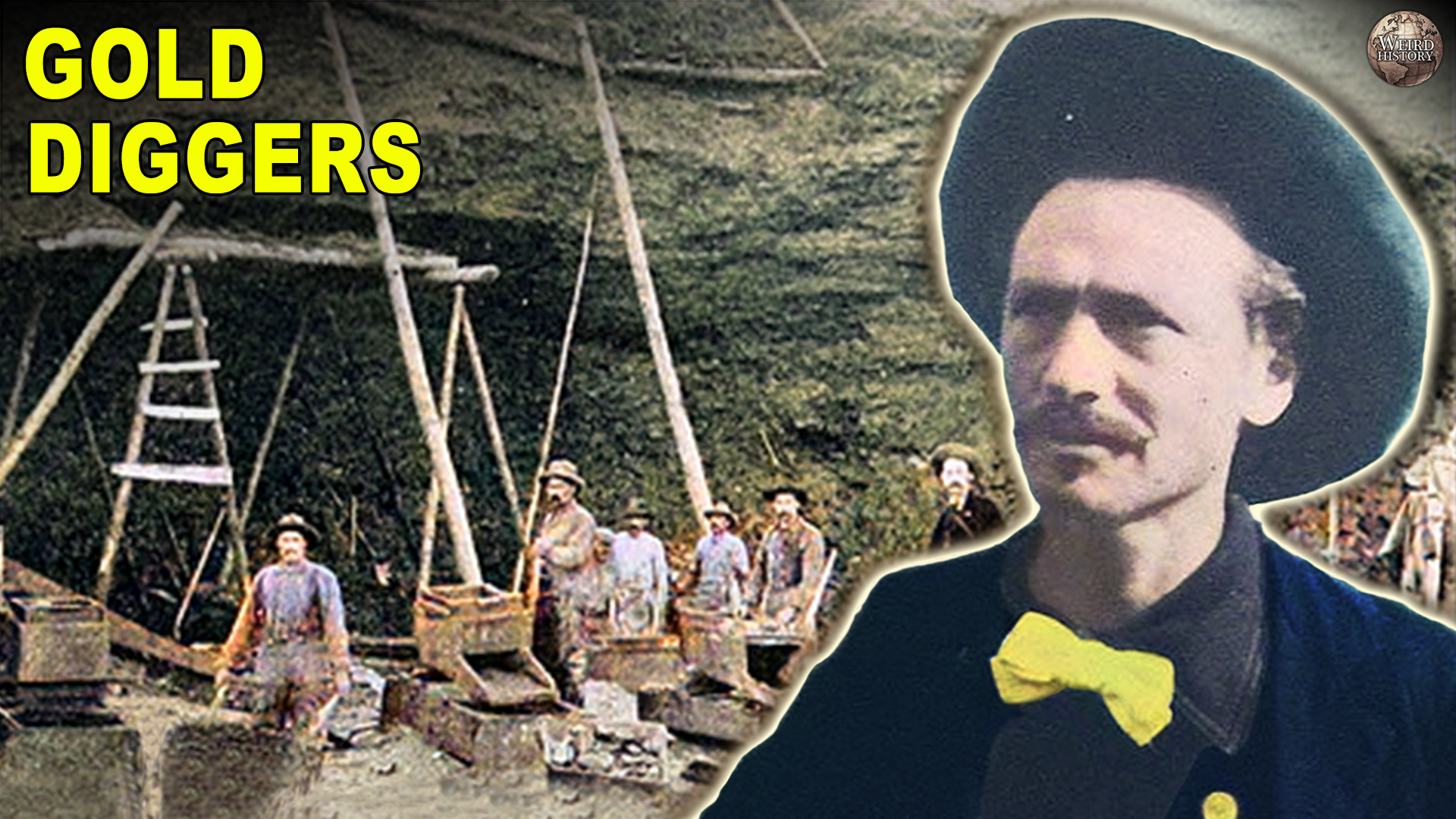
In 1897, the US was at the tail end of an economic recession now known as the Panic of 1893. Many Americans were struggling to feed their families or keep a roof over their heads. So when news got out that gold has been found in the Klondike region of Canada's Yukon, thousands of people hastily uprooted themselves and headed north to take part in rushing to remote northwestern Canada.
Show More Show Less View Video Transcript
0:00
Throughout human history, the pursuit of gold has led several to extreme wealth and countless more to total ruin
0:08
So when news got out that gold had been found in the Klondike region of Canada's Yukon in the late 1800s
0:13
thousands of people quickly packed up their bags and rushed to remote northwestern Canada
0:18
And although George Carmack, credited with first finding gold in the Klondike, became a rich man
0:24
the majority of gold seekers found nothing but hardship. Today, we're taking a look at what it was like to be in the Klondike Gold Rush
0:32
Okay, time to figure out if there's gold in them there hills
0:42
People had been searching for gold in the Yukon Territory since the 1870s
0:47
By 1896, approximately 1,500 hopefuls were panning for the valuable ore there
0:53
Enter George Carmack. He had moved from California to Alaska in 1881 with the hopes of finding gold
0:59
But by 1896, he hit the Yukon and entered a common-law marriage with a Native American woman named Kate, birth name Shawclaw
1:07
One day, Carmack, his brother-in-law Skookum Jim Mason, and Mason's nephew Dawson Charlie
1:14
ran into a Canadian prospector named Robert Henderson, who claimed he knew where to find gold
1:18
He invited Carmack to come join him, but he bluntly refused to allow the Native American men to come along
1:25
Instead of going with Henderson back to Gold Bottom Creek, the trio followed his suggestion to prospect in an area around Rabbit Creek
1:32
which was later renamed Bonanza Creek, presumably because the prospectors were big fans of the TV show
1:38
It was there on August 16, 1896, that they struck gold. Carmack received the official credit for discovering the gold
1:45
As the three prospectors agreed, it should be his name on the official discovery claim
1:49
Because Carmack's whiteness provided a formidable legal advantage. However, the trio decided not to tell Henderson about their discovery
1:57
Because they were all in agreement that Henderson was a d***. Henderson attempted for years to receive some sort of official recognition for being the first to discover gold in the area
2:07
But his efforts were ultimately fruitless. There's probably some kind of lesson in there
2:12
The reaction to the gold rush was extreme. Thousands of people came down with klondychitis
2:23
which is what the newspapers dubbed gold rush fever. Those under its spell did some pretty reckless things
2:29
uprooting their entire lives to hit the road in hopes of finding gold. For instance, Jack London, not yet a famous author
2:36
convinced his brother-in-law to mortgage his wife's house to finance their trip
2:39
But you can even convince your brother to return the lawnmower All told some 100 hopeful millionaires went north And it estimated that prospectors discovered more than billion worth of gold in the Klondike
2:52
But gold wasn't exactly growing on trees up there. Despite the alluring good fortune of people
2:57
like George Carmack and other prospectors who could quickly arrive in the Klondike
3:02
very few folks actually got rich. Out of the 100,000 stampeders, many died during the trip
3:07
or gave up and went home before reaching the Klondike. In fact, only about 30,000 people made it to the Great White North
3:14
By the time the rest of the Stampeders finally showed up, many of the Creeks had been claimed
3:19
That left thousands of people with no choice but to work jobs for the newly rich Klondike kings
3:24
earning between $1 to $10 a day. And while that isn't terrible pay for the late 1890s, it ain't gold
3:30
most people saw a trip to the klondike as a good thing a great story a new adventure and a chance
3:42
to strike it rich this left them thoroughly unprepared for the realities of traveling to
3:47
and living in the remote yukon territory it was sort of like that scene in jaws where a bunch of
3:52
yahoo show up with everything from dynamite to kitchen knives to try and claim the bounty on
3:56
Mr. Jaws. That was the shark's name, wasn't it? To government officials, the general unpreparedness
4:02
of the stampeders was obvious from the start. Even as the first gold shipments arrived in San
4:07
Francisco, the Canadian government worried about how all these new people would affect the food
4:11
supplies in the territory. To try and prevent mass starvation, the Canadian government decided
4:16
to require anyone heading from the Alaskan towns of Skagway or Dye to the Klondike to show proof
4:22
of a year's worth of supplies, including the equivalent of three pounds of food per day
4:27
before being allowed across the Canadian border. That's like the California Highway Patrol
4:31
making sure you have enough Burger King in the car before they let you pass. In addition to food, the required supplies
4:37
included items such as mining and camping equipment, warm clothing and underclothes, boots, and medicine
4:43
This really wasn't a bad idea considering how difficult things would shortly get
4:46
for the people hitting the road. Speaking of difficulty, the White Pass
4:50
which led prospectors into the Canadian North, earned the nickname Dead Horse Trail because an
4:56
estimated 3,000 horses perished on it during the gold rush due to dangerous conditions and the
5:01
inexperience of the prospectors. Maybe they should have thought about inventing snowmobiles
5:07
The trail began in Alaska, which isn't exactly known for its warm beaches. During the journey
5:13
the Stampeders faced punishingly cold temperatures. The average winter temperature on the White Pass
5:18
is around negative 20 degrees Fahrenheit and can get as low as negative 50 degrees
5:23
Anyone making the trek would have to take shelter for the night in these extreme conditions with nothing but a tent and piles of frozen horse meat And if that weren intense enough many of the gold rushers died from malnutrition or starvation
5:35
going up the White Pass. One account told of a man who resorted to boiling his boots
5:40
to drink the broth, while other reports told of people becoming sick or dying after resorting
5:45
to eating the meat of deceased horses. Note to self, throw the frozen horse meat away
5:50
There were several ways to get to the Klondike, all dependent on how rich or poor you were
5:55
The easiest but most expensive route was to travel by water. People who could afford it would ride the rich man's route
6:02
of simply sailing around Alaska and then up the Yukon River. Most stampeders chose one of the most direct routes
6:08
either taking the White Pass Trail or the Chilkoot Trail. These were called the poor man's routes
6:13
because it cost far less to travel them. You would navigate up the inside passage
6:18
often on a homemade boat, then hike across the mountains to get to the head of the Yukon River
6:25
Very soon after news of the gold got out, prospector Joseph Ledoux snatched up a slice of land
6:33
near the confluence of the Yukon and Klondike rivers and called it Dawson City
6:38
The site was already in use as a fishing ground for the native Han people, but they were relocated to a nearby reserve
6:44
Because screw them, there was money to be made. Dawson City soon became the headquarters of the Klondike
6:50
By the fall of 1897, Dawson City had about 5,000 residents living in tents, shanties, and log cabins
6:57
Streets were overcrowded and filthy, food was scarce, and everyone was trying to strike it rich
7:03
Sounds like an off-strip casino. The city got a huge boom in the spring of 1898
7:08
when hundreds of stampeders arrived in search of gold. The lots Ladue had sold for $5 to $25 just two years earlier
7:16
started going for as much as $40,000, and that's in 19th century money
7:21
But Dawson City still had its problems. The land was prone to flooding, and when you add winter temperatures that fell well below
7:28
zero degrees Fahrenheit, the area was basically inaccessible during the winter. Mining was also nearly impossible, as the prospectors had to wait for the ground to thaw
7:37
Sprinkled on top of that was the threat of infectious disease, such as typhoid fever
7:42
smallpox, measles, and STDs. In fact, infectious diseases accounted for 38.5% of the deaths in the
7:50
Yukon from 1898 to 1904. Then in April 1899, a large fire destroyed about 75% of Dawson City
7:59
The total financial loss was estimated at $4 million, both because of the damage of the fire
8:04
and the widespread looting that came with it. Dawson City's prosperity waned as prospectors
8:09
either left to return home or moved on to other adventures Although many people returned home or headed to the Alaskan goldfields after failing to hit gold others did end up staying By mid Dawson City had gone
8:22
from a dirty, overcrowded tent community to a real city with modern amenities
8:27
like electric streetlights. In fact, the city's growth was one of the main reasons the Yukon became
8:32
an official Canadian territory on June 13, 1898. So some good things did come out of the gold rush
8:38
even for the people who didn't end up getting heavy pockets from it. But not all of it was good
8:48
The Canadian government was either unprepared for or did not care or didn't understand the effect gold mining would have
8:55
on the environment and the population of indigenous people. Before the Stampeders, the forest had basically been untouched
9:01
But as the prospectors and others headed up the Klondike, they accidentally started fires that ended up destroying
9:07
much of the timber in places such as Lake Tagish, Bennett, and Marsh. And all the new mining permanently contaminated the water
9:15
while the building of dams prevented the migration of certain fish species. And the native population also suffered. The arrival of thousands of stampeders negatively
9:24
affected the number of moose, caribou, and small game that local native populations depended on for
9:29
food, because there obviously wasn't enough for everyone. And it's not like they could eat their
9:33
dead horses. Coming into more frequent contact with prospectors also led to disease spreading
9:38
more easily among the tribes. However, the Tlingit and Kayu Kokan people
9:42
were able to profit by working as guides or packers, or by selling food and supplies to prospectors
9:48
But in the long run, the Han people were particularly affected by the gold rush. The rapid growth of Dawson City displaced many of them
9:55
while others had to compete with Americans and Europeans for the best fishing sites and the chance
9:59
to sell their food to the new arrivals. A smallpox epidemic and water contaminated by mining waste
10:04
also hit them hard. Stampeders had it rough, but nobody seems to have suffered like the Han people
10:10
That's a depressing trophy. Unexpected success in Alaska effectively marked the end of the Klondike gold rush
10:21
Most Stampeders didn't arrive in the Yukon until 1898. But by that time, most of the claims had already been staked
10:28
In other words, there really wasn't any more gold to be snatched up. But by November of that year, news of gold showing up in Nome, Alaska, reached the Yukon
10:37
And over the next few months, hundreds of people decided to try their luck there instead
10:42
By the end of April 1899, the areas that extend 25 miles north and 25 miles west of Cape Nome
10:48
had been staked. In May, about 250 miners lived in the camp there. But just one month later
10:55
that number grew to around 1,000. That's an impressive growth. Might be time to open a Starbucks