Up next in 10



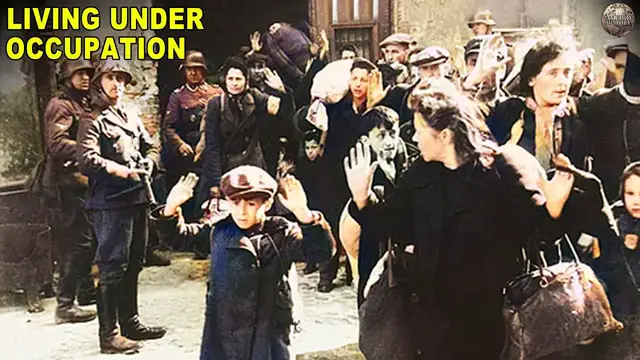
On September 1, 1939, nearly seven years after Hitler became chancellor, Germany invaded Poland. Over the next six years, Nazis invaded, occupied, and brutalized a considerable amount of Europe and Northern Africa. The German brand of military-industrial fascism imposed radical changes in the daily life of all those who came under its reign, though these changes were often specific to context. For instance, life in occupied France was very different from life in Poland under German occupation, which was different than the experiences of Norway or the Balkans. There were, however, some consistencies: food shortages, rape committed by German soldiers, the persecution of Jews, shipping Jews who weren't killed on the stop to concentration camps, and random acts of senseless violence.
Show More Show Less View Video Transcript
0:00
On September 1, 1939, nearly seven years after Adolf Hitler
0:06
became chancellor of Germany, the German army invaded Poland. Over the next six years, the Nazis would invade, occupy
0:14
and brutalize a considerable amount of Europe and northern Africa, and the world would never be the same
0:20
So today, we're going to take a look at what life was like under Nazi occupation
0:25
Time to find out how living under Nazi rule was somehow worse than you thought
0:30
In Nazi-controlled areas of Eastern Europe, mass murder was shockingly common
0:39
German officers took out thousands of Jews in the middle of city streets in a series of organized hits known as pogroms
0:46
This happened across the Baltic states, in Poland and in Soviet territory
0:50
People were arrested and pulled from their homes or attacked by fellow citizens
0:55
During the Lviv pogroms, which took place over separate three and four day stretches
0:59
in June and July of 1941, in what was then Lvov, Poland, and what is now Lviv, Ukraine
1:05
at least 4,000 Jews lost their lives at the hands of the Germans and collaborating Ukrainian
1:10
nationalists. They justified these pogroms by touting anti-Semitic propaganda, alleging the involvement in communist groups and assassination plots. The German annexation of Austria
1:20
known as the Anschloss, took place on March 12, 1938. In the days leading up to the annexation
1:26
Hitler bullied Austrian Chancellor Kurt von Schoenig into appointing Nazis to his cabinet
1:31
and then ceding his country to German control. The annexation emboldened anti-Semitism in Austria
1:38
Many Austrian citizens gathered in the streets to applaud as the German military apparatus
1:42
occupied their country. Contemporary footage showed Austrians greeting Hitler's motorcade with smiles and salutes. Not long thereafter, anti-Semitic violence began in Vienna
1:51
where citizens attacked Jews and damaged their businesses. This mania swept through Austria and Germany
1:57
and crescendoed with Kristallnacht, which translates into English as Kristallnacht, a reference to the broken glass littering the streets
2:05
On November 9, 1938, and continuing for several days thereafter in some areas, soldiers and citizens
2:11
banded together to attack Jews and their businesses, ostensibly in reprisal for the assassination of a diplomat
2:17
by a Polish Jew. on November 7th. Police were sent out to arrest victims, and fire departments were on standby in
2:24
case any fires set in Jewish businesses threatened nearby Aryan shops. The damage was brutal and
2:30
extensive. At least 7,500 Jewish businesses were destroyed by rioters. Schools, synagogues
2:37
cemeteries, and homes were attacked. About 30,000 Jewish men were arrested, and around 100 Jews
2:42
were outright murdered. There are many stories from across Europe of German soldiers committing
2:47
unspeakable acts against women, including firsthand accounts from the soldiers themselves, whether it be by hubris or depravity or a little bit of both. The Nazis kept meticulous records of
2:57
everything they did, which is one reason we know so much about the extent of their cruelty
3:02
It also made things pretty easy for the prosecutors at Nuremberg. One German soldier
3:06
recalled his unit abducting a group of women in a small Russian town on a whim and simply throwing
3:12
them out of their truck when they were finished. Another German soldier in Russia remembered abusing
3:16
a captured spy and tossing her outside to take pot shots at her like a stray animal They even made a game of throwing grenades at her
3:28
In case you haven't seen Casablanca, the Germans didn't just wreak havoc in Europe
3:33
They also made incursions into several countries in North Africa, including Morocco, Tunisia, Egypt
3:39
Libya, and Algeria, although only Tunisia was directly occupied by Nazis. While relatively few Jews were killed in Africa
3:46
more than 10,000 were put in forced labor camps and stripped of their basic rights and freedoms
3:52
And historians fear that if the war had not ended when it did, they would have all met the same
3:56
tragic fate as the European Jews. According to the Jewish Virtual Library, Tunisia, the only Arab
4:02
country to come under direct German occupation, was hit particularly hard. In just six months
4:07
from November 1942 to May 1943, the Germans and their local collaborators implemented a forced
4:13
labor regime, confiscations of property, hostage taking, mass extortion, deportations, and executions
4:21
Like in Europe, thousands of Jews were required to wear the Star of David, and Jewish leaders
4:26
were made to implement Nazi policies under threat of imprisonment or death
4:30
Tunisia was also used as a trading ground for some of the most vicious Nazis, including
4:34
notorious killers like SS Colonel Walter Rauf, who invented the mobile death gas van and
4:41
fled to Argentina after the war to escape punishment for his many crimes against humanity
4:46
An evil genius and a miserable . Congrats on being an evil genius, you miserable
4:58
The German high command respected Paris as a center of culture and society and sought to use
5:03
it as a massive, luxurious state of sorts, going so far as to encourage the arts as a propaganda
5:08
a tool to show how society would flourish under Nazism. Marcel Karn and Robert Bresson even
5:14
made classic French films during Nazi occupation. Yet while the French were afforded
5:18
some limited artistic freedoms, the media was extremely repressed. A newspaper called Parisa Zeitung, or in English
5:26
the Paris newspaper, was published in German, with only a small insert providing
5:30
the information in French. This left ordinary French citizens with no real way of knowing what was actually
5:35
going on in the world. and Nazi-occupied France became a completely controlled fascist media state. The media
5:41
propaganda apparatus bombarded German soldiers and French citizens alike with pleasant tales of
5:46
the friendship between France and Germany, providing examples of how the two nations
5:50
could help each other. Paris at Taiton included loads of flattery of the French
5:55
as well as a daily anti-British cartoon that was presumably very amusing
5:59
but ultimately not worth the price of occupation. Soldiers need food, and so do citizens, unless you want a revolt on your hands
6:12
Consequently, the Nazi high command was concerned with food from the moment plans of global
6:17
domination began. Food rationing in Germany began on August 27, 1939, a few days prior to the invasion
6:24
of Poland. Unfortunately, Poland failed to notice its neighbors stockpiling canned goods in time
6:29
The Nazis implemented a system called food entitlements, which was composed of classes
6:34
such as normal consumers, heavy workers, very heavy workers, children, and pregnant women
6:39
Each class received food supplies based on what the party decided was needed And of course Jews were at the very bottom of that list Occupied territories suffered from terrible famines in part because the Nazis were taking food out of those nations
6:52
for themselves. They were essentially locusts that wore uniforms. In every way, you can make that comparison
6:58
Germany also punished nations that helped the Allies or otherwise resisted Nazi control by stopping food imports
7:05
In the winter of 1941 through 1942, more than 30,000 people fatally starved in occupied Greece
7:11
The situation was so dire that in December of 1941, 300 people succumbed to starvation each day
7:17
in Athens. In the Netherlands, railway workers went on strike to help the Allies. In response
7:23
Germany cut off the Netherlands' food supply. And by the time the country was liberated in May of
7:27
1945, 20,000 people had perished. According to historian Kazimierz Vicka, during World War II
7:34
the people of Poland faced a simple dilemma, either accept what one is now allowed to eat
7:39
and die from hunger or figure out a way to survive. The choice may have been obvious, but it was no less dangerous
7:45
Official rations to Polish citizens were so sparse and inadequate, people were forced
7:50
to come up with creative alternatives, including stealing from factories and engaging in the
7:55
illegal production and trade of food. Eventually, a sophisticated black market developed for the illegal distribution of food in Poland
8:02
If people distributing or purchasing products were caught by the Germans, they would either
8:06
be killed or arrested and sent to concentration camps, which in many cases was just a protracted
8:12
death sentence. Over the course of World War II, almost 3 million Polish citizens were forced to work
8:24
for the Nazi war effort. Many worked at home in Poland, though hundreds of thousands were sent to work in Germany
8:29
Those who were forced to work in cities faced harsh conditions and strict rules, including
8:34
having to wear the letter P on their clothing at all times. Laborers lived near the factories in which they worked, and many manufactured weapons
8:42
Unfortunately, those factories were prime targets for Allied bombing raids, and many
8:46
forced Polish laborers were killed as a result. Some forced laborers who worked on farms fared slightly better, because farms don't generally
8:54
get targeted by enemy artillery. But their treatment varied depending on the situation, and there really was no such thing
9:00
as a good assignment in the Nazis' forced labor workforce. To segregate and control the Jewish populations of occupied countries, the Nazis built ghettos
9:15
These were small, cramped neighborhoods that were unsanitary and repressive, and often doubled as a staging ground from which to transport citizens to concentration camps
9:25
Ghetto residents were permitted to bring very few personal items to their new homes
9:29
Many people lost irreplaceable artifacts of family, history, and culture. This isolation prevented Jews from mixing with the rest of the population, which kept all the
9:37
non-Jews pure in the minds of the Nazis. It was also the first step in an attempt to control
9:43
of any race, Jewish culture. More often than not, Jews in ghettos were required to wear identifying
9:49
symbols, so any citizen they encountered while outside the ghetto knew they were Jewish
9:54
Ghettos appeared all across Europe, with prominent ghettos located in Poland, Belarus
9:59
and Hungary, creating a common experience for Jewish survivors of the Holocaust
10:03
In Belarus and other former Soviet states that fell under Nazi occupation the Holocaust took place in a very different form than concentration camps Nazis would burn entire towns and massacre
10:15
inhabitants as they marched toward Russia. After a German officer perished in an attack outside
10:20
Katyn, an assortment of troops working on behalf of the Nazis, including Ukrainian nationalists and
10:26
Red Army deserters, forced all but three inhabitants into a shed and burned the shed to the ground
10:31
The three survivors were children, but they hadn't been spared. They had simply managed
10:35
to escape the soldiers. In total, approximately 2,230,000 Belarusians, roughly 25% of the area's population, perished during Nazi occupation
10:51
Prior to World War II, the Baltic state Lithuania was the victim of vicious and genocidal Soviet rule
10:58
Once Hitler declared war on the Soviet Union, the citizens of Lithuania saw the opportunity
11:03
to rise up and claim their independence. Unfortunately, Germany soon conquered the tiny country
11:09
And although they allowed Lithuania to keep its own elected officials, the Nazis essentially revoked the brand new government's power
11:16
Lithuania went directly from one genocidal ruler to another. That's some pretty grim luck
11:21
While the Soviets were forced on eliminating any Lithuanians, Hitler targeted the nation's substantial Jewish population
11:27
According to Politico, 80% of Lithuanian Jews perished during the first six months of Nazi occupation
11:33
By the end of the war, 90% of Lithuanian Jews were dead, most of them as a result of Nazi-organized pogroms that included their fellow citizens
11:42
According to the New York Times, in the Ponari neighborhood on the outskirts of town, there is a memorial which eventually included the 70,000 Jews who were stripped naked and shot to death in the forest there
11:53
After the war, the country fell back under Soviet rule, and the genocide against all
11:58
Lithuanians continued. The country didn't regain its independence until March 11, 1990
12:03
which wasn't all that long ago. It's far from ancient history. Luckily for many, strong resistance movements existed in numerous Nazi-occupied countries
12:18
including Belgium, Greece, Poland, Denmark, Norway, and France. Also commonly known as the underground, these groups provided important information to the
12:26
Allies, saved Jewish lives, and took decisive actions throughout the war. Some groups were non-military and resisted Germany through more subversive actions
12:35
such as doing intentionally poor work in Nazi factories or supply chains
12:39
That's the kind of revolution anyone can get behind. The French resistance, which played an important role in street fighting during the liberation of
12:47
Paris, provided key information to the Allies during the planning stages of the D-Day invasion
12:51
But it was dangerous work. The life expectancy of those who joined the French resistance
12:56
was about three months. The Jewish French resistance, meanwhile, helped save thousands of Jewish lives during the war
13:02
And the Danish resistance, aided by allies in the Danish government, managed to save nearly all the Jews in the country
13:08
by helping them escape to Sweden before the Nazis could enact the final solution in Denmark
13:14
Only 492 Danish Jews ended up in concentration camps. Of those, 150 died
13:20
While it is frightening to see the extent of the atrocities the Nazis were able to commit in just six years
13:26
the courage of the survivors and those who banded together to defend human life is both humbling and inspiring