Up next in 10



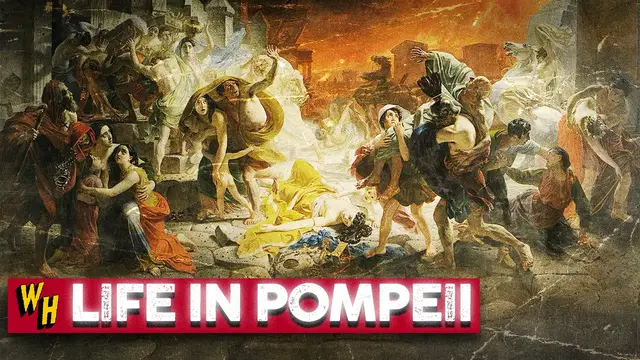
In the year 79 C-E, the volcano Mount Vesuvius erupted, burying the Roman town of Pompeii and hundreds of its inhabitants beneath a sea of lava and a cloud of ash. Ironically, the same forces that destroyed the city also preserved Pompeii’s remains in a way that has given archaeologists a unique glimpse of what everyday life was like there in the weeks leading up to the big bang.
Show More Show Less View Video Transcript
0:00
In the year 79 CE, the volcano Mount Vesuvius erupted, burying the Roman town of Pompeii and
0:09
hundreds of its inhabitants beneath a sea of lava and a cloud of ash. Ironically, the same forces
0:15
that destroyed the city also preserved Pompeii's remains in a way that has given archaeologists
0:20
a unique glimpse of what everyday life was like there in the weeks leading up to the Big Bang
0:25
So, today, we're going to take a look at what it was like to live in Pompeii
0:33
They probably wouldn't have been thrilled to know it, but history has best remembered
0:37
the people of Pompeii as being completely eradicated by the most infamous volcanic eruption
0:43
in history. They even made a bush gardens ride out of it, about which they would have
0:48
been equally thrilled. However, the truth is, most of the city's population survived the disaster
0:54
This is a bit of an oversimplification, but essentially, the eruption took a while
0:59
to really get going. So there was plenty of advance notice for those who had the means to evacuate
1:04
sort of like how they start rolling out trailers for the next Marvel movie a year in advance
1:08
As for those who didn't have the means or the good sense to get the heck out of Dodge
1:12
when the magma started flying, well, they got to be a part of history
1:17
It's not the best trade, but hey, it's better than nothing. The city of Rome was like the Manhattan of the Roman Empire
1:27
It was heavily populated, the summers could be unbearably hot, and it was packed with rich people who wanted to escape to extravagant resorts during the hottest months
1:36
Many of those resorts, as it happened, were in Pompeii. In fact, the city was an ideal vacation spot
1:43
For one, it was nowhere near as crowded as Rome. It also had some remarkable architecture, including a large amphitheater where top-tier shows were staged
1:52
and most importantly, it was a thriving commercial center with plenty of places for rich people to
1:58
spend their money, including factories, shops, bathhouses, and brothels. You might have already
2:04
heard that Pompeii was the capital of ancient sex work, and if you haven't, well, now you know
2:10
In fact, archaeologists believe Pompeii had at least 25 separate brothels. The largest brothel
2:16
in Pompeii, for example, was known as the Lupinar, which is Latin for brothel. It was a two-story
2:22
building with 10 separate rooms, and it was located right in the center of the city. It was
2:27
essentially an ancient sex mall with quite a selection. Graffiti in the Lupinar indicates that
2:33
both male and female workers plied their trades there and the walls were adorned with lewd frescoes that archaeologists believe might have been advertising the services offered served as an instruction manual or possibly both Those frescoes also helped archaeologists identify the
2:49
function of the building, although the fact that it was divided into cubicles, each equipped with
2:54
a masonry bed, made it pretty clear to begin with. It's one of the most visited tourist attractions at
2:59
site today, which makes sense. It was pretty popular back then, too. Tourism wasn't Pompeii's
3:05
only draw. Access to and from Pompeii through the Gulf of Naples gave the city further contact with
3:11
the Roman and Mediterranean worlds and made it a thriving trade center. That being said
3:16
the Gulf presented some serious challenges to residents of the area as well. Its waters
3:21
for example, could be choppy and difficult to navigate. In fact, travelers across centuries
3:27
commented on the winds and violent waves in the bay. With the possible exception of Little Caesars
3:36
most people generally don't associate the Roman Empire with fast food. But humanity has always had a need
3:42
for quick grub on the go, and while many find it surprising, the Romans loved cheap takeout
3:47
every bit as much as we do. Back then, fast food joints were known as thermopoliums
3:52
and they worked very similarly to how takeout still works today. Jars of pre-prepared food were displayed on a counter
3:58
and while any passerby could just stop in and pick up a meal, they were mostly used by impoverished families
4:03
who couldn't afford to cook at home. Of course, the fast food of ancient Pompeii
4:08
wasn't the burgers and fries we think of today. Their menus offered options more along the lines of bread
4:14
with salted fish, lentils, baked cheese, or honey-roasted rodents. Supermarkets have long since supplanted bakeries
4:21
as the place where most people get their bread, But bakeries go back a long way, and they had them in ancient Pompeii, and they kept working right up until the very end
4:32
In fact, archaeologists who excavated one particular bakery in the city were surprised to find 81 loaves of carbonized bread
4:40
Those loaves were preserved for almost 2,000 years, an eerie reminder that Mount Vesuvius erupted on an otherwise ordinary day
4:48
when bread was just sitting in the bakery, waiting to be purchased and eaten
4:52
The old Petula Clark song says that everything's great when you're downtown
4:57
and excavations have revealed that the downtown region of Pompeii was where many citizens went to enjoy meals in restaurants
5:04
These restaurants generally served food that was widely available in the region, like fish, olives, chicken, and eggs
5:11
However some more exotic food choices were also evident Amongst the ruins archaeologists found non shellfish and sea urchins as well as the leg joint of a giraffe Now in all fairness it was the only
5:24
giraffe bone ever to be found in Roman Italy, so it was unlikely that giraffe was a menu staple
5:30
It may have been a seasonal thing. Imagine you're a resident of Pompeii, and you're in a hurry to get your honey-roasted rodents home
5:41
while they're still hot. Such a trip will likely eventually require you to cross the street
5:46
and you really didn't want to have to do that. The city's stone streets were more or less
5:51
perpetually choked with mud, trash, and other unmentionable waste. Luckily, Pompeii had
5:56
crosswalks, or a type of crosswalk at least. Raised stone crosswalks allowed people to avoid
6:02
submerging their feet in the mess of the street. Each of these stones were strategically placed
6:07
so that the wheels of the carriages could pass through the crosswalk with ease
6:11
In fact, to this very day, you can still see the grooves on the road from these carriages
6:16
And while you are out walking the streets, you'd likely be taking in some of the local graffiti
6:21
Even today, visitors can see a vast amount of ancient street art well-preserved in the city
6:26
It may not seem that significant, but archaeologists appreciate graffiti because it gives us a vast amount of insight into what actual day-to-day life was like
6:34
in periods of history so ancient they're all but mythological. Take, for example, the graffiti found on the wall of one ancient brothel, which reads
6:42
Murtis, you suck well. Despite being many centuries old, the graffiti found in Pompeii is largely similar in nature
6:50
to modern graffiti, including insults, declarations of love, jokes, and even advertisements
6:57
One bit of graffiti in Pompeii, for example, reads, Gaius Pumidius Diphilus was here, alongside a timestamp noting the date
7:04
which in contemporary terms was October 3rd, 78 BCE. So every October 3rd, spare a thought for Gaius Pumidius
7:13
He was here. Some of Pompeii's graffiti inscriptions were certainly meant to deface public property like today's tagging
7:20
but not all. In fact, most of what archaeologists found were simple public notices, which were entirely legal
7:26
For example, many inscriptions promoted candidates running for the office of Edile
7:31
a local official who oversaw road maintenance, grain and water distribution, as well as public festivals and games
7:38
One such catchy slogan reads, The neighbors of Lucius Statius Receptus urge you to elect him Duovir, with judicial power
7:46
He is deserving of the office. Emilius Seller, his neighbor, wrote this
7:51
If you deliberately deface this sign may you fall gravely ill At the same time graffiti has also been crucial in helping academics establish the date of the eruption that buried the city
8:02
For decades, historians believed Vesuvius erupted on August 24, 79 CE. But in October of 2018, a charcoal scribble was discovered in a house in Pompeii that was apparently written 16 days before the Calends of November
8:18
which would be October 17th by our contemporary calendar system. Given the unlikelihood a charcoal scribble could have lasted all that long when exposed to the elements
8:28
archaeologists reasoned it must have been written before the eruption in October of 79 CE
8:34
In other words, the volcano actually erupted in October, two months later than previously believed
8:41
One of the things that surprised researchers the most about the remains found in Pompeii
8:49
was that most of them had perfect teeth, with almost no decay, stains, or wear and tear
8:56
It's pretty impressive considering modern dentistry was still a ways away. Some of this
9:02
is due to the fact that their diet was full of fruits and vegetables, and devoid of refined sugar
9:06
which can wreak havoc on your chompers. But really, it was because of the volcano itself
9:12
You see, volcanic activity produces fluoride, an ion of the element fluorine
9:17
and fluoride preserves teeth. That's why we put it into water supplies to this very day
9:22
And thanks to Mount Vesuvius, the water supply of Pompeii would also have been laced with fluoride
9:28
The people in the city also kept dogs. Guard dogs have been popular guards and pets since
9:33
dogs were first domesticated tens of thousands of years ago, and they were still popular in Pompeii
9:40
We know this because archaeologists found mosaics with pictures of guard dogs near the homes of many
9:45
Pompeii citizens, with words like cave canum written on them. For those that don't speak Latin
9:51
that roughly translates to beware of dog. Very few written sources exist documenting pre-eruption
9:57
Pompeii, but the detailed frescoes on walls inside the city tell us a lot about what Pompeian society
10:03
might have been like. For example, there's a major difference in the skin tones of men and
10:08
women in the paintings. Men are golden bronzed, and women appear with pale skin, draped with
10:14
jewelry and surrounded by fine furnishings. According to scholars who have studied the
10:19
frescoes, the women of Pompeii demonstrated higher rank by cultivating pale skin. The idea
10:25
being that they were so well off, they didn't need to go outdoors during the day like some kind of
10:30
plebe, except for that one day when they should have gone outdoors