Up next in 10



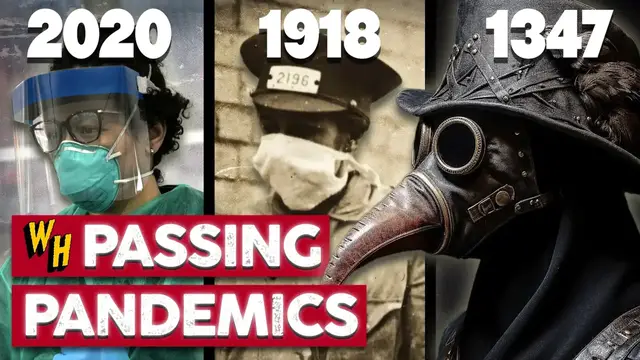
Outbreaks of disease have impacted the lives of individuals and communities throughout history. Whether it's an epidemic (a somewhat localized influx of cases) or a pandemic (a global phenomenon), illnesses that upend daily life, social activities, political institutions, and economic livelihoods leave an indelible mark on those who live through them. Historically, epidemics and pandemics provide guidance about how to manage diseases, perhaps offering instructive lessons on what to do - and what not to do - when illness strikes.
Show More Show Less View Video Transcript
0:00
Illness is a part of our daily lives and has always been throughout history, but some of
0:05
history's most notable outbreaks have continued to take their toll on human life for years
0:10
decades, or even longer after the very first person started to feel like they were coming
0:14
down with something. So, today we're super spreading all the info we can on how long
0:21
historical disease outbreaks actually lasted. Time to flatten the curve. 430 BC was a rough year for Athens. The Peloponnesian War between Athens and Sparta
0:39
that just kicked off two years prior, was going full force. But if war wasn't enough
0:44
Athens found itself also battling another formidable enemy in the eastern Mediterranean
0:49
and Greece. The plague. It all began slowly, with the plague originating in Ethiopia before
0:55
descending into Egypt and Libya, eventually falling on Athens. Healthy folks were suddenly
1:00
finding their heads hot, eyes inflamed, and throats bloody as the symptoms worked their way
1:05
through the body. Sneezing, chest pains, spasms, and coughing followed soon after
1:11
before bringing the whole thing to a vomitous crescendo in the stomach. Historians aren't quite sure what started the plague of Athens or even what it was
1:19
Most assume a combination of diseases like measles, smallpox, and typhus, Because Athens was currently at war with Sparta, most countryside residents were told to stay in the city for safety, while Sparta decided against assaulting the city due to plague
1:33
The close quarters did contribute to the devastation brought on by the disease
1:37
In the end, roughly 100,000 lives were lost in the initial outbreak, with a second occurring three years later in 427 BC
1:45
And since Athens seemed to take the brunt of the hit, they considered the illness a punishment from the gods
1:54
The outbreak now known as the Black Death was one of the most fatal pandemics in the history of
2:03
humans, which is probably why it has the gnarliest name. The Black Death was so called due to the
2:08
color of the buboes or hemorrhages on the groin or under the armpits. Witnesses say that men and
2:13
alike would find dark boils, sometimes the size of apples, ravaging victims' skin. Word on the
2:18
street is that the Black Death arrived in Europe in 1347 via the fleas on rat-infested trade ships
2:23
from Italy. Ugh. Once the B.D. got cozy in Europe, it was able to branch out to North Africa
2:30
then France and England by 1348, followed by a few stops in Scotland, Scandinavia, Germany
2:35
and Russia by 1350. It was one hell of a tour. By 1353, the initial onset of the Black Death
2:42
had run its course in Europe, but the political and economic instability it left in its wake
2:46
was hard to ignore. Doctors were blindsided at the time, trying methods such as bloodletting
2:52
herb-based treatments, and lancing of the plague boils, because healthcare has historically been
2:57
a trial process Perhaps more confused were religious groups where emotions ranged from fear and repentance for a perceived angry god to scapegoating other religions When the dust finally settled after seven straight years of Black Death roughly 50 million people are estimated to have succumbed to the disease across Europe China India and other parts of Asia
3:24
When the bubonic plague came on the scene, it never really went away
3:28
Since the Black Death of the 14th century, England experienced several run-ins with the plague throughout the centuries
3:35
But the deadliest variant came about in the winter and spring of 1665
3:39
when the epidemic claimed somewhere in the neighborhood of 15 to 20 percent of London's population
3:44
The real spot of bother came during the hot summer months when the disease was able to really spread its wings throughout the city
3:51
City slums, unsanitary conditions, and simply too many people crammed together allowed the plague to move quick and fast
3:58
Almost nowhere was spared, save for a small city called Aeum in Derbyshire
4:03
who avoided a complete wipeout by quarantining itself from the outside world
4:08
though they presumably spent thousands of dollars on DoorDash. By late 1665, the plague had slowed its roll in England just in time for the Great Fire of September 1666
4:17
to burn 400 acres of the city to ashes. Boy, these guys really couldn't catch a break
4:23
Did that terrible fire snuff out the remaining bits of plague still hanging around
4:27
historians are a hard maybe on that. However, the record shows no further outbreaks after 1666
4:33
Estimates say as many as 100,000 people perished from the plague London called the Great One
4:47
The country that would be America was having a rough time in 1775
4:51
Colonists were fighting for a new country against the British in a savage and bitter war
4:56
But to make things a little bit more exciting for everyone, Mother Nature decided to throw in a heaping bout of smallpox at them as well
5:04
You know, to shake things up. Smallpox initially found itself in America centuries prior via the Columbian Exchange
5:11
the trade route begun by Christopher Columbus between Europe, Asia, and the Americas
5:16
This initial bout claimed the lives of millions of indigenous people in North America
5:20
When the next wave appeared in the late 18th century, Many additional Native Americans, as well as soldiers and settlers, perished
5:27
George Washington was hesitant to inoculate his troops against the disease, believing quarantine to be a better option
5:33
By 1777, though, the need to build immunity from the disease was dire
5:38
which led to Continental Army President John Hancock, yep, the guy with the big signature, inoculating the entire army en masse
5:46
By the end of it, Native Americans, Canadians, Mexicans, and others in the line of fire
5:50
were hit hard by smallpox. spreading the disease along various trade routes, which left countless unrecorded casualties in the process
5:57
Estimates put the final number of deaths at about 130,000. The Ottoman Empire had seen its share of battles during its time on top
6:13
The Battle of Nicopolis, the Battle of Ankara, and of course, the Battle of the Bubonic Plague
6:18
the latter of which lasted from 1812 to 1819. Outbreaks of the disease had been occurring since at least the 16th century
6:26
and reared its ugly head in Istanbul na Constantinople. The updated version of the plague entered the scene around July of 1812 and was wiping out 2,000 casualties per day by September
6:37
The militia in Malta was forced to quarantine in 1813 due to the disease's formidable staying power, with no sign of relief in sight
6:45
Odessa, which was under Russian control by this point in time, forced more than 32,000 residents to stay inside their homes during the worst of it
6:52
and lost 2,600 individuals by the time the plague ran its course
6:56
Overall, roughly 300,000 people succumbed to the plague. There was a brief period of relief in 1819, but the disease came roaring back in 1836
7:06
Gotta respect the bubonics. They come to play. In 1854, London saw a cholera outbreak where a Dr. John Snow, no, not that one
7:21
was able to trace its origins to a city water pump, confirming cholera to be a waterborne disease
7:27
But until that discovery, neither India nor Europe knew what the disease was
7:32
or how it spread during their respective pandemics. It was bad enough the first time around
7:36
when it was discovered in India in 1817. But in 1829, the second outbreak of the disease
7:42
came sniffing around for more. Cholera moved to Russia by 1830 and started making waves in Europe the following year
7:48
By 1832, major cities with an overcrowding problem and poor sanitation found themselves utterly slammed by cholera, bringing in extremely high numbers of illnesses
7:59
Thanks to oceanic trade and immigration, cholera got itself an all-expenses-paid trip to North America to show the land of opportunity what it was working with
8:08
By the end of 1832, major cities like New York and Philadelphia were reporting hundreds of casualties causing social unrest and major concern about how to treat it
8:17
A lot of historians will tell you that this second pandemic ended in 1837, but others would call those historians liars and claim cholera stuck around until the late 1840s or early 50s, taking tens of thousands across the globe with it
8:31
Either way, cholera seriously wore out its welcome. The third plague pandemic was a big one, lasting over 100 years and claiming millions of lives
8:47
It began in Yunnan, China in the 1850s and wiped out tens of thousands of lives throughout Hong Kong and Canton over the next 40 years or so
8:55
By 1896, British ships accidentally assisted the disease in spreading to India, ravaging port cities before spreading out across the subcontinent
9:05
British authorities tried to halt the onslaught using oppressive quarantines restricting travel and banning all traditional Indian medical practices Hmm that last one seems personal But the efforts were in vain
9:18
and the disease continued making new appearances in Australia and South Africa by the turn of the
9:22
century. The third pandemic would eventually make its way through parts of Europe, the U.S.
9:26
and South America during the first part of the 20th century, and didn't officially come to an end
9:31
until the late 1950s, around 105 years after it began. Localized outbreaks of the disease continue sporadically
9:39
so it's difficult to put a final number on the death toll. But estimates place it at more than 15 million lives lost over the past century
9:46
the majority of which occurred in India. The so-called Spanish flu was first reported in Kansas in 1918
10:00
which you'll notice is not located in Spain. Spain was one of the few countries reporting on the disease at the time
10:06
so the name kind of stuck. Nevertheless, this particular flu required long bouts of quarantine
10:12
caused economic devastation, and reshaped entire families. As men of a certain age got the disease in the U.S.
10:18
many ventured overseas to fight in World War I, bringing the flu along for the ride
10:22
and infecting their European counterparts with some accidental germ warfare. The first wave in the spring of 1918 was bad
10:29
But the second round in the autumn was even worse, claiming the lives of millions of men
10:34
women, and children from September to November. The highest numbers were amongst the 20-40-year-old
10:39
crowd, getting worse as a third wave swept through during the winter and spring of 1919
10:44
This final wave would last until early 1920, just 100 years before history would kind of repeat
10:50
itself. As that final year dragged on, orders to stay off the streets were given as the bodies were
10:55
piling up, waiting for the undertaker to get around to moving them. All told, 50 million people
11:00
in North America, Europe, and parts of Asia met their end due to the highly infectious influenza
11:05
strain that, again, wasn't from Spain. Severe Acute Respiratory Syndrome
11:18
It's a name you probably heard a lot during the turn of the 21st century, whether it be on the
11:22
news, in the neighborhood, or that SNL sketch where Peter Sarsgaard was selling Sarsgaard face masks
11:28
SARS first appeared in the Guangdong province of China around 2002, identified as a viral
11:34
respiratory affliction caused by a coronavirus. Get mighty sick of that guy. SARS did a tour of
11:39
Asia, starting in China before showing up in Hong Kong, Singapore, across the pond to Canada
11:44
and then Vietnam by early 2003. Around 8,000 cases of the disease were reported by the time
11:50
ran its course. A strike team of medical researchers, including the CDC, the WHO
11:55
research institutions, and public health officials from around the world worked tirelessly to identify
12:00
the cause of SARS and develop a successful treatment. Around 774 people were reported
12:05
to have died from SARS throughout the U.S., Canada, Southeast Asia, South America, and Europe
12:10
But as of May 2004, the World Health Organization declared the SARS pandemic to be contained