Up next in 10



Buboes, black spots, and bloody froth: it was all in a day’s work for Black Death body collectors. The plague, which may have killed as many as 200 million people worldwide, changed everything—including body disposal.
Show More Show Less View Video Transcript
0:00
Between 1346 and 1353, the Black Plague may have killed as many
0:07
as 200 million people worldwide. It changed the way we think about public health
0:13
particularly body disposal. Millions of corpses piled up, and body collectors risked their lives to clear out the streets for a hefty paycheck
0:22
So today, we're going to take a look at what it was like to be a body collector
0:26
during the bubonic plague. Time to break out the hand sanitizer. The Black Plague swept across the globe in the mid-1300s
0:37
and by the time all was said and done, it would leave as many as 200 million people dead
0:41
The world had never seen such a devastating pandemic before, and despite a few close calls, it hasn't since
0:48
Not counting if you thought the 1994 Stephen King miniseries The Stand
0:51
was an episode of 60 Minutes, it's an easy mistake to make. In a matter of months, hundreds of thousands of people
0:57
drop dead in Europe's biggest cities. The Italian writer and poet Giovanni Boccaccio witnessed the plague firsthand
1:04
According to him, Florence itself turned into one giant tomb piled with bodies, as many
1:10
died daily or nightly in the public streets. Of the thousands who perished in their homes, Boccaccio said, the departure was hardly observed
1:18
by their neighbors, until the stench of their putrefying bodies carried the tidings
1:23
Boccaccio's experiences during the plague would eventually inspire him to write his masterpiece, The Decameron, a book about three young men and seven young women escaping the plague
1:31
by telling stories to each other in a secluded villa just outside Florence. This highly influential
1:37
novel would pave the way for works like Geoffrey Chaucer's Canterbury Tales and William Shakespeare's
1:42
All's Well That Ends Well. However, the epidemic didn't just lead to the creation of highfalutin
1:47
works of literature. It also created major problems for cities trying to get rid of all
1:52
the diseased corpses. To those who lived through the Black Death's ravages
1:55
it literally seemed like the world was coming to an end. At least, it definitely seemed that way to one Irish monk
2:01
who recorded the devastation in 1349 and concluded with a pessimistic note
2:06
in case anyone should still be alive in the future. Talk about your downer endings
2:11
But the world did survive the Black Death, which meant someone had to do the dirty, dangerous
2:16
and occasionally disgusting job of cleaning up all the bodies. And those someones were the body collectors
2:22
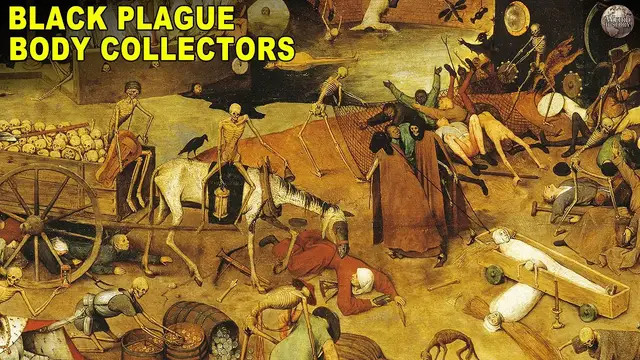
In what might be history's least desirable job, body collectors had to remove plague victims from their homes and from piles on the street so they could be buried
2:31
But by the time the collectors came around the bodies usually weren in good shape As Picaccio explained plague victims had certain tumors in the groins or the armpits some of which grew as large as a common apple others as an egg
2:44
After the bulging buboes appeared, black spots began to cover the body
2:48
If you're watching this video over lunch, you might put down that burrito
2:52
It does not get any prettier from here. Those buboes might burst
2:56
And if they did, they would leak rancid pus, like the world's most haunted jelly donut
3:01
Flea bites could transmit the deadly bacteria Yersinia pestis and become gangrenous. If the disease attacked the lungs, the victim might
3:08
cough up a bloody froth before convulsing and expiring. Obviously, all these variables only
3:14
made the job of the body collector more foul and more dangerous
3:20
If for some reason it still isn't abundantly clear, the plague was extremely deadly. And there
3:26
were three different forms of the plague that struck simultaneously. Bubonic, septicemic
3:30
or bloodborne, and pneumonic or airborne. If you had to pick which plague to get
3:36
you definitely want to choose bubonic. Why? Because it only killed roughly 75% of the people
3:41
it infected. The situation in plague-ridden Europe was so dire that a 75% chance of meeting
3:47
a historically gruesome end were considered pretty good odds. That's because septicemic
3:52
and pneumonic plague had a 100% mortality rate. If you're not good at math, that's the exact same
3:58
mortality rate as swallowing a live grenade. As her old buddy Boccaccio reported, merely touching
4:03
the belongings of a plague victim could transfer the disease. In the Decameron, he told a terrifying
4:09
story of two pigs who nosed through the rags of a plague victim, writing, almost immediately
4:15
they gave a few turns and fell down dead, as if by poison. That's like having a canary in a coal
4:20
mine and having it burst into flames. Not the most reassuring sign. Body collectors were operating
4:25
under no illusions. They knew firsthand just how risky their job was. They may have protected
4:31
themselves from catching the plague by using the same techniques as contemporary doctors
4:36
smelling sweet flowers. The famous plague doctor costume might look like Big Bird during his
4:41
edgelord live journal phase, but the mask was actually designed to block out bad smells
4:46
According to the miasma theory of disease that was popular at the time, illnesses like the plague
4:51
were spread by foul smells. By filling the beak of the mask with flowers and herbs
4:56
doctors believed they could protect themselves from contagion. Body collectors might have tried similar tactics
5:01
to make their jobs less deadly. And to be honest, whether it helped prevent plague or not
5:06
smelling flowers was preferable to smelling the perpetual graveyard fart of decaying plague victims
5:10
that hung over the city. In Florence 60 of the population was wiped out by the plague in a matter of months With victims literally piling up in the streets body collectors found themselves facing a new
5:25
problem. They were running out of room to bury the dead. So all across Europe, cities resorted
5:30
to mass graves. One Florentine chronicler described the situation, saying, at every church
5:35
they dug deep pits. Those who were poor who died during the night were bundled up quickly
5:39
and thrown into the pit. The next morning, the body collectors would throw earth on the corpses
5:44
and toss in more bodies. According to the same Florentine chronicler, others were placed on top of them and then another layer of earth
5:50
just as one makes lasagna with layers of pasta and cheese. That sounds worse than the lasagna it sparrows, and that's bad
5:58
Garfield couldn't get through more than two or three slices of that. The chronicler Angulo di Toro wrote that in many places in Siena
6:04
great pits were dug and piled deep with a multitude of dead. If the graves became too shallow, another would be hastily dug
6:11
Anulo reported with horror, There were also those who were so sparsely covered with earth
6:15
that the dogs dragged them forth and devoured many bodies throughout the city
6:20
Dogs dragging plague-ridden human remains through the city like old pizza boxes they pulled out of the trash
6:25
is an image the Italian tourism industry would prefer to keep off of postcards
6:30
And because necessity often breeds creative efficiency, when they ran out of land to bury the corpses in Avignon
6:36
the Pope consecrated the Rhone River, and the dead were thrown into the water
6:42
Before the plague, European countries tended to have very elaborate funeral rites
6:47
Pocaccio wrote that a person who had passed on was supposed to be born on the shoulders of his peers to the church selected by him before his death
6:55
Of course, with the sheer number of victims, and so many others terrified of falling ill
7:00
nobody really had the time or inclination for fancy funerals during the Black Death
7:04
Instead, Boccaccio explains, bodies were transported by a sort of corpse carriers drawn from the baser ranks, who performed such offices for hire
7:13
In this sense, body collectors could be seen as opportunists who were capitalizing on the pain and misery of history's worst crisis
7:20
And while that's certainly true to a degree, someone had to move the bodies. Score one for the free market. These medieval bills aren't going to pay themselves
7:27
Not surprisingly, a body collector loitering outside your house was an extremely unwelcome sight
7:33
And not just because it meant the plague had claimed another victim. Some body collectors abused their position
7:38
demanding bribes before they would cart off a corpse. In Florence, gangs of shovel-wielding grave diggers known as the Bikini stalked the streets
7:47
Because the job was so undesirable, these body collectors earned enormous sums
7:51
which they then reportedly spent on booze They were constantly stinking with the effluvia of death and earning more than they ever had done before Others reportedly showed off by laughing drinking and assaulting innocent people
8:04
It was like having a Department of Public Health staffed by deputized soccer hooligans
8:08
Even worse, some of the bikini gangs broke into houses, threatening to murder people and declare them victims of the plague if they didn't pay up
8:15
Gotta admit, that's not a bad racket. Nothing like an apocalyptic pestilence for a scapegoat
8:22
The Black Death struck Europe between 1347 and 1351. Body collectors were extremely busy during this period
8:30
carting off at least 25 million victims. You might assume that the need for body collectors dried up once the plague ran its course
8:37
and society had a chance to catch up a little. But that assumption would be very wrong
8:41
The Black Death wasn't the end of the road for body collectors, not by a long shot
8:46
Because, like the Spider-Man franchise, the plague kept rebooting itself. England was hit by the plague another six times in the 14th century alone
8:54
In fact, the plague continued to cull the population of Europe well into the 1700s
8:59
giving body collectors a level of job security many of us can only dream about
9:03
A deadly outbreak of the plague struck London in 1665, and by September of that year, the city was drowning under 8,000 new corpses every week
9:12
There were so many victims piling up that the city ordered body collectors to work only at night
9:17
because the sight of cart after cart piled with corpses reasonably terrified those who hadn't fled the city
9:23
Just like Monty Python, body collectors would pull dead carts through the streets
9:27
ringing a bell and urging people to bring out their dead. Family members who were quarantined with the sick would lower their expired loved ones to the street
9:34
sometimes with a hook on a long pole, like the world's worst claw game. The famous diarist Samuel Pepys wrote that he stopped going out at night
9:42
because of his great fear of meeting dead corpses. The fact that Pepys specified dead corpses as opposed to living ones
9:48
makes us wonder what the hell else was going on in London at the time
9:55
The world descended into chaos during the Black Death. Priests dropped like flies, though there was no one left to administer last rites
10:03
In monasteries in Marseille and Carcassonne, every single monk perished. Even worse, every family bond broke apart
10:10
According to Boccaccia, brother was forsaken by brother, nephew by uncle. brother by sister, and what is more and scarcely to be believed
10:18
fathers and mothers were found to abandon their own children, untended, unvisited, to their fate, as if they had been strangers
10:25
Only one group remained constant and reliable during the plague, the body collectors, who were always there to ring their bells
10:31
and pull their carts through the streets, as long as the money stayed good