Up next in 10



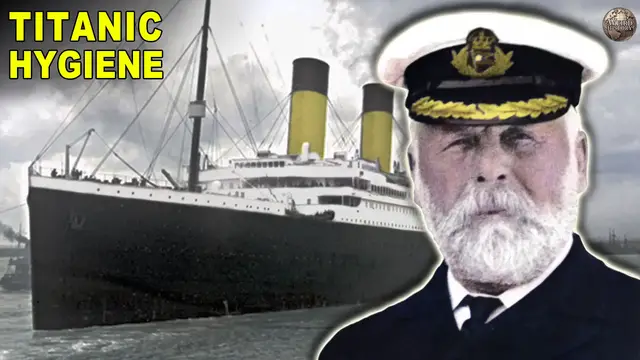
Like most things aboard the Titanic, hygienic practices and resources were dictated by class. First-class passengers traveling on the Titanic enjoyed some of the most luxurious bathing, dining, and recreational facilities to have ever been found at sea, while third-class passengers had to prove themselves clean just to get on board.
Show More Show Less View Video Transcript
0:00
If you were lucky enough to travel in first or second class
0:03
taking a cruise aboard the Titanic was a luxury of the highest order
0:07
First class was treated to fine dining, luxurious baths, and amazing recreational facilities
0:14
Before an iceberg brought it to a tragic end, the Titanic represented the pinnacle
0:18
of a luxurious ocean cruise, even if hygienic practices and resources were determined by class
0:25
Today, we're exploring hygiene on the world's most famous ocean liner, The RMS Titanic. Let's clean things up before this ship goes down
0:35
In first and second class, Titanic passengers had access to public and private spaces with
0:40
plenty of amenities. There was a gym, a massive swimming pool, and a grand squash court. But one
0:47
of the finer amenities was the Victorian Turkish bath. Although using it required an additional fee
0:53
it remained popular as an overpriced massage parlor for the wealthy. The Turkish bath had
0:58
rooms for massages, a steam room, and an electric bath. Resembling an iron lung in size and appearance
1:04
the electric bath was actually an early version of the modern tanning bed, meant to keep the body warm
1:09
It was a hot destination, to say the least. Men and women were not able to access the bath at the same time
1:16
Instead, three male and two female attendants were on standby to help out during business hours
1:21
When the ship sank on April 15, 1912, the three male attendants, John Borthwick Crosby
1:27
Walter Ennis, and Leonard Taylor did not make it. But both women, Anne Karen and Maude Slocum
1:34
survived to tell their tales. While the Turkish bath was a popular amenity
1:38
regular baths were a bit more scarce. Singing in the bathtub sure can be fun
1:46
but most Titanic passengers didn't have that particular luxury. Only a scant few cabins throughout the ship
1:52
featured a private porcelain tub at all. A fresh, relaxing dip in the tub could be yours, assuming you had enough wealth and status
1:59
Captain Edward Smith enjoyed his own tub from the comfort of his personal cabin
2:04
So did many of the first-class passengers occupying the B-deck's multi-bedroom parlor suites
2:09
White Star Line chairman J. Bruce Ismay famously occupied one of the fancy suites
2:14
But the most expensive suite went to Charlotte Cardenza, who brought along 14 trunks and three packing crates worth of stuff for the ocean crews
2:22
But for those without access to fancy bathtubs, using public bathing facilities was a big part of the trip
2:30
What do you do when your massive ocean liner doesn't offer private bathing facilities for everyone
2:35
Offer public baths And that precisely what the Titanic did Each deck had a communal lavatory for the passengers bathing needs But they had to make an appointment first Making an appointment required speaking with the bedroom steward
2:48
who would then have the bath steward prepare a relaxing bath for the passenger. Of course, the availability of bathtubs decreased by passenger class
2:56
To the surprise of absolutely no one, the third class bore the brunt of these tub shortages
3:01
So much for luxurious baths. Oh, and did we mention Third Class composed 709 of the ship's over 1,300 passengers on its maiden voyage
3:10
Every one of them had to share one of two bathtubs for their bathing needs
3:14
Of the two, one was exclusively for men and the other for women. Luckily, attendance cleaned and sanitized the facilities between each use
3:22
Speaking of facilities... Sometimes it's hard to find a public restroom that isn't disgusting or completely unsanitary
3:30
But if nature called during your luxury cruise on the Titanic, you were in luck
3:35
The ship had plenty of restrooms, complete with stalls, commodes, and sinks
3:40
but only if you were riding in first class. First class cabins had the finest soap and toiletries one could find on a big boat in the middle of the ocean
3:48
The fancy restrooms were stocked with high-end vinolia toilet soap. Vinolia toilet soap was marketed as Vinolia Otto
3:55
and made special mention of its status as the Titanic soap of choice
3:59
It had some choice advertisement copy, too, telling buyers it's perfect for sensitive skin and delicate complexions and represents a higher standard of toilet luxury and comfort at sea
4:11
Hmm, it's not as catchy as you're not fully clean until you're zestfully clean, but we'll take it
4:15
While the first class got to scrub themselves with fancy soaps, the restrooms for the third class passengers were a little bit different
4:22
It wasn't uncommon to find a water closet and sink in a cabin aboard the Titanic
4:29
but finding an automatic toilet was a bit more difficult. In a bizarre twist, the first and second class cabins didn't have automatic flushing toilets
4:38
They were forced to flush them manually, just like at home. The third class, however, did have automatic toilets
4:44
but it wasn't done out of an altruistic reason. The Titanic provided them to steerage passengers out of concern they wouldn't know how to use a toilet
4:53
Since they mostly used outhouses and chamber pots in the past, they may not have realized the toilet should be flushed after use
4:59
The real question is, did the water swirl clockwise or counterclockwise? We may never know
5:05
Third class had even a toilet instructor, matron Catherine Wallace, who helped teach them how to properly use the facilities
5:12
Sadly, she went down with the ship on that fateful night. Normally procedures for boarding a ship are pretty straightforward But on the Titanic third passengers had to submit to a medical inspection prior to boarding the ship The idea was to prevent lice disease
5:29
or any possible infections from spreading among the ship. An infectious eye disease, trachoma
5:34
was also a major concern. But the health inspections didn't apply to everybody
5:39
First and second class were exempt from the medical screenings. They only had to stop at the purser's office
5:44
to have their tickets checked prior to boarding. Men, women, and children with steerage tickets were met by a group of physicians outside the ship
5:51
They were then examined one by one and only allowed to board if declared healthy
5:55
If they were clean and healthy, they received an inspection card allowing them to board the ship
6:00
The Titanic had a knowledgeable and dedicated medical team, with a hospital and medication available to all passengers on the ship
6:07
Speaking of that hospital... British regulations at the time required the Titanic to hold a certain quantity of medical supplies
6:15
before leaving port. But what did the ship's medicine cabinet look like exactly? There was
6:20
bicarbonate of soda for indigestion and heartburn, castor oil and Epsom salts were used to relieve
6:26
constipation, and of course they had plenty of the heart medication, digitalis, and aspirin
6:31
But the ship also carried laudanum to be used as a sleeping aid, chloroform for easing flatulence
6:37
and everyone's favorite hemorrhoid treatment, sulfur. Over on D-Deck, the hospital was far
6:43
removed from the passenger cabins. Even so, it was accessible to the passengers and the crew
6:48
It was state-of-the-art for the time. Four wards contained three beds apiece
6:51
and a qualified medical staff was always on hand. The hospital also had an infectious disease area
6:57
complete with a ventilation system for preventing germs from having a cruise of their own
7:01
It was truly ahead of its time, but first-class passengers still insisted on bringing their own
7:07
help. The Titanic had stewards and stewardesses to take care of passenger needs, but that wasn't
7:15
always enough for first and second class travelers. They often brought their own secretaries and
7:19
servants along for the ride. Instead of relying on ship personnel to dress and groom them
7:24
they relied on personal servants. Their status elevated them above Titanic crew members too
7:29
Each received a silver-plated napkin ring with the word servant etched into it. Some of them
7:34
perished when the ship sank. But others managed to get into lifeboats with their employers as the
7:39
ship plunged into the icy waters of the Atlantic. Hired help weren't the only additional passengers
7:44
in first class either. Several wealthy people also brought along their best friends
7:51
Amid all the luxuries first class passengers received on the Titanic, bringing pets along is probably the most unexpected The ship had a luxury kennel on F deck run by John Hutchinson and a group of stewards There were at least 12 dogs on board Smaller pooches were allowed to run free in their owner cabins But the big dogs required daily exercise
8:12
The stewards walked them along the poop deck daily and cleaned up after them
8:16
Dogs weren't the only passengers from the animal kingdom. Several roosters and hens roosted on the Titanic, owned by Ella Holmes White
8:24
White was importing the chickens to the U.S. from France. She survived the sinking of the ship, later testifying the ship broke into two as it sank
8:32
But a cat named Jenny was the most adorable pet on board. Well, as adorable as cats can get
8:38
Jenny was the ship's cat, who gave birth to a litter of kittens before the Titanic left Southampton
8:43
She and her family lived in the corner of the galley, tended by the ship's staff. Sadly, many of the pets did not survive the disaster
8:50
But three dogs did. A Pomeranian named Lady, who belonged to Ms. Margaret Hay, managed to get into the lifeboat with her owner
8:58
Hay wrapped her in a blanket as she boarded the lifeboat. Another Pomeranian, owned by Elizabeth Jane Rothschild, was brought aboard a lifeboat in a very similar way
9:07
A Pekingese named Sun Yat Sen also survived the disaster. She belonged to the famous publisher Henry S. Harper, the director of Harper & Brothers
9:15
Today, many know the company by a totally different name, Harper Collins
9:19
But on that night, he took his dog aboard the lifeboat to the objection of almost no one
9:24
Apparently, there was plenty of room on the boat. For historian J. Joseph Edgeit, Harper was heard to remark
9:30
there seemed to be lots of room and nobody made any objection. One of the side effects of having fancy cutlery and cookware is the crazy amount of care they needed
9:41
The silverware was fancy. Silver plating adorned napkin rings, plates, and bowls
9:46
Even the cookware had gold-lead lining. The Titanic employed an entire team of stewards to act as busboys and dishwashers
9:54
They had assistants who washed plates and glasses. Even their assistants had assistants to handle the cleaning duties
10:01
The ship also provided meals on less elegant dishes to third class
10:04
This was unusual for the time, as most ocean liners required steerage passengers to bring their own food
10:10
There was also a ton of laundry. Third class passengers and crew washed their clothes in iron tubs themselves
10:16
but first and second class paid to have their garments laundered. There weren't any large-scale laundry services aboard the ship
10:23
It was a specialty job held by stewards like Thomas Baxter, Sidney Holloway, and Ernest Olive
10:29
In addition to laundry, they kept linen closets fully stocked and changed first-class bedding daily
10:34
Soiled linens and towels were steam-cleaned and bagged so they could be cleaned once the ship reached its destination
10:41
It was standard practice at the time, keeping things clean for a large number of passengers on board