Up next in 10



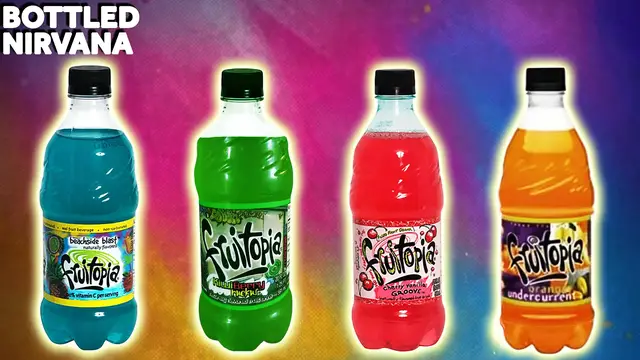
If you grew up in the early aughts, odds are you had a Fruitopia machine in your school. They just seemed to appear one day in the 90s as if from nowhere, offering fruity nectar of the gods to anyone brave enough to gaze upon the kaleidoscope imagery of its glowing display. While many may not remember Fruitopia and even fewer have actually tried it, for a time it was on top of the world. So why did it get tossed out of paradise?
Show More Show Less View Video Transcript
0:00
If you grew up in the early aughts, odds are you had a Fruitopia machine in your school
0:05
They just seemed to appear one day in the 90s, as if from nowhere, offering fruity nectar of the gods to anyone brave enough to gaze upon the kaleidoscope imagery of its glowing display
0:16
While many may not remember Fruitopia, and even fewer have actually tried it
0:20
for a time it was on top of the world. So why did it get tossed out of paradise
0:25
Well, today we're stepping through the kaleidoscope to uncover whatever happened to Fruitopia
0:33
Okay, time to twist the cap off some history. Marketing a juice drink to children is as easy as dumping enough sugar in there to sell itself
0:43
But bottled teas and juices for teenagers and adults didn't begin gaining traction until the 1980s
0:49
as consumers sought out alternatives to the sugary sodas being advertised at the time
0:54
Hoping to capitalize on this trend, Leonard Marsh, Hyman Golden, and Arnold Greenberg founded Snapple
1:01
The trio launched their brand in 1972 under the exciting name Unadulterated Food Products
1:07
UFP's plan was initially focused on selling juice drinks to health food stores
1:11
and didn't begin selling its first bottled lemon tea until 1987. This marked a major turning point in their venture as sales rose from $3 million in 1986 to a jaw-dropping $700 million in 1994
1:25
Must have been one hell of a tea. Snapple was an instant hit, largely thanks to the refreshing and unique take on tea, their distinctive glass bottle
1:33
and of course, the poppable bottle caps stamped with one of about 1,100 different fun facts
1:38
They also had an early hit with spokesperson Wendy Kaufman, who starred in Snapple commercials between 1993 and 1996
1:46
Kaufman was a real employee at Snapple, who was picked for her distinct New York accent and boisterous personality
1:52
Back in the 90s, there were few commercial celebrities bigger than the Snapple lady
1:56
Think Flo from Progressive, but with juice instead of insurance. In 1994, amid floundering sales and stock hits, Snapple was bought up by Quaker Oats for a whopping $1.7 billion
2:07
The sale set off dollar sign alarms at Coca-Cola HQ, which is when Fruitopia came into the picture
2:13
Coca saw the adult juice trend that Snapple had tapped into and decided they wanted a piece of the fruity pie for themselves In 1994 Coca launched Fruitopia under their Minute Maid brand The initial launch included a million ad campaign focused on the health food movement that was taking the country
2:32
by storm. The campaign was essentially a call to war, putting Fruitopia in direct competition with
2:37
the juggernaut Snapple. At the helm of Coca-Cola's marketing was Sergio Zimond, credited with coming
2:43
up with the idea for Fruitopia as an alternative to the sugary sodas getting so much bad press
2:47
But Zyman wasn't the only one attempting to come up with the next great new beverage
2:52
Around that same time, in 1995, friends Kevin McGovern, John Bellow, and Tim Schwalm introduced the world to the South Beach Beverage Company, or Sobe for short
3:02
Their initial offering was a Ginseng Guarana Ginkgo blended tea they called Black Tea 3G
3:08
It is impossible to roll your eyes further back than you just did. You may also remember Sobe as the flashy glass bottle with the little lizard on it
3:16
branding which caught the eye of thirsty consumers in the mid-90s. On the same shelf as Fruitopia, customers could find Sobe elixirs, teas, life water, and energy drinks
3:26
Sobe was eventually scooped up by PepsiCo for $370 million in the year 2000
3:31
and the cola giant promptly removed the glass bottles from distribution. We're not saying the removal of the iconic glass contributed to Sobe's complete downfall by the mid-2010s
3:40
but we're not not saying it. Fruitopia debuted in 1994 with spiritually cosmic flavors
3:49
like Strawberry Passion Awareness, Citrus Consciousness, and Grape Beyond. If these names sound a little funkadelic, that was the idea
3:57
In the early 90s, a renewed interest in the New Age movement and all the aesthetics that came with it
4:03
prompted Fruitopia to point their advertising in that direction. Coke marketed their new venture as embodying harmony
4:08
imagination and the free spirit the psychedelic packaging funky colors fruit forward identity
4:14
and peaceful aesthetic was immediately appealing to adults who fondly remembered the new age
4:19
movement as well as kids who love colorful juices no matter what the packaging looks like
4:24
fruitopia was so popular in fact that time magazine named it one of the best new products of 1994
4:29
a list that included no other beverages fruitopia found itself a permanent home in mcdonald's soda
4:34
fountains and even got a mention in a 1999 episode of The Simpsons
4:38
from astrophysicist Professor Stephen Hawking. I wanted to see your utopia, but now I see
4:45
it as more of a fruitopia. By the end of 1994 Coca was busy investing million to expand the brand and even introduce a lower calorie line If you turned on the TV during that time odds are you would have seen one of those kaleidoscope ads
5:00
with catchy music written by none other than art pop superstar Kate Bush
5:05
No, really. Even if you weren't watching much TV at the time, you could hardly get away from Fruitopia's advertising
5:11
With painted school buses full of teenagers deployed across the United States
5:15
to hand out free drinks and bring awareness to the brand. And to add even more of an incentive
5:20
trips to Hawaii and New York and other prizes were offered to customers just for buying a bottle of their juice
5:26
Snapple remained the industry standard for the adult juice market in the early days
5:30
with Fruitopia labeled by many as a Snapple knockoff. Despite this, Fruitopia vending machines
5:35
began to pop up all over the country, predominantly in high schools
5:39
where they were very popular with younger students on campus. Coca-Cola had tried to make a push
5:44
offering $1.5 million to the Madison, Wisconsin School Board to introduce a Fruitopia inclusion
5:49
curriculum, a bid that was ultimately rejected. Had it gone another way, it would have been just
5:54
another thing the Simpsons predicted. Despite its initial momentum, Fruitopia continued to fall
6:02
behind competitors like Snapple and Perrier as its marketing outpaced its popularity. Fruitopia
6:08
had its strongest year in 1999, ending the year with 44 million cases sold
6:13
However, by the very next year, sales had tanked from a projected 400 million
6:18
to just $60 million. Seeing the writing on the wall, Coca-Cola dropped several of the underperforming flavors
6:24
like Lemonberry Intuition Tea, Cranberry Lemonade Vision, Curious Mango Tea, Tropical Consideration
6:31
Apple Raspberry, and Lemonade. Oh, deep and light name for that one
6:35
Just Lemonade. By 1996, Fruitopia's advertising agency had changed over to Leo Burnett and, in an effort to revitalize the brand, floated the new tagline, Find Your Own Fruitopia
6:47
However, Saab Cars USA filed a complaint since the tagline resembled their own, Find Your Own Road
6:53
Coca-Cola got tired of this Saab story and backed down, replacing it with slogans like, Fruits Unite, Refreshment Happens, and Fruitopia, We Just Want to Make You Feel Good
7:03
That wasn't the only time the company was involved in some rotten fruit. In 1994 Royal Crown Cola dealers sued Coca for paying off convenience stores to feature and advertise Fruitopia and other Coke products exclusively squeezing out the little guys in the process A similar thing happened in 2000 after a jury found Coca guilty of violating Texas antitrust laws
7:24
Coke was ordered to pay $15.6 million, a hit which added only another nail into Fruitopia's rapidly closing coffin
7:32
Unable to stay away from lawsuits, the brand bubbled up some trouble with Greek author Eugene Trivizas
7:37
Trivizas owned the trademark to a comic series called Fruitopia that he had been writing for years, and he was able to successfully block Coca-Cola from
7:45
trademarking the name in Greece. This would, unfortunately, pave the way for more misfortune
7:50
to befall Fruitopia by the beginning of the new millennium. The writing was on the wall by 2003
7:55
after changing consumer tastes and an aging target demographic saw Fruitopia's worst year yet
8:00
Coca-Cola made the decision to discontinue Fruitopia in the U.S. After Coca-Cola put the kibosh on the Fruitopia brand in the U.S. market in 2003
8:12
the four best-selling flavors were chosen to continue on through the Minute Maid brand
8:17
which was seen as more sustainable due to its household recognition and long history of quenching thirst
8:22
This wasn't an isolated incident either. PepsiCo's FruitWorks, a Snapple competitor, also folded around the same time
8:29
eventually being absorbed into the Tropicana line. Those orange drink companies do not mess around
8:35
While it's a fruitless effort trying to find Fruitopia anymore in the United States
8:39
Canada and Australia have the privilege of basking in its refreshing goodness via both
8:43
can and carton form. Canadian McDonald's locations are also a hotspot for Fruitopia activity, still featuring flavors
8:50
like Strawberry Passion Awareness and Orange Gru. If you're lucky, you can also find additional flavors like Raspberry Kiwi Karma, Tangerine
8:58
Wavelength, and Blueberry Watermelon Wisdom. At least that's what it says on Coca-Cola's Canadian website
9:04
And while adult teas and juices may not be all the rage they were in the 90s and the early 2000s
9:10
elder millennials still have a soft spot for the beverages, as proven in 2022 when Snapple revived its once-abandoned Snapple Elements line
9:18
Back in the day, you could find colorful bottles of Snapple featuring all the elements of our planet
9:22
earth, rain, sun, and fire, and Mila Jovovich. Staple fans had their nostalgia quenched in 2022 as the brand introduced new elements versions and redesigned plastic bottles with less sweet formulas
9:34
No word on Coca-Cola plotting any revivals of the Fruitopia brand, but if history has taught us anything, their vending machines may just inexplicably reappear one day