Up next in 10



Let’s bust one Great Depression myth right off the bat, courtesy of Megan McArdle: “even at the height of the Depression, when a quarter of the workforce was unemployed, most people were not on relief, and most were not suffering malnutrition.”
Show More Show Less View Video Transcript
0:00
In 1929, a massive stock market crash ushered in the nearly decade-long worldwide economic depression
0:07
that would prove to be the most prolonged and widespread in recent history
0:11
The rise of refrigeration, changes in the food supply chain, and the increased need for inexpensive meals
0:17
led to a drastic change in the American diet. Getting food on the table was tough, and sometimes using what was available led to some rather strange recipes
0:26
Today, we're looking at the weird foods people ate to get through the Great Depression
0:34
First Lady Eleanor Roosevelt wasn't going to let the Depression bring her fellow Americans down
0:39
As an early supporter of the home economics movement, she planned inexpensive and nutritious meals from Cornell's Home Economics Department
0:47
Although FDR was a bit of a gourmand, both the First Lady and the President practiced leaner eating habits during the Great Depression
0:54
According to their book, A Square Meal, A Culinary History of the Great Depression
0:58
food historians Jane Zegelman and Andrew Coe noted the Roosevelt's ate this way to send a message to Americans
1:05
about how to eat during troubling times. Instead of foie gras or an amuse-bouche
1:10
FDR had to eat simple meals, at least when guests or the press were around
1:15
Denture-friendly fare like deviled eggs and tomato sauce with mashed potatoes or a bean and tomato stew
1:20
were a typical White House fare. Sounds like something you'd find at the frozen dinner aisle
1:24
Flavor and spices need not apply. Dessert came in the form of prune whip
1:30
a delightful dish based around everyone's favorite dried fruit, the prune. Prunes and other dried fruit were common substitutes for fresh fruit during the Depression
1:39
so prune pudding was sort of an easy substitute for freshly baked pies or other desserts
1:44
It's easy to make, too. All you need is some sugar, egg whites, and a bunch of prunes
1:49
Whip it all together, and you'll have a real, mmm, regular dessert in no time
1:58
Everyone loves peanut butter. And everyone loves onions, right? Both items were readily available during the Depression, and someone decided to mix the two
2:08
This resulted in a most surreal concoction from the Great Depression cookbook
2:12
Peanut Butter Stuffed Baked Onion. Mmm, okay. Promoted by the Bureau of Home Economics
2:17
The recipe for peanut butter and stuffed onions saw publication in several newspapers and magazines
2:22
of the period. The Bureau's professional home economists actively encouraged American homemakers
2:28
to serve the inexpensive glop to their families. Food historians Andrew Coe and Jane Ziegelman
2:33
decided to try making the dish themselves more recently. Coe said, it was not a popular addition to the dinner table
2:40
Ziegelman put it more succinctly, noting that peanut butter has nothing to say to a baked onion
2:45
The Bureau of Home Economics really took the phrase, there's no accounting for taste, literally, when they came up with that one
2:55
Ritz crackers? They're no townhouse cracker, but they are great for a light snack or handy to use in a dip
3:02
Mmm, good cracker. But they have an unlikely alternate use, a substitute for apple pie filling
3:10
Ritz mock apple pie is pretty much what it sounds like, a pie made with Ritz crackers as its filling
3:16
The traditional ingredients of an apple pie combined with lemon juice and the unique texture of Ritz crackers created a taste intended to simulate a real apple pie Considered a Depression favorite today this pastry imposter has its roots in the 1880s when apple shortages
3:31
called for pie-filling substitutes. Soda crackers were a cheap alternative to America's favorite
3:36
fruit, and mock apple pies were popular during tough times. At some point, Nabisco began putting
3:41
the recipe on the back of Ritz Cracker Boxes, where it would remain until the 1980s. After 1,500
3:47
requests for the recipe in a single year, the company restored the recipe to its packaging
3:51
in 1991. It remains one of Ritz's most requested recipes today. If an apple-free apple pie sounds
3:58
tasty, you can try making one yourself. Just substitute 36 slightly crushed Ritz crackers
4:03
for the apples in your favorite recipe, and you'll be baking a mock pie just in time for dessert
4:11
Eleanor Roosevelt did her best to promote home economics throughout the Depression
4:16
That didn't mean she didn't send out some genuinely bizarre dishes during that time
4:21
Take the case of an off-putting casserole made from spaghetti, boiled carrots, and white sauce
4:27
Unlike traditional pasta cooking methods, this recipe required cooking the spaghetti for a full 25 minutes
4:32
Once the pasta turned into a sad noodle mush, you were supposed to mix it with similarly boiled-to-death carrots
4:39
A bland white sauce made from milk, flour, salt, and butter topped off this not-quite-al-dente dish
4:45
Roosevelt called it a vehicle for nutrition and nutrients, but you'd probably prefer to eat an old flapper hat instead
4:55
Vinegar-based desserts were popular in the 19th century, but made a comeback during the Depression
5:00
Known more commonly as desperation pies, these treats mix staple ingredients like eggs, butter, and sugar with some kind of substitution
5:08
In this case, apple cider vinegar takes the place of fresh apples. It's the fantastic acidic flavor of an apple cobbler without any pesky fruit
5:16
Cooks can whip the eggs and sugar into a delicious meringue to top the acidic dessert off in style
5:22
Apparently, it tastes like salt and vinegar custard, and it leaves the roof of your mouth tingling
5:27
Mmm. If you find yourself with a hankering for vinegar cobbler, don't despair
5:32
In 2015, award-winning chef Chris Shepard began serving the dish in his Houston restaurants
5:38
helping Vinegar Cobbler make a comeback in recent years. In a recipe straight from the Haywire Mac songbook, Mulligan's Stew was basically hobo food
5:50
Not to be confused with NBC's short-lived 1977 comedy of the same name
5:54
Our two families became one after a tragic plane crash in Hawaii
5:58
Mulligan stew is a community food put together by whatever foods they could scavenge and put together
6:04
In his book, Riding the Rails, Teenagers on the Move During the Great Depression
6:08
Errol Lincoln Hughes describes the dish as a mix of just about everything
6:12
People predominantly cook Mulligan stew with stolen onions, corn, potatoes, foraged greens, and occasional meat bits
6:20
Enterprising hobo chefs might add a handful of navy beans or whatever else may add some flavor to the dish
6:25
but the real secret ingredient was just a bit of bold Durham tobacco
6:29
and everyone's favorite flavor enhancer, lint. Hmm, that's a meal I may not ask for seconds on
6:40
Dining at the White House during the Great Depression wasn exactly fancy Take the case of Milcorno On one presumably dark and stormy night in 1933
6:50
several mad scientists at Cornell University invented a gruel known as Milcorno
6:55
It's alive! Scientists intended for this blend of powdered skim milk, cornmeal, and salt
7:01
to help families stretch food budgets. Milk Corno came with a somewhat dubious promise of enabling meals for a family of five for $5 a week
7:10
And of course, Eleanor Roosevelt served it at the White House. But Milk Corno wasn't the only milk, cornmeal, and salt-based food supplement
7:17
There was also Milk Wito and Milk Goto, both of which were purchased in bulk by the government
7:23
The government even bought 25 million pounds of dystopian dust to use in various hunger relief efforts
7:28
And although all of them turn into porridge after boiling, the Bureau of Home Economics inexplicably suggested that no corno made a good substitute for the noodles and chop suey
7:38
Well, at least there isn't much toxicity in such things. Despite some of the strange things people had to eat during the Depression, one modern culinary staple arose in the midst of it all
7:53
The one and the only Kraft macaroni and cheese dinner. According to the Smithsonian, Thomas Jefferson famously served macaroni and cheese at an 1802
8:02
state dinner after falling in love with the dish while visiting France. It wasn't an entirely new concept at the time, but the idea of boxing it and selling it as an
8:11
inexpensive meal was. In 1937, a rogue salesman for the St. Louis-based Tenderoni Macaroni Company
8:18
began selling his noodles with packets of Kraft-grated cheese attached. Kraft soon hired
8:23
the enterprising salesman to promote the meal to cash-strapped Americans. The dinner caught on in
8:27
a big way, selling for 19 cents per four servings. Its speed was a selling point, with one early
8:33
print ad featuring a happy, bewildered husband asking, how the deuce did you make this keen
8:38
macaroni and cheese so fast? Why, we just got home. Kraft's Dinner, as it's known in the Great
8:44
White North, went on to become a staple of modern college cuisine and has a special place in our
8:49
hearts today. Food historians typically agree that loaves were quite popular during the Great
8:57
Depression. Food loaves were made from a central ingredient and cheaper ingredients that would
9:02
stretch the entire thing out. A Depression-era menu might contain such delicacies as a liver
9:07
loaf, lima bean, and peanut loaf. Authentic meatloaf was a luxury, but still relatively
9:13
affordable by patting it with other ingredients like crackers or bread. And much like today
9:17
ketchup and canned soup delivered more flavor at a small additional cost
9:22
Food historians Ziegelman & Co. baked some soy lima bean loaf, maintaining it tastes a bit like falafel, but should be served with lots of highly seasoned gravy
9:34
Some historians believe the federal government made a mistake by overlooking immigrants
9:39
contribution and creativity to hunger relief efforts during the Great Depression. Italian immigrants were sometimes known for making delicious, highly nutritious
9:46
and inexpensive foods for their families. Yet the government chose to overlook their methods
9:50
as a source of hunger relief inspiration. One delicious and vitamin-packed ingredient
9:55
foraged by Italian immigrant women in New York City came in the form of dandelion greens Straight from the front yard to the dinner table dandelion greens were added to salads sauteed or cooked with olive oil to create an essentially free meal
10:11
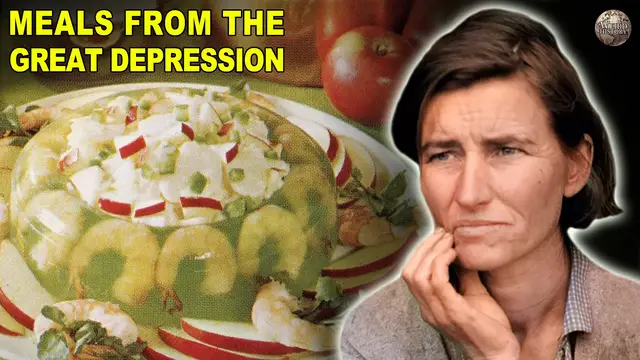
If you needed a cheap source of protein during the 1930s, gelatin was likely your main ingredient
10:18
Many Depression-era cookbooks feature gelatin as a base for such cutting-edge recipes as
10:23
corned beef luncheon salad and other congealed salads. Mmm, bright, crisp vegetables in cool, shimmering jello
10:30
There's a salad for you. Congealed salads may sound like the name of a band from the 90s
10:35
but they were authentic dishes people ate during tough times. Corned beef luncheon salad was particularly repulsive
10:40
with its unholy mix of its canned corned beef, gelatin, canned peas, vinegar, and lemon juice
10:47
A few reports from individuals courageous enough to try today describe it as wrong in every way possible
10:53
Just from the color to the smell, the texture, the flavor, the mouthfeel
10:58
It may look, smell, and probably taste like canned cat food, but one simply cannot deny gelatin's versatility in cooking
11:05
Have you made a jello salad lately? Well, do. This week. Hey, there is always room for a jello salad
11:15
Got milk? The people struggling to survive through the Great Depression certainly did
11:20
Milk also piqued nutritionists' interest. who placed tremendous importance on it as a kind of superfood
11:26
Cow's milk was a bit of a wonder food at the time. Packed with vitamins, fats, sugar, and proteins
11:31
it served nutritional needs and practical purposes during the period. Milk was also used in tons of recipes from the time
11:38
from flavorless white sauces and cornstarch pudding to fortified foods like milkorno
11:43
Of course, the sheer amount of milk given to school-age kids was quite impressive
11:47
as the government advised nearly a quart a day. School lunches almost always featured a nice glass of milk to go along with a day's meal
11:59
Chipped or frizzled beef has been a breakfast choice in some parts of the United States since the 19th century
12:06
eventually finding its way into a 1910 military cookbook called Manual for Military Cooks
12:11
Since then, the creamed chipped beef on toast has been an army staple with a colorful name
12:16
S*** on a Shingle, or S.O.S. The old frontier favorite enjoyed a resurgence during the Depression
12:22
Per culinary historians Ziegelman and Co., this era's version was a combination of canned corn
12:27
beef, plain gelatin, canned peas, vinegar, and lemon juice, and wrong in every possible way
12:33
That doesn't mean some folks aren't nostalgic for SOS today. SOS was often served during the
12:39
Second World War, and even the TV show MASH used it as a recurring joke
12:43
You've forgotten your shingle, doctor. Nothing says America quite like hot dogs
12:52
Everyone's favorite processed meat product was a surprisingly versatile ingredient during times of scarcity
12:58
Although many Depression-era recipes that incorporate hot dogs had bleak names like poor man's stew or Hoover stew
13:05
they made for surprisingly good recipes. Sliced hot dog rounds with cooked macaroni, cans of stewed tomatoes, and canned corn or peas from time to time
13:15
Modern cooks are hard at work reclaiming Hoover stew these days. occasionally substituting fancier ingredients for yesteryear's canned vegetables
13:23
Bon appetit