Up next in 10



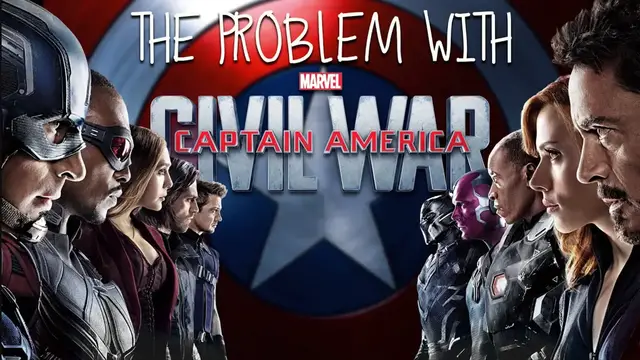
Captain America: Civil War not only changed the course of the entire MCU, but it set a new bar for superhero movies in general. Though, even with it's boundary pushing elements, Captain America: Civil War is not without it's share of problems. Whether you look at the adaptation from the comic book series, or the larger implications within the Marvel Cinematic Universe, its clear Captain America Civil War isn't a perfect movie, but it's dang close.
Show More Show Less View Video Transcript
0:00
I'm trying to keep you from tearing the Avengers apart
0:03
You did that when you signed. Captain America Civil War was a defining turning point in the trajectory of the MCU
0:09
It pits hero against hero. He's my friend. So was I. And asks a simple question
0:17
Where does individual freedom end and public safety begin? Or at least that's what it wants you to think it's about
0:24
However, there seems to be a larger problem with this film that, Even now, seven years later, no one wants to talk about
0:30
This isn't going to change what happened. I don't care. And be warned, spoilers for Civil War, both the comic and the film, are incoming
0:38
The conflict of Captain America's Civil War theoretically centers around a simple concept
0:42
Should superpowered individuals be forced to have governmental oversight? That's also the high concept of the 2006 Marvel Comics crossover Civil War that the movie is
0:52
loosely based on. In the film, we follow multiple intertwining plot threads that all coalesce around Captain America
0:58
attempting to defend his longtime friend Bucky Barnes, a.k.a. the Winter Soldier, despite his assassin past
1:04
Other forces, led by Iron Man, are attempting to bring the rogue entity
1:08
who was formerly under the control of the Soviet Union, to justice by any means necessary
1:13
This is all told against the backdrop of a push from the global community to pass what are deemed the Sokovia Accords
1:20
ostensibly a metahuman registration act. A great many people see you as heroes
1:26
There are some who would prefer the word vigilantes. Here's the thing
1:32
Captain America Civil War is a great superhero movie. It's a rollicking good time
1:36
and it initially seems like it wants to interrogate these large ideas on a deeper level
1:41
to push further than being a fun popcorn movie. But because of the requirements of making a blockbuster
1:46
they couldn't make it feel like a trial episode of Star Trek The Next Generation
1:50
So what did they do? They made the story more personal. Sometimes I want to punch you in your perfect teeth
1:56
but I don want to see you gone We need you Cap They centered it on Cap relationship with Bucky and they made the Winter Soldier a MacGuffin that everyone after The idea of the Sokovia Accords is a fascinating setup for a film
2:09
Too bad the finished picture has almost no interest in delving deeper into it
2:13
than just using the idea as texture for blink-and-you-miss-it worldbuilding. Is that how you see this
2:18
This is protection? It's internment, Tony. She's not a U.S. citizen, and they don't grant visas to weapons of mass destruction
2:24
She's a kid! Give me a break! But let's go back to 2006. The book follows the struggles of two warring factions of superheroes
2:31
who find themselves on opposite sides of a new law, the Superhuman Registration Act
2:36
You see, after a villain named Nitro accidentally blows up an entire school
2:40
killing roughly 600 people, the public discourse around the ethics of superheroics in the 616 shifts dramatically
2:47
The Registration Act requires anyone with superpowers to come forward, reveal their secret identity, receive training
2:53
and, if they choose to continue fighting crime, to work for the federal government
2:58
This law fractures the superhero community with one faction, the anti-registration crowd
3:02
receiving the required governmental oversight and employment as an infringement on their rights
3:07
The other faction, the pro-registration team, view it as a necessity to keep the public safe
3:12
However, the main through line is Captain America and his anti-registration compatriots
3:16
are on the run from Iron Man, who is taken over as the head of both the pro-registration movement
3:22
and ultimately shield itself. Congratulations, Cap. You're a criminal. As you can see, this is a very politically volatile setup
3:31
The story is deeply rooted in the post-911 ideals of safety and freedom
3:35
that America was grappling with and arguably still is. The SRA might as well be the Patriot Act for comic book characters
3:42
Our very strength invites challenge. Challenge incites conflict. and conflict breeds catastrophe
3:53
The finale of the story underscores just where America was at the time
3:57
During the climactic battle in New York City, Cap wins a one fight with Iron Man giving him the opportunity to end things once and for all But the Sentinel of Liberty is overwhelmed by local civilians The story ends with Cap idealism being tarnished and Iron Man more authoritarian outlook winning the day
4:15
aided by the will of a terrified people. It's a bleak ending that showcases how mob mentality and the fear of the unknown can drive people to vote against their best interest
4:24
that sometimes we willfully strip ourselves of inalienable rights under the promise of the ever-mercurial idea of security
4:31
How are these ideas manifested in the movie version? A central component to the underlying metaphor
4:36
is conflating individual freedoms with the right to have a secret identity
4:41
However, in the MCU, most heroes don't have secret identities. I am Iron Man
4:47
Therefore, some liberal changes needed to transpire. The film takes the perspective that we're going to follow the effect
4:53
that the heroes have had on the world, as opposed to the political temperature of the world informing or pushing the heroes
4:59
in a specific direction. Due to this, there's an emphasis placed on the civilian casualties
5:04
This is represented by both the collateral damage during Crossbones self-immolation and the bombing of the UN
5:10
The film asks to what degree are these heroes morally culpable? And yet, as previously mentioned
5:15
it's more there for a sense of world building than actually a central dynamic
5:19
The movie attempts to make these larger concepts personal and give them a face
5:24
He decided to spend his summer building sustainable housing for the poor guests where Sokovia
5:28
He wanted to make a difference, I suppose. I mean, we won't know because we dropped a building on him while we were kicking ass
5:33
The biggest sense of differentiation between the book and the movie is how the central conflict is resolved
5:39
The tagline for the book was, whose side are you on? Whereas the film slogan, united we stand, divided we fall
5:45
is more centered on the fact that there is a conflict, not actually which side should win
5:51
In the book, at the outset, both Tony and Steve have valid points, and for the majority of the story, their perspectives are valid
5:57
Towards the climax the population sides with Tony and that registration is a good thing But the book sides with Steve making the ending a dour conclusion Despite the will of the people prevailing we have chosen a darker path In the movie all that nuance is lost
6:14
There's the ultimate reveal that Bucky killed Iron Man's father and Steve knew about it but never
6:18
told Tony, thus sparking a knockdown drag out fight between the three of them in the highly
6:23
emotional finale. And while this sequence inarguably works on a character level, on a story level
6:28
it doesn't push the greater MCU anywhere new, which is what the first half of the movie is signaling
6:35
Marvel's mantra has always been, the world right outside our window. And the MCU could have brought some of that realism
6:41
into their films by holding their character accountable. Instead, they give into their base emotions
6:47
It's my fault. It's not true. Turn the TV back on. They're being very specific
6:52
In the book, both Tony and Steve were right. In their own way, they had opposing views
6:57
that were both interlaced into a vibrant political allegory. In the movie, both Tony and Steve fall prey to their lesser demons
7:04
and are wrong. Steve is blinded by his love for Bucky and is caught in a betrayal of Tony
7:10
Instead of taking the high road and turning Bucky over to the authorities, Tony chooses revenge
7:15
And therein lies the biggest problem with Civil War as a movie
7:19
It accomplished so much and plays out so many threads so expertly
7:23
you basically forget what the movie should be about. Civil War is the first time that Marvel opted to stagnate the development of their world
7:31
over the quick and easy progress of the characters. This is evidenced by how quickly the Sokovia Accords stopped mattering in the greater MCU
7:39
Making suits exclusively for superheroes necessitates anonymity. May I remind you that the Sokovia Accords have been repealed
7:45
Ultimately, Captain America Civil War is a fantastic superhero film. However, it could have been so much more than that
7:52
Civil War's ambitions are to make a great film about superheroes punching one another
7:56
And it does that flawlessly. But it could have been a great superhero film about how we progress sociologically
8:02
and how in the face of near godlike abilities, it's very hard to remain true to our collective convictions