Up next in 10



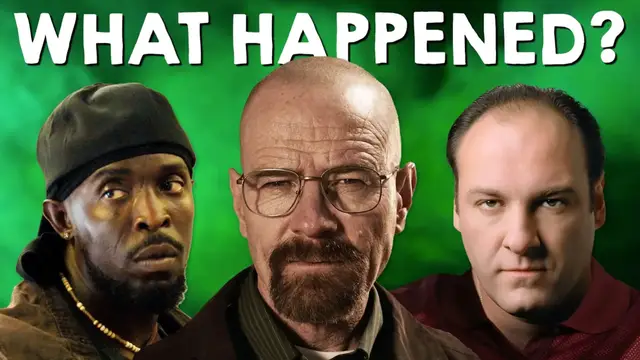
It's no secret that the Anti-Hero is not a new character type. Though for a brief period it seemed most major networks were attempting to create stories around Anti-Heroes specifically. From The Wire, The Sopranos, and Deadwood, to Breaking Bad and Mad Men, these Anti-Hero characters dominated the small screen for almost a decade. But in today's television landscape, it seems the Ani-Hero has been almost forgotten about.
Show More Show Less View Video Transcript
0:00
Whatever happened to Gary Cooper, the strong, silent type
0:04
See, what they didn't know was once they got Gary Cooper in touch with his feelings, that they wouldn't
0:08
be able to shut him up. Movements don't just pounce out of thin air
0:12
They percolate for years, often decades before they rise to the surface, boil over
0:17
and spill over our collective popular culture. While it may take a long time to happen
0:21
they often vanish much more quickly. In the case of antiheroes, what was once
0:25
a cultural phenomenon and the subject of every forced water cooler conversation has almost vanished completely from our television screens
0:33
Why am I on there? What? I've seen Judy, that's Judy! It's not you
0:39
The idea of an antihero is by no means a new storytelling device, going as far back as
0:44
myths like Robin Hood or epics like Thursitis in Homer's Odyssey. The character trope is one who runs counterclockwise to our collective idea of a hero
0:53
They were often self-serving, cowardly, weak, with a morally gray code. They appeal to a side of us that romanticizes the idea of cunning or making it on our own despite the rules
1:04
I got the shotgun. I got the briefcase. It's on the game, though, right
1:11
This mantra was embraced by the new Hollywood movement characters like Alex DeLarge from A Clockwork Orange or Travis Bickle in Taxi Driver
1:18
While movies have had more carte blanche to tell their stories due to the MPAA divvying up what was considered acceptable for adults and children
1:26
television traditionally had a thinner line to toe. The first couple shown in bed together wasn't until 1947
1:32
and the FCC strictly fined and regulated shows like NYPD Blue and Chicago Hope for airing nudity
1:38
or swearing between the hours of six and 10 when they felt more children might be watching
1:42
But then we hit the golden era of prestige cable TV shows that began in 1999 with The Sopranos
1:49
The story revolved around Italian-American crime boss Tony Soprano trying to balance his empire and family life
1:55
The show caught on very quickly thanks to its powerful performances inventive storytelling and lead in James Gandolfini Part of its unique framing was the fact that Gandolfini Tony was in therapy It made an otherwise distant figure and idea seem relatable
2:10
Despite Tony's cruelty and narcissism, he was a character who, at least on the surface
2:14
seemed to want to better himself. Mr. Soprano? Yeah. That quirk made him instantly more relatable to audiences
2:22
He was a perfect introduction for millions to the idea of an antihero
2:27
Part of its appeal was obvious. Mobster and crime family stories have done incredibly well in the US market
2:33
From films like Godfather 1 and 2 all the way to Scarface, there's an inherent love and admiration for the ruthlessness and familial bonds of these types of stories
2:42
Appealing to an ingrained sense of wonder would continue with Deadwood in 2004
2:47
If there is one thing American audiences like more than the mobster genre, it may very well be the Western
2:53
Created by David Milch, co-creator of NYPD Blue, Deadwood focused on the titular South Dakota frontier town
2:59
on the cusp of a gold rush. Nearly all the characters were what we would consider antiheroes
3:05
Most notably, though, was Ian McShane's Al Swearingen. He ruled over the town with fear and intimidation
3:10
Now, it's not for me to tell anyone in this camp what to do, much as I don't want more people getting their throats cut
3:17
But often for the town's own well-being. Over the next few years, Swearingen would become the gold standard to the question
3:23
do the ends justify the means? As consumers of stories, we adore that question
3:28
We are constantly weighing the pros and cons of given circumstances and asking how far would we go
3:34
At what cost will we draw a moral line? There has probably never been a television show
3:38
that punched that question harder than 2008's Breaking Bad. Created by former X-Files showrunner Vince Gilligan
3:44
Breaking Bad told the story of Walter White, a meager high school chemistry teacher
3:48
who turns to cooking and selling of illegal substances to make sure his family is not wrecked by medical debt
3:54
after his lung cancer diagnosis. But you know the business and I know the chemistry
4:00
I thinking maybe you and I could partner up Before the show turned into the ascent of a criminal mastermind it showed the audience how easily any one of us could turn to a life of crime
4:11
and not just out of greed, but out of a governmental service like medical care, failing
4:16
Part of the genius of Breaking Bad, thanks in part to Bryan Cranston's spellbinding turn as Walter White, was just how understandable the decisions were
4:24
While it's less likely to relate to being in the mafia or running a saloon
4:27
it's incredibly simple to understand being ill, to understand not wanting our loved ones to be in debt after our passing
4:34
It's not a stretch to say that on a limited ticking clock of life, you wouldn't try anything to take care of your family
4:40
Once that hook is in, we fall in love with the character and happily get shocked or left in awe at every stretching stride
4:47
that shows us this was probably never about White's family security as much as it was White being desperate to prove his life had value
4:55
You clearly don't know who you're talking to, so let me clue you in
4:59
I am not in danger, Skylar. I am the danger. And that quest for value is part of why antiheroes grabbed audiences by the proverbial collar
5:07
and shook us with more shows like Mad Men or Peaky Blinders
5:11
The shows became so enchanting and domineering, they formed their own era
5:15
The building of a movement that crescendoed until they all but disappeared
5:19
But how could something that was such a singular moment vanish? One easy answer is oversaturation
5:26
That answer is almost too simple, though, and doesn't really reflect the moment of ignition
5:30
or where the entertainment landscape resides currently. In 1999, when The Sopranos debuted
5:35
it was a scrappy attempt at cable to be big and loud. Unlike your local stations that were free
5:40
with a metal antenna strapped to your roof, cable cost money, and a premium channel like HBO
5:45
was more money on top of that. The Sopranos had to be so good
5:49
that you paid for channels when you already had free ones available. It was intentionally boisterous in order
5:55
to do something the heavily regulated FFC would never allow on network
5:59
F*** you, Santa! F you When Deadwood followed five years later also on HBO it went even further especially in its foul language which is said to have the F word 43 times in its opening episode This seemed a
6:12
deliberate strike from Milch, who was heavily fined before heading to the appeals court for
6:17
showing a man's butt on primetime in his tenure on the aforementioned NYPD Blue
6:22
These shows were a novelty upon their release. An hour-long family drama about the mafia or
6:28
profanity-laden Western and a good guy science teacher gone rogue that showed the ins and outs
6:33
of drug production and distribution. While the internet was still in its adolescence
6:38
the research behind Breaking Bad showed methods that you used to only really be able to pick up
6:42
from newspaper tidbits. These shows were pushing an envelope that had remained intact for decades
6:47
and now there isn't really an envelope to push. With so many streaming options
6:51
organizations like the FCC are almost infantile. The only fines folks at Netflix and Hulu really
6:57
have is lost subscriptions or dwindling views. Some of this shift away from the antihero
7:02
is also simply a cultural shift. With the world bursting at the seams
7:05
people seem wanting more and more stories about do-gooders and traditional heroes
7:09
more often than not based on a comfort meal, that warm and familiar mashed potatoes intellectual property
7:15
With so many IPs like Godzilla, Marvel, and a never-ending Star War, that comfort is never too far away
7:21
And there's nothing wrong with being wrapped in warm familiarity, but there is something missing with shows that challenge us
7:27
and demand answers to questions we're often too afraid to ask. Not to say those shows don't exist
7:32
Our flag means death has incredibly interesting views on heroics and love
7:36
And Nathan Fielder and Benny Safdie's new show, The Curse, seems intent to make us question what being a good person really is
7:43
But the moment no longer has a stranglehold like the second Golden Era did on the cultural lexicon
7:49
Maybe it's because there are just so many new shows popping up so frequently
7:53
Many directors have lamented the idea of dumping so many films on streaming
7:56
that they become content and not art. Too much of any one thing never pays off
8:01
Everyone loves mashed potatoes and gravy, but that should never be all you consume
8:06
So what, no f***ing ZD now? Hey