Up next in 10



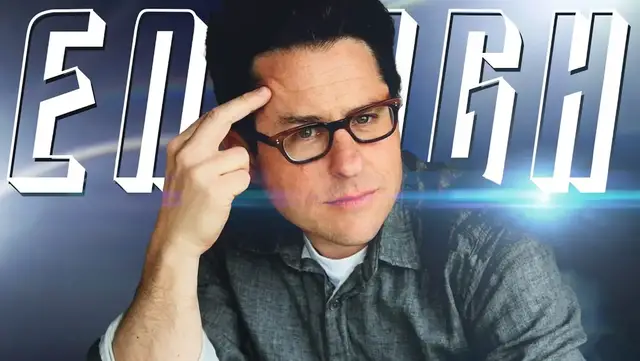
Without a doubt JJ Abrams is one of the most recognizable directors of the decade. Resurrecting franchises like Mission Impossible, Star Trek and Star Wars put the director on the map, but one famously personal touch may have gone too far...Lens Flares. JJ Abrams is now more known for his use of Lens Flares than his large body of work. But in his more recent films, it seems JJ Abrams has stepped away from the use of Lens Flares, almost entirely.
Show More Show Less View Video Transcript
0:00
What's up with the lens flares
0:04
J.J. Abrams is one of the most recognizable directors on the planet
0:10
With a long and storied career both in film and television, the man who resurrected Star Trek and Star Wars
0:16
has generated a legacy for himself that is seldomly rivaled. His bold visual style and action-oriented impulses
0:24
have seen him hailed as a visionary. And yet, there was a brief period from 2009 to 2013 where he was obsessed with lens flares
0:34
What was that about? Oh look, it's a lens flare. It's my favorite thing. Prior to being one of the most famous filmmakers on the planet, J.J. Abrams was mostly known for his TV work
0:46
Despite having written films early in his career like Regarding Henry, Forever Young, and Armageddon
0:51
it was shows like Felicity, Alias, and Lost that put Abrams on the map as a named creator
0:58
Despite having directed multiple episodes of all three series, a career directing feature films eluded Abrams
1:05
That is, until, as legend has it, Tom Cruise was watching an episode of Alias late one night
1:10
and had the idea to enlist Abrams to direct the long-gestating Mission Impossible 3
1:15
I got exactly what you asked for. Did you want something else? That film was a massive success, which opened the door to Abrams being courted by Paramount
1:24
to resurrect their other long-gestating flagship franchise, Star Trek. Initially, Abrams was reticent about taking on the project due to his lack of fandom for the material
1:34
However, during development conversations with writers Alex Kurtzman and Roberto Orsi and producer Brian Burke, the concept of how do you bring a little Star Wars into the Star Trek world was brought up
1:46
This was a concept and an aesthetic that Abrams could wrap his head around and frankly excel at You needed each other I could not deprive you of the revelation of all that you could accomplish together There are some elements of Abrams Star Trek which are decidedly cribbed directly from Star Wars
2:03
Examples include the Kirk-Luke parallels, the rapidly paced space battles, and the timeless themes of parental figures pushing a wayward youth onto a path of greatness
2:13
Despite there being an urban legend that all the odd-numbered Star Trek films are bad
2:18
Abrams' 11th voyage into the stars was approachable and applicable to your average moviegoer and longtime fans
2:26
It was a massive success. This is also the point at which Abrams came into his own as a visualist
2:32
The main stylistic element that truly set the initial Star Trek film apart
2:36
and functioned as such a calling card for Abrams as a director was its use of lens flares
2:42
For those not familiar, a lens flare is a now common piece of filmic language
2:46
that happens when light is absorbed directly by a camera lens and refracted by the lens elements
2:52
causing shapes and bursts of color to be seen in the final image
2:56
It literally is just this aesthetic thing that I like, which I absolutely am guilty of overusing
3:01
and realize that it can be insanely distracting. In generations past, lens flares were looked down upon in the filmmaking industry
3:08
They were formerly perceived as imperfections and evidence that the director didn't have enough time or money to film a sequence correctly
3:15
However, they were slowly embraced as a stylistic flourish and eventually became an exciting
3:21
way to visually spice up an otherwise bland shot. The gritty, grounded aesthetic that many films in the 1970s used, like Easy Rider, was a
3:29
major turning point in the mainstreaming of lens flares. It wasn't until Abrams took them on as a key piece of visual language for both of his
3:37
Star Trek films that they fully entered the lexicon of something that was worthy of paying
3:41
attention to The reason why Abrams and company utilized them so heavily in Star Trek 2009 and its follow Star Trek Into Darkness is because they were used to symbolize the optimistic future conceptualized by Star Trek creator Gene Roddenberry
3:56
There was this idea we had that the future was so bright that it just couldn't be contained
4:02
The camera literally couldn't contain the potential of this new world. In fact, not only did the production digitally insert lens flares into shots
4:10
but they also had multiple production staff members whose literal only job was to stand off-camera
4:16
and shine flashlights into the lenses in order to guarantee they would get the bursts and refractions they were looking for
4:22
Even the film Abrams made in between the two Trek movies, Super 8, a love letter to Steven Spielberg films
4:28
featured many lens flares, some of which had to be digitally inserted into sequences
4:33
because the scenes were shot at night and it wasn't possible to achieve in-camera flares
4:37
In many ways, Spielberg's use of flares in Close Encounters of the Third Kind
4:41
could be pointed to as the Rosetta Stone for Abrams' obsession with them
4:45
Nice flare. Nice flare. See? Isn't that better? That's better than that
4:50
That's better than that. While Abrams' other story and visual trademarks are on display in all of these three movies
4:56
it's the lens flare that sets them apart from the rest of his work. Abrams virtually owned the idea
5:01
of incorporating them into a scene for a solid half decade. It's easy to understand how a director can get fixated on a visual idea
5:09
You're literally being hired to bring a story to life. You've been paid to solve visual problems for the production
5:15
to put your visual fingerprints all over them. However, familiarity breeds contempt
5:21
Making any piece of art, especially a film, is a magic trick. And the more people see how the trick works, the less wowed they are by it
5:29
The obvious sort of joke is that I overuse lens flares. and that's sort of what I'm known for
5:33
What's impressive about this story isn the fact that Abrams found something that worked It that he stepped away from it Star Trek 09 had lens flares in practically every scene if not every shot One Count estimated 721 flares while its sequel upped that number to 826 flares And The Force Awakens
5:53
has seven in the whole film. So why did he stop using them? What pushed him away from a stylistic
5:59
trope that brought him fame, fortune, and cultural respect? Simple, because his wife shook some
6:05
sense into him. No, that's not a joke. You said that your wife told you to stop with the lens
6:10
flares. She was right. There was one scene in Star Trek Into Darkness that you literally couldn't
6:14
see what was going on. It was a very important emotional scene. Alice Eve was somewhere behind
6:20
this crazy lens flare glaring, and Abrams' wife just looked and said
6:24
Okay, I think this is it. At this point, you have to absolutely stop doing that
6:28
While rapid storytelling, witty dialogue, and an emphasis on movement have always been a trademark
6:34
of Abrams' theatrical style, the fact that Lens Flares took over his filmmaking vocabulary
6:39
and cemented itself into the popular consciousness enough that Stephen Colbert asked about it on air
6:44
is a testament to how iconic a storyteller Abrams truly is. Very few people working in the film industry
6:51
are associated with a mechanical part of the filmmaking process. The list is basically John Woo with slow-mo
6:59
the Wachowskis with bullet time, and Christopher Nolan with the sound. Even fewer filmmakers are asked about it publicly when they stop embracing that storytelling trope
7:09
Today, we're living in a post-Lens Flare world, or at least JJ's post-Lens Flare era
7:15
What does the future hold for cinema's golden boy? Now that Abrams is out from under the stylistic template of Star Trek and Star Wars
7:23
he has a genuine opportunity to redefine his visual voice. Fingers crossed that Abrams' knack for reinvention doesn't stop at beloved franchises
7:32
and can extend to himself
#Film & TV Industry
#Movies