Up next in 10



Modern medicine has seen more development in the past 50 years than in all of human history combined. Many long-practiced medical treatments now seem completely bizarre in retrospect - things like putting animal dung on a wound, drinking urine, carving holes in your skull, or drinking medicinal potions made of morphine or mercury. But which practices are considered the most peculiar from all of human medical history? Which practices were once used as medicinal treatments only to be later found incredibly dangerous?
Show More Show Less View Video Transcript
0:00
Modern medicine has seen more development in the past 50 years than throughout all of human history combined
0:06
That being the case, many long-practiced treatments now seem pretty strange in retrospect
0:12
like the kind of thing that would cost you your medical license. So, today we're going to take a look at bizarre medical practices from history that sound made up, but aren't
0:23
Time to play doctor. Nothing says best medical practices like putting dead mice in your mouth
0:35
Okay, maybe not. But when it came to dentistry, the ancient Egyptians sure thought it did
0:40
They would blend remains of mice with other compounds to ease tooth pain
0:44
And you thought a root c was unpleasant. Wait, how did they do root cs
0:49
With a rat? The use of dead mice in medicine didn't go out with the pharaohs
0:54
In the time of Elizabeth I, the English cured their warts by cutting a mouse in half and
0:59
applying it to the growths. OK, that actually sounds like how you would get warts
1:04
Bits of expired mice were also used to treat whooping cough, smallpox measles, and even bedwetting
1:14
A common 1950s medical practice involved intentionally infecting syphilis patients with malaria
1:22
To modern ears, this might sound like a terrible idea that risked exposing patients to any number
1:27
of dangerous side effects. Because it was. The theory at the time was that the fever produced by the malaria virus would kill off the syphilis
1:35
and that the malaria virus would then be cleared up through some other treatment. And although the injected malaria virus did have positive results in eliminating the syphilis virus
1:44
it also caused, you know, malaria. Patients suffered intense fever attacks for weeks and had long-standing side effects that could last for decades
1:53
So as a treatment, it was, at best, kind of a mixed bag. Virtually everything has a patron saint, including, and we're being totally serious here
2:06
painful hemorrhoids. The patron saint of hemorrhoids may sound like a guy you'd meet at an
2:11
airport Chili's, but it was actually the canonized Irish monk Saint Fiacre. It was once believed that
2:18
if a person didn't pray to Saint Fiacre, they would suffer from hemorrhoids, which is a powerful
2:24
incentive to get your kids to say their prayers. And if the threat of hemorrhoids didn't get you
2:29
praying, then the cure for hemorrhoids certainly would. Because if a person chose not to pray to
2:35
Saint-Fiacre and came down with hemorrhoids, they were sent off to the monks who would cure the
2:40
ailments with a red-hot iron. Alternatively, the patient could sit on Saint-Fiacre's famous rock
2:46
the spot where the 7th century monk was miraculously cured of his own hemorrhoids
2:51
We imagine most patients opted for the rock over a red-hot poker, but it was medieval times. That
2:57
Rock may have been covered with red pokers Later treatments like soaking in a hot bath were far more effective and far less painful Long before the miracle of Botox 19th century doctors were using paraffin wax injections to
3:16
smooth out unsightly wrinkles. The wax was also used in breast augmentation procedures
3:22
It's also used to make candles and crayons, but nobody cares about coloring in the dark when
3:26
there's boobs to be inflated. There was, however, a downside. Wax hardens
3:31
And in this case, the paraffin would harden into thick, painful lumps known as paraffinomas
3:37
These injections were quickly abandoned once it became widely known that they caused granuloma
3:42
formations and embolization, which is the blocking of blood vessels. Eh, sounds like a small price to pay for a wrinkle-free smile
3:49
Mercury was an extremely popular medical treatment from ancient times until fairly recently
4:00
possibly because of how mysterious and cool it looks. The ancient Persians and Greeks used it as an ointment, and 2nd century Chinese alchemists
4:09
prized liquid mercury for its supposed ability to increase lifespan and vitality
4:14
Some healers even promised that by consuming mercury, sulfur, and arsenic, one could gain eternal life and the ability to walk on water
4:22
In actuality, mercury and arsenic are so toxic that they're often referred to by scientists as turbo poisonous
4:29
Citation needed. Needless to say, consuming mercury, sulfur, and arsenic is much more likely to lead to an extremely painful demise
4:37
rather than give you the ability to jog across the ocean. Even in more modern times, mercury was still being used
4:43
to treat sexually transmitted diseases like syphilis. But again, it was more often killing those it was used on than curing them
4:50
which I guess technically does cure the syphilis. The discovery of radium made Marie and Pierre Curie household names
5:03
and led to an expansive industry of radium-infused glowing products. Probable slogan, they glow because they're radioactive
5:11
Unfortunately, radium was also used in several questionable medicines. because if it glows in the dark, it must be good for you
5:19
One advertisement even touted the benefits of preparing radioactive drinking water at home
5:24
to cure various ailments. Marie Curie herself died from exposure to radiation in 1934
5:30
so it's probably best to keep radium out of the medicine cabinet
5:39
One treatment for mental illness that became popular in the 1930s was the lobotomy
5:44
which is the removal of parts of the brain in order to curb depressive symptoms
5:49
Even at the time, lobotomizing was acknowledged as a dangerous procedure that often left patients with a permanent disability
5:55
It also negatively affected their ability to function in society, their memories, and their personalities
6:01
But despite the well-known risks, approximately 50 people were lobotomized in the U often without their consent The procedure declined in popularity as electroconvulsive therapy and psychiatric medication became more widely practiced
6:16
Jack Nicholson's performance in One Flew Over the Cuckoo's Nest probably didn't hurt either
6:25
Fad diets are rarely a good idea, but some are worse than others
6:30
For example, the tapeworm diet was an early 20th century weight loss method that relied on the not exact science of deliberately
6:38
ingesting a tapeworm. It sounds like an easy way to shed those excess pounds, but the truth is
6:44
most tapeworm species actually have horrific effects on the human body, apart from stealing
6:49
all the food you eat. Many who participated in this diet wound up suffering from malnutrition
6:55
nausea, vomiting, diarrhea, anemia, and the wish that they would have just joined Planet Fitness
7:03
Before the dangers of smoking were well known, or at least disclosed to the public
7:11
there were numerous ads touting the health benefits of cigarettes. Some even included endorsements from doctors
7:17
who would promote a particular brand's positive aspects. Because when the Marlboro man hands you a big sack of money
7:23
you start telling people cigarettes will cure baldness and let you see in the dark
7:28
During the 19th and early 20th century, Smoking was even suggested as a therapy for asthma, of all things
7:40
Believe it or not, the bacteria in poop can have a medicinal effect
7:44
That being said, it can also cause tetanus. So maybe think twice before writing yourself a prescription to Chairman Meow's litter box
7:52
Animal waste was a common curative for various injuries, even as late as the 19th century
7:57
One Victorian remedy to ease a sore throat included dried dog biscuits, not the kind
8:02
you find in a box. And the ancient Egyptians used the poo from a donkey, crocodile, dog, gazelle, or fly
8:08
for numerous medicinal purposes. Medicine back in the medieval era was guided just as much by astrological superstitions
8:20
as it was by medical knowledge. Medical astrologers were so revered that many thought they were real-life magicians
8:27
Doctors would refer to special calendars containing star charts with different labeling to aid with diagnoses
8:33
For example, body parts were assigned signs of the zodiac, and organs were assigned planets
8:39
So, Doc, I think my Jupiter is inflamed, would be a common complaint
8:44
After the patient's star chart was examined and compared to the current positions of the stars
8:49
their ailment could be diagnosed and treated. These days, if the doctor has you fill out a star chart before your appointment
8:55
You should turn around and see if your Uber driver is left yet. Since the Middle Ages, enemas have been a popular treatment
9:07
for intestinal issues. Back then they were performed using a device called a clister which was a long metal tube with a cup on the end Like the world worst beer bong The tube would be pushed into the body through the anus and a medicinal fluid
9:22
would be poured into the cup and then pumped into the colon. One of the most common fluids
9:27
used in the clister was a concoction of boar's bile, thought to have beneficial effects
9:32
Other fluids included herbs, opium, oxygen, tobacco, and turpentine. Nothing cures what
9:38
you like butt-chugging turpentine. King Louis XIV of France is said to have had over 2,000 enemas
9:45
during his reign, so we're guessing he liked them. Some were even administered as he sat on his throne
9:51
so if you ever tour the Palace of Versailles, maybe don't sit on that chair
10:00
The modern science of anesthesia is fairly new, having only become common practice over the last
10:05
150 years. Before that, doctors would use a range of other medical treatments to induce sleep before
10:11
an operation, you know, like a hammer. One popular method was something called DWAIL
10:17
an herbal anesthetic made from seven ingredients, bile, lettuce, vinegar, briny root, hemlock
10:23
opium, and henbane. Some of these ingredients are harmless, but others are incredibly lethal
10:30
Mixing them incorrectly could put a patient to sleep permanently, which made the act of
10:35
anesthetizing almost as dangerous as the surgery itself. Nevertheless, Dwayle was a popular anesthetic
10:42
from the 12th to 15th century and even made an appearance in Hamlet
10:51
There's no more homemade medicine than the water from your own canteen, so to speak
10:57
Human urine has been used for a variety of medical purposes, including curative treatments and as an antiseptic
11:04
Romans are said to have used it to whiten their teeth, which hard pass
11:09
King Henry VIII's surgeon recommended that all battle wounds should be washed in urine
11:14
And later, it was used to treat sores caused by the bubonic plague. And we saw how well that worked
11:19
Urine is popularly believed to be sterile, even today. But scientific evidence shows that is not the case
11:26
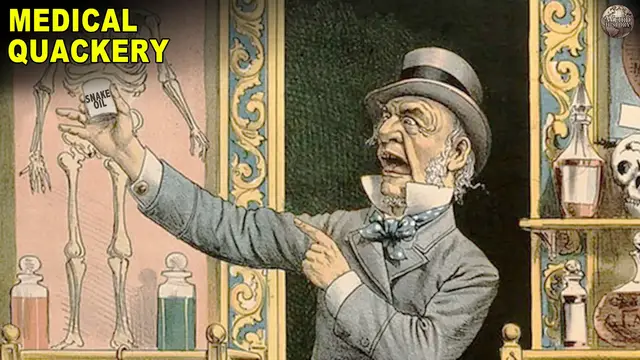
You're better off just buying some antiseptic at a local pharmacy. You ever wonder why con artists and liars are often referred to as snake oil salesmen
11:40
Well, the term refers to the oil derived from the Chinese water snake, which was used in
11:45
traditional Chinese medicine to relieve joint pain from arthritis and bursitis. It was brought to America by Chinese laborers working on the transcontinental railroad
11:54
This was back-breaking work, and the laborers would rub the oil on their aching joints for relief
12:00
Interestingly, despite its negative connotation as a slang term for conmen, there is some science behind the medicinal properties of snake oil
12:08
Snakes are a rich source of EPA and omega-3 fatty acid with anti-inflammatory properties
12:14
So the next time your arthritis starts acting up, reach for the nearest bottle of King Cobra
12:20
That's snake oil, right