Up next in 10



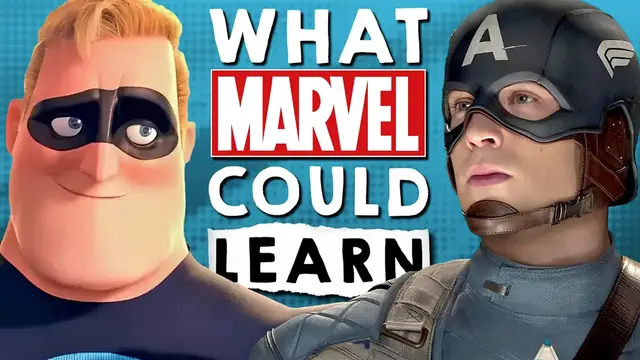
The Incredibles is undeniably one of Pixar’s best films. It also holds the distinction of being one of the greatest superhero movies ever produced. In a world where the superhero landscape is now dominated by the MCU and DCEU, it's hard to distinguish what came before the tidal wave of superhero content. In an era where both the Marvel and DC Cinematic Universes are struggling, perhaps it's time to take a look back at what made The Incredibles work so well for Pixar.
Show More Show Less View Video Transcript
0:00
I don't know what'll happen
0:01
Hey, we're superheroes. What could happen? This is The Incredibles. It's undeniably one of Pixar's best films
0:10
It also holds the distinction of being one of the greatest superhero movies ever produced
0:14
In an era where both the Marvel and DC Cinematic Universes are struggling, there's got to be
0:18
something that we can learn reevaluating this landmark cinematic achievement, right? Everyone can be super
0:26
And when everyone's super, no one will be. Brad Bird's The Incredibles tells the story of a family on the brink of falling apart
0:35
who reconnect over the shared trials of becoming a super teen. The movie is bold and visually stylized
0:40
It has a perspective on a narrative level that feels like it comes from an individual
0:45
instead of a script written by committee. This is something that the MCU has struggled with
0:49
often being accused of having a cookie-cutter approach to character and story
0:52
The idea was to bring together a group of remarkable people. In the case of The Incredibles, there are specific lessons that can be drawn and adapted into the MCU's toolkit
1:03
Your characters should have thematic resonance. Look at how Byrd structured the main cast of The Incredibles
1:08
Each character in the family has powers that reflect where they're at in life and how they relate to the family as a whole
1:14
Elastigirl, a.k.a. Helen Parr, has the ability to stretch and bend in inhuman ways
1:20
mirroring the idea that she's the member of the family that is constantly stretching herself across social and logistical gulfs
1:26
in order to make everyone happy. Her teenage daughter, Violet Parr, is struggling with self-image and developing confidence
1:32
and she literally is invisible, struggling to be seen by those around her
1:36
and experience that almost every teenager goes through. Dash is a hyperactive and impulsive little kid
1:41
thus he has super speed. Get where this is going. The through lines of their characters
1:45
are represented physically in mind for drama. That was totally wicked The MCU on the other hand has been known to do this sometimes The original Avengers has very well roles Cap and Tony are at opposite ends of the powers and ideological spectrum
2:01
where the other members of the team fit into fairly clearly defined roles. The Guardians of the Galaxy are also a loose adopted family
2:07
or even the way Black Panther's family is depicted fits the thematic underpinning
2:11
They're a real family attempting to sort out how to be a royal family
2:15
But in later phases of the MCU, how does Shang-Chi and his supporting cast of the broader relationships of the Eternals
2:22
develop the idea of a family? They're clumsy and ill-defined. Many of the later MCU character
2:27
hierarchies feel stale and strained. So how does Marvel cover this up? Every character quips
2:33
every character. I understood that reference. In this bouncy dialogue-driven tone that started
2:38
with Robert Downey Jr. improvising most of his lines on the original Iron Man
2:42
if you douse me again and I'm not on fire, I'm donating you to City College. and then eventually crescendoed into its apex with Joss Whedon's dialogue in the initial Avengers film
2:51
When did you become an expert in thermonuclear astrophysics? Last night. This tone defined much of the early success of the MCU
2:58
However, as things rapidly evolved, Marvel didn't do what the Incredibles did so well
3:04
made sure everyone has their own voice. Things aren't so bad. Food's a lot better
3:08
We used to boil everything. No polio's good. Internet, so healthy. The Guardians of the Galaxy is actually a very well-structured comedic ensemble
3:16
that functions much like The Incredibles. Drax not understanding metaphor. His people are completely literal
3:22
Metaphors are gonna go over his head. Nothing goes over my head. My reflexes are too fast
3:27
Groot only having one thing he can say. I am... Well, that's just as fascinating as the first 89 times you told me that
3:35
And Rocket being angry all the time worked well when played against Peter Quill's quippy Han Solo
3:42
It's a fake laugh." It's real! Totally fake his deadpan alien girlfriend I gonna die surrounded by the biggest idiots in the galaxy Each of them have very distinct modes of character expression which allow for real growth and evolution as the franchise evolved
3:58
They feel more like an adoptive family because of their differences. Ant-Man
4:02
He jokes around in just about the same way as War Machine, Korg, and basically every other MCU character does
4:12
Oh man, I thought it was a water truck. Uh, sorry. Marvel Studios hit it out of the park with Tony Stark
4:19
That's undeniable. But since then, many of their characters have suffered from Tony Stark banter syndrome
4:25
Speaking of syndrome... You got me monologuing! I can't believe it! The archetype of a former sidekick gone bad isn't exactly a new idea
4:35
but the Incredibles execute this idea in such a wonderful and exciting way
4:39
I was wrong to treat you that way. I'm sorry. See? Now you respect me
4:44
Because I'm a threat. Syndrome's island base is inspired by the work of James Bond production designer Ken Adam
4:50
The large, foreboding angles and murky, brutalist interiors give him a sense of majesty as a
4:55
villain that wouldn't have been achievable without his level of thought and attention
4:59
to design. Similarly, as showcased in the Island Guards and Dash chase sequence, Bird and crew are
5:04
pulling from influences as disparate as Silver Age Flash comic books and the intro sequence
5:09
of Johnny Quest. Everything about The Incredibles is filtered through an unabashed love of 60s spy movies like Dr. No
5:17
but it's the juxtaposition of these visuals against the traditional superhero aesthetics
5:21
that make the whole thing work, and the emphasis on weakness and failure
5:25
In almost every fight scene or challenge that the characters go through, they struggle and succeed just barely
5:31
and many of their flaws are expressed and detailed in these struggles. Whatever happened to ladies first
5:36
Well, whenever happened to equal treatment? Hey, look, wait, the lady got me first
5:40
In most big budget superhero fare they just don make time to express these vulnerabilities or attempt to combine a traditional superhero aesthetic with anything other than the power fantasy that we all expecting to see on screen
5:53
The MCU needs more outlandish visuals, or at least unconventional sources of inspiration
5:59
When this happens, it's great. Take, for example, Thor Ragnarok. One of the most successful films of Phase 3 really leaned into the idea of drawing influence
6:07
from Jack Kirby's work, and also from the seminal 1980 Flash Gordon adaptation
6:12
The visuals of this helped propel the film into a new era of success
6:16
It feels new and fresh. Now, look at the character designs in Winter Soldier
6:20
The Russo brothers prefer a militarized, down-to-earth aesthetic. Cap's uniform in Winter Soldier
6:25
is basically just a black tech suit. You take that helmet and shield away
6:29
and does he even read as Cap? Compared to him in the first Avengers film
6:33
where his uniform is bright and very comics referential, it's a stark contrast
6:37
You gonna wear that? No. If you're gonna fight a war, you gotta wear a uniform. Why are these choices being made
6:43
Because Marvel is constantly attempting to smuggle big, out-of-left-field ideas into the corporately controlled mainstream
6:49
And thus, they feel it's necessary to provide a visual guardrail for the average moviegoer
6:55
But back to The Incredibles, Brad Bird didn't do that in the slightest
6:58
An animated feature film starring human characters with the twin leads being in their 40s
7:03
and struggling with real-world issues is not what the animation industry wanted then
7:08
and it's definitely not what it wants now. However, they leaned into that
7:11
and found a way to make those issues relatable, and they made it feel fresh by pulling on influences
7:16
that none of the movie-going public was aware of. That's what the MCU needs to do
7:21
in order to regain its spot at the top of Mount Hollywood. Be visually inventive
7:26
draw from unusual sources of inspiration, and place the emphasis on the uniqueness of a character
7:31
The highest point that the studio has reached are when they do just that. What are you waiting for
7:37
I don't know. Something amazing, I guess
#Movies
#Animated Films
#Family Films