Up next in 10


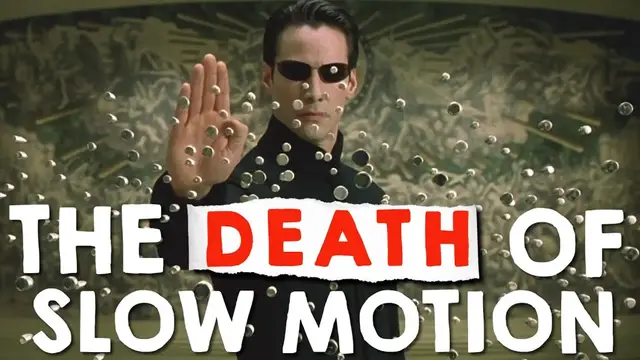
Slow Motion in film used to be intentional, powerful, and story driven. Slow Motion was meant to shine light on emotion and impact for certain sequences. Though, in today's filmic landscape, Slow Motion has become more a gimmick than a story telling device. Whether it's every Matrix Ripoff attempting bullet time, or most of the Zack Snyder led DCEU, Slow Motion has inflated run times, and caused a slow death to an effect that used to mean something.
Show More Show Less View Video Transcript
0:00
Here's an example of how slow motion is used in modern action storytelling
0:06
And here's an example of the same type of action shot at standard speed
0:13
Despite the exciting choreography, slow motion inarguably makes the sequence more dramatic
0:18
It's the most widely used technique in a contemporary director's arsenal. It creates
0:23
an instant sense of importance in the mind of the viewer. And yet, it's so omnipresent in big
0:28
budget action movies, it's almost lost all its potency, despite being more popular than ever
0:33
Is slow motion dead? There's footage of us walking out of the mall in slow motion, fire behind us. It's like heroes
0:41
Katie, that would be a waste of time and absolutely unnecessary. In the early days of the invention of filmmaking, it was discovered that 24 still images shot in
0:49
rapid succession could trick the eye into perceiving these separate images as a singular
0:54
constantly moving picture, a motion picture. The primary reason for this is that our brains can
0:59
only process images so quickly as disparate and separate entities before it blurs into a single
1:05
combined visual. This phenomenon is called persistence of vision. Essentially, everything about the filmmaking process and industry revolve around this core principle. As such
1:15
in the beginning stages of the filmmaking world, various artists and would-be industry types were
1:20
experimenting with what would happen to the image when you over-cranked the film running through
1:24
the camera or under-cranked it, meaning running film faster or slower through the exposure or
1:29
projection process. Most of the original motion picture cameras had literal hand-cranking devices
1:35
The original version of what we think of today as slow motion was invented by over-cranking film
1:39
through a camera by the Austrian physicist and priest August Musker. He first got the idea to
1:45
experiment with projection speeds when he was going to the movies and as the film wore on the projectionist would get tired and the projection speed would slow making the film jittery and hard to discern As hard as it is to imagine the projection was also hand
1:58
Thus, Musker decided to try and record more frames per second, thus solving this problem
2:03
However, instead, he accidentally created what we now call slow motion. He created a mechanism where the more frames shot per second
2:11
the slower the time is represented on film. What's happening? It's slow motion
2:19
From here, the use of slow motion becomes exponentially more common. Filmmakers such as Sergei Eisenstein and Akira Kurosawa
2:26
both use the slowing down and speeding up of time in their movies, such as Battleship Potemkin and Seven Samurai
2:32
to achieve emotional effects on the audience. To say nothing of the effects of how slow motion was utilized
2:37
throughout many 1950s and 60s monster movies to make scale models and actors wearing suits
2:42
feel like massive creatures from beyond our earthly comprehension. As the gritty aesthetic of the 1970s took over
2:48
thanks to the new Hollywood movement, slow motion somewhat fell out of favor. I'm going to execute a button-hook pattern super slow-mo
3:00
However, by the end of the next decade, it would be back with Augusto
3:04
thanks largely to one filmmaker in Hong Kong, John Woo. Because of his films A Better Tomorrow, The Killer, and Hard Boiled
3:10
slow motion's use was cemented in the minds of global audiences everywhere
3:15
Wu would transition into Hollywood blockbusters, but it would be his influence on a generation of other directors
3:20
with his original Hong Kong films that would truly leave a lasting impact
3:26
Buenos dias, children. Take, for instance, the way Wu directs the climactic battle in The Killer
3:31
or the warehouse shootout in Hard Boiled, or, of course, his love of slow motion coupled with shots of doves flying through the air
3:37
It would be Wu's dominance over the 1990s that would almost single revitalize the use of slow motion However it would be the next two culprits that would fully transform the visual language of film forever 1999 saw the release of The Matrix a genre
3:56
sci-fi epic that took elements of cyberpunk, anime, and John Woo's love of slow motion
4:01
mixed them all together, and propelled the medium of film into the 21st century
4:06
You remember this shot, right? The shot that changed movies forever? Well, originally
4:10
the film's directors, the Wachowskis, were debating strapping a camera that shot hundreds
4:14
of frames per second to a rocket in order to capture the feeling of being freed from space
4:19
and time. But that didn't work. What we really like about slow motion is that it sort of brings
4:25
some of that quality to action scenes. So what they did, thanks to the involvement of a technical
4:30
genius named John Gaeta, was they synchronized hundreds of still image cameras together with a
4:35
computer, thus allowing each camera to capture a single moment, and when connected together
4:41
presto chango, persistence of vision takes over, and you have rapid movement through space
4:46
with a little digital augmentation and cutting-edge green screen technology added for good measure
4:51
This moment was a massive turning point because it wasn't just artifice for artifice's sake
4:55
The visual effect was integrated into the film's story, making it that much more important
5:00
Neo is realizing he's meant for something more, and that the Matrix can be bent and warped
5:05
This triggers the bullet time mechanic. It's not just a cool effect. It's something linked directly to the plot and the characters
5:11
It's a character making a choice that warps the visual language of the story. It's the logical evolution of John Woo's love of warping time
5:18
to showcase how cool and impenetrable Chow Yun-fat is. After The Matrix is released, slow motion became near omnipresent
5:32
You practically can watch a big budget movie without some version of slow motion and bullet time creeping in Perfect example the biggest and most popular movies on Earth It used practically throughout the entire MCU climaxing with the Avengers films
5:45
They all have numerous examples of slow motion. Or perhaps the currently reigning king of slow-mo
5:50
Zack Snyder. From Dawn of the Dead to 300 to Watchmen, all the way through the remade Justice
5:54
League, Zack Snyder has taken the idea of slowed down balletic hyperviolence and milked it for
6:00
every dime it was worth. The Zack Snyder cut was a runtime of four hours and two minutes
6:04
How much of that do you think is just the slow motion? Tragically, it's only 24 minutes
6:10
IGN did the math, but even so, 24 minutes of slow motion, whereas most films only have mere minutes
6:16
Is Zack Snyder a man who has the ability to create iconic and indelible images
6:20
Yes, absolutely. But also, maybe let's not make a movie with 24 minutes of slow motion in it
6:26
It's like I've been in a dream where I was somehow really invested
6:31
in the Zack Snyder cut of Justice League. going to the movies has gotten more expensive
6:36
The types of movies that get made have been shrinking, and the only solution that these studios and filmmakers have
6:42
is to just try more of the same and pray it works out. The last four DC movies have all bombed
6:47
and the public opinion on the MCU is souring. Could this be in part due to the fact that there's no diversity
6:53
in what's being made these days? Sure, but there's also the simple fact that the way these films are shot
6:59
is all extremely similar. You know what movie had zero gratuitous speed ramp pseudo bullet time slow motion in it
7:05
Barbie. It has a visual identity all its own. And when one of these IP movies isn't shot like that
7:10
it's the highest grossing movie in Warner Brothers history. Slow motion is a tool
7:14
It's perfectly acceptable when used in an interesting original way. However, for the past two decades, it's basically been being used the exact same way
7:23
To mimic the Matrix. To slow down and expand time. to attempt to place dramatic importance on a moment when a character is doing something cool
7:30
We've been there. Done that. Slow motion is dead