Up next in 10



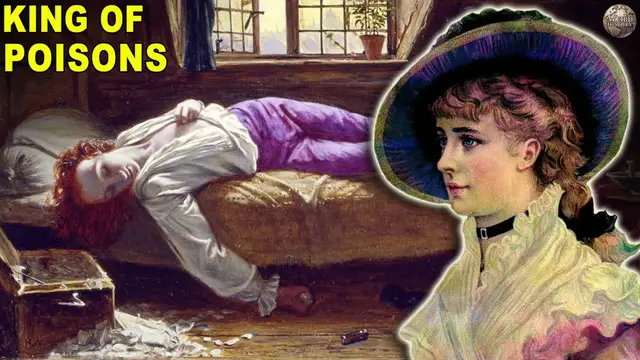
Arsenic: it’s been called the “king of poisons” and the “poison of kings.” And for good reason – it has a lengthy, storied history, one full of mysterious poisoners and sometimes less-than-sympathetic victims. It's been a tool for thousands of years, used to kill countless people by shutting down their cells; a pea-sized amount of the stuff is enough to cause excruciating death.
Show More Show Less View Video Transcript
0:00
Arsenic has a storied history, full of mysterious poisoners and sometimes less than sympathetic victims
0:07
In everyday life, it served as rat poison, medicine, makeup, and more
0:12
But for thousands of years, it's also been used to bring an excruciating death to countless people
0:18
So, today, we're going to take a look at arsenic, the most weaponized poison in world history
0:30
Arsenic has a very long history. Since the time of the Romans, it has been used to settle old scores, knock off spouses
0:38
and execute criminals. In fact, way back in 82 BCE, Lucius Cornelius Sulla issued what was most likely the first
0:47
law against poisoning, the Lex Cornelia. While arsenic has been a known poison from as early as the 4th century BCE, it wasn't
0:55
identified as an element until 1250, when the German scholar Albertus Magnus codified it
1:01
With such a long and bloody history, arsenic is considered the king of poisons, and it's been used
1:06
to kill royalty, making it the poison of kings as well. Arsenic poisoning was popular for several
1:12
reasons, but chief among them was that it left very little trace. The symptoms of arsenic poisoning
1:17
vomiting and diarrhea, were easily mistaken for other common diseases, such as food poisoning or
1:23
cholera. Arsenic could both be used to kill quickly or slowly, using minuscule amounts of
1:29
arsenic over a period of months until it built up in the victim's system and shut down their organs
1:34
In fact, a pea-sized amount was all it took. It was also odorless and tasteless, so it was very
1:40
easy to conceal in food or wine. As a London newspaper reported in 1855, if you feel a deadly
1:47
sensation within and grow gradually weaker, how do you know you are not poisoned? Arsenic was
1:53
a silent killer, and it was usually used by people very close to the victim. A wife, a son
1:58
eager to acquire his inheritance, or even a disgruntled servant. Yeah, sometimes the butler
2:04
really did do it. The Borgias are famous for many reasons. Take Alexander VI, who lived from 1431 to
2:17
1503 and was known as the Borgia Pope. He wasn't one of those popes who was big on celibacy
2:23
so he fathered a few children and then spent his life ruthlessly propelling them to power
2:28
He married off his daughter Lucrezia multiple times, while pushing his son Cesare to build the family's wealth and legacy
2:34
In addition to being famous for having a pope as the patriarch, the Borgias were also known for poisoning people, which became known as the gift of the Borgias
2:43
The Borgias' favorite delivery method was arsenic in wine. When their victims died church law dictated the ownership of their property reverted to the church which coincidentally was run by the Borgias But when Alexander VI accidentally drank poisoned wine himself and died the family fortunes quickly fell
3:02
Oopsie daisy. They say necessity is the mother of invention, and historically speaking, there have been countless women who
3:14
instead of hiring a divorce lawyer, felt it very necessary to rid themselves of their husbands
3:20
Accordingly, Giulia Tofana invented a mysterious poison in 17th century Italy called acqua tofana
3:26
also known as the inheritance poison. The concoction was disguised as a bottle of makeup
3:32
and women bought the arsenic-laced potion to help them escape marriages. In those years, murder was sometimes the only way
3:39
to escape your husband. Just a few drops of the poison could kill
3:43
without leaving a trace. and as many as 600 people died as a result of Tofana's potion
3:48
In 1659, one of Tofana's customers was caught, and the investigation ultimately led back to Tofana
3:55
She was executed, along with her daughter and several accomplices. Arsenic was pretty popular in the 1800s
4:06
So popular, in fact, it is believed that a third of all criminal cases
4:10
of poisoning from that era involved arsenic. It's easy to believe because back then, arsenic was available in any chemist's shop
4:18
sold as a rat poison, and was relatively inexpensive. Its popularity led to a wave
4:22
of high-profile trials for arsenic poisoning, most of which accused women. For example
4:28
in 1840, a French aristocrat named Marie Lafarge was put on trial for murder after her husband
4:35
Charles Lafarge, died under mysterious circumstances. Marie was an orphan, forced into marriage by her relatives. Charles mistreated Marie during their time together
4:45
and only after a few months, he began having spells of vomiting and diarrhea. After his death
4:50
his family accused Marie of murder. A toxicologist testified that there was arsenic in Charles' body
4:56
and Marie was convicted and sentenced to hard labor for life. During the 19th century
5:01
arsenic was available everywhere, and it was very inexpensive. A cartoon in Punch magazine made that
5:07
point in 1849 by showing a small child asking a chemist for arsenic. In the caption, she says
5:13
please, mister, will you be so good as to let mother have another pound and a half of arsenic
5:16
for the rats? See, the joke is that amount could easily kill thousands of people
5:21
You kind of had to be there. The chemist's shop announces on a sign, all sorts of poisons
5:26
constantly on sale, which puts a whole new twist on Black Friday shopping. It's no wonder that in
5:31
1851, the House of Lords in England tried to pass a law making it illegal for women to buy arsenic
5:43
In 1908 China emperor was murdered Guangzhou was the second to last emperor of the Qing dynasty and he was only 38 years old at the time of his death
5:52
Despite many suspecting foul play, Guangzhou's death was officially listed as the result of natural causes
5:59
However, in 2008, researchers used modern toxicology methods to uncover the real source of Guangzhou's death
6:06
He was poisoned with arsenic. Dum-dum-dum! An ysis of his hair found an arsenic content 2400 times higher than normal
6:15
In other words, clear evidence of foul play. The emperor may have been murdered by his own aunt, the Empress Dowager Sushi
6:22
who clashed with Guangzhou over political differences. One Qing court official reported seeing a eunuch carrying a bowl of yogurt from the Empress Dowager's room
6:31
and giving it to the emperor. Two hours later, Guangzhou was dead
6:35
And that's why I never trust a eunuch carrying a bowl. For centuries, arsenic allowed people to commit murder and get away with it because no one knew
6:43
how to treat arsenic poisoning or tell if arsenic was the cause of death. Before the 20th century
6:49
doctors used lots of different substances to try and induce vomiting in the afflicted
6:53
hoping it would clear the poison from their systems. They also applied leeches to their
6:58
patients' stomachs. As for how to tell if someone died of arsenic poisoning, one running theory
7:03
held that if you tossed a victim's stomach contents into a fire and they smelled like garlic
7:08
It was arsenic. Most of the time, it was just garlic. However, the poisoning party couldn't last forever
7:14
And in 1836, English chemist James Marsh perfected a chemical test that could reveal the presence
7:20
of arsenic. Suddenly, people couldn't get away with using arsenic to poison their victims
7:25
But despite the innovation, some poisoners still risked it. In 1916, Arthur Warren Waite used arsenic to kill his father-in-law after successfully
7:35
murdering his mother-in-law with diphtheria germs. When the same germ warfare tactics failed against his father-in-law
7:41
a fed-up weight turned to arsenic. Unfortunately for him, the poison was detected by police
7:47
and weight was sent to the electric chair in 1917. These days, arsenic is mainly famous for being a poison
7:58
but that wasn't always the case. It was also once marketed as a way for women to beautify themselves
8:04
In the 19th century, women used arsenic powder to whiten their skin
8:08
It literally destroyed their red blood vessels, giving women the coveted pale, almost dead
8:13
look first popularized in Victorian times and still pretty chic among goths
8:18
It could cause capillary damage in the skin as well, which gave some a desirable, rosy-cheeked look
8:24
According to an 1896 ad for Dr. Campbell's Safe Arsenic Complexion Wafers, rubbing arsenic
8:30
on your face would transform you into a lovely creature and an object of worship The wafers purported to remove pimples freckles and tans and give skin radiant health That is if you survive the side effects
8:47
While sensational tales of people murdered with arsenic flourished in the 19th century
8:52
the poison wasn't just used to kill. In the mid-1800s, mountaineers in Austria consumed
8:58
arsenic on a regular basis. They considered it to be a stimulant and a tonic, and the group became
9:03
appropriately known as arsenic eaters. Did they eat arsenic to build up a tolerance against
9:08
poisoning? Perhaps, but more likely, it was a case of believing arsenic would protect them from other
9:13
diseases. And in case you're wondering or planning, it is possible to build up a tolerance to arsenic
9:19
but only to a very modest degree. Arsenic used to be an ingredient in European paints
9:24
American author and socialite Claire Booth Luce found that out the hard way in the 1950s
9:30
when she was the ambassador to Italy. Luce was the first American woman appointed to a major
9:35
ambassadorship abroad when President Eisenhower selected her as the ambassador to Italy in 1953
9:41
Unfortunately, Luce suffered from a case of arsenic poisoning. The culprit wasn't a resurrected
9:47
Borgia-style assassin, though that does sound like it would make a great plot for a movie
9:51
No, it was the ceiling of her dining room. During many embassy functions, Luce was exposed to
9:57
flaking arsenic-based paints from above. Luce fell ill and was forced to resign from her position
10:03
but fortunately, she recovered. Arsenic hasn't only been used to kill. In fact
10:13
in the early 20th century, it became an important treatment in the fight against syphilis
10:18
Around 1900, a German pharmacologist named Paul Ehrlich developed a less toxic form of arsenic
10:24
that could be used as an antimicrobial agent. After testing 604 different compounds of arsenic
10:31
he found one he called salversan. It became the most important drug used in treating syphilis
10:36
until the discovery of penicillin. Salversan was marketed as the arsenic that saves lives
10:42
As you've probably gathered by this point, arsenic is incredibly toxic, which for farmers of the early 20th century
10:48
made it the perfect pesticide. In 1929, almost 30 million pounds of arsenate compounds were spread across U.S. fields and orchards
10:58
It was especially popular with fruit growers who used the pesticides to protect their crops
11:02
even as customers became sick. In 1919, the Boston Health Department had to destroy arsenic-contaminated apples because
11:09
people became so ill. In spite of how deadly arsenic is, the United States did not officially ban arsenate pesticides
11:16
until the 1980s. Other countries continued to use arsenic-based pesticides much longer
11:22
In the 2000s, concern over arsenic levels in apple juice produced in China
11:26
led the FDA to screen for arsenic in its Toxic Elements food program