Up next in 10



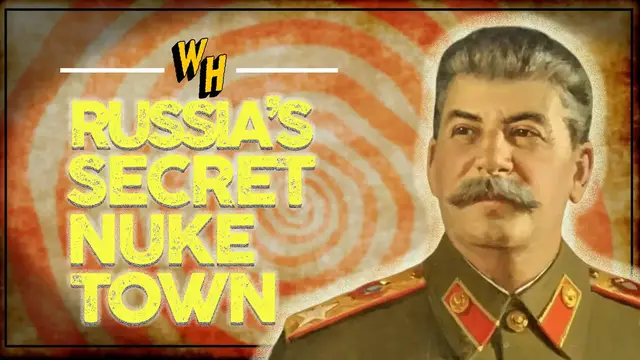
City 40, or what is today known as Ozersk, is a closed city in Russia that the Soviet Union created during the Cold War. City 40 didn't appear on any maps until 1991, allowed no outsiders to enter, and for a long time, no insiders were allowed out. It wasn't until very recently that the Western world has even become aware of Ozersk, and it took a brave documentary crew sneaking cameras through the heavily guarded gates for any footage of the city to escape.
Show More Show Less View Video Transcript
0:00
The closed Russian town of Izhorsk, also known by its codename City-40, was established during
0:07
the early days of the Cold War to house extremely sensitive information on the Soviet's nuclear
0:12
weapons program. It was so secret, it didn't even appear on maps until 1991
0:17
But now, some of that classified information is finally available. So, today, we're cluing you in on City-40, the secret town where Russia began its nuclear program
0:29
We built this city. We built this city on plutonium. Back in 1947, the developers of City 40 found a barely inhabited spot
0:44
about 45 miles from the city of Chelyabinsk in the Ural Mountains, and said
0:49
yes, this is where a city should go. They built the city alongside the new Mayak plutonium plant
0:55
which was to become the hub of the new Soviet atomic weapons program so they could finally catch up with those meddling Americans
1:02
Once the plant opened up, imported nuclear scientists and facility employees were invited to move in
1:07
First, they started processing and weaponizing plutonium, which eventually led them to manufacturing the USSR's first plutonium bomb, First Lightning
1:16
As far as doomsday device names go, that one's pretty cool. Mayak is still chugging along today, but they're not just making weapons anymore
1:24
Instead, they've moved on to harmless commercial materials like cobalt-60, iridium-192, carbon-14, and mambo-5
1:34
Actually, that one's harmful to your ears. Mayak requires around 15,000 people to keep the place up and running
1:40
And all of them live within the city walls alongside their family members, requiring lots of infrastructure
1:46
At the end of the day, nearly 100,000 people call Azjorsk their home
1:51
and enjoy all the amenities one could expect from a bustling city. There are sanitation and public works systems, schools and churches
1:59
restaurants and grocery stores, and even an air hockey table. Also of note, their coat of arms features a golden salamander
2:06
And the Azjorsk golden salamanders is a great name for an air hockey team
2:11
This next part might be a gut punch, so you might want to sit down
2:18
You are simply not invited to the City 40 party. Aside from being surrounded by thick walls and guard fences
2:25
one would need proper clearance in order to get inside. No outsiders allowed
2:30
Nowadays, residents can come and go as they please, but that wasn't always the case with City 40
2:35
Back in the heyday of the nuclear arms race, only high-ranking Soviet officials were permitted to enter or exit the city
2:42
Residents were essentially held hostage, trapped inside a city crawling with armed guards at
2:47
every gate. But at least they had air hockey. In City 40, it's not the thousands of visible
2:52
cameras you have to watch out for It the hidden cameras and audio recorders hiding in the shadows To ensure nobody was sharing secrets or plotting illegal deeds Soviet secret police forces NKVD and the KGB were constantly listening in on residents
3:08
conversations. And if someone was suspected of being an enemy of the state, undercover agents
3:12
might just whisk them away to the gulag. Forget about planning a surprise party
3:17
While not nearly as extreme, City 40 is still under surveillance that relies on a ubiquitous
3:22
police presence. In fact, some folks interviewed for a documentary about the city have had to flee
3:27
for fear of retaliation. Life in City 40 isn't all surveillance state and constant threat of arrest
3:37
In fact, the government has gone to great lengths to make sure the community surrounding their
3:41
nuclear plant is happy with their lives, so they never leave. The town boasts plenty of public
3:46
parks, a professional theater, a college of music, and fresh air surrounding serene lakes
3:52
If you close your eyes, you can almost forget the cameras spying on you
3:57
One thing the town doesn't have in surplus is violent crime. Thanks to plentiful housing, cheap grocery store prices
4:03
the availability of food other Russian citizens could only dream about, violent crime doesn't find a home in this totalitarian surveillance state
4:10
Life in beautiful Izorsk may look too good to be true. And if you care about not getting radiation poisoning, it might be
4:21
Take Lake Irtyash. From the shore, it looks like any other large body of water
4:26
But before you dive in headfirst, we should let you know the locals call it the Lake of Death
4:31
You see, when Mayak was looking for somewhere to dump all its toxic waste
4:35
the lake seemed like the quickest option. Now, the soil, the plants, the wildlife, and even the air around the lake contain amounts
4:43
of radioactivity proven to cause adverse health effects. And when you live in a place with fallout levels of radiation, you and your neighbors
4:50
are all prone to cancer, birth defects, and a slew of other health issues
4:55
For the people of City 40, that's just a Tuesday. We really don't have the numbers on radiation statistics from Izhorsk due to the government's
5:03
reluctance to admit anything. Doctors were flat out forbidden to mention that the residents had radiation poisoning, instead opting to call it special disease
5:12
As a result, patients were misdiagnosed and never offered the proper treatments
5:16
A recent study revealed that Izhorsk residents are over two times more likely to develop lung, liver, or skeletal cancers
5:22
But instead of being discouraged by these health issues, residents have come to see radiation illnesses as a badge of honor, sacrificing yourself for the good of the people
5:31
They say the best charity starts at home, but this does not sound like the best charity
5:39
When ranking history's worst nuclear disasters, Chernobyl and Fukushima sit in spots one and two
5:46
But the lesser-known Kushtiam nuclear disaster finds itself sitting snugly in the number three position
5:52
September 29, 1957, the day the sky turned purple. Over in Mayock a cooling system had failed to do its job leading to a tank explosion from overheating kind of like putting too much air in a balloon made out of uranium After the tank went boom
6:08
nearby farmers could swear it was the start of nuclear war based on the color of the sky
6:12
and massive plumes of toxic smoke hanging around. 20 million curies of nuclear waste were pumped
6:18
into the airways and spread by approaching wind, contaminating a region where about 270,000 people
6:23
were living. Of that group, just 11,000 were evacuated, while their homes were demolished
6:28
and livestock destroyed with no explanation. The event became known as the Kustyam Disaster
6:34
because the Soviets couldn't name it after a city that officially didn't exist, so it was named
6:39
after the closest town they would acknowledge. The International Nuclear Event Scale rates this
6:43
disaster at level 6 out of 7, and with good reason. Within days, 300 of the 5,000 residents
6:49
of kushtyum were dead from radiation poisoning, panicking all the while over this unknown
6:54
mystery disease that was causing their skin to literally slough off their body
6:58
We didn't know the full extent of the disaster until 1976, when renegade Soviet scientist
7:03
Zoros Medvedev exposed the whole fiasco. Before he spoke up, nobody outside of Azorsk even was aware it happened
7:11
near the lake of death is lake karachai where the concerns are similar except you also can't
7:21
stand on the shores for more than an hour without exposing yourself to fatal doses of radiation
7:25
we're not sure what spf that is so it's best to avoid laying out entirely city 40 was considered
7:32
the most polluted place on the planet due to mayox constant dumping of toxic waste into the same
7:37
waters residents bathed in and drank from. In the 1950s, they started storing their waste in
7:42
barrels and cooling vats, the very same cooling vats that went boom in the Kushtyum disaster
7:48
It's the stratosphere's problem now. Eventually, the Soviets decided it was easier to just dump
7:53
everything into Lake Karachai. Radioactive levels of isotopes strontium-90 and cesium-137 in the
7:59
lake are believed to have been present over 100 times the levels released at Chernobyl. Then in
8:04
1967, a drought saw the lake's water levels lower enough to expose formerly submerged toxic sediment
8:11
When all that dried up from the sun, poison dust got picked up by the wind, spreading far and wide
8:16
for 900 miles. The Soviet government covered the dried up lake in cement, which is probably good
8:22
enough, right? In 1996, an elderly woman named Tamara Vasiliana was taking a stroll outside
8:28
Azursk when she heard strange cries coming from the bushes near the road. She discovered a small
8:34
humanoid life form with a large head, wide eyes, and a hole from which its various noises were
8:39
emanating. Vasiliana did the only sensible thing she could have, brought it home with her
8:44
named it Alyoshenka, and raised it as her own child. Friends and city officials described the
8:49
creature as a cat wrapped up in rags, and not of this world. After Vasiliana was imprisoned for an
8:56
unknown crime officials refused to check in on her apartment officially because they didn she had an alien baby in there but why wouldn they check Maybe they were just too spooked Eliushenka mummified body was later discovered and autopsied by Dr Stanislav Samushkin
9:12
who was absolutely perplexed and suggested it was an extraterrestrial being. Conveniently, the body was lost or stolen just after the autopsy, making further investigation impossible
9:23
The legend has grown in notoriety over the years, and several theories have popped up
9:28
in an attempt to explain this unorthodox family tragedy. The running theory is that Eliushenko
9:33
was likely a premature human infant, a young victim of the most polluted place on Earth
9:42
The city went through quite the identity crisis before finally landing on the name Azursk
9:47
Since it's located near the larger city of Chelyabinsk, they called themselves Chelyabinsk 40
9:52
maybe because Chelyabinsk 1 through 39 was already taken. Later, it changed to Chelyabinsk 65 to match up with the last digits of the postal code
10:01
If a resident was granted the rare opportunity to leave the city walls, they were ordered to say they were from Chelyabinsk and that they lived on Lenin Street
10:10
which is kind of like an American spy saying they live in Washington, D.C. on President Avenue
10:15
The city's code name of City 40 stuck until Soviet dissolution civil rights groups
10:20
proposed giving it a name it could call its own. So in 1993, City 40 was officially renamed this, which is either this or that when you Englishify it
10:30
You can now find Asyorsk wherever Russian maps are sold, acknowledging the existence of the city and its residents
10:36
Residents of the now officially recognized Asyorsk found that they were now eligible for government programs and benefits for the first time
10:43
including compensation for the poison air they'd been breathing for decades. But there can be no ebbs without flows
10:49
and the new shift in legal status created a bureaucratic brouhaha to this day
10:53
Residents are continually left waiting for benefits they are owed or outright denied
11:01
Russian President Vladimir Putin would describe Russia's nuclear force as compact and efficient, but by compact, we think he meant located entirely in Azursk
11:11
While Russia has shifted its focus away from plutonium processing and more toward medical and aerospace material production
11:18
most of Russia's nuclear stockpile still takes residency in Asyorsk. And while some of the stockpile has been decommissioned
11:24
the rest is just a ticking time bomb made of decaying nuclear material
11:29
But an American who really wants to understand this Russian town of horrors
11:33
might be surprised to find the U.S.'s role in its creation. Richland, Washington, was home to the Hanford site
11:40
a nuclear reactor built during World War II. Joseph Stalin and his spies managed to get their hands on the plans for the plant
11:47
and realized just how far behind they were in the nuclear arms race
11:51
To make up for lost time, Russia put together their own government-sanctioned weapon factory town
11:56
which we now know as Asyorsk. The two were essentially sister cities, constructed from the same plans with a shared history
12:03
It's like the Olsen twins, by way of Oppenheimer