Up next in 10



Living in the 21st century feels like the peak of civilization - we’ve mastered central air conditioning and we have all the modern conveniences that make it so we essentially never have to lift a finger again except to order more door dash. But there are also forgotten eras of history full of peace, unchecked prosperity, and exciting cultural advancements. Sure, we may have the most advanced technology so far, but what was really the best time to be alive? And could the perks of a bygone era convince you to hop into a time machine?
Show More Show Less View Video Transcript
0:00
Living in the 21st century feels like the peak of civilization
0:04
We've mastered central air conditioning, and we all have the modern conveniences that make it so we essentially never have to lift a finger again except to order more DoorDash
0:14
But there are also forgotten eras of history full of peace, unchecked prosperity, and exciting cultural advancements
0:21
Sure, we may have the most advanced technology so far, but what was really the best time to be alive
0:29
And could the perks of a bygone era convince you to hop into a time machine
0:33
Well, today we're turning back the clocks to look at some of the best times to be alive in history
0:43
If you were a dude living in Athens in the 5th century BC, you would have been happier than a trapos in a scissor store
0:49
Right off the bat, all male citizens had equal rights and freedoms
0:54
Rich or poor, well-educated or uncultivated. high class or lowly commoner. All the guys were on equal footing, with wealth distributed relatively
1:04
fairly through the population. As a male citizen of Athens, you could be rubbing elbows with the
1:09
father of medicine one day, while sharing a public bath with the father of philosophy the next
1:14
Because of all the freedom and peace going around at the time, many scholars flocked to Athens
1:19
including Aristotle, Plato, and Hippocrates. You know, the ones whose ideas became the backbone of
1:27
Western civilization, the arts were flourishing at the time too, as theater, literature, and
1:32
architecture thrived within the city. And can we talk about the food? Fruits, cheeses, breads dipped
1:39
in delicious wine which was drunk with every meal, just like the Athenians. The most common beverage
1:44
to partake after water. While things were great if you were a guy, women weren't so lucky, and slaves
1:51
even less so. Slavery was legal and common in Athens, and although some valued slaves may have
1:58
worked as tutors or even officials, they never had any real legal rights. Women lived under a
2:04
patriarchal society, and while some were allowed to receive an education, they were expected to
2:10
stay at home, care for their children, and entertain their husbands. Hey, at least there was wine
2:15
By the time the 1st century CE rolled around, the Romans had pretty much fought everyone there was to fight
2:26
They conquered so much of the Western world that there was simply nobody left to conquer
2:30
But instead of weeping, like Alexander would, the Romans celebrated with a long period of peace known as the Pax Romana
2:38
The Roman army did a pretty good job of keeping the streets safe and even cleared the seas of pirates
2:44
There were local rulers with some autonomy, but for the most part, everyone had to pay taxes and swear loyalty to the emperor
2:52
Because the emperor was so respected, they were able to usher in a great and extensive trading network
2:57
They built a massive road through the vast Roman territory, opening up travel and innovation in the process
3:03
Historian Edward Gibbon considers no other time in history more prosperous and happy than that of the Pax Romana guided by the firm but gentle hands of four beloved emperors during the Nerva Trajan Hadrian and Antonine administrations
3:19
But even peacetime has its downsides, and Pax Romana was no different, considerably for the slaves
3:26
Back then, slaves were strictly property, not human beings, who were sometimes forced to participate in gladiatorial games where wild animals would
3:35
rip them limb from limb to the sounds of an uproarious crowd. But even if you weren't a slave
3:41
life still kinda stunk. Literally. Because it was so densely populated, Rome was a particularly
3:47
stinky place to live. An aroma of animal carcasses and sewer water tinged the air
3:53
and stung the nostrils. And while unpleasant, didn't seem to disrupt the peace much
3:58
Maybe you get used to the stench after a few generations. Born from the tragedy of the Black Death and the decimation of one-third of Europe's population
4:11
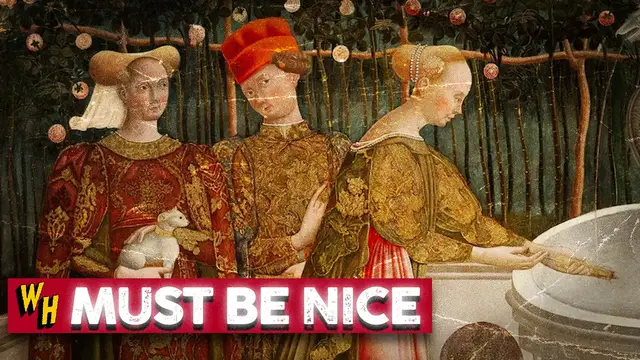
Italy suddenly experienced an economical, cultural, and artistic rebirth known as the Renaissance from the 14th to the 17th centuries
4:19
It was a good time to have survived the plague. Those who were able to dodge a painful death
4:24
soon learned that those left could bargain for fair wages, now that there were considerably fewer people gunning for the unemployment office
4:32
This caused the economy to rebound and allowed arts and culture to absolutely thrive
4:37
Now the wealthy could use their riches to become patrons for artists, writers, architects, and scientists
4:43
The Medici family sponsored the likes of Michelangelo, Rafael, Donatello, Leonardo da Vinci, and Galileo
4:52
aka the Fifth Turtle, who wields a ninja telescope. these artists and innovators could focus on their craft full-time now that money was no issue
5:00
Though overall conditions had improved slightly from the pain of dying horribly from the plague
5:05
the average Italian during the Renaissance was still a peasant, just barely scraping by
5:10
Political power was wielded mostly by the wealthy and trade guilds, whose luxurious lifestyles were made possible by slavery
5:18
And if you were a woman, you pretty much weren't allowed to do anything. Dynastic Egypt in 1100 BC was way ahead of its time in science, technology, architecture
5:33
and medicine, as well as education, medical care, and even sports. Back then, you could find
5:39
technologies we would be well familiar with today, such as pens, depression, and other mental health
5:45
medicines, breath mints, toothpaste, and board games. Also, they had cats. Unlike most places
5:51
of the past, dynastic Egypt was a great place to be a woman, as this is one of the few time
5:57
periods of yore where men and women were equals. Women could be priests, scribes, doctors, or
6:04
if they so choose, cat ladies, filling their houses with many, many cats. Things were so great
6:11
in Egypt back then that the afterlife was simply a continuation of the lives they already had
6:16
Even in death Egyptians craved the regular day existence As good as things may have been anyone who knows anything about ancient Egypt knows the important role slave labor played
6:27
Egyptian slaves could be criminals or people captured in battle, and they received little mercy from their owners
6:34
who believed that their social status was predestined. Between the 13th and 15th centuries
6:44
the Kingdom of Mali was on top of the world. After acquiring control of major land routes for ivory
6:50
salt, and slave trades, they became one of the richest and most powerful kingdoms the Middle Ages
6:55
had ever seen. And at the heart of Mali, the great king Mansa Musa I built the capital city Timbuktu
7:02
which was as massive as it was wondrous. It held vast libraries, universities, mosques, palaces
7:08
and over 200 schools. Timbuktu sat at the mouth of the Niger River, which made it ideal for
7:14
agriculture, with an abundance of copper and gold mines nearby. You would think such a powerful king
7:20
would rule with an iron, or more likely gold-plated fist. But the kingdom's founding charter limited
7:26
his power, while also granting equal rights to slaves and women. The biggest problem with this
7:32
time period ended up being how short-lived it was. Once Mansa Musa died, things almost immediately
7:38
began to decline with internal squabbles and an economic crisis. Technically, the king officially
7:43
owned all the country's gold, so commoners were forced to trade with seashells and gold dust
7:49
Plus, on top of all that, it was pretty dang hot living in the desert
7:58
The 15th to 17th centuries are known for being the age of exploration, a time period when seafarers
8:04
began seeking new routes to their destinations and discovered a whole bunch of stuff in the process
8:10
But even centuries before that, Polynesian seafarers were colonizing islands all across
8:15
the Pacific. Expert navigators were able to cross the mighty Pacific in canoes and discovered
8:20
beautiful lands in the process, like New Zealand and the Easter Islands. They were probably just
8:26
as shocked by those giant heads as we were the first time we saw them, and they were walking
8:30
around Hawaii before anyone else had set foot there. Each new island brought new foods, plants
8:35
and animals back to their native islands and families. As to why all this came to a halt
8:40
Nobody really knows. Archaeologists and historians believe that since chieftains often battled with each other for territory, it's possible infighting led to the end of all
8:49
the exploration. During the Islamic Golden Age, you couldn't get more culture than Baghdad in the
8:59
8th century. Its location at the center of trade routes made it a primo location to become extremely
9:05
wealthy, and as a result, the whole place was covered in parks, bazaars, fountains, mosques
9:11
and schools. Baghdad's House of Wisdom was consistently filled with some of the best
9:16
minds from every corner of the empire. Diverse groups of Jews, Christians, and Muslims worked
9:21
together to translate famous works, which expanded human knowledge in mathematics, medicine astronomy sociology and geography The government not only supported the social structure but took great pride in their scholars and paid them Tom Brady salaries But all of these innovations came at a price
9:39
In an Abbasid society, there existed a strict social order. It was totally cool for non-Muslims
9:45
to practice their religion and they could do so in peace. However, they would forever be marked
9:50
as second-class citizens. They were taxed more and were often persecuted outside of the city
9:55
Plus, like with so many eras, slave labor was common. During the Incan Empire, there was no better place to set up roots and live out your life than Cusco in the 3rd century
10:11
First off, they designed the city to be in the shape of a puma, which rolls pretty hard
10:16
It featured temples carved from gold and silver and an advanced irrigation system
10:22
The Incan government was centralized and collected food and labor taxes from its citizens
10:27
then redistributed the food according to the needs of the people. And archaeologists have actually found evidence of advanced medicine
10:34
including successful brain surgeries. But while they were extremely progressive in many areas
10:40
the Inca still had a little guy to kick around, this time in the form of some 10 million people farming in the cliff sides
10:47
These farmers were not noblemen, religious men, or craftsmen who thrived in the city
10:52
and a majority of their produce was taken by the imperial government to be redistributed
10:57
allowing the government to maintain control. Adult men were forced to provide free labor to the government
11:03
oftentimes in dangerous projects, such as building temples or maintaining grass-woven suspension bridges
11:09
Also, there was the whole religious human sacrifice thing. Not great. The Song Dynasty was the second part of China's golden age
11:22
and also the name of countless high school garage bands. Around the 11th century, Chinese inventors developed innovations
11:30
like paper and printing, the compass, and drinking tea. Gunpowder was also invented during this time
11:36
and used to create celebratory fireworks. And since they lived in peace under a single emperor
11:41
they didn't need to develop weapons. With agricultural innovation and the rapid growth of many cottage industries, like papermaking, pottery, and silk production, citizens were able to maintain a certain amount of economic security
11:55
When c locks were invented, trade started booming as agricultural goods could now be distributed quickly and efficiently
12:02
The bustling middle-class cities far surpassed those of European cities in both architecture and practical organization, as noted by Marco Polo when he visited China
12:11
But within those city walls, not everyone was having a great time
12:17
Women under Song's reign did not have an easy go of it, as political leaders had adopted
12:21
the old Neo-Confucianism mainstay, where women are born to serve men. This is also where the barbaric and painful practice of foot binding became wildly popular
12:32
No matter how great they may seem, every so-called golden age had just as many drawbacks as any
12:38
other era. In other words, the grass is always greener on the other side of the time machine