Up next in 10



Alaska frontier food has always blended practicality and indigenous tradition, combining influences from Inuit populations, Russian fur trappers, Yukon gold prospectors, and other groups who have occupied - and cooked in - the area. The culinary contributions of each make for some unique pairings, surprisingly simple flavors, and ingenious recipes - all of which constitute some version of native Alaskan food.
Show More Show Less View Video Transcript
0:00
In 1959, Alaska became the 49th state to join the United States
0:05
yet it remains the last frontier in many ways, including the kitchen
0:10
Alaska frontier food combines influences from Inuit populations, Russian fur trappers, Yukon gold prospectors
0:17
and others who have occupied and cooked in the area. So, today we're going to take a look at some surprising foods
0:24
people ate on the Alaskan frontier. Okay, so let's find out what gets baked in Alaska
0:30
or fried or boiled or whatever. I scream, you scream. We all scream for ice cream
0:38
And well, some of us scream for Inuit ice cream. The concoction is also commonly known as agudic
0:44
which is a Yupik word that means mix them together and can be spelled in a variety of ways
0:49
Agudic is a traditional food that is usually served to commemorate special occasions
0:53
like weddings, funerals, celebrations of a boy's first hunt, or after the successful catch of a seal or polar bear
1:00
As a frontier food, akudic was prepared by taking the fat from any number of animals
1:05
including but not limited to seal, whale, bear, or moose, and whipping it until it was a paste
1:11
Some tribes, like the Athabascan group, used marrow from caribou as well
1:16
Once the fat was sufficiently whipped, snow and wild berries were added
1:20
Which berries were used usually depended on the region in which the akudic was being made
1:24
Modern versions of a gudic might use crisco or some fat substitute instead, and include sugar, something that traditional Inuit groups didn't have
1:33
It is still served as both a snack and a dessert. Hemmican, a dish whose name is derived from the Cree pemmican, meaning manufactured grease, begins with jerky, which is ground up and pulverized before being mixed with animal fat
1:49
Traditionally, the jerky, which can be made from the meat of moose, deer, elk, or any number of animals
1:55
would be powdered with a mallet or mortar and pestle. Once the mashed-up jerky and melted fat were blended together, dried fruit and spices were slowly mixed in
2:05
Blueberries, currants, and cherries were the most common types of fruit, but cranberries could also be used
2:10
Once the mixture cooled, it was placed in rawhide or cloth bags
2:14
It could be then stored for months at a time, serving as a vital and portable solution of protein and fat
2:21
In fact, pemmican was so highly valued at times, the food itself could even be used as currency
2:26
Pemmican was commonly consumed by fur traders because it could be stored and easily shipped to the North American prairie regions
2:33
where foods could be extremely difficult to find, especially in the winter months
2:37
The fur traders are believed to have learned how to make it from an English explorer named Peter Pond in 1779 which is a pretty sweet name It quickly became vital to the trade and was even picked up by the Royal Navy who used it to provision several Arctic expeditions
2:54
If you're the kind of person who's afraid of bees, you might want to consider moving to Alaska
3:00
because there are no bees in Alaska. Well, that doesn't make any sense
3:05
Yeah, because they have bees, and they have had bees. But I think this is what we mean
3:10
What we mean is there were no honeybees introduced into Alaska at the time
3:14
That meant that the men and women on the frontier of Alaska had no access to honey
3:19
As a result, they learned to make sweeteners from natural herbs. Squaw honey, for example, was made by boiling clover with firewood or flowers
3:27
the nectar in the flowers being the ingredient that provided the sweetness. White sweet clover, although not native to the area, is common in Alaska
3:35
and fireweed is an easily identifiable wildflower. Once the plants were boiled, the sweet syrup could be spread over foods like bread, flapjacks, or biscuits
3:44
Squaw honey was a staple of the 19th century gold prospectors, or stampeders
3:49
who came to the Klondike seeking their fortunes in 1896. In addition to syrups, they would use it to make soups, mashes, and spices
3:57
that added some flavor to the otherwise bland foods they stuck with
4:02
Kelp relish was used as a substitute for salsas and other condiments made from vegetables
4:07
like tomatoes and cucumbers. Most commonly made out of bull kelp, native to southeast Alaska
4:13
kelp relish was pickled and eaten with seafood like halibut, clams, and shrimp
4:17
In order to pickle the kelp, it was soaked in brine, rinsed, and chopped into small pieces
4:23
Sometimes, spices like mustard seed, onion, and lemon were added for extra flavor
4:28
In lieu of dicing the kelp, whole portions could be eaten like pickles instead
4:33
Much like the aforementioned squaw honey, kelp relish became a favorite of the Klondike gold miners who learned to make it from the native
4:40
Alaskans. Dependent on large game like moose and caribou for survival, the Inuit made sure to use
4:48
all parts of the animal. Modern meals made out of moose meat, which resemble the types of foods
4:52
eaten on the frontier, include moose steak pie and simple moose pie. Both recipes use flesh from a
4:58
moose with filler such as potato and onion. Moose steak pie is breaded on the bottom and top
5:04
while simple mousse pie is more of a casserole with ground mousse meat on top
5:08
Mousse mincemeat can also be made by blending mousse flesh with an array of spices
5:13
molasses, brandy, wine, and other seasonings to taste. This can all be baked into a sweetened pie or eaten on its own
5:21
Another mousse-based delicacy is jellied mousse nose. The jaw of a mousse is boiled and then placed in cold water so that all the hair can be removed Fresh water is then placed in a pot along with onion garlic spices and the moose nose After soaking the bone and cartilage are removed and the thinly sliced meat is allowed to
5:41
set in its own juices. As John Lennon once sang, I am he as you are he as you are me and we are all
5:51
together possibly eating a walrus stew. All right, we might have changed that last part. Anyway
5:57
stews were common on the Alaskan frontier, which stands to reason. They're hearty meals that could be made from any available ingredients
6:03
including salmon, moose, or even just beans and vegetables. Walrus stew began as a mixture of meat and broth in a pot
6:10
However, with the introduction of barley, buckwheat, and potato cultivation by Russian fur traders
6:15
it soon expanded to include those items. Traditional walrus stew, often served at Thanksgiving, may also feature rice
6:23
along with some diced seaweed and walrus fat added for flavor. It's served with walrus coke, the cooked skin of the animal with a layer of blubber attached
6:31
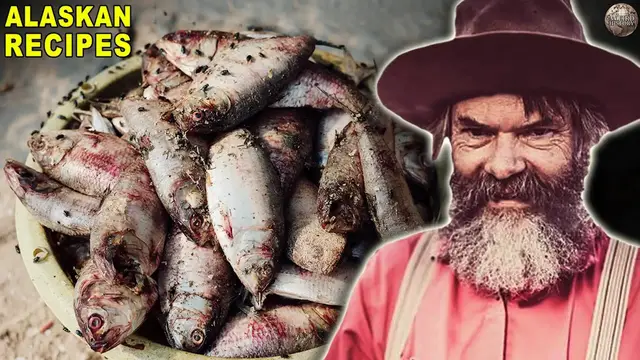
Goo goo goo joob. The dish known as stinkhead is called tepa by the Inuit, which seems to be a much more appetizing name
6:41
But regardless of what you call it, stinkhead consists of fermented whitefish or salmon heads
6:46
Traditionally, stinkhead is made by wrapping and burying the heads of fish for weeks at a time
6:52
By the time the heads are retrieved, the good bacteria has presumably eaten away the bad
6:58
Traditionally, the food was buried in a wooden barrel covered with burlap
7:02
However, for a short period in modern times, the wooden barrel was replaced with a bucket
7:06
and the burlap with plastic. Why a short time? Well, it was found that both stinkhead and stinky eggs buried in this way contributed
7:14
to high rates of botulism in Alaska each year, which was a considerable downside
7:20
That being the case, Native Alaskans have greatly returned to using the traditional bucket and burlap
7:26
While it sounds like a gritty cop show from the 70s, this was a staple on the Alaskan frontier
7:33
Bannock was a simple bread made out of flour, salt, baking powder, and water
7:37
Some recipes featured milk, eggs, and dried fruit, all of which varied according to what was on hand
7:42
Inuit women who made bannock may have included seal oil because it kept the bread from freezing
7:48
Traditional bannock got its name from the Scots, and the word, in an alternate form
7:52
goes back to at least the 8th century. It was the Scots who introduced wheat flour to the Alaskan
7:58
population. But indigenous groups may have made their own variant of bannock using the edible
8:02
bulbs of the carnus plant as well. In either form, bannock or bannock-like bread could be
8:07
fried in a pan or wrapped on a stick and baked over an open flame. Large bannock rounds made
8:13
in frying pans would be cut into segments and served with stew or covered in squaw honey While this also may sound like Thundar the barbarian sidekick muck tuck is basically just whale skin with a layer of blubber attached But it provided essential nutrients to Inuits and
8:30
Alaskan frontier people. In fact, it's such a good source of vitamin C and vitamin D, the British
8:36
would give it to their Arctic explorers to help prevent scurvy. Most often taken from bowhead and
8:41
beluga whales, muck tuck is still consumed today. Muck tuck can be eaten raw, in which case it is
8:48
said to have a nutty taste, or it can be consumed in frozen cubes. It's also often fermented and
8:53
stored for later consumption. In modern times, muck tuck is sold commercially in places like
8:58
Greenland and Canada, and it is often diced, breaded, deep fried, and served with a condiment
9:03
like soy sauce. As a delicacy, muck tuck may be salted and served on its own, but it can also be
9:09
incorporated into other recipes, like muck tuck meatloaf, which blends muck tuck, eggs, oats
9:15
and flour with salt and pepper. Hines may boast that they make 57 varieties of ketchup
9:22
but they've got nothing on the Inuit, who have been putting their local berry supply to good
9:26
use for a long, long time. Blueberries, cranberries, lingonberries, and partridge berries
9:32
were only a few of the fruits picked and used by Inuit groups, many of which still remain
9:37
fundamental for dietary and medicinal purposes. As settlers adjusted their eating habits to what
9:42
was available on the Alaskan frontier, berries were used for an increasing array of foods and
9:47
condiments. Cranberry ketchup, for example, was made by boiling berries before separating the pulp
9:53
and juice. Cranberries could be used of the highbush or lowbush variety, both tart fruits that
9:59
ideally saw sufficient sugars and spices added to taste. Once boiled again and thickened
10:04
Cranberry ketchup could be canned and stored before being served with meat or poultry
10:11
With a name derived from the ancient Proto-Slavic word pir, meaning festivity or banquet
10:17
or the pirogue is most commonly associated with Eastern Europe and Russia
10:21
Made from yeast-raised dough, pirogues usually come in oblong shapes with tapered ends
10:27
But there are no hard and fast rules. They could just as easily be circular or rectangular
10:32
The pirogue was introduced to the Alaskan area by Russian fur traders, and it quickly became a favorite of Alut peoples
10:39
Nobody knows exactly when this took place, but when Captain James Cook visited what would later be Alaska in 1778 on his voyage to find the Northwest Passage
10:48
he claimed that women brought him a pirogue, indicating it was perhaps already a common dish in the region
10:54
Aluts made crusts using new types of flours, which were also introduced by Russians
10:58
Those crusts were then filled with things like salmon, eggs, rice, and onions
11:03
The aloo pirogh resembles a specific type of the dish, a traditional salmon pie Russians call kuli biak
Cooking & Recipes
Food