Up next in 10



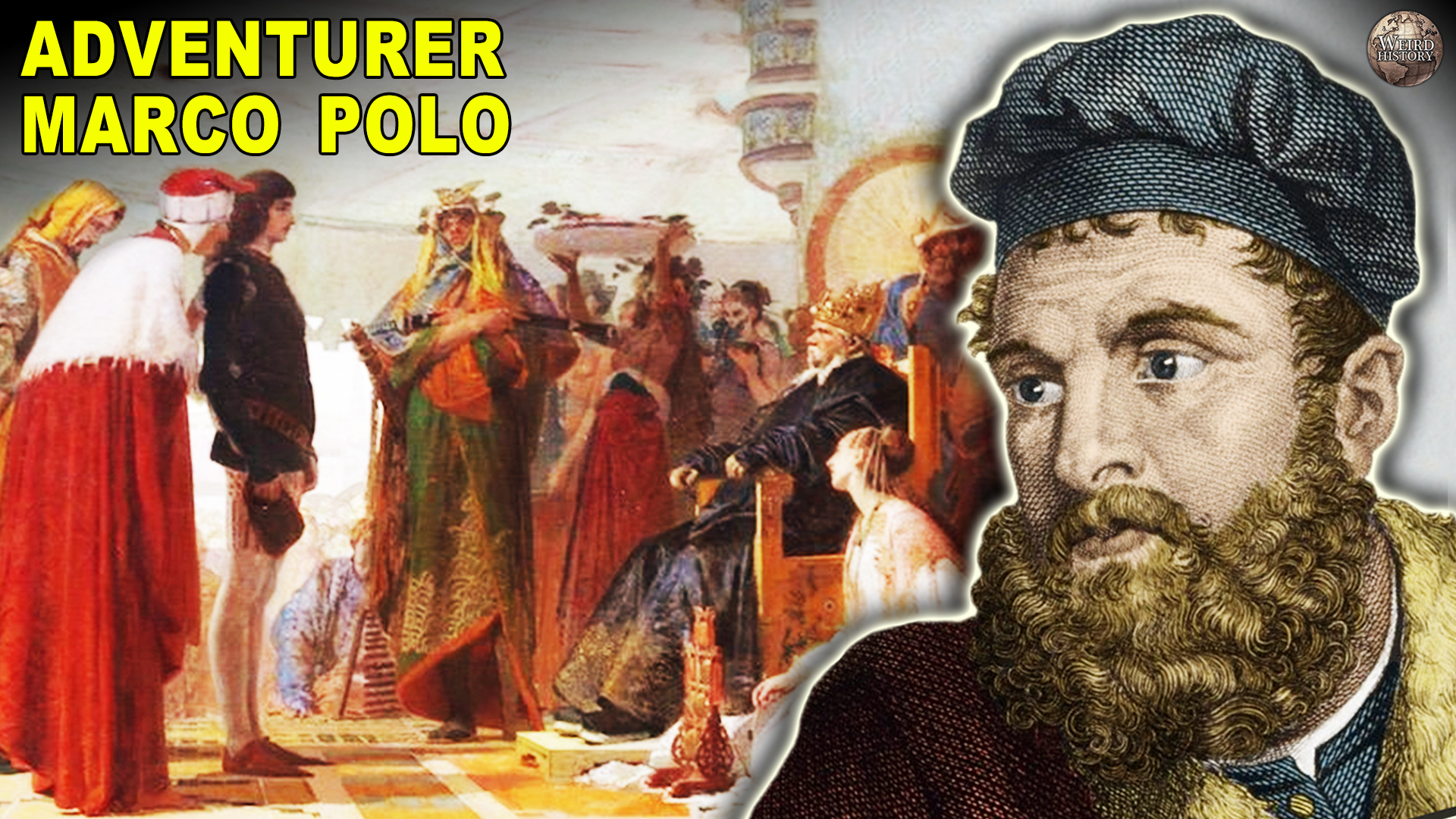
The biography of Marco Polo tells the story of one of the most famous explorers of all time. Leaving Venice with his father and uncle, he spent 24 years going all the way from Israel to China, where he lived for 17 years. His life story involves working for the great Kublai Khan personally, surviving perilous journeys, and eventually writing one of the greatest travelogues of all time.
Show More Show Less View Video Transcript
0:00
Marco Polo has gone down in history as one of the most famous world travelers of all time
0:06
I mean, who else has a pool party game named after them? He was an explorer, a merchant, a soldier, an observer of new cultures, and a biographer
0:15
But was he really? Some modern scholars don't believe that Marco Polo wrote his famous travels
0:21
or even spent 17 years in China, like he claimed. So today, we're talking about some surprising things you might not know about Marco Polo
0:30
With hundreds of different versions of the book, and some that omit basic facts about life in China
0:35
it's likely that the original version he made might have been lost in history. But what do we know about Marco Polo the man
0:42
Okay, time to get this party started. Marco Polo! It's believed that Marco Polo was born on either September 15th or 16th, 1254, in the Republic of
0:57
Venice. Exact dates from 800 years in the past are a bit tricky to pin down. And, tragically
1:04
none of Marco's birthday cards survived the passage of time. Marco Polo's father, Niccolo
1:09
and his uncle, Maffaeo, left Venice for Constantinople before he was born. And Marco's
1:14
mother passed away at some point, leaving the boy to be raised by his extended family
1:19
Bad luck Marco, as he was probably known, didn't meet his father until 1269, when he was 15
1:25
after the brothers returned from their long trip. Talk about a bittersweet reunion. Marco definitely
1:31
came from a family of travelers. His father and uncle were among the most successful traveling
1:36
merchants in the kingdom of Venice. Both brothers left Venice for Constantinople when they hit
1:41
adulthood, where they lived with fellow Venetians and set up a trading post. In 1259 or 1260
1:48
they left Constantinople just before it was sacked, pretty good timing there, and moved their
1:52
business to a city in the Crimea. But they soon found out the Mongols were running the joint
1:58
So in 1269 or 1270, they came back to Venice with a request from Kublai Khan himself. During their
2:04
time hanging out with the Mongols, the brothers apparently made quite an impression on Kublai
2:09
Khan. Kubla asked them to return to Europe, carrying letters requesting that Kubla be sent
2:13
100 intelligent men acquainted with the seven arts. They were also asked to bring back oil
2:19
from the lamp burning at the Holy Sepulchre in Jerusalem and had gifts to present to Rome
2:24
The requests definitely took the Venetians by surprise. Kubla controlled the largest empire
2:30
in the world, which had been trampling everything in its path for over a century. But Western Europe
2:36
had been spared the worst of the Mongol wrath and knew little about the people
2:40
So the brothers' tales of Mongol wealth and power was exciting new information for Venetian Catholics
2:46
While the Polos were among the first Europeans to actually set foot in the Mongol Khanate
2:50
there had been other, less famous travelers to make the journey, like Giovanni da Pienne del Carpene
2:56
also known as John of Plano Carpene. John was a Franciscan monk and papal legate
3:01
who traveled to the court of Ogdey Khan starting in 1245 tasked with protesting the Mongol attack on Western Europe After presenting the Khan with a protest letter John was in turn given a letter to give to the
3:14
Pope, demanding Europe's leaders present themselves for surrender. It was sort of like
3:19
passing notes in class, except across an entire continent. After this very long and oddly peaceful
3:25
back-and-forth relationship, John wrote a book of his travels and passed away in 1251
3:30
20 years before Marco's journey. The Polos had intended to return to China
3:38
as soon as they'd completed their missions on behalf of Kublai Khan, but fate intervened
3:43
Unfortunately, when the Polo brothers came back to Venice in 1269, Clement IV
3:47
had died a year earlier. The Vatican was in the middle of a three-year struggle
3:52
to elect a new pope, one that dragged on so long the electors were put on rations of bread and water
3:57
and eventually put in a roofless room to encourage them to speed up on their selection process
4:03
The Polos waited for two years for the situation to be resolved
4:07
then finally decided to just go back to China in 1271, taking young Marco with them
4:13
Marco, his father, and his uncle first traveled from Venice to Israel
4:17
then to Turkey, then through the Iranian desert to Afghanistan. From there, they crossed the highlands of Central Asia
4:23
entered modern-day China, and finally made it to Xiongdu, where Kublai Khan held court
4:29
The journey took three years, through lands no European had ever seen
4:34
And because minivans with built-in DVD players had not yet been invented
4:38
young Marco got to see it all. Once they safely arrived in China, the Polo men gave Kubla the sacred oil and the letters from the Pope
4:48
completing history's longest Postmates delivery. Kubla was so pleased with the Polos that he actually gave them a full-time job
4:55
appointing them as administrative assistants of sorts, something he didn't trust his own Chinese subjects to do
5:01
So for the next 17 years, the trio traveled around China carrying out a variety of tasks
5:07
though the exact details of what they did and where they did it are lost to history
5:11
All we know is that Kubla kept them booked and busy, but they were having a blast working for him
5:17
Marco, in particular, grew up to become a trusted envoy of the Khan
5:21
and was sent off to far-flung Mongol outposts in places like southeast and southwest China, possibly
5:26
going as far as Burma. He might have even governed a city in southern China
5:31
for several years, though this is up for debate. It was around this time that Marco gathered the material
5:36
he'd eventually used to write his famed book. More on that in a bit. The success of the Polo's work in China
5:44
came with its own problems. They did their job so well that Kubla
5:48
refused to let them leave. But in 1292, a Mongol princess was to be sent to Persia as a consort
5:55
Seeing their chance to escape, the Polos volunteered to serve as her escort
6:00
Kubla was nearly 80 by that point and finally let them go
6:04
Either he'd become more charitable in his old age or had simply gotten easier to trick
6:09
From southern China the expedition reached Vietnam After spending five months in Sumatra waiting out severe storms they moved on to Sri Lanka traveled down the coast of India and finally made it to Persia
6:21
Yeah, it was a long trip. Sort of like if your teacher made you finish every game
6:26
of Oregon Trail you started. And like all of us did in that game
6:30
the polo expedition suffered extreme losses. Of the 600 people on the mission, only 18
6:37
including the three polos, survived the journey. Should have brought more road snacks, I guess
6:43
The mission accomplished, they set out for Venice and were robbed of most of their riches
6:47
as soon as they reached Turkey. Old bad luck Marco strikes again
6:53
Speaking of Marco's bad luck, after 24 years away, Marco, his father, and his uncle finally
6:59
returned to Venice in 1295, where they had dramatic reunions with the rest of their family
7:05
See, the Polo men had been away for so long that everyone just assumed they had died years ago
7:11
Many of them couldn't even recognize the three explorers. Further complicating the reunion was the fact
7:16
that the Polos had been away for so long that they had all but forgotten how to speak Italian
7:21
and had to relearn the language to reconnect with their family. Sort of like a college friend who came back a week late
7:27
from spring break and pretended he'd forgotten English. The Polo men soon learned that while they had been away
7:36
Venice had been involved in a long, simmering conflict with nearby Genoa. A few years after
7:42
they returned from their journey, war finally broke out. Marco decided the best way to relearn
7:47
how to be Italian was to take the patriotic soldier route and joined up to fight the great
7:52
rival of Venice, taking a catapult-armed ship out to battle. Unfortunately, he was taken captive and
7:58
sent to prison in Genoa. We were not kidding about Marco's bad luck. While in prison, he struck up a
8:04
friendship with a fellow prisoner named Rustichello, a writer of chivalric romances from Pisa
8:10
The encounter ended up changing his life. See, Marco told his decades of travel stories to
8:16
Rustichello, who wrote them down for him in a combination French-Italian language
8:21
After a few years, Marco was set free and took the book with him. He originally called it
8:26
Books of the Marvels of the World, but was published in Italian as Il Million
8:31
which means the million. It reportedly earned the title because contemporary audiences
8:37
believed it was full of a million lies. Ouch. So I guess it did not make Oprah's list
8:43
Oh, wait. Maybe it did make the list. Today, it's known in English by the less incendiary title
8:49
The Travels of Marco Polo. The Travels of Marco Polo contains little of his own personality
8:54
or personal memories, but more of his observations about the Mongols, the Chinese, the people of Southeast Asia
9:00
and Russia. All of these were lands that virtually none of Polo's readers
9:05
had ever set eyes on. The combination of Polo's descriptions of exotic places
9:09
and people and Rustickello's fantastical descriptions of the people and events Polo saw were entirely in keeping
9:16
with the popular style of the time. As such the book was a massive success which is crazy considering that each copy had to be made by hand Back then every book was essentially a zine
9:30
Given that the book was unofficially titled The Million Lies, people have always wondered
9:35
how accurate Polo's book really was. The scrutiny has only increased over the last few decades
9:41
In 1995, the head of the Chinese section at the British Library wrote a book called
9:46
Did Marco Polo Go to China? The book makes several arguments suggesting all or part of Polo's account was invented out of
9:54
whole cloth. For instance, The Travels of Marco Polo contains nothing about common Chinese
9:59
traditions like chopsticks and foot binding and gets major details about military actions wrong
10:05
Furthermore, Polo himself was never mentioned in any Chinese record of the time. But others have
10:11
argued that Polo might not be at fault for the inaccuracies. Much of what he recorded was
10:16
second-hand information, which could have been exaggerated or embellished considerably by the time it reached his ears
10:22
They pointed out that other travelers had missed foundational details of Chinese life
10:26
and frequently used pseudonyms during their travels. So yeah, there might not be any record of a Marco Polo
10:33
but did you think to check for a Parco Molo? There's also the possibility that Polo himself
10:39
may have put a little extra flair on some details. He was trying to sell a book
10:43
Whatever the case, Polo was adamant that everything he put down in his book was accurate to the best of his knowledge
10:50
On fact, on his deathbed, he's alleged to have whispered, I did not tell half of what I saw
10:58
Poland's account opened the European mind to a vast world waiting to be explored and exploited
11:04
The book's description of Japan set the wheels in motion for Christopher Columbus to undertake his journey in 1492, searching for a quicker route east
11:12
Meanwhile, Polo's stories of the spices of the Far East encouraged Western merchants to seek out these areas for themselves
11:20
breaking up the trading monopoly held by Arab nations. The wealth of new geographic information recorded by Polo
11:26
was widely used in the late 15th and the 16th centuries, giving invaluable details on shipping routes, native peoples, and cities
11:35
Columbus himself owned an annotated copy he took with him on the voyage that discovered the New World
11:40
He may have owned the audiobook version as well, which at the time would have just been a guy
11:44
you pay to read the book out loud. Lastly, let's use this time to put a long-standing urban legend to bed
11:54
Marco Polo did not bring spaghetti back to Italy from China. One of the many editions of The Travels includes a reference
12:00
to Polo eating a macaroni-type noodle in China. This isn't surprising, as China's history includes references
12:06
to noodles going back to the second century. However, thin flour noodles had been eaten in Sicily since at least 1154
12:14
with other writings mentioning pasta variations in other Italian cities after that
12:19
So not only did Marco Polo not introduce pasta to Italy from his travels in China
12:24
but Italians had been passing the pasta since way before Marco was even born
12:29
Chalk that one up as one of the million lies, I guess
#Social Sciences
#Travel Guides & Travelogues