Up next in 10



Photographs provide provocative glimpses into people's lives. Stories behind photos - for individuals on both sides of the camera - may reveal much more than a single image can encapsulate. Pulitzer Prize-winning photos receive international attention for their ability to evoke visceral reactions, highlight key events in history, and open eyes to unrealized truths.
Show More Show Less View Video Transcript
0:00
Each year, Pulitzer Prize-winning photographs are honored for their intensity, societal insight, and raw emotion
0:07
But while those pictures may provide provocative glimpses into people's lives, the stories behind them reveal much more than any single image could
0:16
So, today we're taking a look at Pulitzer Prize-winning photographs and the stories behind them
0:21
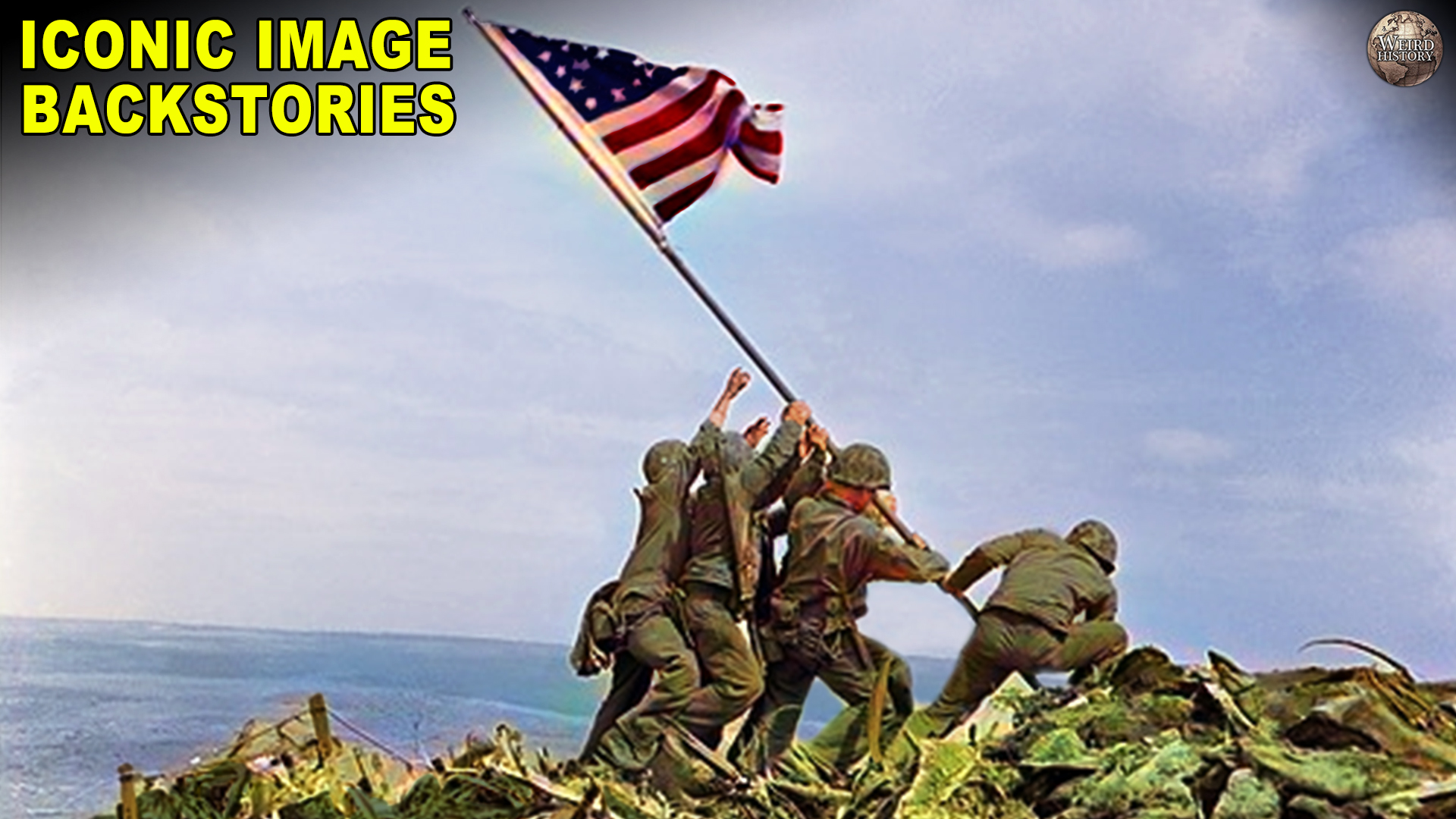
Time to look at these photos. On February 23, 1945, Joseph Rosenthal took a picture of six U.S. Marines as they raised a flag
0:35
on Iwo Jima after taking control of the island from the Japanese forces five days earlier
0:40
The six Marines in Rosenthal's photo are Michael Strank, Harold Keller, Harlan Block
0:46
Franklin Sousley, Harold Schultz, and Ira Hayes. Sadly, Strank, Block, and Sousley later perished
0:52
in action. According to Rosenthal, over the brow of the topmost ridge, we could spy men working with
0:58
the flagpole they had so laboriously brought up about quarters of an hour ahead of us
1:02
The flag was tied to an iron pipe as the Marines struggled to place it atop Mount Suribachi
1:08
As Rosenthal waited for them to swing the flagpole into position, he moved back to the edge of the
1:12
volcano's rim in order to capture all he could with the angle covered by his lens. After he took
1:17
photos, Rosenthal sent his picture to the Associated Press. Under normal circumstances
1:23
Rosenthal's picture would not have been eligible for a Pulitzer until the following year
1:28
But the AP's photo editor, F.A. Resch, sent the photo to a Pulitzer Prize board member
1:33
explaining he felt the material was so outstanding that it merited consideration accordingly
1:37
The first sports-themed Pulitzer Prize-winning photograph, Babe Ruth Bows Out, was taken on June 13, 1948
1:50
the day of the Great Bambino's final baseball game. Nathaniel Nat Fine, a photographer for the New York Herald Tribune
1:58
was one of many photographers present for the event. But Fine's picture captured Ruth's emotional emergence from the dugout from a unique perspective
2:05
When Ruth leaned himself on a bat and the thousands of spectators cheered
2:09
Fine moved behind the slugger to seize upon the natural light. He also wanted to include Ruth's uniform number, 3
2:16
which would later be retired by the Yankees and never again worn by a member of the team
2:20
Tragically, the Sultan of Swat succumbed from cancer just two months after the photo was taken
2:25
Taken December 4, 1950, Associated Press photographer Max Desfor's flight of refugees
2:36
across Wrecked Bridge in Korea was just one of the numerous images he captured while covering
2:41
the Korean War. Desfor, who apparently had some serious cojones, had parachuted into North Korea
2:46
alongside American troops And when North Korean and Chinese forces attacked Desfor found himself near Pyongyang surrounded by thousands of fleeing refugees trying to cross the Taedong River
2:58
Daswar later recalled the scene saying, all of these people were literally crawling
3:01
through these broken down girders of the bridge. They were in and out of it, on top, underneath
3:06
and just barely escaping the freezing water. My hands got so cold, I could barely
3:11
trip the shutter on my camera. Luckily, he found a way to snap the iconic image
3:15
The Pulitzer Prize jury found the bridge photo to be especially poignant, praising Desfor and his work for all the qualities which make for
3:22
distinguished news photography, imagination, disregard for personal safety, perception of human interest, and the ability to make the camera tell the whole story
3:37
In May of 1953, Virginia Shaw was on a fishing trip with her family when she witnessed an accident
3:43
on the Pitt River Bridge over Shasta Lake in California that sent the cab of a semi-truck over the edge
3:49
Like at a scene out of a movie, driver Paul Overby and his companion, Hank Baum, were lifted to safety
3:54
by motorists, including Shaw's husband, Walter, only moments before the cab burst into flames
3:59
and fell into the water below. Using a Kodak Brownie camera that contained expired film
4:04
with a mere two exposures remaining, Shaw snapped a picture of the scene
4:08
She submitted the photo to the Sacramento Bee and received $10 in its weekly photo contest
4:13
The picture was then published in the Akron Beacon Journal in Ohio and then later picked up by the Associated Press
4:19
Finally, it made its way to the Pulitzer jury who would bestow its highest honor on Shaw
4:24
The win made her only the second amateur photographer to win the Pulitzer Prize in news photography
4:28
and the first woman to ever receive the prestigious award. But since it was the 50s
4:34
the official announcement about her Pulitzer Prize identified her as Mrs. Walter M. Shaw, G
4:40
Banks? Described as poignant and profoundly moving by the Pulitzer Prize
4:50
board in 1955, tragedy by the sea actually captures the emotions of two parents as they realize their child is gone
4:57
Yeah, we had no idea that's what was going on either. On April 2nd, 1954, Los Angeles Times photographer John Elgant
5:05
was in his front yard near Hermosa Beach when his neighbor alerted him to some excitement on the beach
5:11
Gaunt grabbed his camera and headed over, photographing the young couple, the McDonald's
5:14
just moments after their infant son, Michael, disappeared into the surf. Gaunt took four pictures that day, a series of images the Pulitzer Prize jury
5:23
initially ranked number four out of their top five. But the decision was overruled, and the prize was awarded to Gaunt
5:29
The End island in July 1956 it was a shock to both ships and not just a physical one Their radar screens had indicated they would pass each other safely in the fog But instead the hull of the
5:52
Andrea Doria received a 40-foot gash from the Stockholm, prompted the crew and passengers to
5:56
abandon ship. The Andrea Doria fell so far to one side, half of the lifeboats were submerged and
6:02
became inaccessible amid the panic. The collision would ultimately cost the lives of 51 people
6:08
The next day, Harry Trask, photographer for The Boston Traveler, climbed aboard a small
6:13
airplane to catch a glimpse of the sinking ship. Trask struggled with air sickness, but still asked the pilot to make several passes
6:20
He would later recall, As we circled, I could see the ship gradually sinking below the surface
6:25
Debris and empty lifeboats were scattered everywhere. In nine minutes, it was all over
6:30
Trask submitted 16 pictures from his time in the air, with the now famous sinking of
6:34
the Andrea Doria, ultimately selected as the outstanding single picture. Once Fidel Castro and his forces seized power in 1959 during the Cuban Revolution
6:49
they detained hundreds of members of the military and police forces, including Jose Rodriguez
6:54
Rodriguez was a corporal in the army of Cuban dictator Fulgencio Batista, and after appearing
6:59
before a tribunal that deliberated for just one minute, Rodriguez was sentenced to execution by
7:05
firing squad. A priest then gave him his last rites. Due to a stay of execution, however
7:10
Rodriguez would not be slain until the next day. When it was finally carried out, Rodriguez's
7:16
sentence was witnessed by Andrew Lopez, a photographer for United Press International
7:21
One of four pictures submitted by Andrew Lopez, last rites of Jose Rodriguez depicts a priest
7:26
administering the condemned man's last rites. On July 17, 1967, photographer Rocco Morabito
7:38
was driving in Jacksonville, Florida, when he spotted an electric company lineman dangling
7:43
upside down from an electricity pole. The worker, Randall Champion, had been shocked by over 4,100
7:49
volts, which is entirely too many volts, leaving him unconscious and hanging precariously. Morabito
7:55
a photographer for the Jacksonville Journal, took a quick photo and then went to call an ambulance
8:00
just as another lineman named J.D. Thompson climbed the pole and began to give his co-worker
8:05
mouth-to-mouth resuscitation. Once he called for help, Morabito continued to take pictures
8:10
finally hearing the words, he's breathing, from the heroic lineman above. After the assassination of Martin Luther King Jr. in April of 1968, two funerals were held in
8:25
Atlanta, Georgia. One of those was a private service at Ebenezer Baptist
8:29
Church, where photographer Moneta Sleek Jr. took a series of photos for Ebony magazine The picture that would receive the Pulitzer Prize for feature photography in 1969 captured King widow Coretta Scott King in a quiet moment of grief holding her young daughter
8:44
Bernice, in her lap. According to the Pulitzer Prize jury, Sleet's picture showed the strength
8:50
of the woman, the comforting of the child, and her dignity in the face of deep personal grief
8:55
Sleet's award was unique because the Pulitzer Prize board would not officially open up journalism
8:59
awards for magazine content until 2016. So how did Sleet win? According to the Pulitzer jury
9:06
although the picture was taken by a magazine photographer, Sleet was acting as part of a
9:10
press pool, and his picture was widely distributed and printed in many American newspapers
9:15
In other words, it was a really good picture. In April of 1969, a group of students took over Willard Strait Hall on the campus of Cornell
9:28
University in Ithaca, New York. As members of the Afro-American Society, the students saw themselves
9:34
as standing up against prejudice and inequity at Cornell and were demanding a separate college
9:39
for black students. When photographer Steve Starr arrived on the scene, he saw a student with a
9:45
rifle inside the building. For the next 34 hours, Starr tried to stay on top of the story. Meanwhile
9:50
the university public relations people, who could smell a PR disaster in the making
9:54
tried to keep the media away. Starr took his award-winning photo after the armed students finally left Willard Strait Hall
10:01
at the end of their 36-hour standoff. The protests had remained peaceful throughout, but the Pulitzer Prize jurors praised Starr
10:08
for photographing an event that marked one of the main turning points in a year of campus turmoil
10:13
Furthermore, the jurors believed that the picture had a major impact on later events
10:17
because it was the first time that campus protests were openly armed
10:24
When photographer J. Ross Bauman covered the Rhodesian Bush War in 1977 for the Associated Press
10:32
he took a series of controversial images that would earn him a Pulitzer Prize for feature photography the following year
10:38
In 1977, Bauman accompanied forces deployed by the white government in what was then called Rhodesia and is now called Zimbabwe
10:44
They were on a mission to weed out anti-government guerrillas. Bauman recalled that they forced all the men in one village
10:51
to line up in push-up stance on the ground for 45 minutes
10:55
Villagers were further subjected to beatings and torture to coerce them to give up any known guerrillas, often to no avail
11:01
The Rhodesian government later confiscated much of Bauman's film, but he managed to hide three roles
11:08
After they were published, Bauman's role in the incident was called into question
11:11
as was the authenticity of his work. But Bauman stood by his photos, and the Pulitzer Prize jurors agreed
11:18
saying the images depicted, one part of a nasty war, the plight of black prisoners
11:22
captured by the Rhodesian army. Bauman was 23 years old when he won the Pulitzer Prize
11:27
for feature photography, making him the youngest individual to ever receive the award
#Photographic & Digital Arts
#Social Issues & Advocacy