Up next in 10



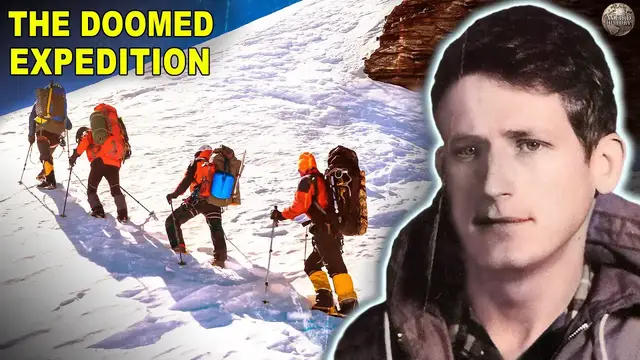
In July 1967, two separate groups of young men set out to climb Denali (Mount McKinley). Those groups ended up merging into what's now commonly called the Wilcox Expedition, named after group leader Joe Wilcox. His name is unfortunately associated with the deadliest climbing disaster in American history, as a lethal storm killed 7 of the 12 men who set out to summit the mountain.
Show More Show Less View Video Transcript
0:00
In July of 1967, two separate groups of young men
0:04
set out to climb Denali, the mountain previously known as Alaska's Mount McKinley
0:09
Those two groups would end up merging into a single expedition, which would
0:13
end in the deadliest climbing disaster in American history. Today, we're going to take a look at some horrifying details
0:20
from the doomed Alaskan mountain expedition that almost killed every climber. As many people know, Mount Everest is the biggest mountain in the world. It measures over 29,000
0:35
feet tall, and K2 is just behind it at nearly 28,000 feet. Comparatively, Denali is only 20,000
0:43
feet. Then why is Denali such a daunting mountain to climb? Well, there's a difference between the
0:48
highest and tallest. Everest is certainly the highest, as in the highest point above sea level
0:54
But Denali is the tallest from base to summit. From a 2,000-foot plateau, the mountain goes straight up 18,000 feet
1:03
Everest, on the other hand, goes up 14,000 feet from its plateau
1:07
The Wilcox Expedition, named after its leader, Joe Wilcox, was actually the joining of two separate groups of men
1:14
ranging in ages from 22 to 31. The first group, which was the original Wilcox Expedition, had nine men
1:21
Ansel Schiff, Jerry Clark, Steve Taylor, Dennis Luchterhand, Henry James, Mark McLaughlin
1:29
Walt Taylor, and John Russell. The other group, known as the Colorado Expedition, had four
1:35
Paul Schlichter, Howard Snyder, Steve Lewis, and his older brother, Jerry Lewis. And no
1:41
not the comedian. However, tragedy struck the Colorado Expedition before they even set foot
1:47
on the mountain. Seven hours prior to their departure, Steve Lewis got into a car accident and broke his hand
1:53
That was particularly problematic, as the minimum required number in a climbing group was four
1:59
This meant that the Colorado expedition had to join the Wilcox expedition if they wanted to climb
2:04
The two groups may have been thrust together by fate, but it's openly known that they didn't exactly
2:08
become fast pals. While at least one researcher says the conflict has been blown out of proportion over the years
2:15
when you put together perfect strangers and the perfect storm, you know things are going to go south. It also didn't help that
2:21
in addition to being inexperienced climbers, many members of the expedition were also plagued by
2:26
altitude sickness. They probably knew enough to realize that they should have turned back
2:31
but instead pressed onward. That's what happens when you have peak fever
2:40
At the time the men set out to conquer the peak only 213 people had ever summited the mountain Today for comparison about 32 have attempted to reach the top
2:50
though only about 50% of those who have tried actually pulled it off. As park services attempted to corral mountain climbing into a more organized sport
2:58
it continued to grow quickly. But the attitude towards mountain climbing in the 60s and 70s
3:03
was one of exploration and adventure. The men on the mountain were there on a personal journey
3:08
and they knew they only had themselves and each other. Coming back to the mountain, one thing to remember
3:14
is that Denali's weather is no joke. First of all, conditions are erratic and unpredictable
3:19
In the morning, it can be calm. Hours later, the mountain can be overtaken
3:23
by a whiteout with high winds. Moreover, the severe conditions are only exacerbated
3:28
by the mountain's location. Denali is around the 63rd parallel north. For context, Mount Everest is at 28 degrees north latitude, which is the same as Walt
3:38
Disney World in Florida. What does this all mean for climbers? Well, in simple terms, at higher latitudes, storms are stronger, faster, and colder
3:47
If you bust out a map, you'll see Everest is in the middle of Asia, far from any bodies
3:51
of water. In fact, it's over 1,000 miles from any substantial body of water
3:56
Denali, on the other hand, is only 200 miles from the Gulf of Alaska and 400 miles from
4:01
the Bering Sea. This proximity to water causes low-pressure systems that can produce fierce storms
4:07
And this is exactly what happened during the Wilcox Expedition. Inexperienced climbers and a mismatched group or not
4:19
the Wilcox Expedition had no way out of the perfect storm they encountered
4:24
To quote Andy Hall, the son of Park Superintendent George Hall, it's hard for some people to accept that some things
4:30
are bigger than they are. The mountain calls the shots. The weather dictates everything going on
4:36
Hall also said if a similar storm happened today, even with technology and advancements in safety and climbing
4:42
the exact same thing would have happened. The group would be stuck on the mountain until the storm stopped
4:47
And that's pretty much what happened to Wilcox's group. Hall explained they were stuck alone with their skill until the weather broke
4:54
And in that case, the storm lasted for seven days. That seven-day storm was absolutely brutal by any measure
5:00
The winds eventually reached 300 miles per hour, and temperatures plunged to 30 below zero
5:07
Mountain climber Jeff Babcock was part of a group attempting to summit Denali at the same time as the Wilcox expedition
5:13
According to Babcock, before the disaster even started, a park ranger said he wasn sure if the Wilcox group was prepared for the task and may have bit off more than they could chew When Babcock team first happened upon the Wilcox survivors they were in sorry shape The group had five people in a four tent
5:31
no room for a stove, and they were reduced to eating candy and crackers
5:35
Babcock and his men gave the survivors food and water. Before that, the group was trying to use their body heat
5:41
to melt snow in water bottles. When the storm started, Babcock's group
5:46
was at Carson Ridge, where the work of climbing Denali begins. The five survivors of the Wilcox expedition
5:52
had come down to a lower elevation camp to carry supplies, allowing them to narrowly escape perishing in the storm
5:59
Babcock's team was full of experienced climbers who knew a storm when they saw one
6:03
And they built an igloo and snow walls around themselves for protection. Babcock's group landed the unlucky job
6:09
of going up to recover the seven bodies. They could only find three
6:13
For Babcock and the rest of his group, It was the nightmare of our lives
6:18
Babcock was only 20 years old at the time. When rescuers finally reached the group's campsite
6:27
they found no survivors. Instead, they discovered a tent in pieces wrapped around a body that was holding onto a tent pole
6:35
Due to the weather, the body had frozen and then thawed, and it had started to decompose
6:40
Two more completely frozen bodies were also found. The other four were never located
6:45
One climber's bamboo stick was found next to a crevasse, but there was no way rescuers could rappel down into it
6:52
Babcock's rescue group noted the climbers were not tied together, indicating their lack of experience
6:58
Through the lens of modern technology and medicine, it may seem unbelievable that a body couldn't be identified
7:04
Between DNA, dental records, and the myriad other ways that technology has enabled ways to identify remains
7:10
even decades later, it's hard to recall it wasn't always so easy
7:14
In 1967, this was the reality those involved with the Denali disaster faced
7:20
Between decomposition and bodies being completely frozen and covered in snow, rescuers had no way of telling who was who
7:27
To make matters worse, there was also no way to get the bodies down off the mountain
7:31
One rescuer said, I should have taken a photo. I don't know why I didn't. It would have helped the family members know who it was and given them the closure
7:39
A group was later organized to retrieve the seven dead climbers to put their bodies to rest
7:43
but they were never located. Paul Schlichter and Howard Snyder, two of the five survivors from the Wilcox expedition
7:55
have theorized over the years about what befell the other seven from their group
7:59
The two believe after the initial group radioed from the summit the storm struck at 20 feet Of the two bodies found on Archdeacon Tower Schlichter believes they were Walt Taylor and Denny Luxorhand who were strong and healthy
8:12
young men who may have tried to go straight down a 4,000-foot slope. Snyder believes the third body
8:18
was John Russell, who was originally unaccounted for when the group reached the summit. Snyder
8:23
thinks Russell's altitude sickness got to him and that he turned back towards the camp alone
8:28
After a tragedy, it's natural to point fingers and assign blame. Joe Wilcox, whose name was attached to the tragedy from the beginning, was the logical target
8:38
Was he really prepared to lead an expedition? And why didn't he force those with altitude sickness to go back down sooner
8:45
After the National Weather Service and the National Oceanic and Atmospheric Administration
8:50
released three separate studies on the storm, Wilcox was finally able to accept he was not
8:55
to blame. No one could have survived that storm. Wilcox said, we couldn't have done anything for the climbers up there
9:02
I now have to accept that they, and probably anybody else, couldn't have survived up there
9:07
Wilcox did not know his crew were not well established and had not climbed together in
9:11
the past. He put out an advertisement, collected applications, and that was it
9:16
So while his group may have been more experienced, they weren't a team of men who knew each other
9:20
or had worked together before. Whether Wilcox should have determined things like that before
9:25
leading the expedition is up for debate. But once the damage was done, that debate became mostly academic
9:31
Could the entire tragedy have been avoided or at least been less tragic
9:35
At least one man thinks so. Wayne Mary, a ranger at the park
9:39
had been the main point of contact with the Wilcox expedition throughout the storm's terror
9:44
Mary called for an airplane, but to no avail. To Mary, who was looking at Denali from the north
9:50
it looked safe to attempt a rescue mission. The rescue coordinator, however, who
9:54
had an entirely different visual on the mountain, said there was no way they could have made it
9:59
Andy Hall, who researched the disaster for his book, Denali's Howl, said
10:04
it's a huge mountain with all these micro environments. And depending on where you are
10:08
it looks completely different. And it is completely different. The tragedy on Denali
10:13
which was then called Mount McKinley, sent shockwaves through the National Park Service
10:18
And there was even talk of closing off the mountain to climbers. However, George Hall
10:22
Hall, who was the park superintendent at the time, fought to keep the mountain open
10:27
Was it a good call? There have been at least 127 deaths in Denali National Park since 1932, although at least
10:34
one study suggests that rate of deaths seemed to decline over time
10:39
That being said, whether keeping the mountain open to climbers was a good idea or not, the
10:44
Mountaineering Club of Alaska gave Hall a lifetime membership for his efforts