Up next in 10



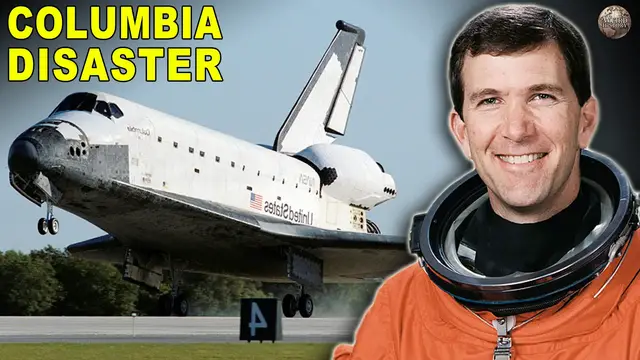
On February 1, 2003, the space shuttle Columbia was reentering Earth's atmosphere after a two-week routine mission when it exploded, killing all seven astronauts aboard and scattering debris across multiple states. It was a horrific tragedy, particularly considering that the shuttle was on its 28th mission and had been a solid vehicle for space exploration and research since the 1980s. What happened to the space shuttle Columbia effectively ended NASA's shuttle program. In 2011, NASA's space shuttle fleet was officially retired.
Show More Show Less View Video Transcript
0:00
On February 1st, 2003, the Space Shuttle Columbia was reentering Earth's atmosphere after a two-week routine mission when it exploded, killing all seven astronauts aboard
0:11
It was a horrific tragedy, and despite the fact that Columbia had been a solid vehicle for space exploration since the 1980s, it effectively ended NASA's shuttle program
0:22
So, today, we're going to take a look at how the Space Shuttle Columbia disintegrated at 18 times the speed of sound
0:30
On January 16, 2003, Columbia, the first shuttle ever to take flight, was on its 28th routine
0:40
mission. The seven-member crew consisted of Rick Husband, Commander, Michael Anderson, Payload Commander, David Brown, Mission Specialist, Kalpana Chawla, Mission Specialist
0:51
Laurel Clark, Mission Specialist, William McCool, Pilot, and Alain Ramon, Payload Specialist from
0:57
the Israeli Space Agency. Colombia was ideal for scientific research purposes. The shuttle, which made its first flight in 1981, flew 28 missions over the course of
1:06
22 years. It had completed over 4,000 orbits around the Earth over the course of just 300 days
1:12
in space. Since the explosion of the Challenger, the Colombia had become the principal shuttle
1:17
for NASA's research program, being used for 11 of the 15 flights of Space Lab laboratories
1:22
The sole spaceflight of Space Habs Research Double Module and all of the microgravity
1:27
payload missions. It was also the shuttle that was used to deploy the Chandra Observatory in 1999
1:33
This crew's mission was to perform around-the-clock scientific research, and they were successful in doing so
1:38
completing approximately 80 experiments during the 16-day trip into space. With two weeks of scientific experiments behind them, the team aboard the shuttle started the
1:53
journey home on February 1, 2003. The craft hurled toward Earth from 200,000 feet at up to 23 times
2:00
the speed of sound. But as it made its approach toward Kennedy Space Center, it became evident
2:05
something irregular was happening. Ground control was getting abnormal heat and tire pressure readings
2:10
from the shuttle's left wing. Then, the crew and craft disappeared entirely from both radio
2:15
communication and radar. One of NASA's capsule communicators called up to the crew to discuss
2:20
the abnormalities. Shuttle Commander Rick Husband got the message and replied, Roger, before he was cut off completely
2:26
Mission Control was unable to reconnect with anyone on the shuttle. While it true that occasionally during reentry communication with shuttles can go temporarily awry this time was different The craft completely disappeared from Mission Control radar and streaks of white smoke
2:41
filled the sky, spelling disaster for the Columbia and its crew. There's an old expression that holds, God is in the details
2:49
Ironically, it's also sometimes phrased as, the devil is in the details
2:53
And that was certainly the case on February 1, 2003, when the Columbia exploded
2:58
because as hard as it may be to believe, the cause of the accident was ultimately determined
3:02
to be a single small section of insulating foam. As the world would later learn, a little more than
3:08
a minute after the shuttle's initial launch, pieces of foam insulation fell from the bipod
3:13
ramp, which fastened an external fuel tank to the shuttle. While the shuttle was being propelled
3:17
upward at about 545 miles per hour, the foam struck the Columbia's left wing, damaging panels
3:23
of carbon heat shield that were attached to it. Once that happened, the crew's fate was sealed
3:29
The shuttle and its astronauts suffered no ill effects in space. But once the Columbia entered
3:34
Earth's atmosphere for its return trip, the wing was no longer protected from the intense heat of
3:39
re-entry, which could be as much as 3,000 degrees Fahrenheit. The wing broke off
3:43
causing the rest of the shuttle to break up, burn, and disperse. The world wouldn't learn about the damage to the heat shield until after the disaster
3:56
but mission control knew almost immediately. The ground team knew foam had broken loose
4:02
and there was a minority opinion that catastrophe was possible, so greater efforts needed to be made
4:07
to identify the location and extent of any damage. However, the team ultimately chose a different
4:12
path. They felt that if they discovered Columbia was not able to return to Earth due to damage
4:17
they and the astronauts would face an agonizing moral dilemma. Should the crew return to Earth
4:23
and die in a fireball during reentry? Or should the crew remain in orbit and die as their oxygen
4:28
supplies run out? On his blog, former shuttle project manager Wayne Hale revealed that John
4:34
Harpold, director of mission operations, told him, there's nothing we can do about damage to
4:39
the thermal protective system. If it has been damaged, it's probably better not to know. I think
4:43
the crew would rather not know. Ultimately, Harpold believed it would be better for the
4:48
Columbia's crew to have a happy, successful flight and die unexpectedly during re-entry
4:52
than to learn of their situation and stay in orbit, knowing that there was nothing to be done
4:57
until the air ran out. What might be the most tragic aspect of the whole affair is that after
5:01
the disaster, the Columbia Accident Investigation Board determined that the space shuttle Atlantis
5:07
could have been used to stage a rescue mission that might have saved the crew of the Columbia It would have been a high operation and only possible had the damage been identified early in the mission and preparations for a rescue launch made immediately
5:19
We'll never know if such a rescue would have been successful, but we do know the course of action that was taken
5:24
not only cost the lives of the astronauts on board the Columbia, but it would also eventually cost NASA the entire shuttle program
5:37
This was not the first time foam had broken off in space flights
5:41
It had actually occurred several times before. In fact, it happened so frequently, it began to routinely be referred to as foam shedding
5:48
However, because it had never before caused any incidents worthy of concern
5:52
most NASA engineers dismissed the problem of foam shedding as being of no great urgency
5:57
That being said, there was at least one NASA engineering manager, Don L. McCormick Jr.
6:03
who told mission management team member Linda Hamm that he had concerns about the issue
6:08
Despite this, he was told by her that it was no issue for this mission. After the horrific crash, Columbia's debris field stretched from central Texas to western Louisiana
6:16
A team of more than 25,000 professionals and volunteers searched an area of 2.3 million acres
6:23
to recover everything possible that remained from the Columbia. Due to the large area and extensive number of fragments, however, pieces are still being found to this day
6:31
In fact, as of 2017, 14 full years later, only about 84,000 pieces, or 40%, of Colombia had been recovered and were still being studied
6:42
The accident occurred almost a year and a half after the September 11th attacks on the World Trade Center and the Pentagon
6:48
Terrorism was fresh in everyone's thoughts, and the idea of a mechanical mishap wasn't the first thing that came to the minds of investigators
6:55
According to FBI Dallas Special Agent Michael Hillman, it was a time when people were concerned about terrorism, and it couldn't be ruled out right away
7:02
Many involved in the search and rescue following Columbia had also recovered and sifted through the debris in the 9-11 attacks
7:09
The Bureau worked closely with NASA and turned over all evidence to the organization once it was confirmed terrorism was not the cause
7:16
After the Challenger accident, which resulted in the deaths of seven astronauts only 16 years
7:27
earlier in 1986, NASA vowed to do better. But ultimately, they couldn't keep that promise
7:33
The organization's budget was halved in the 90s, and the decrease in funding only continued from
7:38
there on out. By the time of the Bush administration, NASA was on a shoestring budget
7:42
yet was still expected to produce missions to keep up with the work on the International Space Station The organization was reluctant to take the time to iron out the kinks Professor Henry McDonald former director of NASA California said
7:55
The mentality became, we flew it. We had a problem. We landed. So what's the big deal
8:01
So there was a crack in the wing panel. But hey, we got away with it. When's the next mission
8:05
While Congress and NASA played the blame game, heads rolled at the organization soon after the
8:10
accident. Higher-ups were let go, and Wayne Hale was put in the position of second-in-command for
8:15
the remaining shuttle missions. He was the only member of NASA to apologize for the accident and
8:20
to publicly accept the blame for the normalization of the abnormal. He said
8:24
After the accident, when we were reconstituting the mission management team, my words to them were
8:30
we are never ever going to say that there is nothing we can do. Changes were made under Wayne
8:34
Hale's tutelage when he took over after the Columbia disaster. He was responsible for changing
8:39
the dismissive attitudes that had infiltrated the organization over the years. I said
8:44
the first thing we've got to do is we've got to put the arrogance aside, he said in a later
8:48
interview. Any concerns that were brought to him, he took into serious consideration. Checklists and
8:53
safety regulations were updated, and the remaining shuttle flights were successful before the fleet
8:57
was retired for good in 2011. While NASA's safety record greatly improved since the accident
9:08
the shuttle fleet itself was aging. Columbia had been the first to fly in 1981
9:13
and the fleet's technology was simply outdated. After the Columbia disaster, it was
9:18
concluded that the remaining shuttles should be replaced as soon as possible by the panel that investigated the accident
9:24
The four remaining shuttles were sent to museums in New York, California, Florida, and Virginia
9:29
With the shuttle fleet no longer in commission, NASA turned to outside help in the form of Elon Musk and SpaceX
9:35
Musk said of the obsolete shuttle program, I was trying to figure out why we had not made more progress since Apollo
9:41
We're currently in a situation where we can't even put a person into low Earth orbit. That doesn't really gel with all of the other technology sectors out there
9:48
According to Musk, the computer that you could have bought in the early 70s would have filled
9:52
a room and had less computing power than a cell phone. He questioned why space exploration
9:56
technology had not, in his opinion, improved. Well, just about every other sector of technology had
10:02
NASA and the government contractors it worked with faced the same problems they had always
10:06
faced. Too little to work with, too little time to do it in, and too much to do. Musk and his
10:11
investors didn't have these issues and could find the cheapest, safest way forward without
10:15
bureaucratic red tape, and they endeavored to do so. We'll have to wait to see how it pans out
10:20
but today, privatized space travel seems to be the wave of the future