Up next in 10



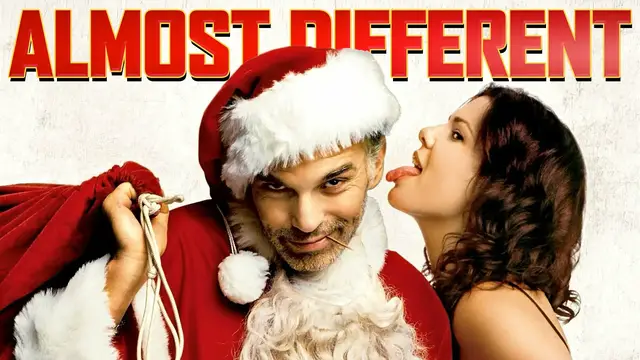
Director’s cuts of fan-favorite movies can be a blessing or a curse. When a Director’s Cut is announced, fans often expect to see a film as the director originally intended—a deeper, more complete version of the story they love. But in the case of Bad Santa, the Director’s Cut turned out to be a tough pill to swallow. Instead of enhancing the cult classic’s dark humor, this version of Bad Santa drained much of the comedic life from the film, leaving fans divided on whether it was an improvement or a misstep.
Show More Show Less View Video Transcript
0:00
Look who's here, Jimmy. It's Santa
0:03
I'm f***ing right. Let's tell him what you want for Christmas. I'm on my f***ing lunch break, okay
0:11
When it was announced in 2006 that director Terry Zweigoff was releasing a director's cut of his raunchy Christmas hit, Bad Santa
0:19
fans of the darkly hilarious film found themselves in a holly jolly mood
0:23
After all, directors know their work better than anyone else, and director's cuts are often superior to theatrical cuts, which are frequently marred
0:30
by creative compromises made to appease studio bosses and producers. But as it would turn out
0:36
the Bad Santa director's cut wasn't exactly the gift fans were hoping for
0:40
And there's a candy corn in this one. Well, they can't all be winners, can they
0:45
At some point in the early 2000s, screenwriters John Requa and Glenn Ficarra managed to snag a
0:51
meeting with Hollywood legends Joel and Ethan Coen, better known as the Coen brothers
0:55
Requa and Ficara wanted to write a movie for the brothers to direct, but Joel and Ethan informed them they only direct scripts they write themselves
1:01
The Coens did, however, have an idea for a movie about a drunken Santa Claus
1:06
and they offered Requa and Ficara the chance to write it. Pants are awful baggy. You got anything in there
1:11
Yeah, my b**k. You want to see it? The Coen brothers would eventually polish the resulting script
1:16
but they still declined to direct it, instead offering it to Ghost World director Terry Zweigoff
1:21
That script, of course, became Bad Santa, which hit theaters in November of 2003
1:26
Bad Santa stars Billy Bob Thornton as Willie, an angry, depressed, alcoholic safecracker
1:31
who spends every Christmas season in a new city working as a department store Santa
1:36
a position that allows him and his partner to case the store in preparation to rob it
1:40
That partner is Tony Cox's Marcus, a little person who acts as an elf to Willie's Santa
1:46
Marcus not only does most of the work when it comes to planning and executing the robberies
1:50
he also has to keep the increasingly self-destructive Willie from ruining their scam
1:56
which is no easy feat. He's not going to say a mistake in front of the children, is he
2:00
No, no, no. It's a joke. An adult joke for us adults
2:05
While preparing for their forthcoming Christmas heist, Willie meets a sweet, albeit weird, 8-year-old boy named Thurman Merman
2:12
Thurman father was sent to prison for embezzlement leaving him in the care of his grandmother who is for lack of a better term not all there Bullied by other kids the lonely Thurman gloms onto Willie
2:23
as a substitute father figure. Through their odd relationship, Thurman learns to stand up for himself
2:28
while Willie learns an unexpected lesson in the true meaning of Christmas. Did I fix you some sandwiches
2:34
I don't want any f***ing sandwiches. What is it with you to fix some f***ing sandwiches
2:38
As far as Christmas movies go, Bad Santa is easily among the darkest
2:42
of the genre. Audiences, however, still had a great time with the film because that darkness
2:46
is balanced out by plenty of rude, crass comedy and a top-notch supporting cast that included
2:52
vaunted talents like John Ritter and Bernie Mac. As a result, the movie was a massive hit
2:57
grossing almost $77 million worldwide against a $23 million budget and earning itself a sequel
3:03
that landed in 2016. I said next, godd**t, this is not the DMV, all right? Move along
3:09
That being said, not everyone loved the theatrical cut of Bad Santa
3:13
For example, its director, Terry Zweigoff. It turns out that behind the scenes, the movie's production wasn't quite as smooth as he might have hoped
3:21
The trouble started when studio executive Bob Weinstein demanded additional scenes be shot to make the film more commercial
3:27
According to Zweigoff, the studio wanted to mess with it and make it more mainstream and pour some fake sentiment on it for people that stumble around the mall
3:36
Zweigoff refused to shoot the additional scenes, so the studio had them shot without him
3:40
and then inserted into the film over his objections. Weinstein's cut was then sent to the Coen brothers
3:46
who, according to Zweigoff, called it a piece of s*** and accused the Weinsteins of trying to turn the movie
3:51
into something more like the raunchy 1999 teen sex comedy, American Pie
3:56
What the f***? Luckily for Zweigoff, his contract guaranteed him final cut on the film
4:02
a privilege he had to forfeit half his salary to secure, given that he had the power. He removed a large amount of the offending material
4:08
but under intense pressure from the studio, he didn't quite remove it all. And the result is
4:13
what we all now know as the original theatrical cut. Zweigoff's preferred cut, it should come as
4:18
no surprise, is his director's cut, which according to him is nothing more or less than
4:22
the filmed version of the script he was originally given. The first obvious difference in Zweigoff's
4:27
version is that Willie opening narration during which he introduces himself and complains about of how much he hates his life and job has been completely removed Instead the director cut relies on its visuals to establish Willie miserable frame of mind
4:41
You're an emotional f***ing cripple. Your soul is dog f***ing. Every single f***ing thing about you is ugly
4:47
Zwykov removed the narration because he felt it just clumsily spoon-fed the audience
4:52
what was easily apparent on screen. But this seemingly minor change actually winds up making a huge difference
4:58
Willie's voiceover is actually pretty funny, and it sets the tone for what is clearly going to be a comedy
5:03
Without it, the beginning is distinctly sadder and more melancholy, which was by design
5:08
Zweig wanted the movie's opening to leave viewers wondering whether what they were about to see was a comedy or a tragedy
5:14
And from a filmmaking perspective, that's definitely a more sophisticated approach. But it begs the question of whether a movie about a shopping mall Santa
5:21
who punches teenagers in the face and has sex in the big and tall women's dressing rooms
5:26
really benefits from a more sophisticated approach. Is that your underwear? Part of it
5:32
Where the hell's the rest of it? No, actually, don't tell me. I don't want to know
5:35
Similarly, the theatrical cut includes an early scene that depicts Willie and Marcus drinking together at a bar
5:41
Willie explains that he's going to retire to Florida and buy a bar on the beach
5:45
Marcus doesn't believe him, feeling Willie will piss the money away and want back into their partnership
5:50
The movie then cuts to Miami Beach several months later, where we find Willie behind the bar on the beach
5:55
pouring a drink, but we quickly learn it's not his bar. He just snuck behind it to steal himself
6:00
a beer and then gets caught and beaten up. The director's cut, on the other hand, removes both
6:05
of these scenes, instead cutting directly from Willie and Marcus's successful robbery to Key
6:10
Biscayne, Florida, 11 months later. Once again, Willie's situation and frame of mind are established
6:15
visually rather than through dialogue, and once again, the end result is notably more moody and
6:20
less funny. You can't drink worth a s***, you know that? I weigh 92 pounds, you d***
6:26
Zweigov's cut also mixes an amusing scene where John Ritter's mall manager awkwardly confronts
6:31
Willie and Marcus about Willie's dressing room escapades, and once again, the movie is a little
6:35
less funny for it. But the differences between the two versions run deeper than just some missing
6:39
jokes, because the director's cut also removes most of the material that makes Willie redeemable
6:45
For example a scene where Willie takes Thurman to a gym to teach him how to box so he can defend himself against his bullies is completely removed The training completely degenerates into a slapstick sequence where Thurman
6:57
Willie, and Marcus take turns punching each other in the crotch, and it pays off in the end of the
7:01
film when Thurman successfully stands up to his bully by punching him in the crotch. It's some
7:06
hilarious physical comedy, but equally important is that Willie's efforts to help Thurman keep this
7:11
bad Santa from seeming too bad. Kid, maybe you shouldn't spend so much time around me
7:15
Similarly, the director's cut removes a humanizing sequence in which a guilt-ridden
7:20
Willie stealthily replaces Thurman's cherished advent calendar after destroying it in a drunken
7:25
fit of self-pity. In fact, it removes all references to Thurman's advent calendar
7:30
completely eliminating the subplot for the film. The boxing training and the advent calendar are
7:35
no doubt what Zweigoff was referring to when he complained about fake sentiment being added to the
7:39
film. And in all fairness, both scenes are mildly out of character for Willie. But at the same time
7:44
however, they do make Willie easier to root for, and they make his redemption at the end
7:49
feel a little less like it comes out of nowhere. What Zweigov wanted in his vision, however
7:57
were extended moments of Willie's bad attitude, really hammering home his namesake of bad Santa
8:02
A scene of him throwing bottles at the wall of his hotel room in Florida, for example
8:06
is slightly longer, so is a vulgar conversation he has with Marcus in the mall parking lot
8:11
as well as the infamous pinball scene. And in Zweigoff's Cut, Willie shouts a racial slur at a toy donkey during a scene
8:17
where he destroys a room full of Christmas decorations. These differences don't sound terribly important
8:22
but the effect they had was to change Bad Santa into an almost entirely different type of movie
8:28
The Willie of Zweigoff's Cut ultimately comes off as both a badder and sadder Santa
8:33
and the movie itself comes off more like a brooding, depressing, cautionary tale than a full-blown comedy
8:39
This version, no doubt, restored the writer's original version of their movie
8:43
but at the same time, it drastically changed the landscape of a film people already love
8:48
The bottom line is that, while it may not have been the version its director liked in the past
8:52
it's hard to ignore that the theatrically released cut struck a nerve with the Christmas going public
8:57
and you want to give the people what they want, especially for Christmas. Did somebody drop you on your f***ing head
9:02
How can they drop me onto my own head? No, not onto your... What
9:07
God, are you with me