Up next in 10



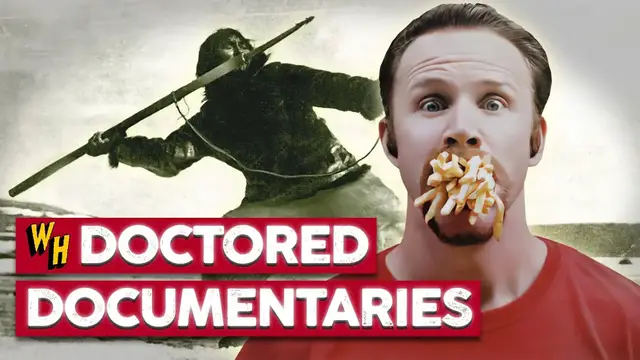
People understandably expect to be presented with facts when they watch a documentary. There are, however, some notable or high-profile things that documentaries got wrong. Although truth and authenticity are elements every nonfiction film should strive for, movies are made by people, and sometimes people make mistakes, or have a bias or agenda related to a controversial subject that leads to inaccuracies, omissions, or misleading conclusions. Historical documentaries are particularly susceptible to these flaws.
Show More Show Less View Video Transcript
0:00
Audiences flock to a good documentary
0:03
There's something about witnessing a solid non-fiction film that can jumpstart a cultural conversation
0:08
But what happens when the filmmakers in charge of these films aren't exactly honest
0:13
Well, today we're taking a deep dive into some of the world's most beloved documentaries
0:17
and how the creators may have stretched the truth. Now, you can't handle the truth
0:23
Or at least these filmmakers thought you couldn't. Decades before launching its Disney nature label that produces animal-related documentaries
0:35
Disney released a series called True Life Adventures that included the 1958 film White
0:40
Wilderness about animals living in the Arctic. Among them are a group of lemmings. The filmmakers
0:45
captured them doing what lemmings are believed to do, throw themselves off a cliff en masse
0:51
That's probably the only thing you know about lemmings, right? Well, the sequence was false
0:57
Aside from the fact that lemmings don't actually take their own lives, the footage wasn't even filmed in the Arctic, but in Alberta, Canada, where lemmings don't live
1:06
A cameraman on the production claimed that kids in Manitoba were paid 25 cents
1:10
to round up as many lemmings as they could find. Then the animals were transported to Alberta for filming
1:15
As the cameras rolled, crew members just threw them off a damn cliff. This footage was edited together to make it look like the creatures were offing themselves
1:23
These poor lemmings' fates were technically murder. Who says Disney isn't magical
1:31
Supersize Me made such a cultural impact that McDonald's changed its menu
1:36
dropping the Supersize designation on food items. Director Morgan Spurlock made himself the subject of the 2004 documentary
1:42
eating nothing but McDonald's food, three meals a day, for a month
1:46
The effects look shocking on screen. He gains a massive amount of weight, loses energy, becomes depressed
1:52
sustains serious liver damage, and sees his cholesterol spike. The upshot is that fast food is massively unhealthy
2:00
Everybody already knew that, but seeing the impact for 95 minutes drives the point home
2:04
Super Size Me got people talking so much that it earned $11 million at the domestic box office
2:10
an astronomical sum for a documentary. Are Spurlock's results definitive? Absolutely not
2:16
and duplicating them has been difficult at best. At Linköping University in Sweden
2:21
a group of students decided to put supersize meat to the test. Seven healthy med students in their early 20s
2:27
spent a month gorging on burgers, fries, pizza, and other unhealthy foods, all while avoiding exercise
2:33
Their results were much different from the filmmakers. All of them probably gained weight
2:38
and saw their energy decrease, but none experienced anything close to the depression Spurlock claimed to have
2:43
And while their livers did register significant changes, None of it was anywhere close to being at a dangerous level
2:49
Their cholesterol numbers were virtually unchanged. All of this suggests one of two things
2:54
Spurlock had other medical conditions that impacted his results, or his body just had
2:58
an uncommon reaction. In 2017 Spurlock shared that he was an alcoholic who hadn been sober for more than a week in 30 years which suggests he was drinking during production of Super Size Me It might explain why a doctor who followed him during the McDonald experiment said his liver looked like an alcoholic
3:19
Released in 1922, Nanook of the North gave audiences a look at something
3:23
the vast majority of them had never seen, the day-to-day life of Inuit people
3:28
The film showed the harsh weather conditions they lived in, their rites and rituals, how they hunted for food
3:33
and so on. Part of the film's fascination comes from watching how the Inuit people react to
3:37
unfamiliar objects brought by the filmmakers. The movie's most famous scene, for example
3:42
finds central figure Nanook taking a bite out of a gramophone record, which he assumes is food
3:47
However, the movie unfairly portrays the Inuit people as having childlike innocence
3:51
which wasn't entirely the case. As one example, the record-biting scene was staged for comedic
3:56
effect. Similarly, director Robert Flaherty shows Inuit men hunting with primitive weapons
4:01
as their ancestors would, rather than with the guns they actually used
4:05
Tricks like that undermine the authenticity of the picture. Additionally, Flaherty hired his two common-law wives to play Nanook's wives
4:13
and built sets large enough to accommodate his camera equipment. His movie may be entertaining to watch
4:18
but it isn't a completely faithful treatment of its subject matter. The Copernican Principle is pretty simple
4:27
It states that the Earth is not the center of the universe, and consequently, humans do not hold any position of privilege in the universe
4:34
This is widely accepted by scientists and has been for a very long time
4:38
The makers of the 2014 film The Principle argue otherwise. They suggest the Earth is the center of our solar system
4:46
and the scientific community has withheld important information to prevent the general public from learning the truth
4:52
Spurious evidence is presented to support this claim. What is that evidence
4:57
That's where the documentary's flaws lie. The assertions made in the principle have been ridiculed by experts, largely because geocentrism
5:04
has long been disproven. Nevertheless, some very smart people were duped into appearing in the film
5:10
including noted string theory scientist Michio Kaku, who called the filmmaker's techniques of
5:15
creative editing intellectual dishonesty. Similarly, math professor Emeritus George Ellis said that the idea of geocentrism was never even brought up in his interview
5:24
leading him to become perplexed upon seeing the trailer and learning the movie's true subject
5:29
Also caught in the crossfire was actress Kate Mulgrew of Star Trek Voyager and Orange is the
5:34
New Black fame. She was hired to narrate the principle, only to later claim that she was a
5:39
voice for hire and misinformed about the film's intent. She even went so far as to formally
5:44
apologize for her participation. And she was on Star Trek, so, like, she would know we're not at
5:50
the center of the universe, so. Searching for Sugarman won the Academy Award for Best Documentary in 2013
5:59
That's notable because the movie is partially built on several exaggerations of the truth
6:04
It concerned Sixto Rodriguez, a Detroit-based musician who released two albums in the early
6:09
1970s neither of which went anywhere Many years later one of those albums became an inexplicable sensation in South Africa That might have jump his career except Rodriguez was missing No one knew what happened
6:22
to him, although rumors that he'd taken his own life persisted. The movie follows two fans as they
6:27
attempt to find out what really happened to this mercurial figure. That sounds like a compelling
6:32
mystery, except director Malik Ben-Jalool plays fast and loose with the facts, omitting the detail
6:38
that the musician didn't disappear into obscurity as the film suggests. In reality, he had minor success in Australia
6:44
and New Zealand during the 70s, even opening for noted Aussie band Midnight Oil
6:49
and playing a music festival alongside Men at Work. Ben Jaloul additionally implies that Rodriguez's music
6:55
helped spur opposition to apartheid in South Africa, when in fact, opposition to white minority rule
7:00
had been going on for decades. The biggest manipulation in searching for Sugar Man
7:05
is the central suggestion that Rodriguez was ever missing. The former singer was openly living and working back in Detroit
7:12
The film makes it appear as though he was in hiding or couldn't be found, when he was actually living his life in full view of everyone around him
7:18
and most people who knew him were well aware of his musical past. Waiting for Superman
7:27
Waiting for Superman takes a hard look at the educational system in the United States and determines that it is generally failing children
7:33
Among the assertions in the 2010 film is that too many bad or burned-out teachers keep their jobs
7:39
because teachers' unions prevent them from being fired. Getting rid of them and bringing in good teachers, the documentary argues, would make a huge difference
7:47
Director Davis Guggenheim concludes that charter schools are therefore the savior of education
7:52
especially for low-income families and minority communities. These schools would have funding to hire only the best teachers
7:59
who would then provide kids with the most exceptional education possible. His conclusion came under fire in some quarters
8:05
Only one in five charter schools achieves the phenomenal outcomes the documentary suggests are commonplace
8:12
And an in-depth study of charter schools by Stanford economist Margaret Raymond found that when it came to math tests
8:18
17% of students in charter schools scored better than those in public schools
8:22
37% performed worse, and there was no discernible difference in the rest
8:26
That misrepresentation of charter schools' success was a common criticism of the film
8:32
Expelled, No Intelligence Allowed is a 2008 documentary starring Ben Stein, a former speechwriter for Richard Dixon, best known for playing the teacher who intones the
8:43
title character's last name in Ferris Bueller's Day Off. The movie argues in favor of intelligent
8:49
design, a theory that God created the world and everyone in it, not in a biblical Adam and Eve
8:54
kind of way, but as more of a guiding hand over time. He interviews a range of scientists in his
8:59
exploration of that idea. One of the most controversial sections finds Stein making
9:03
connection between Darwinism and the Holocaust. Not a lot of people would be comfortable taking
9:08
part in a film that makes such a claim. Several of the scientists featured said they were misled
9:13
about both the movie's title and intent. They alleged producers approached them about appearing
9:18
in a documentary called Crossroads and that would look at the intersection of religion and science It was therefore a shock to discover that Expelled is actually a direct attack on evolutionary science and the people who lean
9:30
toward religion are portrayed as the good guys. When they realized they participated in an anti-science
9:36
documentary that pushed a religious agenda, they publicly criticized Stein and his crew
9:41
To make things fair, Stein should give these scientists a chance to win some of his money
9:46
It's only right. Few topics evoke reactions as strongly as abortion. People on both sides of the issue have deeply held beliefs
9:59
In the mid-80s, a film called The Silent Scream tackled this hot-button issue
10:03
It purports to show what happens to a 12-week-old fetus during an abortion procedure
10:07
The title refers to an image in which the fetus opens its mouth in a scream-like gesture
10:12
as it moves away from a probing instrument. Anti-abortion groups and conservative politicians championed the film
10:18
saying it had the power to change the mind of any pro-choice person who would agree to watch it
10:23
The veracity of the silent screams images was quickly called into question
10:27
Pediatricians pointed out that the fetus could not be screaming in pain because, at 12 weeks
10:32
there is not yet a brain and therefore nothing to receive pain signals. Other medical professionals
10:37
added that nerve cell pathways don't even start to develop until a fetus is 24 weeks along
10:43
There were also allegations that special effects were used to manipulate the images
10:47
In particular, the footage seems to have been sped up when the medical instruments were inserted
10:51
making it appear that the fetus was thrashing around in horror. If your documentary uses the same techniques as an Evil Dead movie, something has gone wrong
11:03
The Great Global Warming Swindle, which aired on the UK's Channel 4 in 2007
11:08
presents dubious information under the guise of representing minority views. It purports to take a look at the issue of climate change
11:14
But rather than basing its arguments on overwhelming scientific evidence, it asserts that the scientific community, the media, and environmental activists have pulled the wool over the public's collective eyes
11:25
Specifically, the documentary argues that global warming is a myth, and all those entities have overstated its effects for their own benefits
11:34
Many scientists and other experts appear in the film to discuss that claim
11:38
The catch is, one of the participants didn't believe the movie's central thesis
11:43
Carl Wunsch, a professor of physical oceanography at MIT, said he was duped into appearing in
11:48
the Great Global Warming Swindle, believing they were making a serious movie about climate
11:52
change and not something that was, as he put it, grossly distorted
11:56
Wunsch said his comments were taken out of context to make it seem like he believed something
12:00
he didn't. Director Martin Durkin also fabricated graphs, relied on opinion pieces, and included propaganda
12:07
from the oil lobby in his film. The Office of Communications, or Ofcom
12:12
the UK's version of the FCC, wound up hearing official complaints about the harmful irresponsibility of the program
12:19
While they agreed that the film broke rules about due impartiality on matters of major political
12:24
and industrial controversy and major matters relating to current public policy, they ultimately ruled it was not made
12:30
to intentionally cause harm or offense