Up next in 10



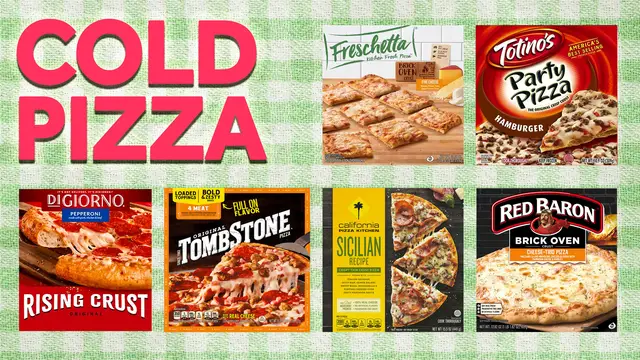
Weird History Food is taking frozen pizzas out of the freezer and into the storytelling oven to talk about everyone's favorite go to cheesy snack. Thanks to some innovations, frozen pizzas have become a staple in just about everyone's freezer. But how did this happen? Prebake your oven with your Tony's or Tombstone pizza and get ready to eat some hot-n-now pizza history.
Show More Show Less View Video Transcript
0:00
Frozen pizza, one of America's greatest culinary inventions
0:04
Foodies will scoff, as they always do, but when you were young and mom was too exhausted to whip up an elaborate meal
0:11
a frozen pie thrown into the oven at 425 degrees for 15 minutes
0:15
was the answer to everyone's prayers. Abundanza! Today on Weird History Food, we're gonna talk about the history of frozen pizza
0:24
Now, no need to preheat your oven. This video is coming out hot and ready
0:30
To truly understand the history of frozen pizza, it's important to have a tiny bit of basic knowledge
0:38
on the pizza's origins before there was a reason to freeze them
0:42
While hard flatbread doused with oil and scraps of whatever food was laying around the hut
0:47
has been around since the Neolithic era, the modern pizza, the kind with various cheeses and tomatoes
0:53
that you and I are familiar with, didn't appear until the early 18th century in Naples, Italy
0:59
These new, warm, fresh cheese and tomato pizzas were an instant hit amongst the poor working class Neapolitans who invented them
1:07
They combined the efficiency of sandwiches with the cheesy tomato-ness of Italian food
1:13
And since most people of Naples stayed within their city limits, pizza remained a regional delicacy for decades
1:19
But all that changed when Italians began immigrating to America in 1880
1:23
As the first wave of immigrants settled in the northeastern U.S., Gennaro Lombardi opened America's first pizzeria in 1905
1:32
But it didn't start out as a pizzeria. Lombardi's was originally a neighborhood grocery store
1:38
One day, one of Lombardi's employees, fellow Italian immigrant Antonio Totono Perro, suggested they try to sell fresh pizzas
1:46
Pero's five-cent large pizzas became so popular so fast, Lombardi's swapped his building's grocery store license for a restaurant license
1:54
and Lombardi's groceries became Lombardi's pizzeria. Soon, pizzerias started popping up all over the East Coast
2:01
Most of them were opened by former Lombardi's pizza chefs, including Pero, who all wanted their own slice of the proverbial pie
2:11
Of course, not every American got to experience the first wave of Italian pizza
2:16
Unless you lived in one of New York's five boroughs, chances are you were probably eating pickled vegetables, grains, and if you were lucky, any meat
2:24
Pizza was just a twinkle in most rural Americans' eyes. That is, until 1928, when two General Motors engineers, Thomas Midgley Jr. and Charles Franklin Kettering, changed home refrigeration forever with their invention of Freon
2:38
This refrigerating gas allowed General Motors to introduce their new domestic Frigidaire refrigerator-freezer combo in 1940 to the home market
2:47
Before that, if you wanted to extend the life of perishables, you stored them in a big wooden chest which was internally cooled with perpetually melting blocks of ice
2:56
With modern home refrigerators beginning to fly off American showroom floors, mom and pop pizzerias got the jump on the home pizza game first, long before anyone thought of selling frozen pies
3:07
in june of 1950 the new york times published an article about a boston pizzeria selling pre-made
3:13
ready pizzas the pizzeria did everything except throw the pie into the oven then customers could bake the raw pie at home Soon New York pizzerias were selling pre unbaked pizzas too And with that one of America first food fads was born
3:29
But Joseph Bucci, a Philadelphia pizzeria owner, wanted to take his unbaked, ready-to-cook pizza game one step further
3:37
and he filed the first U.S. patent for frozen pizza. He called it the method for making frozen pizza
3:44
Once Bucci figured out how to freeze a pizza without the sauce seeping into the dough while still keeping its original taste and texture
3:50
other independent pizza makers took his lead, and small runs of regional frozen pizza brands started popping up all over local grocery stores
4:03
One of the very first pizzaiolos to master Bucci's frozen pizza technique was Jack DeLuca of East Cleveland, Ohio
4:10
which had a very large first-generation Italian-American community at the time. Oh, and since you're wondering, Pizzaiolo is Italian for a professional pizza chef
4:18
And it's also a fun thing to shout at your Domino's delivery driver. After experimenting with different ways on how to preserve his pizzas for months at a time
4:26
De Luca perfected how to freeze pizza. Suddenly, he was selling $20,000 worth of pizza every month in 1952
4:33
Converted for inflation, that would be over $223,000 a month in today's economy
4:38
That's a lot of dough. All that said, it was Rose and Jim Totino who took the frozen pizza game to new heights
4:45
Totino, that name probably hit your ears like a Pavlovian dog whistle
4:49
Once their Minneapolis pizzeria couldn't keep up with their customers' demand for over 500 pizzas a day
4:55
the husband and wife team built a large frozen pizza plant in 1962
4:59
While Bucci, DeLuca, and other independent frozen pizza manufacturers might be able to produce a couple hundred pies on a good day
5:06
Totino's could produce hundreds of pies an hour. To be honest, pizza really lends itself to factory production
5:13
Thirteen years later, after becoming America's top-selling frozen pizza manufacturer, Rose and Jim Totino sold their brand to the Pillsbury Company in 1975 for $22 million
5:23
With the acquisition of Totino's, Pillsbury became the instant leader of the frozen pizza industry
5:29
But their monopoly didn't last for long. Big players like the Schwan Food Company out of Minnesota
5:34
bought the Kansas-based Tony's Frozen Pizza in 1970 and Red Baron's Frozen Pizza in 1975
5:40
to take a big slice out of the frozen pie market. Kraft also got in the game
5:45
when they bought the Tombstone pizza brand, which was just starting to make some serious headway
5:50
in the independent market as well. By the way, what's with the frozen pizza brands
5:54
having weirdly sinister names? Tombstone was the product of a pair of brothers
5:58
Pep and Ron Simic, who co-owned the Tombstone Bar in Medford, Wisconsin
6:03
When the Simmics noticed how popular their in-house pizzas had become, they made frozen versions and shipped them around the country
6:09
By the time the Simic brothers sold their pizza to Kraft, it was the third most popular frozen pizza in the country
6:16
All three brands are still spinning pizzas today, with Red Baron hanging on as one of America's top-selling brands
6:27
It was around this time in the early 70s when frozen pizza got caught up in bureaucratic red tape
6:33
and shady strong-arm politics, which almost crippled the market. Alarmed at the increased use of cheaper imitation cheese in frozen pizzas the Wisconsin Cheesemakers Association tried to force the United States Department of Agriculture you know them as the USDA to set regulations on how much real cheese had to be on a frozen pizza
6:54
The correct answer is all of it, right? All of it should be real cheese. Actually, no
6:59
To keep costs down, frozen pizza manufacturers would use less cheese. So it was in the U.S. government's interest to force laws that insisted that every frozen pizza had to consist of 12% real cheese
7:10
12%? That's it. Still tastes pretty good. This mainly happened because America's annual dairy surplus was beginning to stockpile and go bad
7:19
And the aforementioned USDA was already spending nearly $3 billion a year to buy excess cheese from local farmers
7:26
In short, the American cheese industry wanted a slice of the frozen pizza industry's share of the booming wealth
7:32
Those cheesy, delicious s. When American consumers realized their frozen pizzas tasted different and began to rise in price
7:41
the USDA immediately received 5,600 letters from angry customers. The consensus of the letters was that American frozen pizza lovers did not want their pizzas regulated by the government
7:51
with rising costs being their highest concern. After similar strong-arm tactics were implemented by the National Milk Producers Federation in the early 80s
8:00
the USDA's enforced cheese tactics eventually faded away, ensuring that frozen pizza manufacturers could keep the cheese out of their pies and their prices low
8:13
In addition to being besieged by the USDA's non-regulated cheese distribution fiasco
8:19
the frozen pizza market of the 60s and 70s had grown stagnant
8:22
Every brand featured a flat and round slab of dough with tomato sauce, cheese, and basic toppings like pepperoni, sausage, and standard veggies
8:31
And while boring pizza has the advantage of still being pizza, variety is the spicy meatball of life
8:37
It wouldn't be until the 80s that the frozen pizza market would see radical changes, thanks to Stouffer's Pizza, an independent frozen pizza manufacturer out of Ohio
8:46
Known mostly for its frozen lasagna, mac and cheese, meatloaf and ravioli
8:50
Stouffer's popularized the oh-so-delicious French bread pizza at the start of the 1980s
8:56
If we'd stuck with tradition, it wouldn't be so good. According to legend, Stouffer's new pizza was invented, slash stolen
9:03
after one of their hungry employees stumbled out of a late-night dance club
9:06
and found Bob Petrolos selling his unique French bread pizza out of a nearby food truck
9:11
That Stouffer's employee took Petrolosa's French breadcrust idea back to the office
9:16
and suddenly, Stouffer's was in the frozen pizza business. Honestly, one would expect most pizza innovations come on the back end of a desperate hangover
9:24
Several years later, in 1983, Paul Merridge and his brother David invented Hot Pockets
9:30
a twist on the pizza with roots tied to the calzone, another dish that originated in Naples about 100 years after they invented the modern pizza
9:38
The new trick with Hot Pockets was that the Marriage Brothers were able to design a wraparound packaging sleeve along with a special dough formula that created a flaky crust when thrown into a microwave
9:49
Bagel Bites came onto the frozen pizza scene a couple of years after Hot Pockets in 1985
9:55
Florida businessmen Bob Mosier and Stan Garzinski invested into the simple idea of mini bagels topped with pizza sauce cheese and bits of pepperoni and sausage A simple yet brilliant idea like windshield wipers or insulin Thanks to a catchy jingle that dared parents to feed their children pizza for breakfast lunch and dinner
10:16
Pizza in the morning, pizza in the evening, pizza at supper time
10:20
When pizza's on a bagel, you can eat pizza anytime. Plus the fact that the brand convinced popular pro skateboarder Tony Hawk to be the official Bagel Bite spokesperson
10:31
Mosier and Garzinski's $20,000 gamble paid off, making their invention the top-selling frozen
10:37
pizza product among kids under 16. Of course, Hot Pockets and the Bagel Bites could not exist
10:43
without Pillsbury's Susceptor, an invention that wasn't approved until 1980, years before all of
10:49
those novelty microwavable snacks made the scene. Pillsbury's Susceptors are those glossy gray
10:54
plastic pieces of lightweight cardboard that go beneath your microwavable pizza and burn the
10:58
out of your fingers every single time. Not only did they make Hot Pockets and Bagel Bites possible
11:04
but also reduced the cooking time for a frozen pizza from a quarter of an hour to a few minutes
11:11
Frozen pizza would never be the same again. French bread pizza, Hot Pockets, and Bagel Bites
11:22
were all whimsical riffs on frozen pizza. And there's no question that these kid-oriented snacks
11:28
carried the frozen pie industry throughout the touch-and-go 80s. However, the most important innovation to rock the industry happened in 1995
11:38
This was the year that Kraft Foods reinvented the frozen pizza game forever
11:42
with their new line of DiGiorno frozen pizza, which featured a patented rising crust
11:47
Don't bother looking for the DiGiorno family, though. The Kraft marketing department baked up the Italian-sounding surname
11:53
to convince their pizza-eating customers the brand had Italian roots. And if the authentic-sounding DiGiorno name didn't convince Americans to give this new pizza a try
12:02
early commercials like this one certainly did. Ads featuring tantalizing visions of plump, rising golden brown crust
12:09
had everyone convinced that DiGiorno's pizza was as good, if not better than, the pie delivered by your local pizzeria
12:16
And in some cases, it actually was. Both because DiGiorno's is pretty good and some delivery is pretty bad
12:23
Along with additives such as gums, protein film formers, and surfactants, all of which
12:28
helped dough retain its structure during freezing and thawing, DiGiorno's innovative crust included
12:33
oils, yeast, and baking soda to strengthen the pizza's foundation, helping it stay hydrated
12:39
rather than drying out. And thanks to the combination of savvy marketing and a unique rising crust, DiGiorno not only
12:45
became the top-selling frozen pizza brand in the world within a year, but its sales
12:50
still account for nearly half of all frozen pizzas sold today. So, what's in store for the future of frozen pizza
12:58
It's hard to predict. Currently, there's a big push to make frozen pizza healthy
13:02
with things like cauliflower crust, which seems a bit counterintuitive to the entire ethos of a frozen pizza
13:09
Listen, some things just weren't meant to be. Frogs were not meant to fly
13:13
and pizza is never supposed to feel like the responsible meal choice
13:17
But until some brilliant mind at a frozen food manufacturer can recreate the pizza rehydration scene in Back to the Future 2 for the consumer market
13:24
we're probably going to be waiting a while for the next frozen pizza revolution