Up next in 10



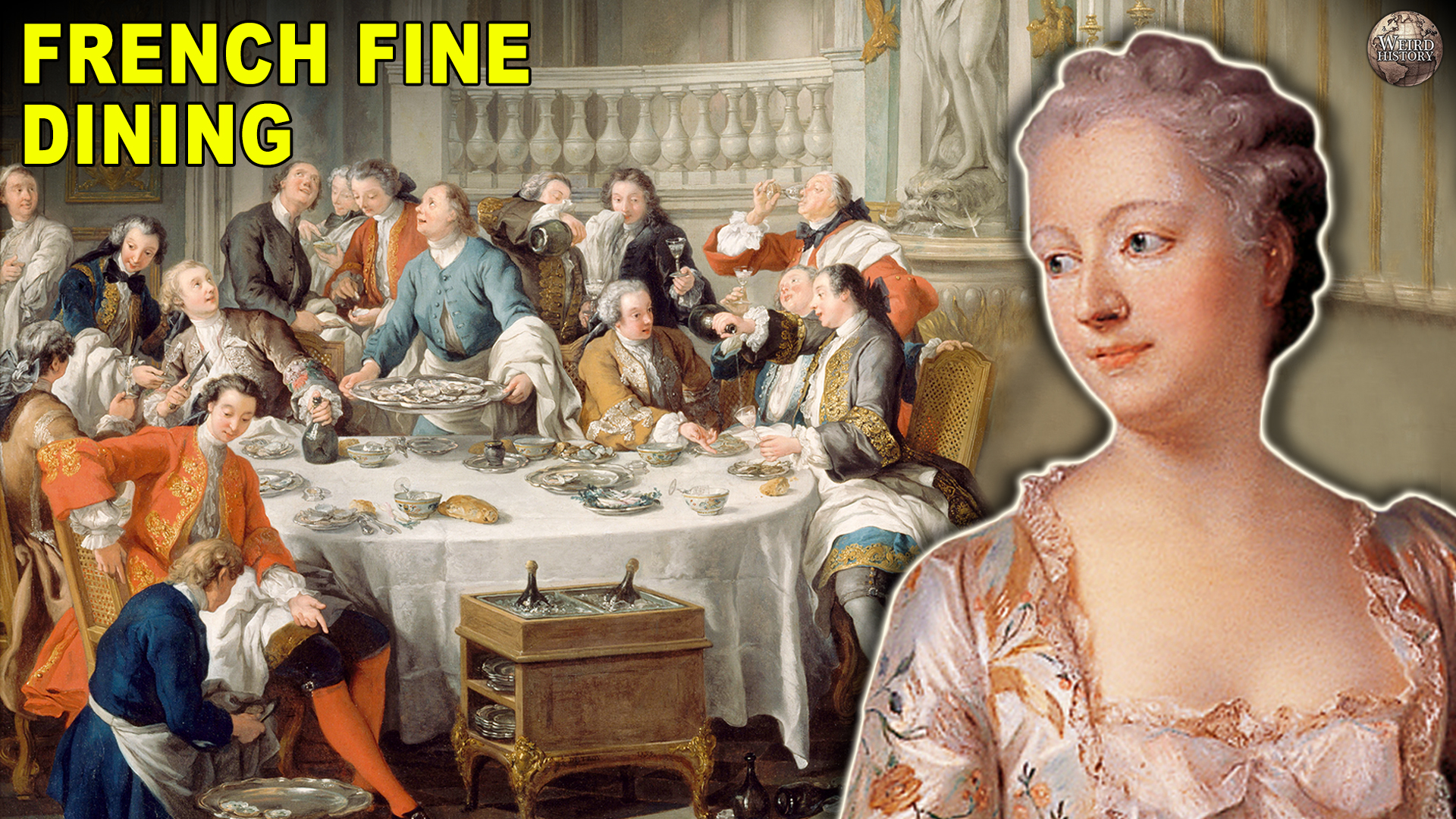
Perhaps nothing was more decadent about aristocrats before the French Revolution than their over-the-top meals; the things French aristocrats ate even make modern Americans looks like humble cuisine ascetics. Foods before the French Revolution were a dizzying array of savories and sweets. Aristocrats of the ancien regime - or "old order," the elite French world before the revolution - tended to have elaborate meals, thanks to the fact that they could afford it; they could buy expensive ingredients and hire master chefs to create mouth-watering dishes.
Show More Show Less View Video Transcript
0:00
Perhaps nothing was more decadent about French aristocrats before the revolution than their over-the-top meals
0:07
Aristocrats of France's ancient regime, or old order, tended to have elaborate meals, thanks to the fact that they could afford it
0:15
They procured expensive ingredients and hired master chefs to create mouth-watering dishes
0:20
While everyone else in the country starved. Today, we're looking at some of the frivolous foods eaten by the French aristocracy as the peasants went hungry
0:29
Okay, time to let them eat cake and chocolate and a bunch of other fancy stuff too
0:43
When Marie Antoinette, a young princess from Vienna who became the final queen of France before the revolution
0:49
first arrived at court, she didn't come alone. In her retinue was none other than her personal chocolate chef
0:55
which is quite possibly the wealthiest thing we've ever heard. Among the many concoctions he whipped up for the queen
1:01
was chocolate with orange blossoms, which yielded a rich, citrusy flavor. Marie Antoinette's love of chocolate
1:08
was hardly unique among the old-timey crowd. Men, women, and children in the 18th century
1:13
had become wild about chocolate, and it was a treat reserved for the upper class
1:17
Louis XIV's Palace of Versailles was basically an aristocratic universe of ritual and decadence
1:30
with Louis firmly at the center. Like the king himself, who took dinner alone in his chambers
1:35
in a highly ritualized manner, the courtiers of Versailles ate well. The food was just as
1:41
over the top as their costumes and hairstyles, especially since aristocrats tried to one-up
1:46
each other with their menus, like a pre-revolution master chef. For example, included on the menu at the Marquis de Louvois banquet
1:53
in 1690 were poached truffles. Truffles, which are decadent and expensive even today
2:00
would have been a delicious treat for the Marquis' hyper-privileged guests. Interestingly, in the preceding centuries
2:06
aristocrats wouldn't have been caught dead eating truffles. Because they came from the ground, they were considered to be peasant food
2:14
Basically, truffles were strictly for the poors until the moment a rich person tried one
2:19
Sort of like rabbit, lobster, and living in a tiny apartment in Manhattan. Oysters are a popular modern-day treat, but the aristocrats of pre-revolutionary France
2:31
really went wild for them. Getting oysters and other seafood to the tables of the ruling class was no easy feat Fishermen and sellers in Paris developed a system of a time that got seafood to the Paris markets early in the morning so that it could reach the aristocrats later in the day
2:47
So beloved were oysters amongst French high society that ensuring one's employer had a
2:52
ready supply of them was sometimes a stressful task. One chef, François Vettel, actually offed himself with his own sword after a delivery
3:01
for a banquet failed to arrive. It might have been less an honor thing
3:05
and more of a, I'd rather die than keep dealing with a thing. Oddly enough, the period leading up
3:13
to the French Revolution saw an increase in the number of cookbooks that were published
3:17
But these definitely were not like modern day cookbooks. Directions were often vague, and they
3:22
did not use standard measurements. Add a thackeray of smudge and steamer
3:27
bobbies for no less than a quarter turn of the jerry tree. So, uh
3:31
Like a teaspoon? Is this food or a paint recipe? Still, these cookbooks are a window into the world of gourmet cooking in the 18th century
3:39
especially if chefs tried to appeal to the elite's appetite for novelty foods that would surprise their guests
3:44
One such dish was the delicious-sounding chicken in bagpipes. However, rather than a woodwind instrument stuffed with the colonel's 11 herbs and spices
3:53
this dish involved chickens that were cooked in lamb bladders, which the cook was supposed to inflate, like bagpipes
4:00
Contrary to popular belief, Marie Antoinette was never really comfortable with the elaborate
4:05
public dinners that had become ritualized at Versailles. In fact, she rarely ate in public and preferred to eat in private
4:13
But occasionally, she was known to have some decadent meals from time to time
4:17
Among them was breaded foie gras, duck or goose liver, which is considered as decadent
4:23
as it is unappetizing. Organ meat rolled in panko? Oh, no thanks
4:28
I ate on the way to the palace. As Louis XV's mistress, Madame de Pompadour was one of the most influential women of the 18th
4:36
century. But her power extended far beyond the royal bedchamber. As a patron of the art
4:42
she often entertained and even employed her own chef. Among the food prepared for Pompadour and
4:48
her guests was stomachs of riverside birds with sand-leek sauce. The only thing tastier than a
4:54
Bird's stomach is a bird's stomach full of sandy vegetable juice. As truly unappetizing as it sounds
5:01
it's also an important lesson. By the middle of the 18th century, the elite class in France
5:06
often crafted their menus for the effect and shock value rather than the food itself
5:11
Sort of like if Marilyn Manson became a celebrity chef If history shows us anything it that rich people get bored very easily
5:23
Though all expensive wines were welcome at Versailles, one towered over the rest, champagne
5:29
Following techniques introduced by a 17th century monk named Dom Perignon, the name primarily associated with champagne today
5:38
champagne became a popular drink among the purse laden. Specifically, Louis XIV notably loved champagne
5:45
though the bubbly beverage's popularity at Versailles would outlast the Sun King
5:49
Rumor has it that Louis XVI and Marie Antoinette rang in the New Year with champagne
5:54
which would mean they started a New Year's tradition that continues to this day
6:03
Drinking water in an age before mass purification could be a risky business
6:08
One sip of the wrong batch could send you swiftly to your deathbed. So it's no surprise that Marie Antoinette was persnickety about her water
6:16
especially after she discovered the only water that did not make her ill
6:20
came from a spring at Ville d'Avray near Versailles. She refused to drink water from any other source
6:27
And while the spring was only a few miles away from the palace, someone still had to go fetch it for her on a regular basis
6:34
and that someone's name was definitely not Marie Antoinette. She was even allowed Ville d'Avray's water
6:40
when she was in prison during the French Revolution. Now that is privilege
6:45
I wonder what vintage her toilet wine was. Brioche has a long history
6:53
The word was actually first used all the way back in the 15th century. But brioche is a rich, buttery bread began to develop in the 18th century
7:02
French aristocrats in particular fell hard for this hunk of starchy goodness
7:07
The elite class could afford more butter and flour, so their brioches were far richer and
7:11
more heavenly than those of the peasant classes. The croquette, a savory breaded roll filled with meat, was hardly unique to France
7:20
In fact, versions of it exist in one form or another all around the world
7:25
But François Massulot, one of the talented chefs working at Versailles, developed his
7:30
own version, and the recipe appears in his cookbook, first published in 1691
7:35
Masulat's version was stuffed with a ragu, but he also made it with truffles and cream cheese
7:44
Dinner in the pre-Revolution court wasn't just a social occasion. It could be an aesthetic experience for royal foodies even before Instagram As such how food was presented was part of the pleasure of dining One cookbook from the 18th century includes a recipe for pumpkin soup that was to
8:01
be served in a hollowed-out pumpkin that had been coated with meringue. Eating a novelty dish out of
8:07
an actual jack-o'-lantern sounds like something you'd find in Flavortown, but it would have been
8:11
featured at the highest of high society feasts in France. Speaking of meringue, like many foods
8:25
historians can't quite pin down the origins of the sweet treat. Some even claim that Queen Maria Lachinska
8:32
the Polish wife of King Louis XV, brought meringue with her to the French court
8:36
But wherever it came from originally, it was a regular fixture at Versailles
8:40
Rumor also had it that Marie Antoinette loved to eat meringue. Let them eat meringue
8:45
Yeah, that doesn't have the same ring to it, does it? Kind of sounds like an exhausted wedding DJ
8:50
One of the most important names associated with French pastries is Nicolas Stroror
9:02
Stroror got his work starting in the Polish royal court, and when Princess Maria Lachinska
9:07
traveled to France to marry the young King Louis XV, Stroror came with her
9:12
You knew you'd bring a personal cake chef if you had one. Stroror introduced the baba cake to the Versailles court, and they went mad for it
9:20
Baba, which is simply the French word for what is essentially a Polish bundt cake
9:24
was a cake that was soaked in fortified wine. If you were a sugar junkie or an alcoholic, and royal courts tended to be full of both
9:31
this was the stuff of dreams. The many-layered mille foie, also known today as Napoleon's
9:38
was a specialty of 18th century pastry chefs. After all, the elite were attracted to delicate foods in the 18th century
9:44
and there was perhaps nothing more delicate than a multi-layered pastry. The 18th century version differed from the modern one in a key respect
9:53
Instead of cream holding together each layer, 18th century pastry chefs used jam, like a
9:58
bougie PB&J. Queen Maria Lechinska may not have received much love in her own lifetime, considering
10:04
her husband King Louis XV was infamous for keeping mistresses. But she had a big part in the evolution of French cuisine
10:11
In fact, one popular dish from the court of Versailles was even named in her honor
10:16
Boucher à la Hrenne is a savory pastry typically made with chicken and mushrooms
10:21
although it can also include veal sweetbreads or ham, or even seafood if you're feeling it
10:27
Having a scrumptious dish named in your honor almost does make up for the fact that your husband tried to sleep
10:31
with every woman in France. Almost