Up next in 10



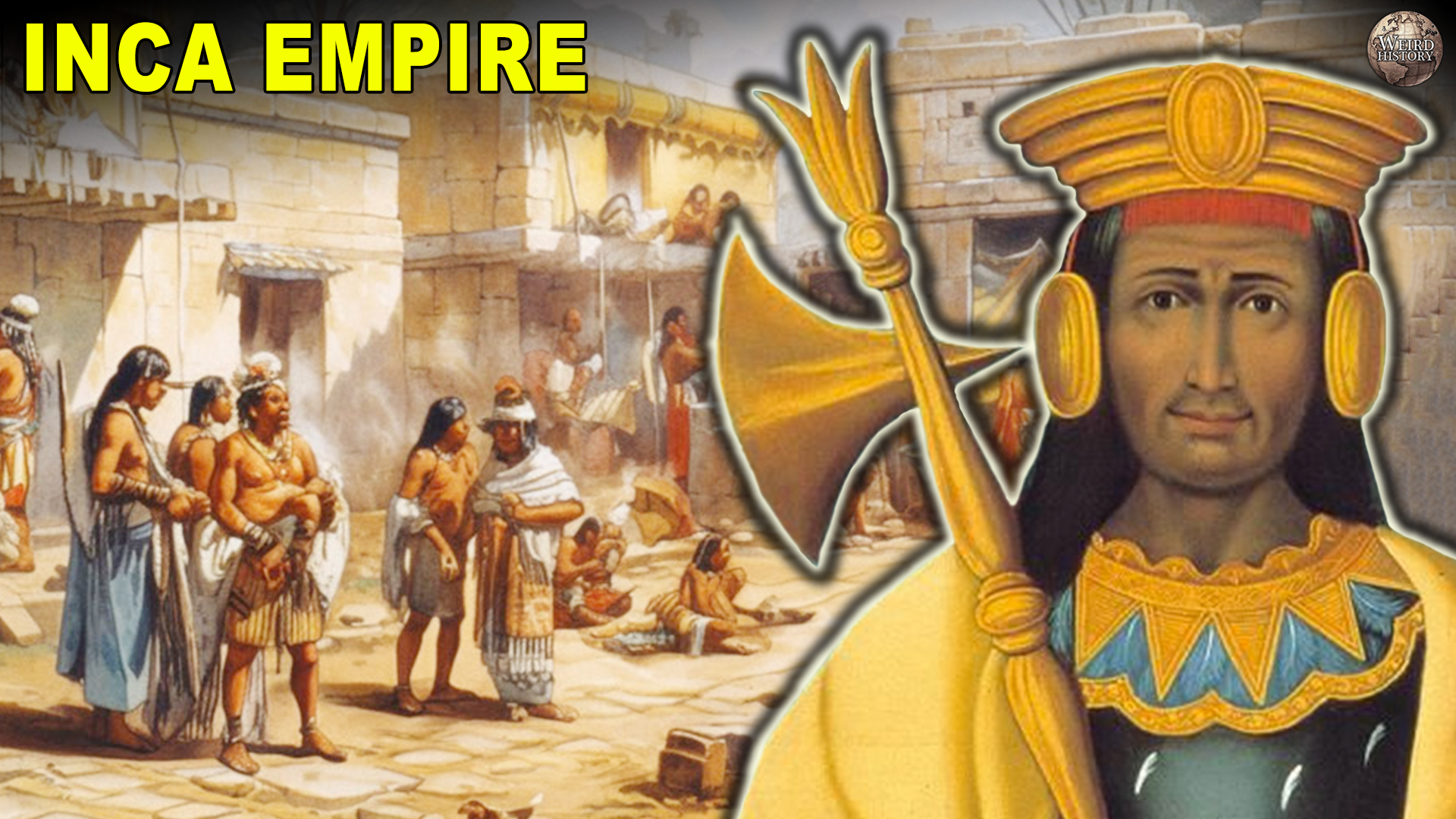
aYou've likely heard of the advanced skills of the Inca Empire. From creating a reliable system of measurement and communication to building a 25,000-mile road system, the Incas were brilliant, innovative people. However, like many native populations, they were bested by the Spanish conquistadors when they invaded in the mid-1500s. The European conquerors stole or destroyed much of the priceless Inca art and artifacts, so we must rely on stories and legends to build the narrative of what life was like for the Incas.
Show More Show Less View Video Transcript
0:00
The Inca were truly a people ahead of their time
0:04
They created intricate highway systems, commanded powerful warriors, and inspired one of the
0:09
greatest Disney movies, The Emperor's New Groove. But as legendary as the rise of the most powerful empire in South America was, its downfall
0:19
was equally historic. Today, we're telling you all the most interesting facts about the Inca Empire
0:25
Time to get Inca hoots. The Inca originated in South America, in the Andes Mountains around the 12th century
0:36
According to Inca legend, Inti, the sun god, created the whole civilization by sending his son to Earth
0:43
Eh, where have you heard that story before? The Inca first referred to themselves as Tawantad Suyu, which means the four regions together
0:51
referring to four different areas they had conquered, each with their own unique environments, crops, and population
0:57
You should start referring to yourself as that when you play Risk. From their humble mountaintop beginnings, the empire would go on to span roughly 2,500 miles
1:06
That was enough to run through present-day Colombia, Ecuador, Peru, Bolivia, and Chile
1:10
Jeez, save some of South America for the rest of us. And they didn't just conquer their lands willy-nilly either
1:16
The Inca were smart about it, leaving soldiers behind to maintain order and peace in their newly acquired land
1:22
The Incas really began to thrive after Sapa Inca, or paramount leader, Pachacuti Cusi Yupanqui, was crowned in 1438
1:31
Under his extraordinary reign, the Inca empire expanded thousands of miles north and south
1:36
He also made up the rule that said royal successors don't inherit any of this land
1:41
So you better get busy conquering on your own, son. But Pachacuti wasn't just interested in expansion of his domain
1:47
He also spent time furthering his existing towns by creating intricate irrigation systems
1:53
allowing farming to boom. And that's just one example of the amazing things the Inca people were able to create
2:02
When you're stuck on the highway during your commute and are looking for someone to blame
2:06
why not the Inca Empire? One of their all-time greatest accomplishments was their vast system of highways
2:13
The Great Inca Road, as it was known, was somewhere in the neighborhood of 25,000 miles of roads and bridges
2:19
that stretched all throughout the Inca empire's domain. And most of the drivers still won't let us merge
2:25
Come on, Incas, move! They were able to build with exact measurements by using something called the Kipu
2:31
which was a device made of data recording strings and knots, sort of the USB storage drive of its time
2:37
Each string contained varieties of different information such as measurements census information financial records and more Using this data Inca builders could make calculated designs creating things like suspension bridges made of Ichu grass
2:50
and earthquake-resistant buildings made of dry-fitted masonry. Just don't get the strings tangled up
2:56
It's like trying to separate Christmas lights, except if you screw up, you blow up a bridge
3:01
Come on, Kipu, separate! As the Incas conquered more and more territory, they found themselves in charge of many different
3:11
peoples and cultures, and the Inca rulers created an organized system of delegates of varying levels
3:17
of power and influence. You had the king, followed by his high priest slash field marshal
3:23
ten loyal families of the ruler, and then another layer of Inca nobles. It was like a lasagna of
3:29
ancient government. Of course, there were pros and cons to being conquered by the Inca. Pros
3:34
included guaranteed food, state-sponsored work, and military protection. Over in the cons column
3:40
were concerns such as every so often they might sacrifice you to one of their gods
3:44
Now, that may seem like a pretty harsh trade, but have you seen all those roads? If you were lucky
3:50
you were chosen as one of the aforementioned 10 loyal families and given special honorary Inca
3:55
status. If you were unlucky, well, kind of feels like we covered that one already
4:00
Living under Inca rule was high risk, high reward. The Inca capital of Cusco was pretty massive and downright impressive. At one point, holding
4:13
150,000 residents, or half of the number of people in your artsy cousin's Brooklyn polycule
4:19
And the Inca went to great efforts to make sure the city was livable and comfortable
4:23
They kept naturally ventilated storehouses, called kolkas, outside the city center to hold their food and goods
4:30
Wonder if they had ancient bodega cats there, too. Kolka cats? Speaking of cats, Cuzco was alleged to be in the shape of a puma
4:39
with the tail containing the homes of some lower lords, the body of the puma being the main plaza
4:44
and the head housing all the ceremonial temples. Sorry, Michiganders. There's a new place that is shaped like something else in town
4:51
and looking like a puma is way cooler than looking like a mitten
4:56
And if you were partying it up at the puma's head, which tragically was not the name of a popular Inca club but should have been
5:03
you could expect gold, jewels, and a large gold basin full of chicha beer in the temples for ceremonies
5:14
Textile art was a popular pastime in the Inca empire and much of it was created for the state
5:19
Rather than forcing monetary taxes Inca rulers allowed their people to provide work or goods including textile which people were allowed to custom design These designs would often be a nod to a specific culture
5:31
and was more impressive than having a plain, undecorated item. If your textiles aren't dazzling, get them out of our faces
5:39
Along with textiles, powder and metalwork were also used for art. But you wouldn't see depictions of gods or myths or everyday tasks
5:47
The Inca were more interested in abstract geometric shapes and patterns. And they probably had to deal with a lot of people sneering
5:54
my kid could sculpt that. You could also find life-sized statues of golden and silver animals
6:00
adorning temples and ceremonial spaces. Like most ancient civilizations, the Inca worshipped a whole bunch of gods
6:12
And the VIP, vastly important power, of course, was Inti. the sun god and patron of conquest
6:19
Because if there's two things the Inca loved, it was conquering and the sun
6:25
Whoever was ruling the Inca at the time was considered a descendant of Inti
6:29
legitimizing their role as leader. If only the characters on Succession had this helpful metric
6:35
there wouldn't have been a show, I guess. Inti was also the subject of the most famous statue
6:39
in the entire Inca empire. The gold and jewel-encrusted statue featured Inti as a young boy
6:45
and was essential in religious ceremonies and funerals for departed rulers. These ceremonies involved cremating the internal organs of the deceased king
6:54
and placing the ashes in the statue's stomach. Ashes to ashes, guts to guts
7:01
We'll never see this fancy golden statue, however, because the Spanish made sure to swipe it when they pillaged the Temple of the Sun
7:08
Speaking of which... The Inca military was great at conquering and expanding
7:17
So how were they seemingly so easily defeated when the much smaller Spanish Armada arrived in the 1500s
7:24
For starters, their armor was mostly made of cotton, and the conquistadors' armor wasn't
7:30
Light armor is well and good when you're used to fighting with clubs and wooden spears
7:34
but the Spanish had heavy plate armor and steel blades, not to mention guns
7:39
can't overstate the guns. It's also important to note that the Inca army
7:43
was mostly peasants, who were unprepared and unfamiliar with the fighting prowess of the Spanish
7:48
The Spanish also used horses on the battlefield, which absolutely blew the Inca's minds
7:54
as there were no horses in Peru. And so they had no experience facing cavalry
7:59
The closest thing they had were llama, and you can really ride one of those in the battle The Spanish also learned that the Inca made a lot of enemies during all their conquering adding more friendlies to the conquistadors ranks The conquistadors ended up
8:13
slaughtering 7,000 Incas, kidnapping the king, and eventually pumped him off. The Spanish had
8:19
the Inca capital city, Cusco, in the bag within a year, signaling the end for the mighty Inca reign
8:25
After that, more European settlers came to town and started coughing all over everything
8:30
They had diseases the unsuspecting Inca had no names for. And like their armies before them, their immune systems could not cope
8:37
Somewhere between 50 to 90 percent of the Inca population contracted smallpox
8:42
influenza, typhus, diphtheria, measles, or even chickenpox. And whoever wasn't killed by these diseases ended up weakened and unable to work
8:53
Crops suffered, communications broke down, and the Inca empire collapsed. Unfortunately, a lot of pieces of the Inca Empire have been lost to time
9:06
But one thing we still have in surplus is the Inca language, Quechua
9:10
which is spoken by about 12 million people around the world. That's a lot of Duolingo subscriptions, if you can put up with that smug owl
9:18
Quechua is believed to be over 5,000 years old, originating in the Supe Valley during the Caral Civilization
9:25
It spread like wildfire and eventually became the official language of the noble Inca bloodlines
9:31
allowing itself to take root in South American culture forever. Today, you can find many different dialects
9:36
of the language spoken in Peru, Ecuador, Chile, Colombia, Argentina, and Bolivia
9:41
In fact, Peru and Bolivia ensure all their children are bilingual and grow up learning the ancient language
9:46
via their national education programs to ensure the dialect will live on
9:54
If you want a snapshot into the everyday life of the ancient Inca
9:58
go no further than Machu Picchu in South America. Equivalent to the Great Wall of China or the Acropolis of Athens
10:05
Machu Picchu is an ancient relic hidden in the mountains just outside Cusco, Peru
10:10
It was built around the 15th or 16th century and was only used for about 100 years before it was abandoned
10:16
This is probably due to the Spanish invasion. However, it is not believed that the conquistadors ever knew about the place
10:23
Its original purpose is not fully known, but experts believe it may have been a settlement for Inca royalty
10:27
or possibly used for religious rituals. Read Sacrifices. It has since been excavated
10:34
and today visitors can see the remains of the amazing buildings made by the Inca
10:38
as well as traces of the advanced irrigation system they had in place. But if old buildings aren't your thing
10:43
there's also a McDonald's in the Cusco Plaza de Armas, where you can presumably enjoy a big machu