Up next in 10



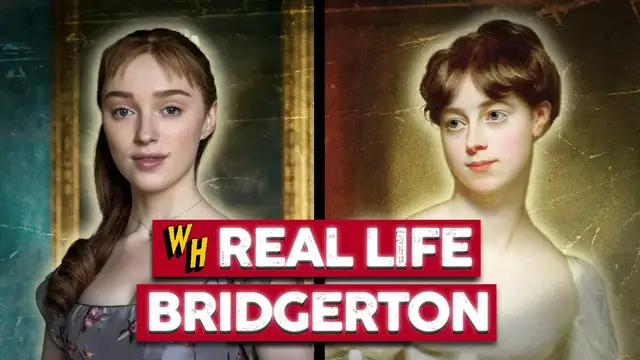
Based on the famous Julia Quinn romance novels, Netflix and Shondaland’s Bridgerton and its spin-off, Queen Charlotte: A Bridgerton Story, have made quite the buzz and generated a solid fanbase globally. Set in the Regency Era, the plot follows the trials and tribulations of the higher classes, who gravitate around their queen and risk the disapproval of the ton with their scandalous actions.
Show More Show Less View Video Transcript
0:00
Set in Regency London during the early 1800s, Netflix's Bridgerton follows the romantic
0:05
escapades of the titular aristocratic family. Living in a social world known as the Tun
0:10
Regency high society families, like the Bridgertons, lived in a world governed by rules
0:15
that, if broken, could ruin a family's fortunes. Though the series imagines a period of rakes
0:20
heiresses, debauchery, virtue, glittering parties, seedy dens of vice, and at least one guy's very
0:27
cute butt, there is still a glimmer of reality within the streaming hit. So how accurate is
0:32
Bridgerton and his depiction of the early 19th century? Well, today we're going to discover what
0:38
it was really like to live in Bridgerton. All right, young nobles, let us make our way through
0:43
the social season. The Regency period in Great Britain technically lasted from 1811 to 1820
0:53
when the Prince of Wales ruled as regent in place of his father, King George III
0:57
Though officially only nine years long, the regency as a social and cultural era
1:02
extended beyond that chronology and was part of the larger Georgian period, 1714 to 1837
1:08
It was the era of Jane Austen and Waterloo, imperialism and romanticism
1:13
slavery and the Industrial Revolution. Though some of Bridgerton's world building is based on the historical record
1:19
however loosely, it doesn't present the past exactly as it was. Rather, the show plays with historical details to reinvent what the past could have been
1:27
a candied wonderland free from the harsh realities that darkened the era
1:31
a world preoccupied solely with intrigue, scandal, and beautiful people falling in and out of love
1:37
Probably better than slavery, yeah? Bridgerton takes place over a season, and we don't mean the weather
1:46
The season, known historically as a social season, was a time of year that dominated the upper crust of Regency London
1:52
From roughly February to June, the upper classes came to the city to participate in a lively social
1:57
scene of exclusive balls, parties, and various entertainments. But aside from libations and
2:02
happy-go-lucky affairs, these social seasons provided major opportunities for love and politics
2:07
Because so many young socialites from the ton were afoot during these balls and parties
2:12
the season enabled elite families to broker marriages for their eligible sons and daughters
2:16
While many of London's high-class lords and ladies simply cavorted around the social scene
2:20
Many saw these affairs as the place to found a future family The season was so notorious for betrothal among the ton that roguish poet Lord Byron nicknamed London party scene the Marriage Mart And for
2:32
good reason, though much of the Western world now views marriage as an act of passion, things were
2:36
not so in the 19th century. In those days, to wed another was more like starting a business
2:41
and the business of marriage was the business of reproducing familial wealth. Kind of makes sense
2:46
right? Marry the rich, and the rich get richer, produce a worthy heir, and the wealth stays in
2:50
the family. Allegiances are forged and the roots of family trees intertwine. And love
2:55
why that's just table setting, my dear. As historian Hannah Greig explains
3:00
marriage brokering during the season was all about keeping the money and the power within
3:04
a fairly small circle of society by controlling the pool of suitors. That's what gives it the
3:08
market aspect. Love isn't blind, it's capitalist. In the Netflix show, lead hunk Colin Bridgerton
3:18
loses his heart to Marina Thompson. Unbeknownst to Colin, Marina needs to marry in a hurry to
3:23
conceal her extramarital pregnancy. So when she laments that they can't get married quickly enough
3:28
in episode 6, Colin suggests they run away to elope, somewhere special, a place for young lovers
3:33
to finally take those big steps down the aisle. A place where marriage comes quickly and few
3:38
questions are asked. The destination for those with money to share some hasty vows and take in
3:42
the sights. Sound familiar? No, there aren't any Elvis impersonators here. Although Las Vegas
3:47
wouldn't be founded for another century, the young lovers of the Tun had another quickie wedding
3:52
destination. Gretna Green, an idyllic village in Scotland, was Regency London's go-to elopement
3:57
site. Because engaged couples of the English persuasion had to wait weeks to marry, many found
4:02
a loophole in Gretna Green. Thanks to Lord Hardwick's Marriages Act of 1753, getting married
4:07
in the Church of England was a major headache filled with hoops and hurdles. With long waiting
4:12
lists and steep rules of engagement, the church wasn't an option for those in need of quick vows
4:17
But fortunately for couples like Colin Bridgerton and Marina, the law didn't apply in Scotland
4:22
In a rush to marry, the pair headed to Gretna Green, a short and scenic trip that took them across the Scottish border
4:27
So the next time the Vegas drive-thru chapel is busy, consider a trip across the Atlantic
4:35
In episode 3 of Bridgerton, the characters Daphne and Simon the Duke rendezvous at a lovely establishment known as Gunter's Tea Shop
4:42
The scene is a fan favorite, and the tea shop has become something of a white whale for televised foodies
4:47
And who can blame them The setting is lavish the conversation divine and the Duke really really seems to be enjoying his ice cream In reality Gunter Tea Shop was a popular Regency establishment
4:58
Well-positioned on London's fashionable Berkeley Square, Gunter's became the ton's favorite go-to sweet spot
5:03
because Gunter's specialized in cold treats like ice cream. This destination provided hot commodities for the wealthy socialites of 19th century London
5:11
Who doesn't love an ice cream date with their soon-to-be betrothed? Or a steamy conversation over a cup-up
5:16
Further embedded in the big business of ton marriages, Gunter's Tea Shop even catered food for high society events
5:22
Yes, during the season's many balls and classy functions, one might see the familiar treats and delicacies of London's favorite sweet spot
5:33
At the end of episode one, the Bridgertons go to Vauxhall Gardens
5:37
where Daphne and Simon agree to con society into thinking they are a match
5:41
In the scene, the gardens are depicted as an extravagant destination full of light and life
5:46
Awestruck by the austere set for the show, audiences' imaginations ran wild
5:51
In reality, Vauxhall was one of the so-called pleasure gardens that entertained Regency Londoners
5:56
Pleasure gardens offered something for everyone among the ton. Illuminated pathways, gardens, fountains, fireworks, concerts, masquerades, and plenty of food to go around
6:06
Ooh, do we smell Gunter's ice cream? Aside from goodies and gardens, chances for mischief were also abundant at Vauxhall
6:12
Off the gilded pathways, beyond the lantern light, dark corners of the gardens provided opportunities for illicit rendezvous
6:20
And though these forays into the shadows put entire family legacies at risk, many could not resist the urge to step off the chosen path
6:27
Vauxhall Gardens was theoretically open to anyone who could pay the price of admission and was a prime example of urban social mixing in its day
6:35
But perhaps, to the surprise of no one, aristocratic and royal visitors tended to keep to themselves
6:40
As historian Amanda Vickery put it, Vauxhall might have resembled an enchanted wood
6:45
but Prince and Pauper knew their place, even in Fairyland. In Episode 6, Lady Danbury, a black noblewoman, explains the origins of Bridgerton's racially
6:57
mixed regency world. Look at our queen. Look at our king. Look at their marriage
7:02
Look at everything it is doing for us, allowing us to become. We were two separate societies divided by color, until a king fell in love with one of us
7:10
Love, Your Grace, Conquers All. With its color-conscious casting, Bridgerton depicts a racially diverse inclusive British past Though the aristocracy of the Regency may not have been as diverse as the show portrays British history itself was less homogenous than most people imagine Folks from a variety of racial and ethnic backgrounds converged on
7:28
late Georgian London. Residents and visitors included Persian students, Indian nurses and
7:33
sailors, black cabinet makers, and abolitionists. In 1810, the country even got its first Indian
7:39
restaurant when Dean Muhammad, a former East India Company soldier, set up the Hindustan
7:43
coffee shop in London. But unfortunately, diversity didn't translate to acceptance in high society
7:49
Far from it. Many upper-class Britons in the Regency got their wealth from slavery
7:54
which officially existed in the British Empire until 1833. And by the late 18th century
7:59
racial attitudes had hardened to the detriment of people of color. Dido Elizabeth Bell, for example
8:04
was a mixed-race heiress who grew up in the household of her powerful great-uncle
8:08
Lord Mansfield. Though privileged, connected, and well-loved by those who knew her
8:12
Bell still wasn't fully accepted as a member of high society. Although Bridgerton serves audiences an imaginative world of peace and hope
8:19
the unfortunate reality of the Regency era's racial divide is one of undue hardship and cruelty
8:28
Throughout the hit Netflix show, leading Lady Daphne Bridgerton narrowly avoids several scandals
8:33
like when lowly Nigel Burbrook aggressively proposed to her at the lavish Vauxhall Gardens
8:38
only to be socked for his poor behavior. And who could forget when she scandalously made out with the Duke of Hastings in those
8:44
moonlit gardens, free from chaperones or inhibitions. Whether punching her desperate sailor or snogging with the dashing Duke, the stakes for Daphne
8:51
were incredibly high. Though young men had more leeway with their behavior, young ladies of the ton had to abide
8:57
by a stricter moral code. Historian Amanda Vickery writes, Chastity, modesty, and obedience were the preeminent female virtues
9:04
Her sexual virtue had to appear unimpeachable, or she would be ruined on the marriage market
9:09
Unmarried ladies stepped out with chaperones who acted as guardians, who protected, surveilled, and vouched for their virtue
9:15
This too served a purpose, assuring a future husband the children his wife would bear belonged to him
9:20
How romantic! Although the Netflix series portrays its loved-crazed characters as charmingly cautious
9:25
they are often predisposed to acts of romantic fancy. But the real world of 19th century Regency London paints a darker portrait of life among the ton
9:33
and romance was no exception. Whether ruined by devious rumors or destroyed by the heat of the moment
9:38
Love and Lust often dismantled high-class society families like the Bridgertons. Anyway, can't wait for the next season