Up next in 10

Bizarre and Bloody Practices of Medieval Barbers
Jan 7, 2026


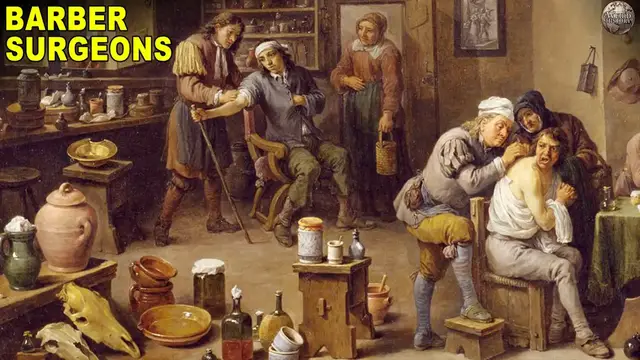
Barbers in the Middle Ages were excellent multi-taskers. It’s true: a lot of surgery in the Middle Ages was done by so-called barber-surgeons, a medieval precursor to the old dude with the combs in the blue water down the street. But they did a whole lot more than just cut people open. The list below features some of the surprising - and often disgusting - things that medieval barbers did besides just cut hair.
Show More Show Less View Video Transcript
0:00
Barbers in the Middle Ages were the ultimate multitaskers
0:04
While it's true that a lot of surgery in the Middle Ages was done by so-called barber surgeons
0:09
these precursors to the old dude with combs in a jar of blue water did a whole lot more than just cut people open
0:15
So today, we're going to take a look at the bizarre and bloody practices of medieval barbers
0:21
OK, prepare yourself for a close shave with history. Perhaps the best description of medieval barbers comes from an inscription on a 16th century
0:35
woodcut by German artist Joost Doman, presented in the first person from a man practicing the trade
0:41
I am called everywhere. I can make many healing salves. I can cure new wounds
0:47
also fractures and chronic afflictions, syphilis, cataract, gangrene, pulled teeth, shave, wash, and cut hair. I also like to bleed. While it may sound like the worst
0:58
Tinder profile ever written, it's not wrong. Medieval barbers did all that stuff, and they
1:03
were considered the experts, although some, if not most, of their methods were a little
1:07
questionable. For example, once upon a time, medieval barbers used to pour boiling oil into
1:13
gunshot wounds in order to cauterize them, which sounds a bit like driving a car into a lake because
1:18
the check engine light came on. Then one day, a famous French barber surgeon named Amboise Par�
1:25
realized how unhelpful boiling oil was as far as treating wounds. How did he make that discovery
1:31
Well, at the Battle of Turin in 1536, Paré ran out of oil and was forced to improvise
1:38
He instead threw together a salve made with some egg yolks, because he had them
1:41
Oil of roses, possibly for the smell, and turpentine, because at that point he was just
1:47
grabbing whatever. After a sleepless night on the battlefield, Paré awoke to discover that his salve, slapped
1:53
together as it was, worked a whole lot better than the boiling oil. Although, to be honest
1:57
anything other than a second bullet would have felt better in a gunshot wound. According to Paré
2:02
he visited with all of his patients, and he discovered that everyone who had been treated
2:06
with his weirdo salve, counter to his expectations, fared better than those who had traditional
2:12
boiling oil. He wrote that each patient he treated with salve had a good rest and that their wounds
2:18
were not inflamed or tumefied. On the other hand, those that had been treated
2:22
with standard boiling oil were feverish, tormented with much pain, and the parts about their wounds
2:28
were swollen, you know, like a person who had been doused with boiling oil
2:32
After repeating the procedure on diverse others, Paré concluded that neither he nor any other
2:38
should ever cauterize any wounded with gunshot. Paré went on to advocate that medical practitioners
2:43
should treat wounds gently, an innovation that, of course, survives to this day
2:47
Although I'm pretty sure that doesn't include turpentine and egg yolks anymore
2:51
Barbers performing minor surgeries in the Middle Ages sometimes offered anesthetic in the form of something called a soporific sponge It was like a primitive form of chloroform made by soaking a sea sponge in a mix containing ingredients
3:04
such as hemlock, mandrake, ivy, hyaciamine, mulberry juice, and opium, among others
3:12
I'm no doctor or even a medieval barber, but it sounds like maybe the opium is doing
3:17
the heavy lifting there. Also, pretty sure hemlock is poisonous, but hey, it's a party
3:22
The sponge is supposed to be completely dried out in the sun during the dog days until all the liquid is consumed
3:28
When the barber needed to knock someone out, they reconstituted the sponge by dipping it in water
3:33
and then placing it under the patient's nose. Some historians have suggested that the sponge contents
3:38
were meant to be imbibed, which would have been a very stiff drink
3:42
Get it? Stiff? Because it'd probably kill you? OK. Pass the sponge
3:47
Instead of university-educated physicians, Lowly barbers in the Middle Ages were tasked with removing kidney stones, and they often
3:55
did it with an audience watching, which adds a real weekday matinee vibe to the term operating theater
4:01
Traveling from town to town with a special lithotomy table in tow, talented barbers
4:06
would perform the simple procedure in just a few minutes in public in order to help advertise
4:11
their services. Some barbers were just showmen looking to make a quick buck
4:15
These so-called stone cutters, that's a hell of an image, were heavily fined if their
4:20
procedure didn't go according to plan. After all, you couldn't just have anyone with zero medical training
4:26
performing surgery in public. Bloodletting and the related practice of leaching are what most people associate with archaic medieval medicine
4:33
And the association holds up. Medieval folks undeniably loved a good bloodletting
4:38
But did you know that medieval people thought that bloodletting was a cure-all that would fix pretty much anything and everything
4:44
That's the reason barbers practice bloodletting more than anything else. As far as they knew, there was nothing it couldn't make right
4:51
It was like Robitussin, if Robitussin stabbed you in a major artery
4:55
One medieval medical textbook even boasted, bloodletting clears the mind, strengthens the memory, cleanses the gut, dries up the brain
5:03
warms the marrow, sharpens the hearing, curbs tears, promotes digestion, produces a musical
5:10
voice, dispels sleeplessness, drives away anxiety, feeds the blood, rids it of poisonous
5:16
matter and gives long life. That sounds pretty good. I'm in. The book also claims bloodletting
5:23
cures pains, fevers, and various sicknesses and makes the urine clear and clean, which is how I
5:28
think everybody likes urine. Of course, in reality, bloodletting doesn't do any of these things
5:33
and it can even prove fatal, which Weird History fans who saw the episode about the death and
5:37
attempted resurrection of George Washington know a little something about. But its complete
5:42
But ineffectiveness as a treatment didn stop some physicians from recommending it for the treatment of pneumonia as late as 1942 That right Some doctors were still prescribing a good old bloodletting the year Bambi came out in theaters
6:00
Medieval barbers looking to advertise their superior bloodletting skills channeled their inner Don Drapers
6:06
and by placing bowls of human blood in their shop windows. While the blood bowls may have brought in new business
6:11
from stray dogs and supernatural creatures, the people of London didn't respond to them so well
6:16
The blood would congeal and get putrid, causing the disgusted citizenry to push for a law banning
6:21
the questionable displays. The law was passed in 1307 with the following wording
6:26
no barber shall be so bold or so hardy as to put blood in their windows
6:31
I'm not sure, but I think that's medieval sarcasm. The barbers were a bit miffed by the public outcry
6:36
For them, the displays were a handy way of recycling unwanted blood. And if they couldn't use it for promotional purposes, what were they supposed to do with
6:44
the blood? Throw it away? Actually, yes. Lawmakers, ever concerned about public health and sanitation
6:50
advised barbers to throw their old bowls of blood into the River Thames instead
6:54
further proof that the Thames has literally never been safe to swim in
6:58
So how did barbers advertise after the Great Blood Bowl ban of 1307
7:03
Some historians believe this is when the practice of wrapping a bloody cloth around a pole
7:06
outside the shop began, a grisly precursor to the wholesome image of a modern-day barber pole
7:16
Believe it or not, human urine has its uses as a cleaning agent
7:20
even though you're probably not going to see it on the shelf of Target anytime soon. The Romans knew it
7:25
In fact, they even recycled their urine to help get their togas cleaner. And it worked
7:29
Truly, ammonia does wonders. Barbers in the Middle Ages knew it too
7:33
and even used stale urine, known as iotonium, as a shampoo for their clients
7:39
That's cool. Whether you could bring your own locally sourced pee from home is still a matter of historical debate
7:45
No doubt some of you are wondering if washing your hair with old pee is a workable life hack for saving money on shampoo
7:51
Well, some modern folks have given it a try. And the general word is that while rinsing your hair with urine will keep it silky and shiny, the whole procedure still makes your head smell like pee
8:00
A document from 1499 detailing the affairs of the Guild of Barbers of Oxford mentions ale basters, an obscure term that initially stumped the editors of the tome Records of Medieval Oxford
8:12
Subsequent research, however, revealed that the lowest class of medieval barbers simply
8:16
couldn't afford a plentiful supply of shaving soap. So they sometimes turned to froth of ale for basting their patients' faces instead
8:24
Yeah, they used beer foam as shaving cream. You know, for when you're looking to give your face that bar rag freshness
8:29
Why Axe, Old Spice, or even Anheuser-Busch haven't resurrected this trend is yet another
8:34
of history's mysteries. Now grab that Michelob and get a good lather going
8:42
A lot of medieval barbers doubled as chandlers Could they be any more medieval Sadly however this had nothing to do with 90s sitcoms In this sense a chandler was just another name for a candle maker
8:56
Why did barbers make candles? Well, chandlers and barbers both used a ton of wax
9:02
Barbers used it as a base in ointments. And chandlers obviously had a great need for it in their candle making
9:08
Sometimes barbers practiced a strange procedure where they would treat a patient by using wax
9:12
to make a model of their diseased organs. They would then present the wax organ at a shrine in an effort to call upon the divine to ease their patients' suffering
9:21
Alternatively, they would make a limb-shaped candle and burn it at a shrine for patients with arm or leg issues, such as gangrene
9:28
While not uncommon at the time, if you see your barber burning a wax effigy of your knees, it's probably time to find a new barber or just get new knees
9:35
Barbers also doubled as dentists in the Middle Ages, because apparently anyone who used pointy instruments at work
9:47
were considered general practitioners. Like their general medical skills, some of their dental techniques were simultaneously modern
9:54
and terrifyingly primitive. To start, the barber would scrape your teeth using toothpicks and scraps of cloth
10:00
OK, so far, so good. But to whiten the teeth, the barber would
10:04
use something called aquafortis or strong water. That is good branding. It sounds strong
10:10
However, aquafortis was actually highly corrosive nitric acid, which will clean your teeth according
10:15
to a generous definition of the word clean. In point of fact, it did do the job it was employed for
10:21
One historian says teeth were known to be considerably whiter after, but only
10:25
because it ate away at the enamel, essentially destroying the tooth from the outside in
10:30
Between the acid mouthwash and the pee shampoo, we're beginning to think medieval barbers shouldn't be trusted with anything
10:41
For a long stretch in the Middle Ages, barbers, for whatever reason
10:45
didn't receive the same level of respect as university-educated physician monks. Can't imagine why
10:50
Physicians and surgeons of the time generally didn't debase themselves by performing things like bloodletting, kidney stone removal, and tooth extraction
10:58
Furthermore, the Pope had outright forbidden physicians from performing certain procedures like bloodletting
11:03
This meant barbers were often tasked with the unpleasant grunt work procedures
11:08
Additionally, barbers were brought in to do the gory elbow work of dissection
11:12
while a physician or anatomist walked them through it, step by step. Physician Andreas Vizalius, who lived from 1514 to 1564
11:21
helped shake up that status quo like a can of shaving beer when he argued, during his second ever anatomical lecture
11:28
that the anatomist would be better served by doing the work themselves. Vesalius simply took the knife away from the barber
11:34
and never looked back. Vesalius was a take charge kind of guy who did what he felt needed to be done
11:39
He even stole the cadavers of executed criminals to use them for practice
11:43
That sounds like unpleasant work. I think I know a few barbers who could help you out with that