Up next in 10



Panel Progress Fine Tuning the Exner Studebaker Future Car
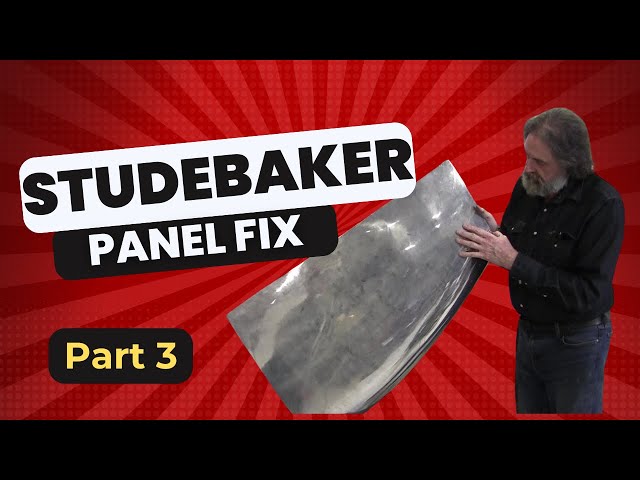
In this episode, we continue the journey of bringing the Studebaker Future Car, designed by Virgil Exner, closer to perfection. Watch as Wray fine-tunes the panels, addressing any remaining issues in shaping and development. Using advanced techniques on the English wheel, we make critical adjustments to ensure each panel fits flawlessly. Whether you’re following the entire build or interested in mastering panel work, this video offers essential insights into achieving professional-level precision.
Show More Show Less View Video Transcript
0:00
standby for episode three fixing the
0:04
rear quarter panel right rear quarter
0:06
panel of this 1948 stud bacer Future car
0:09
it's raline from Pro shaper Workshop I
0:12
got it marked out
0:14
already it's now hitting over here a
0:16
little bit here here and here four
0:19
little spots which is going to let it
0:21
sink in this way and remember we're got
0:23
to sink it in this way too I'm going to
0:25
addess those little spots next wheel
0:27
them maybe I'll pound them with the
0:29
hammer a little bit then wheel them all
0:31
right so I guess I'll I'll hammer these
0:33
out Mallet them out a little bit I've
0:35
got the spots marked on this side but if
0:37
I'm going to Mallet them I had to
0:38
transfer it over to this side so if I
0:42
feel with my hand here I should feel a
0:46
little bit high on this side which I do
0:48
a little bit right here so when to
0:50
knocked that and you can see where the
0:52
wire has been scraping scratching the
0:54
aluminum a little bit right there so
1:02
just a little
1:03
bit baby
1:17
steps yeah I like that now we'll wheel
1:20
it up once you get the r routine down it
1:25
really becomes a no-brainer to make
1:27
these
1:28
panels but you couldn't do it without
1:32
the buck they need a buck that you can
1:35
actually
1:36
read the buck tells you what you need to
1:39
do it's like a road
1:44
map but you have to be able to clamp the
1:48
panel to the buck to get the buck to
1:50
talk to
1:52
you you can't clamp the
1:55
panel you're really
1:57
being vague about it you can't
2:01
see with the wire form it talks to you
2:05
it tells you exactly what you need to
2:08
do there's no
2:10
mystery so while it's in the wheel like
2:13
this you'll often see me rubbing my hand
2:18
it's a little high here so I got to go
2:19
on either side of it so you can do your
2:24
assessment right here without actually
2:26
going to the buck as well cuz you know
2:29
this has to have perfect flow to
2:32
it so this wheel here I call this my
2:35
workos wheel and this has about um a 716
2:40
or so
2:42
interface so it's only making a path of
2:45
about 716 of an inch wide which is what
2:48
about 12 millimet I think and I this
2:52
wheel is heavily radius on the edges I
2:55
like that because that allows it to go
2:58
up from a crown area to a flatter area
3:00
without biting the panel and making a
3:02
big gouge in the
3:09
panel and the wide wheel acts just like
3:13
a slapper if you have a dent here and
3:16
you're hitting it with the slapper the
3:18
dent bridges over or the the slapper
3:21
bridges over the dent same thing here
3:24
you've got that wide wheel on both sides
3:27
of where the low is and it'll bring that
3:30
low up a lot
3:32
faster if you've been watching a lot of
3:34
the videos uh there's been a ton on
3:37
YouTube and also on
3:39
Facebook of uh these new
3:42
machines they are single point machines
3:45
that are making shaped
3:47
panels um there seems to be a lot of
3:50
publicity about them now and at first
3:53
you know I said well that stuff's old
3:55
hat and it is it's been around for 20 or
3:58
30 years you can use the same technique
4:01
in a three AIS Bridge
4:04
Port and what it is is uh it's a
4:06
burnishing action with a rotating ball
4:11
that's rotating against the metal with a
4:13
little force and it's moving the metal a
4:15
little bit at a time it's a it's a
4:19
uh a stretch only operation so you have
4:23
to start with like 80,000 thickness
4:26
aluminum to make a panel that has a
4:29
pretty good Crown in it because you you
4:30
don't have the capability of
4:32
doing uh the shrinking that you normally
4:36
would do if you were hand making the
4:38
panels and there's a couple uh places uh
4:42
in Florida there's a place called salt
4:44
works that I believe they have two of
4:46
the machines now and it looks like
4:48
they're cranking panels out with it and
4:50
you know they're very very expensive
4:53
beyond the capability of most home
4:56
restorers or home builders or whatever
5:00
but uh it looks like they're going to
5:02
make a footh hole especially for making
5:05
aircraft
5:06
handles and there's another company I
5:08
forget the name of them in
5:10
California they have a two-point working
5:14
of the metal and their their uh ball
5:18
tool is not really rotating fast like
5:20
the other one and they're operating on
5:23
both sides of the
5:26
panel and uh I think
5:30
if the prices come down on them they're
5:32
definitely going to have an effect on
5:33
the overall cost of doing this type of
5:35
work because this is labor intensive is
5:38
crazy it's crazy labor
5:40
intensive
5:42
so if those
5:44
machines come
5:46
down coach build car potential bespoke
5:49
car potential is going to get less
5:51
expensive but if you buy one of those
5:53
machines you have to armatize it
5:56
over the the range of work that you're
5:58
doing so you can bring the cost down for
6:02
each panel that you
6:10
make and the panels might not be
6:13
finished with those machines either I
6:14
think you have to tune them up a little
6:16
bit to to make them usable and to be
6:20
able to weld them all together as an
6:24
assembly okay as I look down this I
6:28
still have a Hollow in here because that
6:33
was all fat before and I I uh took that
6:36
out by stretching the edges and I
6:38
probably went a little bit too far so I
6:40
I've actually got to build this up in
6:42
here a little bit I got to take that
6:44
Hollow look out cuz that's not going to
6:47
work what that does is when you put it
6:50
up
6:52
here is going to be the big gap here and
6:55
there's going to be a big gap here cuz
6:57
it's it's hitting here
7:00
it's going to hit at this point which is
7:01
the hollow pot so I got to bring that
7:04
out so now I got to
7:06
wheel a little bit like right in here to
7:11
make this
7:22
straight you can see the panel is
7:25
looking a lot
7:27
better let's see what that looks like
7:35
side I'm still seeing a hollow it's more
7:38
right in here so I'm going to
7:40
concentrate a little more on here and is
7:42
a little bit in here too
8:20
yeah so I don't know if the camera can
8:22
pick up that Hollow with not but when
8:24
you look down right here there's still a
8:27
little bit of concave right right in
8:30
here like that looking at it right there
8:33
there's still a little bit of hollow
8:35
right in there see it so that that's
8:37
where it needs to be worked right
8:39
there so what we're doing let me show it
8:42
with the magic
8:43
marker is say the hollow is right here
8:48
so we got to do this is an exaggerated
8:50
view
8:53
here we're doing this diamond shape of
8:56
work here
9:01
so the most work right here so uh using
9:04
the English patent method I got to want
9:07
to actually do a little bit more work
9:08
right in
9:14
here and less and less as I come this
9:17
way less and less as I come this way so
9:20
that just means less
9:23
passes what are you laughing that tell
9:26
me you see it look d
9:34
oh thank you for
9:49
that lock through and jok
9:52
in I'm Wheeling over the
10:09
it's getting better little bit right in
10:22
there all right in the
10:25
process um it's bringing this curve this
10:28
is an arrangement
10:29
is bringing this curve way down here so
10:32
what I'm going to try to do is see if I
10:34
can take some of that curve out by doing
10:36
the lift
10:40
up I got no pressure on in
10:47
now tell it I don't want that curve in
10:50
there so I'm lifting up on
10:52
it trying to get this side strainer
11:13
remember this is one of the superpowers
11:14
of the English wheel is that you can
11:17
manipulate the arrangement so easy by
11:20
using the lower Anvil or the top
11:24
wheel as full crumbs
11:41
all right now you see this this corner
11:45
is diving down like that so now I'll put
11:48
it in like
11:49
this and I'll lift that up this
11:53
way pulling that corner up
11:58
and the you see this back
12:02
Edge is still a Live Edge so I'm going
12:05
to 45 a little
12:07
bit see if I can settle that down
12:51
now let's see all right it's still live
12:55
a little bit see
12:57
it so I still to get some
13:10
more this is got to come up here on this
13:13
hand
13:44
going bringing this add you round a
13:45
little B
14:08
that's looking a lot better still needs
14:10
a little but let's put that on there and
14:13
see what it
14:14
says the buck will
14:17
talk all right we're fitting pretty
14:19
decent now except it won't go in on the
14:22
bottom here because it's hitting these
14:25
wires right here so I'm going to trim
14:28
that panel I want that panel just to
14:30
cover that bottom wire see it's hitting
14:33
on this wire right here and it can't
14:35
come in you can see that's bound up
14:37
there and
14:40
uh so I'll trim that bottom Edge and
14:43
then if you look up inside here marking
14:46
it to this top Edge needs to be trimmed
14:49
as well so I'm going to mark it uh about
14:51
a half inch over the wire and snap a
14:55
line here and then uh just covering the
14:58
wire on here and snap a line here and
15:01
I'll do that and I like to do that with
15:03
my blue tape all right we got it marked
15:05
up with the blue tape I like the blue
15:07
tape to marck it with it's a real solid
15:10
easy to read line it'll migrate
15:13
sometimes so you got to make sure you
15:14
birtish it down pretty good this is a a
15:18
Chinese sauce cordless Shear I've
15:21
probably showed it a couple times before
15:23
but I've got the borch one I've got a uh
15:26
Metabo one and this one
15:29
and the other ones were more expensive
15:31
this is the best one by far I love this
15:33
one can't buy them anymore I haven't
15:35
been able to find anybody manad sold
15:37
this and then they stopped selling it
15:39
why I don't know I wish H Fray would
15:41
come out with
15:51
one so it's so easy to follow that line
15:54
when you got a nice clean line with the
15:56
tape
16:02
and that's not the finished cut either
16:04
that's going to be that's a still a
16:05
preliminary cut when we get the other
16:08
panel made we'll actually figure the
16:10
actual cut and then do it then all right
16:14
sanded The Edge I took all the magic
16:16
marker off now we'll offer it up to the
16:18
buck and see what the buck tells
16:21
us all right that'll look pretty good
16:24
now what we'll do we got it tight
16:30
everywhere oh it's still being held off
16:32
here I got to cut that a little bit
16:36
more that's holding it off a quarter of
16:39
an inch on the inside it's hitting so
16:42
I'll have to revise that cut a little
16:45
bit but we'll mark
16:48
this that's where that
16:55
goes that's where that goes
17:00
and if I look inside here now we got a
17:03
little bit gaap here and I always read
17:05
these gaps by my finger how much I can
17:09
get in there
17:10
so I can just barely get the middle my
17:13
middle finger in there just a little bit
17:16
everything else is fitting pretty good
17:18
but it's impacting right here so if I
17:20
blow that out right right here if I blow
17:24
that out here that allows that to come
17:26
in so I got to mark this
17:30
really
17:34
good it's about right
17:36
there and then that front
17:40
wire or the third wire in is hitting at
17:44
the
17:47
top all right
17:51
here
17:53
okay so now we only have a few little
17:56
spots the Live Edge on the bottom is
17:59
just about
18:02
gone we'll Hammer that out a little bit
18:05
and see what we got all right we're
18:07
going to pound out these spots
18:12
here notice it was a little high there
18:15
too want to R my run my hand over B
18:30
that to look pretty
18:32
good now what's going to make it look a
18:34
lot better is when I use lower pressure
18:37
and address the whole panel with that
18:40
lower pressure and then we'll put the
18:42
finishing wheel on which is a lot
18:45
flatter than this one has a bigger
18:47
interface that's about I think 3/4 of an
18:50
inch of interface
19:15
just wheel that out till all the lumps
19:17
go
19:18
away and give it a little
19:22
extra so I lightened up the pressure and
19:25
I'm just going to do it once over on the
19:26
side here get some of the uh tracking
19:31
wheel marks out of the wheel paths
19:46
tracking so basically we've been fixing
19:49
this mistake the object of this work is
19:51
to make as little and few of mistakes as
19:55
possible but mistakes do happen and you
19:58
have to know how to fix those
20:05
mistakes the other panel is
20:07
overdeveloped as well the other left
20:10
side it's the right side so I'll have to
20:13
do the same operation on the uh left
20:15
side as well but I won't video that I'm
20:19
just going to video the real challenging
20:22
panels and the ones that need a lot of
20:24
work and to be fixed up and then there's
20:27
a whole bunch of panels that haven't
20:28
been made yet that we will be making and
20:31
then we'll start welding them all
20:32
together and you're going to see a Carby
20:36
born and this is a spectacular car
20:47
too I think Virgil actually would be
20:50
very happy this is actually going to get
20:52
built
21:00
I might have overdeveloped it a little
21:02
bit right here so I'm going to give it a
21:03
little action on this Edge and that
21:07
edge take some of that over development
21:15
out all right try that
21:21
now all right we're going to all clamped
21:23
up I've marked it again it's being held
21:26
up right there so we're got to drag that
21:29
out like I got it circled here this is
21:31
Flowing pretty nice I don't feel any
21:33
High spot here but that's that's that
21:35
culprit that's where this needs to go in
21:38
this way so for that to go in this way
21:41
this has to come out now if we put the
21:43
straight edge
21:45
on we can see this is running pretty
21:48
pretty good see it's doing that diving
21:51
that's what we want there but we have
21:54
you see we got a little rock right here
21:56
so I might have to uh wheel this Edge a
21:59
little bit to develop that
22:02
out so that can go in a little all the
22:05
Live Edge on the bottom is
22:07
gone the bottom uh again doesn't look
22:11
too bad it looks a little Hollow right
22:13
here but it's strong right here so I'll
22:16
have to wheel those edges a little bit
22:19
we're slowly but sure we get it closer
22:21
and closer I'll transfer my marks
22:24
underneath first so I Target it there's
22:29
my oval it's always almost always an
22:32
oval that you're
22:35
working an oval shaped
22:45
spot it's done when you finish it
23:42
I rub my hand on here and make sure I
23:46
got a nice flow feels pretty good now I
23:51
was a little fat over
23:53
here
23:55
so I'm going to wheel that I wheel it it
23:58
upside down it's actually a little more
24:00
effective for stretching
24:06
it I'm right in the middle of the top
24:23
wheel it's
24:26
better now look down here
24:31
to get the straight
24:33
edge they were a little fat in the
24:35
middle they there
24:38
so know it could be arrangement
24:42
though
24:54
yeah give it a little right there it
24:57
seems to be a little low there
25:11
K when you get to this point in the
25:14
development of the
25:15
panel um you don't want to do anything
25:19
aggressive or dwell too much on one spot
25:23
because we're getting close so we'll
25:25
just go backwards if we spend spend too
25:28
much time in one spot we got to pece
25:31
meal fix every one of these little
25:34
little
25:36
spots I can see a little Hollow right
25:39
there when I look in
25:47
there sometimes just a few passes
25:49
through they'll make the trick okay it's
25:52
still right here
26:04
that's
26:06
better I call this the panels talking to
26:09
you when you bounce the light off of it
26:13
and wiggle it a little
26:15
bit it actually will Sparkle a little
26:18
like and it talks right to you tells you
26:20
where it's low spots
26:24
are this is a process of finessing a pin
26:40
all right we'll put that on here I'm
26:41
sure it still needs a little more so the
26:44
panel is AB looking really good now we
26:47
got a couple microwaves in here and
26:50
stuff that'll come out with the other
26:52
wheel really good even that wheel will
26:55
probably straighten it out but we're
26:57
back to the same spots again they got to
27:01
come up a little bit
27:04
more so this one is hitting here we need
27:08
to pound that out so the panel will go
27:11
in some more so mark
27:15
it there space here and
27:18
here and this one is up in
27:24
here right
27:26
here and here
27:30
they're very similar
27:43
spots there they
27:46
go it put
27:48
the straight edge on
27:54
there all right so now we can quantify
27:57
everything too this is
28:00
only you when it well less than a
28:04
quarter I'd say there this is still
28:07
showing bulged out here so that's a no
28:10
fly zone right here so I got to no right
28:16
there say off of that
28:18
spot does it feel high yeah it's a
28:21
little bit high so I got a wheel here
28:23
I'll wheel all around it and that'll go
28:26
down
28:28
there's the panel now it's starting to
28:31
present really
28:35
nice looks like it's supposed to just
28:39
little fine refinement here that's
28:43
all it'll hit that out a
28:56
little wheel that out and we'll see
28:59
where we at
29:41
all right see I've got a little little
29:43
oil can right here let's see if I get
29:45
any of tin a little bit over in here but
29:48
that's so that might well I'll wheel
29:51
those edges a little bit and I'll wheel
29:53
these edges a little bit less than that
29:55
oil
29:57
can they're really
30:17
minor all right that's showing really
30:19
nice now uh
30:23
still at one spot right here is hanging
30:28
me up I got to move that in still this
30:31
way and it's still hanging up a little
30:34
bit up here too so same same exact spots
30:38
it looks like I just said double check
30:40
here you see the wire is scraping right
30:44
here a little bit scratching
31:00
that curve is looking really nice this
31:08
way that will wheel that out
31:45
and Mar wants to bring that camera over
31:48
now we had about a half inch gap on this
31:52
wire and now you can see it's almost up
31:56
against the wire this wire here looks
31:59
like we got about a quarter of an inch
32:01
still
32:02
here and uh we'll still need to pound
32:05
this out a little bit let's
32:08
see
32:09
uh it's hitting down
32:18
here put the straight edge on there and
32:21
see what the straight edge says
32:32
we still got a little strong spot right
32:36
here so I think if I stretch this Edge a
32:38
little bit more over here we'll get rid
32:40
of
32:41
that
32:44
um and we still might need
32:47
to do a little bit here let's
32:53
see yeah right there it could stand a
32:55
little more right there it's not feeling
32:58
High there so but it could come out a
33:00
little bit more right
33:02
there that panel didn't sound like like
33:05
that when I first started with it
33:31
and so I can see that I'm see I've got a
33:34
little bit of low so I could work this
33:36
up a little bit with the wheel right
33:38
here cuz I still got a little concave
33:40
going
33:43
there so I'll bring that Center
33:49
region this Center region needs to come
33:52
up just a little bit right
33:56
there so we'll do those two things we'll
33:58
call it a day and we'll make one more
34:01
video on this part four which will be
34:04
with the other wheel the finishing wheel
34:07
and we'll get this as good as possible
34:09
maybe even buff
34:18
it so we've had about a good hour on
34:21
each one of these videos so that's 4
34:25
hours and it might be the fifth hour for
34:28
finishing into the as close to
34:31
Perfection and there's probably 40
34:34
panels on the
34:35
car
34:38
so let's do the math we see how many
34:41
hours we got to finish this up that's
34:43
just to get the panels finished then we
34:45
have to start joining them together and
34:47
then working all the
34:51
joints Metal Finishing
34:59
the neat thing about the wire for too is
35:01
after we get these panels all finished
35:04
we can have them all clamped on the wire
35:06
for and as long as there's no mechanical
35:09
lock which was holding us to taking it
35:12
off we can actually tack them together
35:15
right on the wireform keeps them all in
35:17
alignment really nicely
35:29
and now I'll do this little section here
36:05
here we
36:09
go it's not talking to me too much I
36:12
don't see too much it's looking pretty
36:14
good I'll put that
36:23
on it's actually hitting right here now
36:26
so it's got to come up a little bit more
36:28
but I think that's what we're going to
36:29
leave it for
36:31
today uh we'll do that final super
36:35
finessing in one more
36:38
video uh because it might take another
36:41
half hour or 3/4 of an hour to get this
36:43
perfect and I don't want to make this
36:45
video too long so thanks for watching I
36:48
hope you learned some stuff that's Ray
36:50
from Pro shaper Workshop in Charlton
36:52
Massachusetts