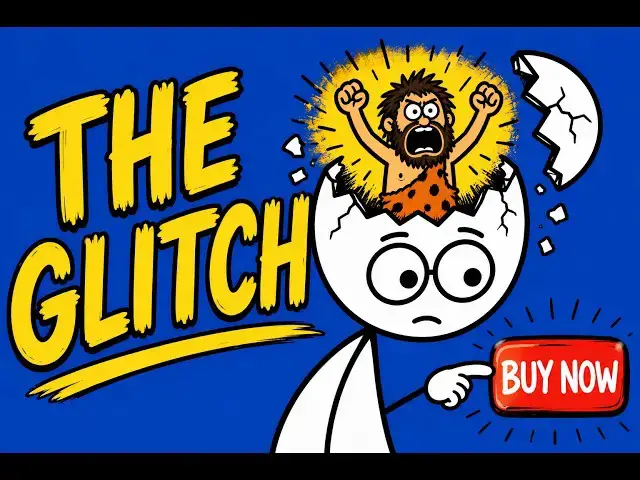

The 10,000-Year-Old Survival Glitch Behind Modern Shopping
Jul 27, 2026
Why do you keep buying things you don't need? The answer isn't weak willpower — it's evolutionary psychology, dopamine, and the impulse-buying instincts your brain developed long before online shopping existed.
That flash sale made your heart race for a reason. Something far older than conscious thought made that decision before you even knew what was happening — and modern consumer psychology is designed to exploit it every single day.
In this video, your brain gets exposed. You'll discover why a discount code triggers the same neural circuit as a rare berry patch, how Robert Cialdini's scarcity heuristic explains every "only 2 left in stock" panic, and what Wolfram Schultz's dopamine research reveals about why unboxing feels better than owning. The seeking system, costly signaling theory, and the accumulation loop aren't personal failures — they're Pleistocene survival engines that never got the memo that the famine ended.
If you've ever bought something you didn't need and felt nothing the moment it arrived — this video is for you.
Subscribe to Primal Wiring for weekly videos on the ancient systems quietly running your modern life → @primalwiring
Primal Wiring explores the ancient evolutionary systems quietly shaping modern life — from dopamine and decision-making to status, fear, cooperation, and the hidden instincts behind everyday behaviour.
00:00 The Flash Sale Your Brain Couldn't Ignore
00:33 The Decision Was Already Made
01:09 The Accumulation Glitch
01:26 Why Scarcity Feels Like an Emergency
01:56 The Scarcity Heuristic (Robert Cialdini)
02:41 Costly Signaling Theory (Amos Zahavi)
03:06 Dopamine Is Not About Pleasure (Wolfram Schultz)
03:40 The Biological Guardrail
Show More Show Less #Science