Up next in 10



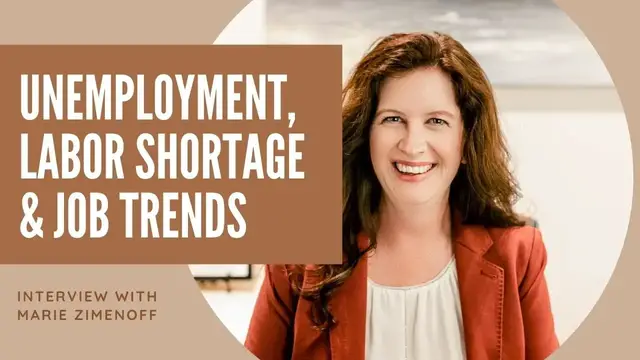
Is it easy to find a job today? What jobs are in demand? What are unemployment rates? Pissed Consumer interviewed Marie Zimenoff, an employment expert and CEO of Career Thought Leaders, about current unemployment rates, labor shortage, and recruiting processes.
00:00 - Introduction
00:33 - About the current employment situation in the US
01:35 - About difficulties with recruiting process
02:48 - The unemployment rate and labor shortage
04:42 - Jobs that will disappear in 5 years
07:32 - Is it faster to find a job now?
09:44 - Soft or hard skills
11:28 - Remote vs. in the office
13:38 - Contractors or full-time employees
16:27 - Employment tips from the expert
Support Pissed Consumer video interview project: https://www.pissedconsumer.com/donate.html
Subscribe to Pissed Consumer social media accounts:
Facebook: https://www.facebook.com/PissedConsumerCom/
Instagram: https://www.instagram.com/pissedconsumer/
Twitter: https://twitter.com/pissedconsumer
Show More Show Less View Video Transcript
0:00
I'm the CEO of Career Thought Leaders and Resume Writing Academy, and Career Thought
0:05
Leaders is an organization that trains career coaches, resume writers, job search coaches
0:12
anyone who works with other people in developing their career. And we are advocates both for our profession as career services providers and for job seekers
0:22
in the realm of finding jobs, as well as for employees in advancing their careers
0:30
What's going on in the employment industry today? After COVID, as we are coming out, what's going on
0:42
What do you see? So the recovery is spotty. Some industries are doing really well and some industries are not doing as well
0:51
the mckinsey data from about a year ago showed and predicted in some ways that those in the
0:59
upper part of the pay ranges would have a quicker recovery than those in the lower wage jobs and we
1:06
are seeing that you're seeing financial services the it tech world coming back really quickly in
1:14
fact they really never went down and some of the low wage jobs having a little bit harder time
1:21
some manufacturing jobs lagging and some hospitality industry types of jobs lagging
1:28
Even though there are a lot of jobs open, there are also a lot more people unemployed in those industries
1:34
Now, as recovery is underway, and as I speak to friends of mine
1:40
they have a hard time recruiting in the low-income segment. Why? Where did all those workers go
1:51
A lot of them found either more flexible positions where they don't have to do that type of work anymore
1:58
We just had our trends event last week. And one of the graphics that that gentleman showed, one of our presenters showed, Larry Boyer
2:07
he showed a graphic of the amount of people in that low wage bracket who have replaced their income trading cryptocurrency
2:17
So there are new opportunities for people that don't require the long hours, the contact with the public, all of the challenges and frustrations and all the pieces that those jobs bring along with fairly low pay
2:33
Now you have a lot more options. You can work remotely. You can do customer service from your house
2:38
You can trade cryptocurrency. And there are a lot of options that have replaced that employment for people who used to do those jobs
2:49
Do you think U.S. has a labor shortage right now overall? Well, I mean, the unemployment rate is almost down to where it was before the pandemic
3:00
So we're sitting right now, you know, 4.6 percent unemployment. and typically when you get to that level of unemployment, everyone who wants to be employed
3:10
is employed and yet you still have all of these positions that people are trying to fill. So
3:15
it depends on what you would call a labor shortage. In some industries, yes, in other industries
3:21
no, you're going to see a lot of innovation to figure out how to do things differently
3:27
and you're going to see the riding of the market as the forces compete against each other in terms of
3:35
the wages and what companies will pay and what individuals are looking to get paid
3:40
And they'll find a place where some technology is going to come in and backfill some of those types of jobs
3:46
because obviously people don't want to do them. And then the wage for other types of jobs that really need humans in them will go up as the demand for those jobs has to be created through wages and other things
4:02
And, you know, when you look at labor shortage and the demographics, the demographics show that population growth is on the decline in most countries in the world
4:13
There's only a few countries in Africa, based on the demographic graphs, that are growing at a population rate
4:23
And so when you look at that, there's going to have to be innovation done to replace some workers
4:30
And I think right now we're seeing that workers are going to determine where some of that is done
4:35
because where you are not being able to find talent, you're going to have to figure out a different way to get that job done
4:40
What jobs, in your opinion, are going to disappear in the next five years
4:47
So we already see that cashiers in supermarkets are starting to disappear in lieu of automated machines self and you don need cashiers anymore So what jobs do you think will disappear in the next five years
5:04
It'll be interesting to see where people find technology can come alongside humans and cut down the FTEs
5:13
I don't think you'll see disappear. You'll see, you know, greatly diminish like the cashiers
5:19
you're always going to have to have a few, you're always going to have to have those people that
5:23
you know, help when the machine doesn't work, you are starting to see some of that technology come
5:28
back into fast food restaurants, etc, where now you can order your own meal. And some of those
5:34
things, there'd been pushback on them right before the pandemic, you know, oh, don't take away our
5:40
jobs, etc. And it's interesting to see now the shift in mentality in point of view around those
5:47
technologies. And now it seems like we're ready in some ways for the technology to replace some
5:53
of those jobs because people have decided that they aren't the ideal job. And so it will be
5:59
interesting to see what happens. But a lot of the technology that we maybe don't expect. So in the
6:06
next five years, I don't know if it'll happen in the next five years, but you're going to see actually a decrease in coders right now and for the last 10 years. So then all about coding
6:15
learn how to code, but AI can learn how to code. So you're actually going to see a decrease in the
6:21
need for coders, but you're going to see an increase in the need for data scientists, people
6:25
that can plan and execute and make sure that the project is going the way it's supposed to
6:31
but they won't actually need humans to do the coding that they're doing now. And will that
6:38
eliminate those jobs? No. Again, it will just be a reduction and you'll still need humans that are
6:43
doing the parts and pieces around it to make sure that the project is as executed as it should be
6:51
Other jobs that, you know, eliminated, there's some parts, for instance, like of accounting
6:56
that may be eliminated. Here, thinking about it, AI is actually really good at strategy and
7:04
determining strategy and getting the pieces together, but will that replace CEOs who are
7:10
doing the strategy? No, because of course the CEO is doing a lot more than strategy. They're doing
7:15
the relationships and the business development piece of that. And the strategy may be easier for
7:22
them because they'll be able to use these AI tools, but I don't necessarily see it replacing
7:27
the strategy officer at a company, for instance. Labor market is hot, right? Unemployment is low
7:37
So there is a lot of companies competing for talents. Is it faster right now to find a new job
7:44
And I understand that it varies from industry to industry, but do you feel it's faster to find a job right now
7:51
Well, not only does it vary industry to industry, but it also varies based on what the individual is looking to do
7:58
So a lot of people right now are looking to make a change. So not only are they job searching, but they're wanting to change their industry or change their role
8:07
And whenever you look to make that kind of change, it takes longer. Your fastest job search is in the industry you've been working and in the same role you've been working
8:17
When you try to shift role or industry, it gets longer. And of course, if you try to shift both at the same time, it gets much longer because you usually have to either work your way into it, volunteer, find some kind of stepping stone, etc
8:30
Right now, a lot of people, since they're looking to make that change, are seeing a longer job search, even though there are so many jobs available
8:39
And that's part of the disconnect that's happening in the market right now is there's a lack of talent that has been doing that exact job that wants to keep doing that exact job
8:50
and a lot of this has to do the harvard business review had an article around the existential
8:56
crisis that we're all going through worldwide when faced with our own mortality and with
9:02
seeing the you know the grand scale of sickness and death that is around us it's causing us to
9:08
reevaluate our lives this is meaning a lot of people want to make a career transition
9:13
and because of that the people who are hiring are saying we're seeing a lot of unqualified people
9:20
Why aren't the people who are qualified applying? Well, because the people who are qualified want to do something different
9:26
And that's kind of the shift we're seeing in the marketplace right now. So the job search is going to be longer when you're looking for a career change
9:34
And you're going to see the amount of people wanting to make a career change kind of elongating that average job search right now
9:44
For the next wave of job seekers their soft skills will be much more important than their hard skills because people will be taking people in that are less qualified but still willing to do the job based on their soft skills because hard skills they would need to learn at the job
10:03
Yeah, and employers are still adapting to this, right? Employers are used to hiring someone that has the hard skills that they need. And job seekers are adapting to this because we tend to default too quickly to soft skills, where we could communicate harder skills, relevant skills, and not that soft skills aren't relevant, but they're, they're, they're not as easy to transfer
10:31
And so job seekers tend to default to that too quickly instead of really looking at how they could translate and communicate that they are qualified for the role in terms of the hard skills, even though they're changing industries
10:45
And as I work with job seekers, always communicating to them that if you are going to transition, usually it's easier to transition industries, stay in the same role
10:54
or if you want to transition roles, you look to stay in the same industry so that you at least
11:00
bring that industry knowledge. And when people are unguided, which a lot of job seekers, you know
11:06
go unguided, they're trying to change both at the same time and it causes a lot of frustration
11:11
on everyone's part, but an employer simply can't make all that conjecture themselves
11:18
And if you're job seeking and trying to change everything at the same time, you're likely struggling to connect the dots for the employer
11:25
and they don't have time to connect the dots for you. What is your view on work-from-home culture
11:34
Do you think it's here to stay? People will continue working remotely when possible
11:41
or businesses are going to require workers to come into the office
11:49
What's your two, three year prognosis? So most of the data says that people want to be flexible, not necessarily fully remote
12:01
So there is a population around 30 percent that wants to work fully remote
12:07
But the majority of people want we want everything right. We want to work from home, but we also want to be in the office so that we can have that camaraderie
12:15
camaraderie. And the data really shows that the majority of people want flexibility, not necessarily
12:21
fully remote. And this is challenging for companies. How do you have an office that people can come
12:27
into two or three days a week, but not all the time? And yet with the worker demand right now
12:33
they're trying to figure it out so that they can recruit the best talent. How do we provide those
12:38
opportunities and that flexible work opportunity. And as time goes on, will people
12:46
maintain that desire for partial remote? Probably. It was happening actually before COVID. There was
12:54
a push towards that partial remote or flexible or hybrid, whatever you want to call it
13:00
So that definitely will stick around. And it will just be interesting to see how companies adapt
13:06
to that and the flexible desk, the work share types of spaces, how all of those adapt as well
13:16
I definitely see that hybrid sticking around and the fully remote has always been there. I worked
13:21
with people in 2010 that worked fully remote from home and that portion of the workforce has grown
13:30
for sure, but I don't think it will be the majority. You're going to see the majority go
13:35
back to this hybrid arrangement. Because there was a shortage of getting full-timers
13:42
do businesses go for contracting type of arrangements working with talent? Yeah. So the freelancer and contract work economy has taken a complete 180. So right before COVID
13:56
there was a lot of pushback on that. People want full-time jobs. They don't want to be
14:01
freelancers. This is less than, you know, it's lesser than work. And then COVID came and now
14:07
you've seen a huge resurgence in that market. People using it to work very strategically and
14:16
making good money and doing solid work in that area. It's not just, you know, Uber and Lyft and
14:24
those types of things, which we tend to think about. There's a big economy of big companies
14:29
hiring out contractors and doing that freelancer or gig work. And that will continue and kind of until people decide they don like it anymore And then it be interesting to see if there a pushback against it at some point and if it if it something that ebbs and flows that kind of my prediction is that at some
14:54
point it will ebb again and and people won't want that type of work they'll want the full-time job
14:59
they'll forget how insecure that full-time job actually is and and want to go back to that
15:08
having it all handed to me by the company. I don't know, but it just seems like it might
15:14
back that way when most people are fully employed and have been for a while and start to get back
15:22
into that comfort zone. Now, as far as companies are concerned, it will be legislature that
15:28
determines some of that. You saw a huge pushback in California against Uber and Lyft and the way
15:35
that they handle freelancing. We've seen legislator at the U.S. level in terms of how freelancers are
15:43
paid and how that arrangement works with companies. So it'll also be interesting to see where the
15:50
policy goes around that. And that will dictate some of this as well in terms of how companies
15:56
hire and if they continue to use contractors on a regular basis. You know, that's just here in the
16:04
U.S. We've got medical insurance issues. If you're a freelancer, you have to figure that out
16:11
You've got these issues for companies in terms of being really careful around how they handle
16:17
contractors. There's some policy issues there that really need to be worked out before we see the
16:24
future of that freelance and gig economy. Job search is rough. And when you're unemployed
16:30
it really doesn't matter what the unemployment rate is, right? When you are unemployed, it's challenging
16:37
And there are mental roadblocks that we all face whenever we have a challenge
16:44
that if we don't address those, the actions don't really matter. So to first realize that job loss is a loss
16:56
and we have to find opportunities to process that. The loss, the feeling of not good enough
17:04
what did I do wrong? Sometimes that seems silly to us, right
17:07
It's just a job, but it is a loss like any other loss and take the time to process that
17:14
and to share those stories, to share those feelings with someone because otherwise they will continue to get in your way
17:20
even when you know the actions that you should take and you're taking those actions
17:24
those those issues will kind of show up at different times throughout the process and
17:31
that's okay we just want to have an opportunity to process them with someone so it's not just
17:36
tactical there is a mindset and a mental health piece of it that goes along with it
17:41
then the tactics piece it's really all about getting clear on what you want and as I said to
17:49
try not to change everything at the same time that makes it more challenging If you're wanting a change, is there a way that you could change industries but stay in the same role or change roles while you stay in the same industry
18:01
That's going to make your job search faster. And, of course, if you really need work tomorrow, your fastest job search is going to be in a similar role and in a similar industry to what you've been doing
18:13
And then I know that you all, you know, the consumer advocacy site, just to be aware that if something sounds too good to be true, it probably is
18:23
And don't ever give your social security number to someone unless you are 100% sure that this is an interview
18:30
Most places will do an interview before they ask for that kind of information
18:36
And you are 100% correct to be skeptical of giving any of that kind of information over
18:43
and try to contact a company. Make sure you know who you're talking to before you would share any of that type of information
18:51
Don't post your address online. There's no need to have your full address on your resume today
18:57
So even if for some reason you want to post your resume where it's public, you don't want to have your address on there
19:03
And you can control that conversation and what you share with people
19:09
That is within your space as a job seeker so that you're sure you know who you're talking to before you share that information
19:18
If you don't know the name of a company and someone's asking you to share information and they won't share the name of the company, just move on to the next organization, next person
19:29
There's plenty of opportunities out there for you rather than to get caught up into something that is a scam
#Jobs & Education
#Jobs
#Career Resources & Planning