0:00
My name is Sylvain Chalabois, Director of the Agri-Food ytics Lab at Dalhousie University
0:10
in Nova Scotia, Canada. We study the future of food. We forecast, we look at several issues
0:19
we work with industry, government, NGOs. Shrinkflation is something that really upsets a lot of people
0:27
a lot of consumers. I just opened this package of Oreos and you could fit one more here and you
0:37
could fit one more here. What's up with that? That is not a full package of Oreos. It is basically a
0:44
packaging strategy allowing manufacturers to reduce quantities while charging you and I the
0:52
same price. And we've seen shrink inflation impact most food categories. It's mostly outside of fresh
1:02
So packaged goods, non-perishables have been impacted by shrink inflation. And it's been around
1:08
for decades. But every time commodity prices go up or input costs, manufacturers tend to actually
1:17
use for inflation as a strategy not to lose market share
1:30
Of course, everything is disclosed at the point of sale. Consumers should look at the price per 100 grams or 100 milliliters
1:39
The challenge that we see is more about policy and how data agencies are tracking the impact
1:48
of shrinkflation on food inflation specifically. Most shrinkflation cases are deceiving You go to the grocery store You don look at quantities you buy a product you always bought only to come home and realize that your bite size is much smaller than before
2:10
the number of bars has been reduced by one or the number of grams the amount of grams
2:29
or let's say for example you're accustomed to buying a package of spaghetti or pasta for your
2:37
family and you realize that all of a sudden one package is not enough so you have to buy two
2:43
instead of just one which could actually lead to more food waste eventually because if you're
2:50
if you're accustomed to buying one package well then you have to buy more and and you may not
2:59
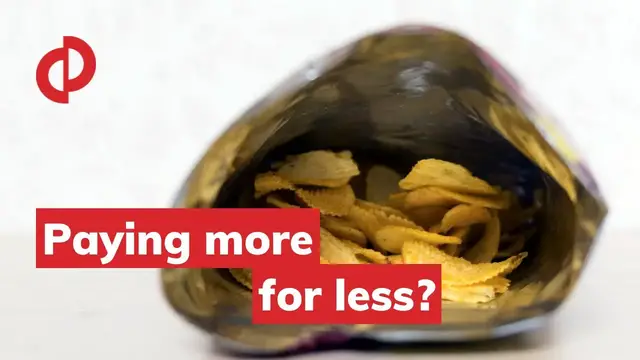
use the extra the way you can count your days how you got a an empty chip bag man
3:05
You're doing people like that wrong. It's a pandemic going on out here, man
3:09
Those are things that really infuriates consumers, generally speaking. It can be considered as fraud because all the information is actually readily available
3:21
So it's been argued before that these cases can be considered as fraudulent, but they're not really
3:28
However, it doesn't mean that fraud is not occurring because there's some adulteration that does occur
3:34
misrepresentation of certain products. And that certainly is a huge problem, especially with fish and seafood, for example
3:43
Some species are not properly labeled. Sometimes there are going to be ingredients in a product that is not mentioned on the label
3:51
That's food fraud. What is this When it comes to shrinklation all the information is there And so if you don pay attention you will be frustrated obviously
4:10
But I wouldn't consider those cases as being fraudulent. I think, I mean, shrink inflation has been around for decades
4:18
what I think is happening now is that we're starting to see more companies acknowledging
4:25
that they're shrink-plating products, which I think is important to do nowadays
4:31
I think Mondelez is actually the first company that I know of
4:36
that actually admitted to shrink-plating some food products. It's not open
4:48
The Oreo cookie, which is well known. It's a big, big seller
4:58
They actually did admit that they shrink plate. And it's very rare that you would see that
5:02
I think it's time because of phones. Everyone can actually walk into a grocery store, take pictures
5:10
And over time, you have this collective memory, which would allow people to compare the old and the new with the new
5:19
to see whether or not there's been some changes. And this is something that we haven't had before
5:25
And certainly it is giving an advantage to the consumer. So in return, I actually think that the industry should be more transparent
5:33
about what's actually is going on here. basically if you don't admit it
5:40
or you kind of you don't acknowledge it then you're seen as a company
5:45
who's hiding something or is just trying to deceive your market at the end of the day
5:53
I actually think that people are smarter and like I said people have access to information data and evidence much more so than before So you have to be absolutely careful with how you portray yourself as a company You
6:09
want to be as forthcoming as possible. But I think it's important for companies to really have
6:15
a relationship with consumers or with the market back and forth. They can have focus groups
6:23
do surveys, but also it's important for them to remain as open as possible
6:28
Now, sometimes things can get dicey, and right now they are dicey
6:33
It's very tense right now in the food industry as a result of food inflation. Food prices are actually really getting consumers to be quite upset because they do believe
6:46
many consumers believe that they're being taken advantage of by the food industry
6:51
And the evidence is weak at best, but it doesn't matter. I mean, that's what they believe
6:58
And so it's been very difficult for them. So going ahead and connecting with consumers right now is not necessarily the most natural thing to do just because they can actually get exposed
7:11
They can expose themselves to even more critique. With social media and everything else, what I find is that it's becoming very difficult to provide facts to consumers so they can actually make a choice or make their minds based on factual evidence
7:34
Right now, a lot of things are being politicized, and many people choose to believe what they want to believe
7:42
And so to cut through that noise has been very challenging for the food industry
7:48
So my guess is that a lot of companies are being extra careful right now to engage with the public