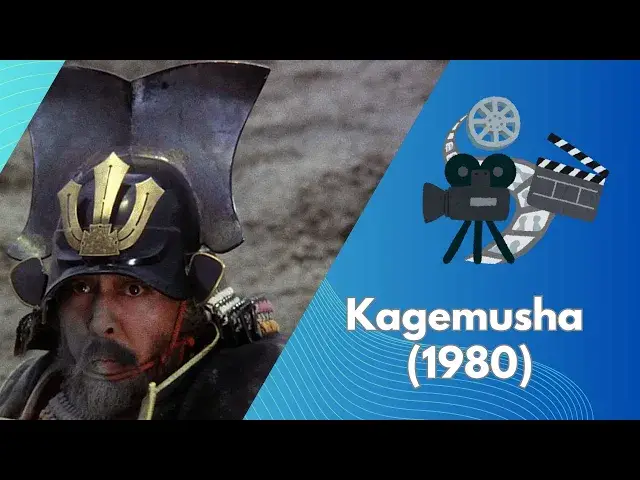

Kagemusha (1980): An In Depth Summary and Analysis-This Film Warned You About Tyranny
Aug 26, 2024

Kagemusha (1980): An In-Depth Summary and Analysis
Kagemusha, released in 1980, stands as one of Akira Kurosawa's most profound and visually striking films. Set during the Sengoku period in Japan, the film explores themes of power, identity, and the human condition through the story of a thief who becomes a warlord's double.
The plot centers around a petty thief who is spared from execution to serve as a kagemusha, or shadow warrior, for Takeda Shingen, a powerful warlord. When Shingen is mortally wounded, the thief assumes his identity to maintain the illusion of Shingen's leadership.
The Takeda clan hopes to prevent their enemies from taking advantage of their leader's death. This deception is fraught with tension as the thief struggles to embody the warlord's commanding presence while grappling with his own identity and fears.
Kurosawa's masterful direction ensures that every frame of Kagemusha is rich with historical detail and emotional depth. The use of color and composition not only captures the essence of feudal Japan but also underscores the film's themes. The vibrant battle scenes juxtaposed with the quiet, introspective moments of the kagemusha highlight the duality of his existence. The thief's journey from a self-serving criminal to a self-sacrificing leader embodies Kurosawa's exploration of transformation and honor.
The film's narrative is deeply rooted in historical events, yet it transcends its period setting to address universal human concerns. The kagemusha's internal conflict mirrors the broader chaos of the era, reflecting Kurosawa's critique of power and the human cost of ambition. The film's portrayal of the Takeda clan's downfall serves as a poignant commentary on the futility of war and the fragility of human constructs of power.
One of the most compelling aspects of Kagemusha is its exploration of identity. The kagemusha's struggle to convincingly portray Shingen while maintaining his own sense of self creates a tension that drives the film's emotional core. This duality raises profound questions about the nature of identity and the extent to which it is shaped by external roles and expectations.
The film's deliberate pacing and meticulous attention to detail invite viewers to immerse themselves in the story and reflect on its deeper meanings. Analyzing the film's cinematography, particularly Kurosawa's use of color and composition, can provide valuable insights into his artistic vision and the thematic concerns of the film.
In conclusion, Kagemusha is not merely a historical epic but a profound exploration of identity, power, and the human condition. Kurosawa's masterful storytelling and visual artistry make it a timeless masterpiece that continues to resonate with audiences.
#KagemushaAnalysis #KurosawaMasterpiece #JapaneseCinemaGems
https://youtu.be/PZLrqKHnkJ0
Show More Show Less