Up next in 10


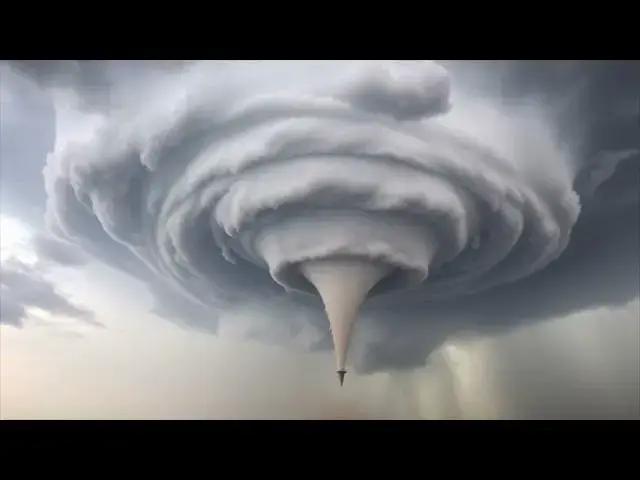
How a tornado forms: from a supercell thunderstorm to a rotating vortex that touches down. The video covers the atmospheric conditions, wind patterns and forces involved, and how meteorologists use that to warn.
Show More Show Less View Video Transcript
0:00
have you ever wondered how a gentle
0:01
breeze can transform into a monstrous
0:04
force of nature capable of leveling
0:06
entire towns the answer lies in the
0:09
fascinating world of tornado
0:11
formation How tornadoes form: the
0:13
science behind nature's
0:15
fury Tornadoes are nature's most violent
0:18
storms capable of producing winds up to
0:21
300 mph These rotating columns of air
0:24
extend from thunderstorms to the ground
0:26
often appearing as funnel-shaped clouds
0:30
The birth of a tornado begins with a
0:32
supercell
0:33
thunderstorm These powerful storms form
0:36
under specific atmospheric conditions
0:38
where warm moist air near the ground is
0:41
topped by cooler drier air aloft
0:44
creating an unstable
0:46
environment This instability fuels a
0:49
strong updraft the rising air that
0:52
powers the storm Another crucial
0:54
ingredient is wind shear where winds
0:56
change speed or direction with height As
0:59
the supercell develops this wind shear
1:01
causes the updraft to
1:03
rotate Initially this rotation is
1:06
horizontal like a rolling pin on its
1:08
side But as the updraft intensifies it
1:11
tilts this horizontal rotation into a
1:13
vertical position creating a rotating
1:16
column of air within the storm called a
1:19
meocyclone The mesocyone is where the
1:21
magic happens As it intensifies it
1:24
creates an area of low pressure at its
1:26
base This low pressure causes air to
1:28
rush in from all directions further
1:30
intensifying the rotation If conditions
1:33
are right a funnel cloud begins to form
1:36
and descend from the storm As it lowers
1:39
it continues to draw in more air and
1:41
debris When this rotating column of air
1:44
reaches the ground we officially have a
1:46
tornado
1:48
Tornadoes can vary widely in appearance
1:50
from thin and ropelike to massive
1:53
wedge-shaped structures over a mile wide
1:56
Once on the ground their intense winds
1:58
can cause catastrophic damage The
2:01
rotating winds create a pressure
2:03
difference between the inside and
2:04
outside of the vortex This can cause
2:07
buildings to explode outward when the
2:09
tornado passes over them adding to the
2:11
destruction Let's recap the key points
2:14
about tornado formation It all starts
2:16
with a supercell thunderstorm formed
2:18
when warm moist air near the ground is
2:20
topped by cooler drier air creating an
2:23
unstable
2:25
environment Wind shear causes the
2:27
updraft to rotate forming a
2:29
messyclone This rotating column of air
2:32
creates a low pressure area at its base
2:35
intensifying the rotation and
2:37
potentially leading to the formation of
2:39
a funnel
2:40
cloud When the rotating funnel cloud
2:42
touches the ground it becomes a tornado
2:45
These powerful vortexes can vary in size
2:47
and shape from thin ropelike structures
2:49
to massive wedges capable of causing
2:52
catastrophic damage with winds up to 300
2:54
mph Thank you for watching our
2:56
exploration of tornado formation We hope
2:59
this video has given you a deeper
3:01
understanding of these powerful natural
3:03
phenomena Stay safe and keep learning
Arts & Entertainment
Science
Earth Sciences
Atmospheric Science
Atmospheric Science