0:00
when warm ocean waters meet the
0:01
turbulent skies nature brews one of its
0:04
most destructive forces hurricanes they
0:07
form silently gather strength swiftly
0:10
and can devastate entire communities
0:12
within hours but what determines whether
0:15
a storm fizzles out at sea or grows into
0:17
a monstrous category 5 hurricane
0:20
understanding the key environmental
0:21
factors behind hurricane intensity is
0:23
crucial for anticipating their impact
0:25
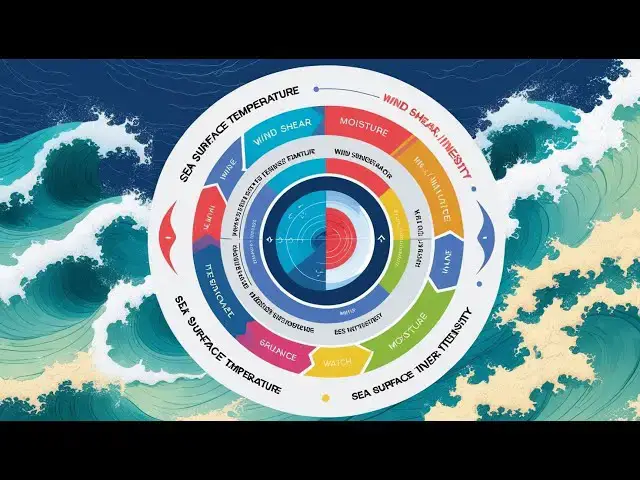
and mitigating their damage the foremost
0:28
driver of hurricane strength is sea
0:30
surface temperature hurricanes are
0:32
essentially heat engines fueled by the
0:35
energy stored in warm ocean waters when
0:37
the sea surface temperature exceeds
0:39
approximately 26.5° C 80° F the
0:44
evaporation rate increases feeding
0:46
moisture into the atmosphere and
0:48
powering the storm's core the warmer the
0:50
water the more energy is available
0:53
allowing the storm to intensify rapidly
0:56
next consider wind shear the variation
0:59
of wind speed and direction with
1:01
altitude low vertical wind shear allows
1:03
hurricanes to remain vertically aligned
1:05
and structurally intact promoting their
1:08
growth in contrast high wind shear can
1:11
disrupt the storm structure tilting the
1:13
cyclone and displacing the warm core
1:15
from the center weakening or even
1:17
tearing it apart thus regions with low
1:20
wind shear present the ideal environment
1:22
for hurricane development
1:24
atmospheric moisture also plays a
1:26
pivotal role a humid mid to upper
1:29
atmosphere supports the formation and
1:31
maintenance of towering cumulanimbus
1:33
clouds within the hurricane this
1:35
moisture sustains deep convection
1:37
reinforcing the storm's eyewall and
1:41
intensification dry air on the other
1:43
hand can infiltrate the system choking
1:46
off convection and reducing the storm's
1:49
these three elements sea surface
1:51
temperature wind shear and moisture
1:54
interact dynamically to determine a
1:56
hurricane's strength however rapid
1:59
intensification events where wind speeds
2:02
increase dramatically in a short period
2:03
are becoming more common in today's
2:05
warming climate this presence urgent
2:08
challenges for forecasting models and
2:10
disaster preparedness strategies
2:12
as climate change continues to warm the
2:14
oceans and alter atmospheric conditions
2:17
the frequency and severity of intense
2:19
hurricanes may increase investing in
2:21
research early warning systems and
2:24
community resilience is no longer
2:25
optional it is essential have you
2:28
noticed how rapidly recent hurricanes
2:30
seem to intensify what do you think
2:33
needs to change in how we prepare for