Up next in 10


This video goes beyond common money saving tips and general how to save money advice; low income or high income earners, this applies to all.
//Creative Commons Attribution Licence video (Reuse allowed)
Show More Show Less View Video Transcript
0:00
As you know, I'm an advocate for saving money and I think it's highly important I even have tons of content out on just that topic alone
0:07
But as my channel grows more and more, I'm starting to see that there's some extremes when it comes to saving money
0:13
Some good, some bad. And as each day goes by, I'm finding these two very different extremes of saving money right in front of me
0:22
And to be honest, it's gotten to a point where I really can't stop thinking about this one thing
0:28
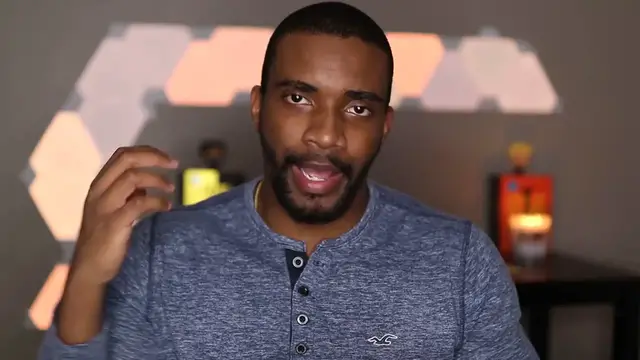
Saving money can actually hurt you. Hey, what's up? My name is Reggie Bryant and this channel is all about personal finance and personal growth so you can better yourself every single day and live life on your own terms
0:37
On this channel, I'll talk about saving money, increasing your income, and getting out of debt, as well as several personal growth topics
0:43
And I take this all the way back to my own personal experiences to serve as a motivation to you
0:47
Let's get into the video. The problem I'm seeing with saving money right now is the exact same problem I saw when I got my first full-time job
0:56
The problem with saving money is an ironic one. It's not secure. And I know it's a very bold statement to make, but I mean it
1:03
When you get paid, your money goes through a funnel and taxes are taken away before your money even hits your bank account
1:09
And that's assuming that you're working a traditional job just like most of us
1:12
But then you have your financial obligations like rent, mortgages, utilities, transportation, heat, water, energy, food
1:19
Then you have whatever money is left over and that's money that you haven't already spent on things that you don't need
1:25
My point being, how much of that money do you think you can truly hold on to on a consistent basis
1:31
Let's be honest here. If you cut expenses out of your budget, if you're extremely frugal, if you do any and everything you can in your power to hold on to every single dollar possible
1:42
how much money could you truly save at the very maximum at the end of every month
1:46
The reason I'm asking you this question is because that's the exact same question I was asking myself at 21 years old
1:52
And I asked myself this question on a daily basis. I mean, I couldn't help but ask myself that question because I felt like the more money I made, the more I had to lose
2:02
You know what I mean? Like you know that weird feeling you have when you know you're making progress, but then your brain just decides to go into what if mode
2:11
That's what my brain was doing, bro. It went straight in to what if mode and it was saying, what if I lose it all
2:17
And stuff like that drove me to continuously ask myself questions like, how can I make more money
2:23
How can I save more money? How much can I save at the very most every single month
2:28
And that question was nothing but trouble because I messed around and found out
2:32
For me, the answer was $1,000 a month. And that was where I pretty much capped out on saving money every month
2:38
But if I worked extra hard, like really hard and crushed my soul at work doing overtime, I was able to save $1,500 a month
2:45
Just to add context to these numbers, this wasn't exactly a common situation
2:50
I was earning over $65,000 a year at the age of 21
2:55
And when you consider that against the national household income, especially what it was at that time, you'll see that I was bringing in a little more than what the average family was bringing in per household
3:07
So you have a 21-year-old who's doing pretty well as far as money goes, right
3:11
So now let's do something and let's chop the taxes off of that $65,000 that I was telling you about earlier
3:17
So when you break down $65,000 to two paychecks per month and you take the taxes off of it, you're left with about $1,880 per paycheck, which is $3,760 per month
3:30
So keep in mind, as I said before, I was saving $1,000 of that $3,760 per month, which is actually pretty good
3:36
That's a little less than a third of my monthly paychecks that I was able to save, so it was about 27% that I was able to actually put away into my bank account
3:44
Again, not really a common situation because when you consider the 50-30-20 rule of money, it's recommended that you save 20% of your income
3:54
And a lot of people struggle with doing that, and there I was saving 27% of my income
3:59
So clearly I was doing well. I was at least doing above average as far as money goes and saving money
4:04
But you may not have realized there's two problems with what I just said
4:08
For one, I said there's a money funnel where taxes are inevitably taken out and then you have bills
4:13
And that operates off the mentality of I'm not in control. And look, the whole point of saving money is being in control. You have to take control
4:23
And the way you take that control is by having a set percentage in your mind that you know without a doubt you can save every single month without fail
4:31
And depending on how your finances are set up, you decide whether you take that percentage from one paycheck in full or if you do half and half
4:39
That's how you pay yourself first. You know what? I wasn't doing that because it felt off
4:46
You know what I mean? It felt almost irresponsible for me to pay myself first before paying my bills
4:52
It's almost like I had this ridiculous idea that if I were to pay myself first, all my other available money would just decide to vanish in the thin air
5:00
Ironically, the opposite is true because when you wait to pay yourself after you've paid your bills
5:06
that amount of time that goes by from the beginning and end of the month, who knows what you've been buying in between that time
5:14
Fast food, a movie, some snacks, a night out. You might have even treated somebody to a night out
5:20
I know what goes on, bro. I had to catch myself. I need to stop saying bro
5:24
There's women watching my channel now. But by getting into that habit, you're leaving less and less money for yourself at the end of the month
5:32
And I know because before I knew that I could save $1,000 a month, I was only putting away $800 a month and I was sitting there wondering where all the money went
5:41
Like I would legitimately get upset because I did not know where the money was going
5:47
Your boy was looking sick. All because I thought the harmless trips to cookout or Chick-fil-A, which was $5 here, $10 there, wouldn't make a difference
5:56
Hey, I wasn't even a big spender, but what I had to realize was the small insignificant purchases that you make over time can make a difference at the end of the month
6:06
And that didn't matter if I was getting fast food from McDonald's, a protein shake from the gym, or a Gatorade at the gas station
6:12
It all adds up. And when you come to a realization like that, you realize that there's no one to blame but yourself when it comes to your money
6:21
And when you see yourself as the one who is accountable for your own actions, you take more ownership and more control
6:27
But I get it. When you grow up with friends and family who says stuff like, oh you can afford it
6:33
Come on now boy, that ain't nothing but a dollar, you better go ahead and get that. Hey, I'm from the south, that's just how they talk out there
6:40
But that's what influences our way of thinking on a very subconscious level
6:45
Same thing with going out with friends. The amount of money that you spend on a night out is insignificant to you at first
6:51
It's just $10, $20, $30. That's nothing right? Until it's the end of the month and you're scratching your head trying to figure out where all that money went
6:59
Trust me, I know how it is. And since we now know that a small amount can add up very quickly, there's another problem
7:06
Like I said before, I was able to save $1,000 a month. That's $12,000 a year
7:11
Even on the higher end months when I was able to save $1,500. If I was able to do that consistently throughout the entire year, that would only be $18,000 a year that I saved
7:20
Either way you look at it, it took me a full 12 months to save up what only took me 4 and a half months to earn
7:27
Not to mention the fact that I was being extremely frugal and I was absolutely relentless when it came to saving money
7:34
Meaning I absolutely maximized on how much I could save for myself at the end of every month
7:39
So even after cutting costs out of my budget, even after working crazy hours of overtime, saying no to nights out with my friends
7:47
and after paying myself first, I was still very limited in terms of how much I could save
7:53
The problem with saving money is, the amount of time it takes to save the money doesn't add up to how long the money actually lasts
8:02
The problem with saving is, the very recommendation of saving $1,000 to start your emergency fund
8:08
or having 3-6 months worth of expenses in your savings are taken as law and it gives us the false implication that what we're doing is actually enough
8:18
It's not enough. One of the biggest problems with saving is the fact that we honestly think that what we're saving is enough
8:26
Let me ask you something. In what world does $1,000 get you out of an emergency
8:31
To me, certain car repairs, certain replacements, they're not emergencies. Like, sure they're urgent, sure they're important, but they're not going to have an immediate impact on your life or your livelihood
8:43
and it's not threatening either one of those things either. To me, an emergency is losing your job and not having anything to fall back on
8:51
$1,000 won't even cover rent. Facts. What I'm telling you is, $1,000 is nothing in the eyes of an emergency
9:01
It's not to say that you shouldn't start off with $1,000. It's not to say that that shouldn't be your first milestone
9:08
That's not saying any of that. It's not bad to, even if you just have $1,000 in your savings account, it's not to say that that is bad
9:16
What I'm saying is, we do not stop there. You don't stop at $1,000
9:22
You don't stop at 3-6 months worth of expenses. You don't stop at $20,000, $30,000, $50,000
9:28
I don't care how much you have in there, you don't stop adding
9:32
Because while all the numbers I just listed can sound like a lot of money, how long does it take for that money to go away just like that
9:41
That's what we need to think about. I want you to understand that emergencies have no remorse or convenience about themselves
9:48
That's why they're called emergencies. They are completely unpredictable. Like, you can't predict a medical emergency
9:55
You probably won't predict your AC or your water heater going out
9:59
Because you're too busy, you have obligations. Your focus could be in several different places
10:04
You won't predict your pet getting sick out of nowhere. And even though you may be on top of your car maintenance, anything can happen to your car at any given time
10:15
I know someone who was on their way to work and as they were driving, a rock rolled off the top of a mountain and perfectly fell on top of her windshield
10:26
While she was driving. On the highway. Do you think that she expected that
10:33
She didn't expect that. Her car was in perfect condition. She was on top of her car maintenance
10:38
Didn't expect that. Literally, it was a natural disaster. I thought she was making it up until she showed me a picture of it
10:45
So, a good lesson is to add on to your savings as much as you possibly can and never stop
10:51
But I don't want that to get mixed up with you thinking that saving your money is going to get you wealthy
10:56
Because that's the third problem. A lot of us are really out here thinking that saving money is going to get us wealthy
11:02
I was one of them. And honestly, it's something that I really had to learn the hard way
11:06
And I'll never forget. I was talking to one of my old mentors about my financial goals
11:11
What I wanted to do and everything. And all he heard was, save, save, save, save, save
11:16
And then I'm going to go and do this. And I'm going to save some more. And save, save, save, save, save
11:21
And then I'm going to go get promoted. And then I'm going to save some more
11:25
And the whole time, he's just looking at me like, Reggie, you could save every single dollar that you make
11:34
It's not going to make you wealthy. And I don't know why, but that really woke me up in that moment
11:39
Because I was so fixated on saving every dime that I possibly could
11:44
That I didn't realize that I didn't really know much about money. Like at 21, all I really knew how to do well was save money
11:51
That was it. So he helped me understand that outside of just saving my money, I also needed to be investing my money
11:58
And we're not even just talking about 401Ks. We're talking about outside of work
12:02
Because I already had a 401K. But even then, I went down the rabbit hole of understanding that saving my money and investing my money separately was still not going to get me wealthy
12:12
Because I was only saving a little bit here and there. And I was only investing a little bit here and there
12:17
So that money obviously isn't going to compound at an overly fast rate
12:21
And by time, I mean 40 plus years. And by consistency, I mean hundreds of dollars a month
12:28
Which means if I wanted that money to grow faster. If I wanted to save more money and on a more frequent basis
12:35
That means I had to increase my income somehow, someway. Because the combination of increasing your income and saving your money and investing
12:44
That is the combination of getting wealthy. And I know you're probably thinking, well Reggie, not everybody wants to get wealthy
12:50
You're doing too much. I mean, I don't really need all that in my life
12:54
That's true. That's 100% true. But every single human being on planet earth wants to be safe and secure within their finances
13:05
And not a single person can argue with me on that. And I'm here to tell you that just saving your money
13:11
Or just saving your money and investing a little bit here and there on the side
13:15
That's not secure. If you lose it all today and you have nothing to fall back on
13:20
What do you have to stand on? Just your savings. How long is that savings going to last
13:26
And you know why I made this video? Because of the year of 2020
13:31
That's why I made this video. Families and individuals around the entire world found themselves in a financial situation
13:39
And they found themselves digging into their savings. Some had enough, some didn't
13:45
Some had some money left over, some didn't. Some people still had their jobs when it was all said and done, some didn't
13:53
People were starting to physically take out all their money from banks because they were freaking out
13:58
People were withdrawing money from their 401ks early because they were freaking out
14:04
Or because they had to use that money to pay for their necessities
14:08
And this is my exact point. If you were truly saving enough, we wouldn't have had to do any of that
14:16
If the world is individuals, like holistically speaking, if the world was saving properly, we wouldn't have had to go to those drastic measures
14:25
And not just people, businesses. Businesses have straight up went bankrupt because of 2020
14:32
And this will happen to any and everybody who has that false sense of security in their savings that they think they have enough of
14:39
With savings, I encourage everybody to think it's never enough. Keep adding, keep adding
14:46
Your emergency funds need to have emergency funds. It might be a bit extreme, but it's necessary
14:53
Because if you're doing it any other way, if you're just saving $1,000 or if you're just saving 3-6 months of expenses and then you stop, you're doing it incorrectly
15:03
You're doing it with the wrong mindset. That is the problem with saving money
15:09
I don't care if you have a low income or a high income
15:13
The same issues exist inside of both circumstances. For these reasons, you've got to educate yourself and become cold with your money
15:23
For these reasons, I'm building courses and programs to help you with your finances
15:27
For these reasons, I'm telling you exactly where I messed up at and how I identified the issue and how I fixed it
15:33
Because I have and continue to make financial mistakes. And I think that it's important for me to share every bit of that along the way so that you can grow as I grow
15:42
Saving money is extremely important, but a lot of us are doing it incorrectly
15:47
And unfortunately, by the time we realize it, it's already too late and we've lost
15:53
And that's the lesson that a lot of us have had to learn the hard way
15:57
That's the video for today. Thank you so much for watching. My name is Reggie Bryant and this channel is all about personal finance and personal growth so you can control you, control your finances, and control your life
16:05
Thank you so much for watching. I'll see you in the next video. Stay cold
16:12
Transcribed by https://otter.ai
Business Finance
Finance
Credit & Lending
Financial Planning & Management
Retirement & Pension
Jobs
Business Formation
Savings Accounts