Up next in 10


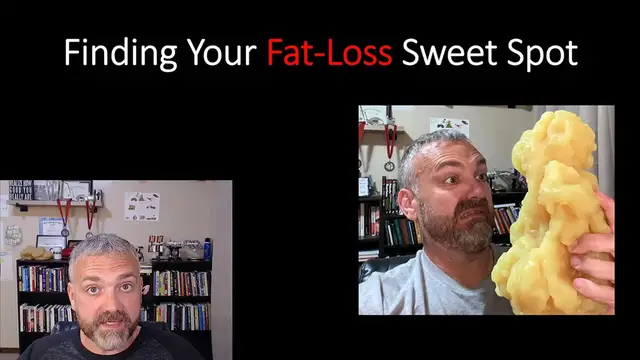
This video is Part 3 of my free mini-course about how to lose fat as fast as possible without losing extra lean mass (muscle).
//Creative Commons Attribution Licence video (Reuse allowed)
Show More Show Less View Video Transcript
0:00
Hey everybody, Dr. O here
0:06
Welcome to Part 3 of the Fat Loss Sweet Spot series. We just got done talking about how dieting too aggressively can cause your body to use lean
0:14
mass for fuel. We also talked about how lean and obese subjects respond differently to aggressive calorie
0:20
deficits because your body fat levels determine when aggressive is too aggressive
0:26
Now we're going to look at the simplest way to tell if you are in two steep, of a calorie deficit, your rate of weight loss. So number two on our first five points here
0:36
So what should a good rate of weight loss look like? Generally it should be between 0.5% and 1
0:42
of your total body weight per week. That means if you if you weigh 200 pounds, you can lose up to
0:48
two pounds a week, 300 pounds, up to 3 pounds a week, and 400 pounds up to 4 pounds a week
0:53
Right? The whole like lose one pound or two pound per week thing doesn't make any sense when you
0:57
take size and consideration. Telling someone that weighs 4 pounds a week, 400 pounds that they should only lose 1 to 2 pounds per week
1:03
Doesn't make any sense. Four pounds of weight loss per week is perfectly fine at that size
1:08
You can be more aggressive if you have a lot of fat to lose because your body fat is protecting
1:12
you from losing lean mass. We covered that in the last video. But a 4 pound weight loss per week for someone that weighs 170 pounds would be a terrible idea
1:23
Let's actually see. It's been studied. So what does the science say? metabolic adaptation to calorie restriction and subsequent refeating
1:31
The Minnesota Starvation Experiment Revisited. So they had 32 non-obes subjects. They weighed 171 pounds on average
1:39
They ate 50% of their energy needs for three weeks. That's an average of 1,353 calories per day
1:48
And they also only ate 49 grams of protein per day. So I'm going to come back to this study when we talk about protein intake later
1:53
So if they were dieting smartly and they were losing 0 to 1 of their body weight per week over this three week period they would have lost between 2 and 5 pounds in three weeks But in this study the change in their body weight was 13 pounds or six kilograms in three weeks You probably be super excited about losing seven and a half percent of your body weight in three weeks
2:19
but, right, there's a huge caveat here. Their body fat provided all the energy that it could
2:25
Lean mass like muscle had to make up the difference. So here's the shocking stats from this study
2:31
Calorie restriction. Remember, they were only eating 50% of the calories they needed
2:35
reduced fat mass by 114 grams per day. So they lost a quarter of a pound of fat every day over three weeks
2:42
Again, sounds great, but the same calorie restriction reduced their fat-free mass
2:48
so lean tissue like muscle, by 159 grams per day or 0.35 pounds
2:54
So every day, they were losing a quarter of a pound of fat and over a third of a pound of fat-free mass
3:01
Right? So over 58% of their weight loss was fat-free mass. This is terrible
3:05
So what did it actually do to their body? This calorie restriction led to reductions in resting metabolic rate
3:11
So the resting metabolic rate went down 266 calories per day in only three weeks of dieting
3:18
The energy cost of walking went down 22%. Their metabolism was adapting and trying to save every calorie
3:24
Their leptin levels dropped 44%. Leptin's a hormone released by fat cells that tells the brain how much fuel you have on your body
3:31
and so leptin leads to subconscious increases in movement and it leads to an increase in your metabolic rate and a decrease in hunger
3:39
So a drop in leptin would slow your metabolic rate, make you very hungry, all negative things
3:45
Then T3, which is the most metabolically active form of thyroid hormone, which regulates your metabolism, dropped 39%
3:53
And their testosterone dropped 11%. So all in the name of losing a few extra pounds over a three-week period, they saw these massive changes
4:01
changes. Basically, they push their bodies too hard and their bodies fought back. This is what
4:06
metabolic adaptation is, your body fighting back from extreme calorie deficits that it can't tolerate
4:12
They became skinny fat really So what does skinny fat look like Let me show you So here this is an image from Wikipedia but you can see variations in visceral fat content in men with the same waist circumference So we have what do we have here Eight different examples All of them had the same waist circumference but look at the
4:29
one in the middle on the top. Only half a liter of visceral fat. And you see the fat tissue would be
4:33
that white tissue, the subcutaneous fat on the outside, and not much fat in the middle. But then go
4:38
all the way down to the bottom couple of guys, right? They're 4.2 liters of visceral fat, 4.3 liters of
4:44
us real fat. So they had the same waist circumference, but some of them were much leaner than the
4:49
others and some of them had a lot more fat than the others. So this is what skinny fat means
4:54
Losing lean mass to get the scale to move is never worth it. Go back to part one in this series if you
4:59
don't believe me. All right. So again, we're trying to find our fat loss sweet spot. It's okay if you're
5:06
losing one and a half percent or two percent of your body weight for the first couple of weeks
5:10
or really the first few weeks if you have a lot of fat to lose like a lot of fat to lose like a I did. Some of this is just excess body fluid, excess bowel contents, et cetera. So you can also
5:20
be more aggressive if you control all the other factors on this list. If you're eating protein
5:26
you're exercising, et cetera. You should be on the less aggressive side if you can't, right? If you
5:30
don't exercise or can't exercise, if you have a lot of stress, if you're sleeping poorly
5:35
I'd recommend you aim closer to half a percent of body weight per week. If you're pulling all
5:40
the right levers, then I think there's no problem with losing. 1% of your body weight or maybe slightly over per week
5:48
All right, so how did I apply this personally? I averaged 4.9 pounds of weight loss per week for the first 10 weeks of my program
5:57
which means I was losing between 1.2 and 1.3% of my body weight per week
6:02
At that time, I was doing 1 60-hour fast and 2 36-hour fasts per week
6:07
early on in the plan when I had tons and tons of fat to lose. I was 414 pounds there on the left
6:13
So at that time, though, after 10 weeks, this is when I started to transition to less aggressive fasting programs as my body fat levels dropped
6:21
Right So it took me 10 weeks to lose my first 50 pounds It took me 16 weeks to lose my second 50 pounds And it took me 22 weeks to lose my third 50 pounds My weight loss didn slow because my metabolic rate was dropping
6:36
My resting metabolic rate went up, remember, because I was adding muscle and I was getting
6:40
my metabolism tested. My resting metabolic rate went up 181 calories per day
6:45
My physical activity was also going up. Over that time, I went from just walking to walking and resistance training and working with
6:53
a personal trainer, et cetera. So my metabolic rate was going up. The calories burned in physical activity were going up
6:59
My weight loss didn't slow because my metabolism was tanking or adapting
7:04
My weight loss slowed on purpose because I was being less aggressive to preserve my lean mass
7:10
So check out these videos for more information about how I started to add more food as my body fat dropped
7:16
So I obviously still lost a ton of weight in a short period of time. But I slowed my weight loss on purpose because I wanted to preserve every ounce of month
7:24
that I could and actually build more of it. So slow your weight loss as you reach your goal, right
7:29
Aim for 0.5% of body weight per week as you get close to your goal
7:34
So you can start at 1%, start it higher than that, but you slowly want to decrease the amount of weight you're losing per week
7:40
if your goal is to preserve lean mass, which it should be, right? Lean bodybuilders, they may even aim for losing a quarter of a percent
7:48
0.25% of their body weight per week at the end of their programs getting ready for the stage
7:54
Right. So don't be in such a hurry to lose weight that you lose muscle in the process
7:59
And also just keep in mind, I keep saying it, the little things become huge at the end of your
8:04
weight loss journey. All right. So finding your fat loss sweet spot point number two, the rate of
8:09
weight loss. These first two points have focused on making sure we aren't eating too little or dieting
8:16
more aggressively than our bodies can handle. The next three points, now it's time to focus on
8:21
sending as many signals as we can to tell our bodies that muscle is a top functional priority
8:27
and not a potential fuel source. That's what we're going to hit in the next three videos of this series
8:33
I hope this one helped. Have a wonderful day. Be blessed
Beauty & Fitness
Weight Loss
Health Conditions
Eating Disorders
Obesity
Nutrition
Healthy Eating