Up next in 10

Venuzeulan Chicken Stew - EmPOWERED to Cook, sponsored by University of Maryland Medical System
Mar 22, 2024

The American Heart Association, with local support from the University of Maryland Medical System, is driving equitable health in our communities through nutrition security -- from Farm, to Kitchen, to Table.
The EmPOWERED to Cook video series, which is aimed toward faith communities, is an example of that work.
Chronic disease is impacted by healthy food access. One of the most critical components to improving cardiovascular health and outcomes is an improved diet and creating environments that support healthy choices.
Making healthy changes in places were people come together in community is an important way to help people be healthier. It also helps cultivate social norms that foster healthier behaviors.
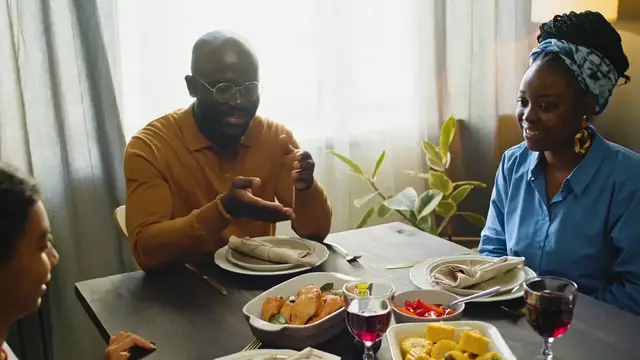
Food can be an integral part of the faith community, and often brings people together as part of fellowship.
Many faith communities want to support their members and surrounding community through food pantries and food banks. They may host meals to help those in the community and provide a welcoming and loving place to find family. Having the support from the faith community can help many who experience food and nutrition insecurity.
EmPOWERED to Cook offers a series of simple, scalable, heart-healthy recipes that faith organizations can adopt to feed worshippers and their communities at-large.
//Creative Commons Attribution Licence video (Reuse allowed)
Show More Show Less View Video Transcript
0:00
The University of Maryland Medical System is proud to support the work of the American Heart Association
0:05
by driving equitable health in our communities through nutrition security, from farm to kitchen to table
0:10
The Empowered to Cook Video Series is an example of that work
0:15
Improving diet and creating environments that support healthy choices are critical to increasing cardiovascular health
0:22
Foods can be an integral part of the faith community and bring people together. Places of worship may host meals and provide a welcoming and loving place to find family
0:29
Having support from the faith community can help many who experience food and nutrition insecurity
0:34
It is important to note that people living in communities of color disproportionately face barriers that perpetrate poverty and hunger
0:42
Because of this, these communities have a higher prevalence of chronic disease such as heart disease and diabetes
0:49
Our goal is to increase access to healthy foods and provide education on how to prepare these foods in an effort to improve health outcomes
0:56
Together with the American Heart Association, we are seeking to build. a culture of health and our faith communities
1:03
with knowledge of resources for healthier eating and living and by making sure that healthy choice
1:08
is also an easy and cost-effective choice. Hi, I'm Chef Stephanie Rose with the American Heart Association
1:21
and I'm here today with Empowered to Cook. And today we are cooking a wonderful Venezuelan chicken
1:29
stew. It is a hearty family celebratory soup and it feeds an army and it's so simple and I can't wait to get
1:42
started. This dish has so many ingredients and like every single one of them is a powerhouse
1:50
vegetable. The other wonderful thing about this soup is that it's Central American but each
1:58
Central American country just kind of has their own spin on it
2:03
And it's just, it's a tapestry of culture. So it gets yourself a nice good knife
2:08
Why not get these carrots out of the way? Beautiful carrots. We move these over here
2:14
And nothing has to be really finely chopped. I mean, this is rustic
2:19
It can be kind of, you know, chunky. Nothing fancy would just, I'm not even going to peel these
2:26
That's pretty easy, right? Half inch. one inch. But these cook a little faster
2:32
so I want a nice, nice hearty chunk. Otherwise, it'll break down in the cooking
2:41
Now, we've got some peppers. I love the red, I love the yellow. Again, this is going to make this dish super colorful
2:49
And again, this doesn't have to be in a teeny, tiny little dice
2:54
And I'm going to do my little cheating thing and just cut it into..
2:58
panels, makes it kind of easy around the seed. Love that. You could make a huge batch
3:10
That why this is really great for celebrations and family gatherings because it feeds so many people and scales super easily
3:24
Butternut squash, sweet potato, which I love, and I've already cut it up
3:28
You could also use white sweet potato. That's also common, a potato that's used in the Central America
3:37
It's a little sweeter, which is just fine. And that's the other really wonderful thing about this
3:42
is you could totally swap out. If you can't find this, use the white one
3:47
If you can't find this, you could also use yucca. Delicious. And then, but you really need to have the plantain
3:57
So what I'm going to do is try to show you how to peel them. You know, they come in many different colors
4:03
So you've got the green plantains. You've got this plantain, which is almost ripe
4:10
you have the blacker ones. You can eat all of them. They're just a little hard to peel
4:15
So I'm going to do the best I can here for you. Cut off the ends
4:20
Just kind of cut that and then try to get that outer skin off
4:29
I just, oh, okay, this one, actually, I think this one looks perfect. Leaks
4:34
A lot of people don't know about leaks. And leaks, I'm not about leaks
4:39
Leaks are wonderful. You know, they are in the Allum family. And they've been around since the Roman times and they were brought to this country and everybody fell in love with them. Because they're milder than a regular onion. And they are delicious. The only problem with a leak is they are dirty. So you've got to really make sure you clean it well, which is why it cuts them up already, cleaned
5:09
And sometimes I only use the white part. But if you start using the darker ones
5:16
this, it's a little chewy. But you can still use it for a stock
5:21
So don't waste that. And I usually cut them like this, or I'll cut them in half
5:30
There's really, doesn't really matter. For this particular dish, three clothes of garlic
5:39
You know how much we love garlic? I'm going to cut off those little nubby ends
5:46
Then it's the bulb of life. Packed with nutrients. So I do that little smashy thing
5:57
I always point my blade away from me when I'm doing this. This helps get all of that papery stuff off
6:06
Dice, again, this doesn't have to be We don't have to mense it
6:12
And of course we're going to put a bay leave or two in this
6:18
And then I think I'll just need to do the half an onion. So remember, stabilize your onion
6:27
So in Venezuela and in a lot of the Latin American countries this dish is called suncocho That what I found out
6:38
But each, each Latin country has their own different variation of it
6:43
They put in different meats. So it's very versatile. Last but not least, should be an asji, aji pepper, I think I'm saying it correctly
6:57
But we have some habaneros because I really want to put a little bit of heat in it
7:02
But be careful with your hands. You know, these can be hot
7:08
But the flavor is great. I could use a smaller knife to get this seeds out
7:13
The seeds are the hotter part. So I am going to try to get them out
7:19
And I might cut this up a little bit smaller because I don't think I want people getting huge chunks of habanero pepper
7:27
Disclaimer. I'm a little worried about my hands now, and you should be when you are dealing with habineros
7:35
or any hot chili peppers, because some of them can be super potent
7:39
and your fingers will be burning right now. So you may want to wear gloves
7:45
but what you absolutely have to do is wash your hands and wash them really well
7:52
and just try to remember, don't touch anything on your face, and sometimes it's hard to do
7:57
So I'm going to not touch anything and wash everything, including my knife
8:02
So I'll be right back after I wash my hands. Great. Got my hands clean, very important
8:10
And now all we have to do is put all of these fabulous, super, super food, nutritious vegetables in the pot
8:22
So I'm going to start with sweet potatoes. We're not using the purple ones
8:27
because that would make the dish a little funky color, even though they're so wonderful
8:32
Why not just going to go around the room here? Peppers. The sweet ones, you know, we love
8:38
The carrots. Those come in multicolors, too. Love that. Leaks, adorable, wonderful, delicious
8:48
nice, mild flavor should be put in every stew. They can be poached
8:54
Oh my gosh, so much to do. Garlic. Isn't it neat? We don't have to saute any of this
9:01
I'm so not used to that. Our beautiful habanions. And they come in different colors too
9:07
I'm not touching them. Just to be on the same side. A butternut squash
9:13
And if you can't find that, you can substitute that with pumpkin
9:17
So many calabaza. Jamaican pumpkin. and our wonderful plantains. Wow, I can't wait to eat those again
9:28
I know there's a bay leaf in here somewhere. I'm going to put another one in
9:33
and now I'm going to put in eight. Not boneless. Keep the bone in, but skinless
9:43
And take off as much fat as you can You know there parts you want to rip off If you are touching it with your hands you know make sure you wash your hands well But there a lot of flavor and there some other
9:55
nutrients that are in the thigh versus the chicken breast. So let's go for this
10:04
Love the bone in because that's really going to impart a lot more flavor. And here we have it
10:11
I have my beautiful spoon. Could it be any easier? Now I'm just going to use my back
10:20
Fill the pot with water. Just so it's covered to the top
10:28
Good thing I have a big pot. It should be good for now
10:33
Stir that up. Get everything kind of incorporated. Look how gorgeous this looks
10:42
I can't wait. Can't wait. Now that's heavy. I'm going to put this over here
10:48
And we're going to crank it on high. We're going to get it to a boil
10:53
But first, got to have some fresh cracked black pepper. Always go for the fresh, if you can
11:01
I think that's enough. And we are allowed to add just a little bit of salt, okay
11:09
We can add a quarter teaspoon. Okay? Didn't put, there's no salt in anything, right
11:16
And then we're going to crank it up to high, put the lid on it
11:22
bring that baby to a boil. And once it's boiling, I'll take the lid off and then simmer it for an hour
11:30
And then we're going to have something very delicious. Let's make sure our heat is off
11:35
Turn the flame off. Even a professional can forget to do that sometimes
11:40
So always double check. And it is hot, so be careful. Check this out. You still have the beautiful color. Oh, my chicken is cooked. You want to make sure you have enough liquid for everybody
12:00
This beautiful thing. Oh, the plantains are gorgeous. Color. Color is there. You'd be full
12:12
And we don't want to forget our lovely garnish. Definitely want to put cilantro on top
12:22
It's fabulous. Serve it with a line. I have some beautiful baby cilantro to add on top
12:32
It's a faunsy, and then we have it. A beautiful, I want to say soulful dish that is a
12:41
that is just a myriad of so many cultures. So I don't see why everybody is not going to love it
12:50
at your next celebration. So enjoy
Food & Drink
Soups & Stews
Food
Nutrition
Religion & Belief
Healthy Eating
Cooking Fats & Oils
Fruits & Vegetables