Up next in 10



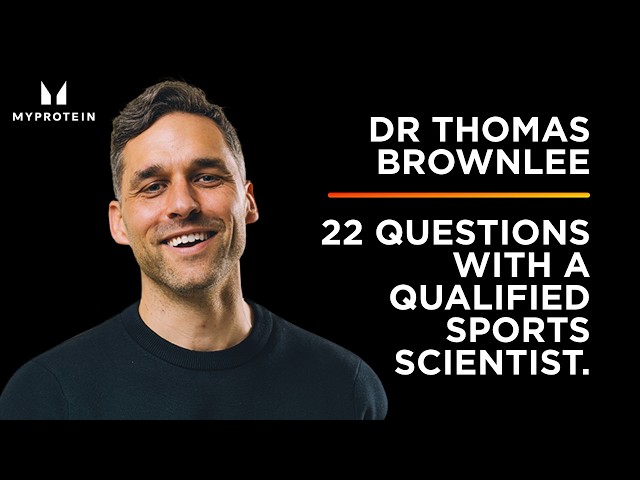
Dr Tom Brownlee PhD, CSci, ASCC, FHEA is the Assistant Professor in Applied Sport Sciences for the School of Sport, Exercise and Rehabilitation Sciences at The University of Birmingham.
In this video, he answers some of the most common questions around Applied sport science.
How he applies physiology and biomechanics to improve performance and reduce injury and how these principles matter for everyday lifters too.
The biggest myth is that more sweat equals better results; progress comes from smart programming and recovery. Elite sport blends science with mindset. Ice baths may reduce soreness but can blunt adaptation if overused. Supplements? Creatine, caffeine, and protein work.
Sleep is foundational and can undermine any plan. Warm-ups should raise temperature, mobilize key joints, and rehearse movements. Science favors structure and consistency over trends. Individual responses vary, so simple, progressive training done well beats complexity every time.
Show More Show Less View Video Transcript
0:00
I'm Tom Brownley. I'm an associate
0:02
professor in applied sport sciences at
0:04
the University of Birmingham. My
0:05
day-to-day is quite mixed. Sometimes
0:07
I'll be teaching. I'm the program lead
0:08
for our high performance sport masters.
0:10
I also am involved in a lot of research.
0:12
Primarily that's working with students
0:14
doing PhDs at professional football
0:16
clubs. So applied sport science is is
0:17
just that really. It's applying all of
0:19
the research, all of the data that comes
0:21
out of research studies into a usable
0:24
way. whether that's um for elite sports
0:26
people or for the everyday gymgoer, the
0:29
the person on the street. So when we
0:30
talk about the the foundations of
0:32
[clears throat] elite performance, we're
0:33
talking about um training, we're talking
0:35
about sleep, and we're talking about
0:37
nutrition. And they really are the
0:38
building blocks. And and thankfully, I
0:40
actually think that they're probably
0:41
some of the the most simple things to
0:42
get right, although often they're the
0:44
things that people overlook in in favor
0:46
of over complicating things. I think one
0:48
of the most common training myths that
0:49
frustrates me is that if a little is
0:51
good, then a lot must be better. I
0:53
absolutely hate the whole hashtag no
0:55
days off. I think periodizing what you
0:57
do is incredibly important and actually
1:00
potentially the rest we do between the
1:01
work is more important. So people who
1:04
often with the right intentions just
1:05
think well I'm going to do loads and you
1:07
see that all the time whether it's
1:09
people who in January perhaps start
1:11
these new ambitions of um keeping fit or
1:14
getting active and they'll go to the gym
1:16
seven times a week for two weeks and
1:18
then they won't again until Easter. It's
1:19
it's unsustainable. So, I think that the
1:21
most common habit that I wish I saw a
1:23
little bit more of is keeping it simple.
1:25
I think consistency is key. You don't
1:28
need to be doing any weird and wonderful
1:29
exercises. If you can be doing something
1:32
which is sustainable for you, if you've
1:34
never trained before, maybe just twice a
1:36
week, it's it's better than not going at
1:38
all. And what you do in the gym, keeping
1:40
your splits a bit larger if you're doing
1:43
less frequent trips to the gym. So, if
1:44
you're only doing two a week, it's two
1:46
whole body sessions moving big body
1:49
parts. um keeping it nice and simple and
1:51
keeping your weights moving up over time
1:54
or if you want to be a runner. Again,
1:56
just keep it nice and simple. If you can
1:57
only commit to two runs, allowing
1:59
appropriate rest between those those
2:01
sessions. And as I say, keeping it
2:03
simple is is absolutely the way to go.
2:05
You don't need to over complicate it
2:07
because largely that's the plan that you
2:08
just won't stick to. So, I think what
2:10
separates a good from a great athlete is
2:12
is that brilliant basics. It's it's
2:14
consistency on the stuff which is boring
2:17
and you don't want to do. It's the
2:18
little bits of prehab in the morning
2:20
before you even go out and do your
2:22
warm-ups. It's thinking about those
2:24
those big blocks. The same thing again,
2:26
nutrition, sleep, training. Again, it's
2:29
not over complicating it. And it's
2:31
consistency. If I were to provide one
2:34
tip, it would just be consistent. If you
2:36
can do 80 85% of what you want to do
2:40
over a prolonged period, you'll get
2:42
there. When we talk about the really
2:44
elite end, obviously in in technical
2:46
sports, they're they're technically
2:47
gifted and to a point you can't
2:49
necessarily teach that. But I think
2:51
we're coupling those brilliant basics
2:53
with a technical gift and a mindset
2:56
which allows people to push on when when
2:58
things get challenging because I've also
3:00
experienced working with some athletes
3:02
where technique might be really good,
3:04
but they get a little bit rattled when
3:06
things become challenging. So you want
3:08
someone who can push on when things get
3:10
hard and and take it past that sticking
3:13
point. So that's what I'd say separates
3:14
them. So I think there will always be
3:16
outliers. Fantastically gifted athletes.
3:19
Let's let's talk football for example.
3:21
Fantastically gifted players who might
3:23
not train in the way you want them to.
3:25
They might not have the lifestyle that
3:26
you want them to. They still turn up at
3:28
the weekend and score two goals. They'll
3:29
be the first name on on anyone's team
3:31
sheet. And lucky them. um they're
3:34
genetic outliers to a point because
3:36
they're not breaking down under the
3:37
demands of the task and they're they're
3:39
incredibly skilled. I would still argue
3:42
that if they followed the kind of things
3:44
nutritionally, training wise, rest-wise
3:46
that we might like them to, perhaps
3:48
they'd be even better. For some sports,
3:50
that's definitely more the case than
3:51
others, though. You're not going to
3:52
fluke your way to an Olympic gold in the
3:54
100 meter sprint, for example. But more
3:56
technical sports, you definitely do see
3:58
that, but it's not going to work for
3:59
everyone. So, ice baths are a really
4:01
interesting question. For a start, a lot
4:03
of the research shows that ice paths
4:04
have to be quite cold and potentially
4:06
quite a lot colder than than people
4:08
might have them. So, you might think
4:09
that you're following a a protocol which
4:11
should work, but you're not even um in
4:14
cold water that's cold enough. Um or if
4:16
the water is cold enough, are you in it
4:18
for long enough for your muscles to
4:19
actually get cold enough? So, that's
4:20
before we even get on to whether what
4:22
the science actually says, but you might
4:24
not even be following the science. Is it
4:25
a trend or is it sciencebacked? Well,
4:27
it's probably a little bit of both.
4:28
There definitely is some research for
4:30
cold water immersion being a positive
4:32
thing for athletic recovery, it can
4:34
actually help to to blunt some
4:36
adaptation effects. So, we know that if
4:38
we're looking um for hypertrophy to make
4:40
our muscles bigger, um ice baths can can
4:43
blunt that. That doesn't mean that we
4:45
shouldn't be using them. Perhaps if
4:47
you're playing at Wimbledon and you
4:48
finished a match at 10:00 at night and
4:50
you've got another match very very soon,
4:51
you're not necessarily looking for
4:53
muscular adaptation. You are looking for
4:54
recovery. So, it might be a good time to
4:56
use an ice bath. Whereas, if you're a
4:58
footballer in preseason and you're
5:00
looking for hypertrophy, then blunting
5:01
that effect might not be something that
5:03
that would be advantageous, especially
5:05
because your first game might be six
5:06
weeks away yet. You can probably deal
5:08
with a bit of soreness the next day.
5:09
More broadly, ice baths seem to be
5:12
something that some people find quite
5:14
enjoyable from a psychological point of
5:16
view. And you shouldn't discount a a
5:19
potentially placebo effect if it is only
5:21
a placebo effect. Because if people are
5:24
feeling better for it and it's not
5:26
hurting them and they're not spending
5:27
thousands of pounds they can't afford on
5:28
an ice bath for their garden, then go
5:30
for it. Uh no, some supplements
5:32
absolutely work. Um whey protein,
5:36
omegas, uh caffeine for example. Um for
5:38
me, if I had to pick just one though, it
5:40
would probably be creatin. I think
5:42
creatin is a should be a bit of a
5:44
no-brainer for most people to be honest.
5:46
It allows um better performance over
5:49
repeated highintensity efforts. It
5:51
improves our efforts in the gym because
5:53
we're able to recover slightly faster
5:55
which just improves the total amount of
5:57
work we are able to do. And more
5:59
recently, there's a lot of um research
6:00
around creatin and cognitive performance
6:03
as well. So, we think there's um changes
6:05
in the in the brain that are occurring
6:06
from creatin supplementation. Most
6:08
importantly, you don't have to take very
6:10
much of it. So, it's quite easy and it's
6:11
it's a relatively cheap um product. So,
6:13
if I was to pick only one, it would
6:15
definitely be creatin my protein crit. I
6:17
think that the rise of wearable data
6:18
over the last five ten years has been
6:20
fantastic. It's really useful to have a
6:23
bit of an idea what's going on inside
6:24
our bodies and to able to quantify
6:27
anything can really help us sort of map.
6:29
It can help us look back and see trends.
6:31
Um it can just be really useful as part
6:33
of our overall training um environment.
6:36
I suppose there are some potential
6:38
downsides though. Um sometimes you you
6:41
might be looking at data which might be
6:43
invalid. So if it's saying that you've
6:45
slept a certain percentage of quality,
6:48
is that correct? Because you don't want
6:50
to get hung up on on a certain metric
6:51
which isn't even true. Following on from
6:53
that, I think people need to be worried
6:54
not to become led or obsessed by those
6:57
metrics. You know, you don't want to be
6:59
sleeping poorly because you're worried
7:00
that you have slept too poorly, for
7:02
example. So much like anything, I think
7:05
the the middle is the way. You should be
7:07
using it to to improve but not lead
7:10
whatever it is that you're doing. I
7:12
think at times as well some metrics can
7:14
sort of be proprietary blends if you
7:17
write there might be if you like there
7:18
might be a score that you don't actually
7:19
know what that score comes from but the
7:21
manufacturer just tells you it's
7:23
something that's that's important. So I
7:25
think we should always exercise a little
7:26
bit of a little bit of caution with
7:27
these kinds of things. I also think that
7:29
you don't necessarily need to use these
7:32
things forever. I think that for
7:34
wearables, for things like rest and
7:35
recovery, you probably quite quickly
7:37
learn what happens to your recovery as a
7:40
result of certain things. If you train
7:42
late at night, how do you feel? If you
7:44
have a drink or two, how do you feel? Or
7:45
how do you sleep? Probably doing a
7:47
couple of months can probably give you a
7:49
broad enough understanding of how your
7:51
body responds to certain things for you
7:53
to not need to use it 24/7 365 if you
7:56
don't want to. So yeah, I think there
7:58
are advant there are ad So yeah, I do
8:01
think there are advantages to be had,
8:02
but we don't want to be led by it
8:04
entirely. Individual variability is
8:06
something that we absolutely need to
8:08
consider. I'm sure we'll all think of
8:10
friends and we'll go and train with them
8:11
or go for a run with them and we'll do
8:13
the same thing week after week and and
8:14
the results are varied and that's, you
8:16
know, that's not unsurprising. Genetic
8:19
variability plays a part. um what we do
8:21
away from the gym, how we eat, how we
8:23
rest, any other kind of activity we do,
8:26
all plays into that. At the elite end,
8:29
um programs are very individualized.
8:32
That's easy because there are enough
8:33
staff to be able to do that and you can
8:35
have enough data around individuals to
8:37
ensure that you're taking into account
8:40
their individuality. But it is really
8:42
important and and sometimes we might
8:44
feel that we're following a plan which
8:46
is supposed to work for us and it
8:47
doesn't. and we should not be so hard on
8:49
ourselves and realize that perhaps we're
8:50
just a little bit different. It might
8:51
take a little bit longer or perhaps it's
8:53
just a bit harder for us and we don't
8:55
want to just keep on pushing following
8:56
the black and white of a plan that
8:58
potentially leads to an overuse injury
9:00
for example. So yeah, individuality is
9:02
is absolutely huge. If I was going to
9:04
design a program for somebody just
9:05
starting out, it it would start with a
9:07
needs analysis, right? It would start
9:08
with me understanding their goals. If
9:10
they want to be able to run a half
9:10
marathon and I'm trying to improve their
9:13
1 RM deadlift, then it might not get
9:14
them to where they want to be. So if if
9:16
they're looking for that general ease
9:18
in, I think a mixture of of movement is
9:21
important. So I would recommend it can
9:23
be quite a small perhaps yoga or
9:25
pilateses type introductory session.
9:27
Doing one of those a couple of times a
9:29
week, which could just be 10 minutes.
9:31
That would be really useful because
9:32
movement quality is important. Aerobic
9:34
and cardiovascular fitness is important,
9:36
but again, if you absolutely hate
9:37
running, then don't do any running. But
9:39
you can have a have a cardiovascular
9:40
based warm-up in the gym before you
9:42
start lifting if that's something you're
9:43
interested in. And again, the middle is
9:46
the way. Stay consistent. Work out how
9:48
many times a week you think you can go
9:50
over a whole year period. If it's twice
9:52
a week, aim for twice a week. When
9:54
you're in the gym, if lifting is what
9:56
you want to be doing, depending on how
9:58
frequently you're going to be going, um,
10:00
think about your splits based on that.
10:01
So, if you're going twice a week, there
10:03
would probably be two whole body
10:04
sessions. If you're going four days a
10:06
week, you might split it uppers and
10:07
lowers. When you're in there, whole body
10:09
movements are your most efficient way of
10:11
doing things. And over time, you just
10:13
want to be ensuring that that weight is
10:15
continuing to go up. If you're doing
10:17
sets of 10, which is a good place to
10:18
start, think about how many more
10:20
repetitions you could do when you finish
10:22
that 10th rep. If it's four or five, you
10:25
might not be working hard enough to
10:26
actually be getting the benefits that
10:28
are required to bring your body to
10:29
change. You probably want it to be one
10:31
or two, one or two additional reps. When
10:34
you first start in the gym, though, you
10:36
can ease yourself in. Feel free to have
10:38
two, three, four weeks where maybe
10:40
you're not pushing yourself quite that
10:41
hard as you get used to the movements.
10:43
Your form is is the most important thing
10:45
because it's going to make sure that
10:46
you're doing the exercises properly and
10:48
that you're not going to get injured. If
10:49
you're not sure, ask someone to help you
10:51
with that. But broadly speaking, a
10:53
mixture of mobility, movement work,
10:55
cardiovascular, and resistance training
10:58
that gets um progressively more
11:00
difficult as you adapt is going to be
11:02
the way forward. I think uh injuries
11:03
like ACL's um there's lots of reasons
11:06
that they're that they're happening. I
11:08
think that it could be overuse um which
11:10
leads to general fatigue and instability
11:12
around the joint. It might be movement
11:14
quality uh issues. It might be lack of
11:17
strength issues. There are there are
11:18
lots of things that that that go into
11:20
it. I would say mobility is important
11:21
for all athletes. Even if you're working
11:23
with Formula 1 drivers who you don't
11:24
think move very much at all, mobility um
11:27
ensures or reduces the risk of of soft
11:30
tissue injuries. And it also ensures
11:32
that if you find yourself in slightly
11:34
more unusual sit positions than you
11:36
might do when you perform typically that
11:38
your body's able to cope with them. So
11:40
no, regardless of your sport, I think
11:42
that mobility is an important thing to
11:43
start. And importantly, you actually
11:45
don't need to do very much of it. A 10
11:47
15 minute circuit to start your warm-up
11:50
can be really really good and help you
11:51
to maintain your your tissue quality,
11:53
your range of movement and be really
11:54
beneficial. I think fundamentals for PE
11:57
in schools would involve movement
11:59
quality and body weight control. Um
12:02
sometimes we will move quite quickly to
12:05
doing high power or high speed or the
12:09
the exciting sexy part of sport I
12:11
suppose. Um but it's really important
12:13
that we can control our bodies. We can
12:15
stop properly. We can move in less
12:18
balanced situations. U as someone who
12:20
snapped the ACL twice, I probably wish
12:22
id spent a little bit more time on that
12:24
control side of things. And that that
12:26
movement quality and that body control
12:28
really is the foundation to build
12:31
strength, to build speed, to build
12:33
power. It is a little bit more boring
12:35
and sometimes we want just want to get
12:36
past it, but it is really really
12:38
important. So my sports background was
12:40
track and field where when I went in the
12:42
gym as a track and field athlete, I
12:44
would do Olympic lifting. So cleans,
12:46
jerks, snatches, all that kind of stuff.
12:48
And speed was really really important.
12:50
And it was in my mind that if I wanted
12:52
to get really really fast, I needed to
12:53
do Olympic lifting. When I started
12:55
working in elite sport and I went to
12:56
work in football and I saw no one doing
12:59
Olympic lifting, but being told that
13:01
speed was really important, I was like,
13:02
well 2 plus two is four, like why aren't
13:05
you doing this if you want to get that?
13:07
So in my inexperienced mind, I was sort
13:10
of saying to coaches and players, well,
13:11
you absolutely need to be doing Olympic
13:13
lifting. So I think that certainly
13:14
demonstrated my inexperience and perhaps
13:16
naivity because I now feel that that is
13:20
not important necessarily and you can
13:22
probably have a very very high
13:24
percentage of the speed gains by
13:26
training in a totally different way
13:27
which means that you don't have to teach
13:29
um footballers or any athletes who don't
13:31
know how to Olympic lift how to Olympic
13:32
lift which could take you six eight
13:34
weeks just wasting time to allow them to
13:37
do that thing that they might not even
13:38
need to do anyway. So I think some there
13:40
was some rigidity in my thinking about
13:42
how I felt that they should train for a
13:44
certain attribute which came from a good
13:45
place but I now know I should have a bit
13:48
of flexibility of thought. How I think
13:50
that strength training has probably
13:51
changed over the last sort of 1015 years
13:53
that I've worked in elite sport. Um
13:55
comes down to I think in the when I
13:58
first started there was a bit of a an
14:00
idea that if you were lifting weights
14:02
then the heavier the weights the better
14:04
and that needed to increase and increase
14:05
and increase. I probably don't think
14:07
quite as black and whitely about that
14:09
anymore. Again, I think that movement
14:11
quality is really really important. And
14:13
if you look at the rise of things like
14:15
reformer pilateses, you can see how you
14:17
can get a really good load through the
14:18
muscle with with, you know, you're not
14:20
it's not with a barbell and you're back
14:21
loaded with plates either side. So,
14:23
broadly, I think I've learned that I
14:25
don't need to be quite so rigid in my
14:26
thinking that there's perhaps more than
14:28
one way to skin a cat. So, I think the
14:30
reason that I thought that Olympic
14:31
lifting was essential for power and
14:32
speed generation was because coming from
14:34
a track and field background, I saw
14:36
everyone Olympic lifting and perhaps it
14:38
was a little bit um chicken and egg that
14:40
I thought that they were fast because
14:41
they were Olympic lifting. Maybe they
14:42
were just fast and they happened to be
14:43
Olympic lifting. I'm not totally
14:45
certain. Um, when I moved into an elite
14:48
football environment,
14:49
they the athletes, a lot of the athletes
14:51
weren't technically capable of Olympic
14:53
lifting, but they were doing exercises
14:55
that were appropriate for them to
14:56
improve their force generation
14:58
capabilities, and that did lead to
15:00
improved um, speed. So, I think the
15:02
reason that I thought that they should
15:04
be doing Olympic lifting came from a
15:05
good place. It came from a good place
15:07
because I wanted them to get better at
15:10
being fast. I was working there as a
15:11
strength conditioning coach and that was
15:13
how I saw that being achieved. So I
15:16
wanted to be good at my job to help them
15:17
be good at their job. I was told that
15:19
they needed to get fast. Uh and I
15:21
thought that came from Olympic lifting.
15:22
So it came from a good place. But there
15:24
was some naivity there in the the
15:27
restrictedness of my thinking and and an
15:29
inability perhaps to zoom out and think
15:32
well if they can get 85 90% of the gains
15:34
by training slightly differently and it
15:36
doesn't mean that we have to focus on
15:38
technique. It doesn't take time in
15:39
training. It doesn't potentially injure
15:40
them if they're not doing things
15:41
properly. Then I probably should have
15:43
just done that. But I got there in the
15:45
end. I think when looking to determine
15:46
an athletes performance priorities, it
15:49
probably comes from from across the
15:51
team. So you probably have the coach,
15:53
the physical coach, maybe the SNC coach,
15:55
perhaps sport scientists, all feeding
15:57
into that. And you'll look at those
15:59
priorities across the the whole of the
16:01
athlete. So if they've got technical
16:03
deficiencies, that might be something
16:04
that you want to focus on above all
16:06
else. Um, if they're technically pretty
16:09
gifted and tactically they're they're
16:10
pretty sound, then you might start to
16:12
look at the physical side of things. or
16:13
if they're okay across the board, then
16:15
you might have um an attribute from each
16:18
of those different areas that you're
16:19
looking at. So me saying that
16:22
footballers were being told that they
16:23
needed to get faster or me being told
16:25
that footballers needed to get faster,
16:26
that was probably only a handful of
16:28
players where their position demanded it
16:30
and it was determined that that was a
16:32
priority for that individual. I think in
16:34
terms of looking at responders to
16:35
different training programs or or how
16:38
attributes are improved depending on how
16:40
people are training, you're always going
16:42
to see individual variability leading to
16:44
different outcomes that you might
16:45
expect. So, for example, you might have
16:48
two players um both looking to improve
16:50
speed, one doing it the kind of textbook
16:52
way and one doing something totally
16:53
different. The one doing it the textbook
16:55
way might be much slower to improve
16:57
their speed than the one doing something
16:58
totally different. Again, that's going
17:00
to come down to individual variability.
17:02
It's going to come down to how well they
17:03
respond to training, but it's also the
17:05
stuff outside [snorts] of the training
17:06
environment. Is one sleeping or eating
17:08
better than others? Is one got less on
17:10
their mind than others. There's a lot to
17:11
consider. So, yeah, sadly, um, sometimes
17:14
it doesn't always follow the playbook,
17:16
but I'd say on the whole it does. If you
17:18
took the average, you would probably see
17:19
the results that you'd expect, but
17:21
you're always going to have outliers. I
17:22
think personally, I probably practice
17:24
what I preach maybe 80% of the time. Um,
17:27
again, I I definitely follow the
17:28
consistency is is key rule. I try and
17:31
get to the gym four times a week. I
17:33
don't love the gym though to be honest.
17:34
So, my sessions are pretty short, 40 45
17:37
minutes, but again, it is consistency
17:39
that's that's key. Um, I quite like
17:42
certain sports. I'm really into surfing.
17:44
I quite like skiing. Um, I don't live
17:45
near the sea or any mountain, so I don't
17:47
get to do it that frequently. So, when
17:48
I'm at the gym, I'm thinking about the
17:49
the quality of my physical performance
17:51
for when I am doing those sports that I
17:53
enjoy. Um, the way I split things up is
17:56
I will split between um an upper body
17:58
and and a lower body. Um, and yeah, I
18:00
would say I practice what I preach. I
18:01
try and keep my weights increasing over
18:03
time, which is getting a little bit
18:04
harder as I get a little bit older. I
18:06
try and sleep well. I try and eat well,
18:08
but um, thankfully I'm not an elite
18:10
athlete, so I don't live and die by
18:11
that. But yeah, I think I'm I'm okay at
18:13
following my own advice. I think in
18:15
terms of how important are sleep and
18:17
nutrition, they are both absolutely very
18:19
very important and thankfully they're
18:22
relatively easy to to do. I mean, sleep
18:25
is much easier than going to the gym and
18:26
and training really hard. Can you do
18:29
okay on one hour's sleep or a few bad
18:31
meals? Yeah, you can. You need to zoom
18:34
out a little bit, don't you? You need to
18:35
look at what it looks like over a month
18:37
or or six months or 12 months. You
18:39
certainly want wouldn't want to be
18:40
having regular 1 hour a night sleeps,
18:43
but no, it certainly is important. Um,
18:46
it can definitely ruin a really good
18:48
training program, especially nutrition,
18:50
I would say. Um, but no, it's definitely
18:53
important. Yeah, I think watching
18:54
football now can be a little bit of a
18:56
busman's holiday. Um, if ever I go and
18:58
watch games live, I'm quite sad. I like
19:00
to go and watch the warm-up, which
19:01
normally happens quite a lot before
19:02
kickoff when everyone else wants to be
19:03
having a beer. Um, but I kind of like to
19:05
see what people are doing and and what
19:07
the fitness coaches think is important.
19:08
I think I can disconnect and watch the
19:10
game, though. It's easier to watch the
19:12
game on TV because the camera follows
19:15
the ball, so you're sort of seeing the
19:16
important bit. But if I watch a game
19:18
live, I do tend to find myself not
19:20
watching the ball and watching what
19:21
other people are doing. So, yeah, it can
19:23
be a little bit like that. But I still
19:25
enjoy it. I enjoy that aspect of it. Now
19:26
I suppose sadly in terms of metrics that
19:28
I enjoy when I watch sport, um I don't
19:31
know if there are any metrics from
19:32
football that I sort of really pay
19:34
attention to. As I come from a sort of
19:36
strength and power background myself, I
19:39
think it's more endurance metrics and um
19:42
and performance that that I find most
19:44
exciting and most impressive. I've you
19:46
know, if I'm watching the Tour to France
19:47
and I see the the wattage that they can
19:49
maintain for five hours, I find that
19:50
absolutely incredible. or if I'm
19:52
watching the London Marathon and I'm
19:53
seeing that the elites what what pace
19:56
they can maintain for two hours like
19:58
that is just on an absolute different
20:00
planet to what I can comprehend. So
20:02
yeah, I'm blown away by endurance
20:04
metrics I think because I'm so bad at
20:06
that. I think if I could change how I
20:08
programmed strength training for
20:10
footballers back in the old days, it
20:12
would probably have been not actually to
20:14
do with the training itself, but it
20:16
would be to do with the education around
20:18
around habits. I think that I found that
20:21
strength training in football could be a
20:23
little bit challenging to show the
20:24
importance of and the value of. So I
20:26
think I'd actually maybe not change the
20:28
programming massively. I might make it a
20:30
little bit more movement focused, but it
20:32
would probably be around more the
20:33
education of the value in it. Because if
20:36
you have players or athletes who buy
20:37
into what you're doing, it's always
20:39
going to make your life a lot easier and
20:41
that's going to be more beneficial for
20:42
them in the long
#Fitness
#Health
#Nutrition