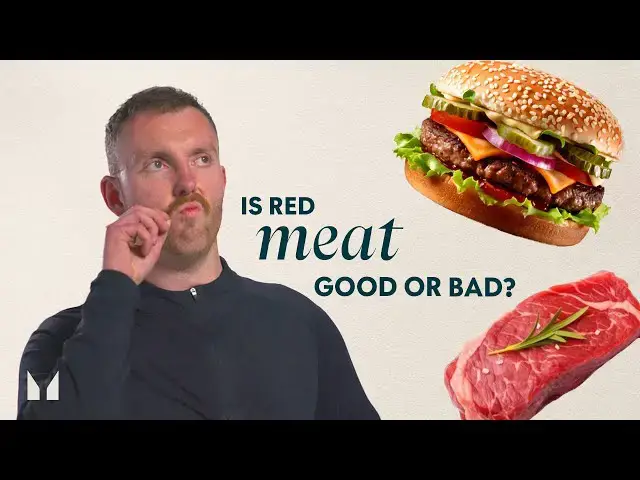

Expert nutritionist explains if red meat is bad for you.
In recent years, the consumption of red meat has been a topic of much debate and controversy.
While red meat can be a valuable source of protein and essential nutrients, there has been a growing concern about the potential dangers of consuming too much of it. Research has linked high intake of red meat to an increased risk of various health problems, including heart disease, certain types of cancer, and even premature death. As a result, many health experts and organisations recommend limiting the consumption of red meat and opting for other protein alternatives.
But what’s the truth?
In this video, expert nutritionist, Jamie Wright explores the potential risks associated with excessive red meat consumption and uncover the real facts that need to be considered in this debate.
***
Chapters:
00:00 - Introduction
00:16 - Red meat debate
00:58 - What is red meat
03:34 - Cooking process
04:09 - Nutritional benefits
05:41 - Health concerns
07:21 - Any more Q's
Show More Show Less View Video Transcript
0:00
hi I'm Jimmy Wright an accredited
0:01
nutritionist and I specialize in helping
0:03
people all across the world achieve
0:05
their goals without silly fat diets on
0:07
today's episode of nutritionist explains
0:09
we're going to be answering the question
0:11
is red meat
0:15
dangerous in recent years the
0:17
consumption of red meat has been a topic
0:19
of much debate and controversy why red
0:21
meat can be a valuable source of protein
0:23
and essential nutrients there has been a
0:25
growing concern about the potential
0:27
dangers of consuming too much of it in
0:29
fact research has linked high intake of
0:31
red meat to an increased risk of various
0:33
health problems including heart disease
0:35
certain types of cancer and even
0:37
premature death as a result many Health
0:40
experts and organizations recommend
0:42
limiting the consumption of red meat and
0:44
opting for other protein Alternatives
0:46
but what's the truth well in this video
0:49
we'll explore the potential risks
0:50
associated with excessive red meat
0:52
consumption and uncover the real facts
0:54
that need to be considered in this
0:56
debate just what is red meat
0:59
understanding what is and what isn't
1:01
classified as red meat is really helpful
1:03
in making sense of the conclusions of
1:05
the data which have caused such a stir I
1:07
suppose this could be argued but I found
1:09
that the most popular or maybe it would
1:10
be better to describe it as the most
1:12
polarizing evaluation of the health
1:14
effects of red meat consumption was
1:16
published by the World Health
1:17
Organization who listed red meat as a
1:20
possible carcinogen meaning quite simply
1:23
wh are suggesting that those who eat red
1:25
meat are at a higher risk of cancer
1:28
scary I know but publishing this
1:31
classification has led to all of the
1:33
commotion around red meat so we'll be
1:35
using their definition moving forward so
1:38
the World Health Organization defines
1:40
red meat as all Mamon muscle meat
1:42
including beef Veil pork lamb mutton
1:46
horse and goat within this you also have
1:49
categories of red meat processed and
1:52
unprocessed red meat processed meat
1:54
refers to meat that has been transformed
1:56
through salting curing fermentation
1:59
smoking or other processes to enhance
2:01
flavor or to improve preservation
2:04
examples of process meat include hot
2:06
dogs packaged ham sausages corn beef and
2:09
belong as well as canned meat and
2:12
meat-based preparations and sauces meats
2:14
that aren't cured smoked or otherwise
2:17
heavily processed are typically referred
2:19
to as unprocessed however it would be
2:21
accurate to say that all meat is
2:22
processed to some extent so the term
2:25
unprocessed more accurately refers to
2:27
minimally processed Meats such as minced
2:29
beef or Cerone steak the concerns with
2:32
red meat intake I just want to make a
2:33
point of saying I am not telling you to
2:35
not eat red meat I'm simply describing
2:38
the potential physiological mechanisms
2:40
proposed to explain the links between
2:42
red meat intake and The observed Health
2:44
outcomes and one potential mechanism for
2:46
The observed link lies in the color of
2:48
the meat itself what makes red meat red
2:51
well it's all down to myoglobin a red
2:53
pigment found in muscle tissue when we
2:55
eat red meat a part of this pigment can
2:56
be processed in the gut into an nitroso
2:59
compounds or no's which can harm and
3:02
potentially cause damage to the lining
3:04
of our gut when cells in the gut lining
3:06
are damaged the gut repairs itself by
3:08
cell replication and DNA damage can
3:11
occur over time this damage may help
3:13
explain the increased risk of cancer
3:15
that has been associated with red meat
3:17
eaters one interesting point on that
3:19
subject though is that unprocessed red
3:21
meat doesn't appear to have anywhere
3:22
near the same impact on gut damage as
3:25
processed red meat this may be done to
3:27
the potential added chemicals that are
3:29
found in processed meat which can lead
3:31
to no's being formed at a faster rate
3:33
than from the meat itself another
3:35
potential mechanism to highlight are the
3:37
heat compounds produced during the
3:39
cooking process do you know the really
3:41
nice crispy bits you get when you cook
3:42
meat in a high heat they taste great but
3:44
they may actually be potentially harmful
3:46
you see those yummy crispy bits and the
3:48
charred parts of the meat create certain
3:50
chemicals which can also damage the gut
3:53
and potentially increase the risk of
3:54
cancer developing other potential
3:56
mechanisms may include the types of fat
3:59
found in a given cut of meat or within a
4:00
processed meat product the amount of
4:02
salt ingested along with the meat and
4:05
the risk of weight gain with potential
4:07
overconsumption of calories does meat
4:10
have any nutritional benefit when it
4:12
comes to unprocessed red meat there are
4:13
actually several health benefits that
4:15
are worth mentioning first and foremost
4:17
unprocessed red meat is an excellent
4:19
source of high quality protein protein
4:22
is essential for building and repairing
4:23
tissues in the body as well as for the
4:25
production of enzymes and hormones
4:27
consuming unprocessed red meat can also
4:29
help ensure that your body gets an
4:31
adequate amount of protein which is
4:33
crucial for maintaining overall health
4:35
and well-being another health benefit of
4:37
unprocessed red meat worth highlighting
4:38
is its Rich nutrient content red meat is
4:41
packed with essential vitamins and
4:43
minerals including iron zinc and vitamin
4:45
B12 just to quickly cover those iron
4:48
plays a vital role in the production of
4:49
red blood cells and helps transport
4:51
oxygen throughout the body zinc is
4:53
necessary for a healthy immune system
4:55
and proper cell growth and development
4:57
and vitamin B12 is crucial for the for
4:59
ation of red blood cells and the
5:01
maintenance of nerve function in
5:02
addition to being a great source of
5:04
protein and essential nutrients
5:06
unprocessed red meat can also provide
5:08
health benefits related to muscle growth
5:10
and exercise recovery red meat is one of
5:12
the few food sources that contains
5:15
naturally occurring high levels of
5:16
creatine a compound that helps provide
5:18
energy to muscles during high-intensity
5:20
exercise it has been shown that
5:22
consuming red meat can increase muscle
5:24
strength and improve exercise
5:25
performance additionally the amino acids
5:27
found in red meat can help repair damage
5:30
muscle tissue and promote faster
5:32
recovery after intense workouts as with
5:35
everything nutrition related the devil
5:36
truly is in the details when it comes to
5:38
red meat now while there are potential
5:40
mechanisms for why it may be harmful
5:42
there are also plenty of reasons why it
5:44
may be beneficial to our health and I
5:46
want to say this not all red meat needs
5:49
a warning LEL and specifically I'm
5:50
referring to unprocessed red meat an
5:53
in-depth review published in nature in
5:55
2022 looked at the existing data
5:57
involving unprocessed red meat and that
6:00
the evidence suggesting an association
6:02
in per Health outcomes was weak at best
6:05
their conclusion also included a finding
6:07
that if there was any difference between
6:08
the risk of certain per Health outcomes
6:10
they were very very minor another
6:13
interesting study which I wanted to
6:14
highlight was a 2021 paper which was an
6:17
observational study looking at the
6:19
associations of unprocessed red meat and
6:22
processed red meat with mortality rates
6:25
and cardiovascular disease this study
6:27
included around 135,000 people from 21
6:31
Low Middle and High income countries do
6:33
you want to know what they find higher
6:35
unprocessed red meat intake which they
6:37
qualified as being greater than 250 gram
6:40
a week was not significantly associated
6:42
with total mortality or major
6:44
cardiovascular disease however higher
6:47
processed red meat intake which is
6:49
greater than 150 gam a week was
6:52
associated with higher risk of total
6:53
mortality and major cardiovascular
6:55
disease so maybe the question we really
6:58
have to consider here is is not
7:00
necessarily what are the dangers of red
7:02
meat intake but rather what are the
7:05
dangers of processed red meat intake
7:08
should you choose to incorporate red
7:09
meat into your diet it is important to
7:11
opt for unprocessed options select lean
7:13
cuts and I would still advise that you
7:15
consume it in some moderation whil it's
7:18
also incorporating other protein sources
7:20
into your diet anyway hopefully this
7:22
video helps and clears up some of the
7:24
confusion around red meat as always
7:26
don't forget to like this video And
7:28
subscribe to the my protein YouTube
7:29
channel for more helpful content and be
7:31
sure to keep asking the team questions
7:33
so we can keep providing you with more
7:36
evidence-based
7:40
[Music]
7:41
answers
#Food
#Meat & Seafood
#Nutrition
#Vitamins & Supplements
#Meat & Seafood Substitutes