Up next in 10



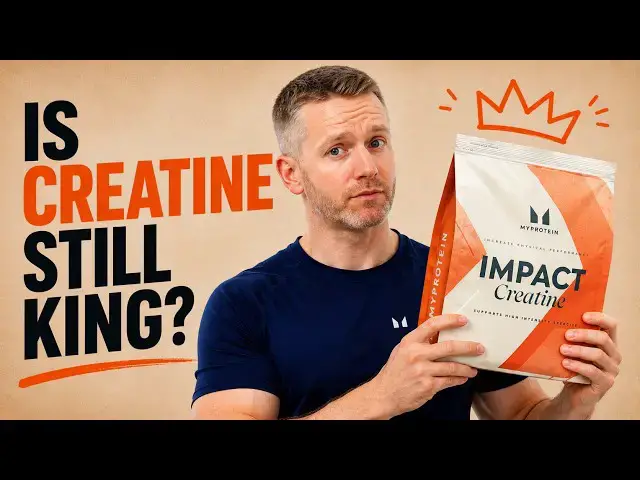
Is creatine still the king of supplements?
In this video, expert nutritionist Dr Richie Kirwan explores the latest evidence on creatine, explaining why it remains one of the most researched and effective supplements available for improving performance and supporting muscle growth.
Dr Richie Kirwan answers some important questions like, how much creatine should you take each day? Does it matter when you take it? And is a loading phase actually necessary?
With so much conflicting advice online, Richie breaks down the science behind creatine supplementation so you can use it effectively and get the most from your training.
Show More Show Less View Video Transcript
0:00
Creatine. What is it? What does it do?
0:02
And why is it one of the most popular
0:03
supplements in the world? Let's talk
0:05
about that.
0:08
>> [music]
0:10
>> How's it going, guys? My name is Richie
0:11
Gerwen. I'm a registered nutritionist,
0:13
nutrition researcher, and I'm a
0:14
university lecturer in nutrition. If
0:16
you're a regular gym-goer, at some point
0:18
in your life, you've probably heard,
0:19
maybe even in hushed whispers, of
0:21
creatine. A magical white powder that
0:23
can make all your dreams come true. When
0:25
you say it like that, it certainly
0:26
sounds dodgy. So, it's no wonder that
0:28
there's now an entire generation of moms
0:30
that have experienced that terrifying
0:32
moment of discovering their supposedly
0:34
innocent child's baggy of creatine
0:36
hidden under their bed, and have
0:37
despaired at the realization that their
0:40
baby has stepped onto the slippery slope
0:42
of steroid use that will eventually lead
0:44
to them OD'ing and being found face down
0:46
in a bag of this evil white powder.
0:48
But at least I'll be jacked, right?
0:50
Seriously though, creatine is one of the
0:51
most popular supplements in the world,
0:54
and it's also one of the most
0:55
researched. People use it to build
0:56
muscle, increase strength, and improve
0:58
performance. But there is also a lot of
1:01
confusion about what creatine actually
1:02
does, how it works, and whether it's
1:05
really safe. So, if that's something
1:07
that you want to know more about, you
1:09
found the right video. First off,
1:11
creatine is a compound that your body
1:12
naturally produces. You're actually
1:14
doing it right now, while you're
1:16
watching me.
1:17
Behave yourself. It's made mainly in the
1:19
liver and kidneys from three amino
1:21
acids: glycine, arginine, and
1:24
methionine. And most of the creatine in
1:26
your body is stored in your muscles. You
1:28
can also get creatine from food,
1:30
especially from red meat and fish. But
1:32
the amount you get from your diet alone
1:33
is pretty small compared with what you'd
1:35
get from taking a supplement. In fact,
1:37
you would have to eat about a kilo of
1:39
beef every day to get the recommended 3
1:41
to 5 g of creatine. Not exactly
1:44
cost-effective. Inside the muscle,
1:45
creatine is stored mostly in the form of
1:47
phosphocreatine, and this plays [music]
1:48
a huge role in how your body produces
1:51
energy during high-intensity exercise.
1:54
To understand why creatine can improve
1:56
performance, we need to talk about ATP.
1:58
ATP, or adenosine triphosphate, is the
2:01
main energy molecule in the body. And
2:03
every time a muscle contracts, it uses
2:06
ATP. The problem is that your muscles
2:07
only store enough ATP for a few seconds
2:10
of very intense effort.
2:12
So, when you sprint, jump, or especially
2:14
lift heavy weights, your body needs a
2:17
way to quickly regenerate ATP. This is
2:20
where phosphocreatine comes in.
2:22
Phosphocreatine can donate a phosphate
2:24
group to help regenerate [music] ATP
2:26
really quickly, which allows you to keep
2:28
producing high levels of force for a
2:30
little bit longer. If you increase the
2:32
amount of creatine stored in the
2:33
muscles, you can store more
2:35
phosphocreatine, and that means you can
2:37
produce more energy during short,
2:39
high-intensity efforts. In reality, that
2:41
means creatine can benefit exercise
2:43
performance in a lot of different ways.
2:45
And there's a huge amount of research to
2:47
show creatine can improve your sprint
2:48
performance, help you lift more weight,
2:50
do more volume in the gym, improve
2:52
glycogen synthesis in your muscles,
2:54
meaning you have a ready source of
2:56
energy for continued exercise. It can
2:58
improve your anaerobic exercise
2:59
threshold, and that's your ability to do
3:01
quick, really high-intensity or
3:03
explosive exercise, and it might even
3:05
improve your aerobic capacity, too.
3:08
Not bad, right? There've been decades of
3:11
research looking at creatine
3:12
supplementation. In fact, it is one of
3:14
the most well-researched sports
3:15
supplements on Earth, and the results
3:18
are pretty damn consistent.
3:19
When creatine is combined with
3:21
resistance training, people tend to gain
3:23
more strength and more lean mass
3:25
compared with training alone. In one
3:27
classic 12-week resistance training
3:29
study, the group taking creatine gained
3:31
about 4 kg of fat-free mass compared
3:33
with about 2 kg in the placebo group,
3:36
and they also improved their strength
3:37
more on exercises like bench press and
3:39
squat,
3:40
even though both groups followed the
3:41
exact same training program. Most recent
3:44
systematic reviews and meta-analyses,
3:46
which combine all of the results of many
3:48
similar studies, confirm the same
3:51
overall pattern, Showing that creatine
3:53
supplementation alongside resistance
3:55
training leads to greater increases in
3:57
strength and muscle mass compared to a
3:58
placebo.
4:00
All of these effects seem to happen
4:01
mainly because creatine allows people to
4:04
train harder, recover faster between
4:06
sets, and maintain performance across
4:09
heavy training sessions. And some more
4:11
great news, the benefits of creatine
4:13
work for women as much as they do for
4:15
men.
4:16
Research looking specifically at active
4:18
females shows that creatine can also
4:20
improve strength and performance in
4:22
women. In terms of different types of
4:23
creatine, creatine monohydrate is still
4:26
considered the standard form. And large
4:28
reviews comparing different forms of
4:30
creatine have concluded that there is
4:31
very little evidence that newer versions
4:34
are more [music] effective or better
4:35
absorbed. When taken at recommended
4:37
doses, creatine monohydrate has
4:38
consistently been shown to be safe for
4:41
healthy people. And most of the common
4:43
concerns people have about kidney damage
4:45
or other health problems are not
4:47
supported by research. That's it. If you
4:49
do suffer from some form of kidney
4:50
disease, you should speak with your
4:52
doctor before supplementing with
4:53
creatine. Now, most people think of
4:55
creatine as a supplement for the gym.
4:57
But there are also some other areas of
4:58
research into creatine and its effects
5:00
on health. Creatine is not just stored
5:03
in your muscles. It's also stored in
5:05
your brain, where it plays a very big
5:07
role in energy production. Because of
5:09
this, researchers have looked at whether
5:10
creatine supplementation could affect
5:12
cognitive performance. Some studies have
5:13
shown improvements in certain mental
5:15
tasks, particularly in situations where
5:17
the brain is under stress. For example,
5:19
in one study, participants who were
5:21
sleep deprived performed better on
5:23
cognitive tests after taking creatine
5:25
compared with placebo. That said, more
5:28
recent systematic reviews show that the
5:29
effects on cognition in healthy,
5:31
well-rested people are mixed. And not
5:34
every study finds a benefit. There is
5:35
still a lot of research in whether
5:37
creatine could help support brain
5:38
function in older adults or in
5:40
situations where energy demands are high
5:42
or during sleep deprivation.
5:44
But this is still an emerging area of
5:46
research. There's also research looking
5:48
at creatine in aging.
5:50
In some studies, older adults who take
5:51
creatine while doing resistance training
5:54
gained more strength and muscle mass
5:55
compared with training alone,
5:57
just like in younger people. Because
5:59
muscle loss with age is a major health
6:00
problem. It's called sarcopenia. This is
6:03
one of the reasons creatine is being
6:04
studied, not just as a sports
6:06
supplement, but also in the context of
6:08
healthy aging and physical function. So,
6:10
if creatine works, the next question is
6:12
why is supplementation needed at all if
6:13
your body makes it? Well, your body does
6:15
make it, and you do get it from food,
6:16
but like I said, the amount you get from
6:18
your diet is pretty small.
6:19
Supplementation allows you to increase
6:21
the amount of creatine stored in your
6:23
[music] muscles to a level that you
6:24
probably would never reach through diet
6:26
alone.
6:27
And that's why supplementation can
6:28
improve performance even if your diet is
6:31
already good. In fact, there's also some
6:33
research showing that creatine
6:34
supplementation may have an even bigger
6:35
effect in vegetarians. In one controlled
6:37
training study, vegetarians started with
6:39
a lower muscle creatine levels than
6:41
omnivores. And after eight weeks of
6:43
creatine supplementation, they showed a
6:45
larger increase in muscle creatine, and
6:48
a greater relative increase in lean mass
6:50
during resistance training. So, what's
6:52
the bottom line?
6:53
Creatine is one of the most researched
6:54
supplements ever studied.
6:55
And the evidence consistently shows that
6:57
it can improve strength, power, and lean
6:59
mass when combined with resistance
7:01
training. So, if your goal is to improve
7:03
training performance, build muscle, or
7:04
support high-intensity exercise,
7:06
creatine is one of the few supplements
7:08
where the evidence really does support
7:10
its use.
7:11
If you've got any more creatine
7:12
questions, drop them in the comments
7:14
below, and remember to like and
7:15
subscribe to Myprotein YouTube channel
7:17
for more evidence-based nutrition
7:19
information.
Sports