Up next in 10

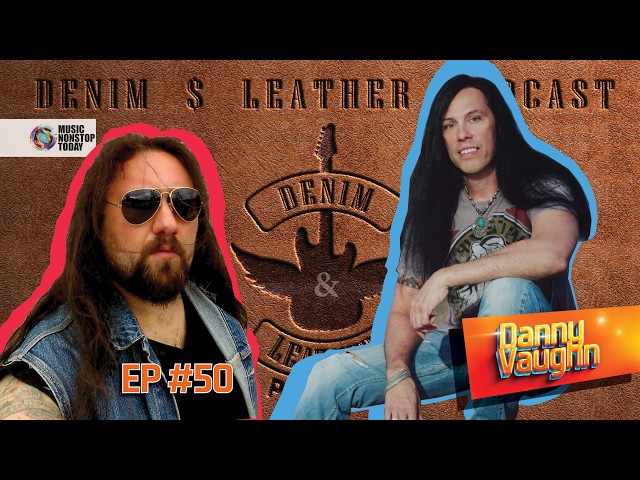
Interview with Danny Vaughn from Tyketto (Episode #50, Recorded: March 5, 2026)
Mar 22, 2026

This special 50th-anniversary episode of the Denim and Leather podcast features an insightful interview with Danny Vaughn, the frontman of the band Tyketto and formerly of Waysted. The conversation covers a wide range of topics, including Danny’s upcoming album, his musical journey, reflections on the music industry, and touring plans.
Key Highlights and Insights:
- New Album Release
- Musical Style and Themes
- Creative Process and Collaboration
- Release Formats and Distribution
- Views on Digital Music and Streaming
- Career Reflections and Industry Changes
- Glam Rock vs. Grunge
- Live Performance and Touring
- Memorable Experiences
- Personal Notes
About Danny Vaughn
Danny Vaughn is an American rock and heavy‑metal singer, born Daniel T. Himler on July 18, 1961, in Cleveland, Ohio. He is best known as the lead vocalist for the bands Waysted and Tyketto, and also performs as a solo artist and frontman under his own name.
Main musical roles
He was the singer for the British‑American hard‑rock band Waysted from 1985 to 1987, appearing on their album Save Your Prayers.
Show More Show Less View Video Transcript
0:04
Okay guys, in the new episode of Denim
0:06
Leather podcast, this is the 50th
0:08
episode of Denim Leather podcast. So
0:10
it's anniversary jubilee. Uh we have a
0:12
special guest Danny from Teero and from
0:16
X Wasted from back in the day. Uh thank
0:19
you Denny for joining us.
0:20
>> No, my pleasure. What are we going to
0:22
talk about today?
0:23
>> Oh, I got to ask you about your new
0:25
record. It's coming up uh real soon,
0:28
right?
0:29
>> Yeah. March 20th.
0:30
>> Yeah. Teero uh Closer to the Sun uh new
0:34
record is coming up March 20th. And u uh
0:38
wanted to ask you about is the whole
0:40
record going to be high energy rock like
0:43
uh the the the two singles that you
0:45
released we rise and higher than high.
0:48
>> Yeah, absolutely. Um, when we when we
0:51
started to decide what kind of record we
0:53
wanted to make,
0:55
we wanted to make something that was
0:58
positive and and uplifting. Um,
1:02
even before today, you know, we felt
1:05
that things in the world are really
1:07
bearing down on us and and making our
1:10
lives horrible and difficult. And so, we
1:13
didn't want to address that. We wanted
1:15
to give some music that people could put
1:17
on in the car and drive and just let
1:20
things go for a while.
1:23
>> Yeah. Because the for the last five six
1:26
years it was a mess in the world. I mean
1:28
uh you probably sensed that and and that
1:31
pressure and and you completed in a
1:34
positive record.
1:35
>> Yeah. And and the other thing too was
1:37
that while we didn't want to remake
1:41
Don't Come Easy, the first album, you
1:44
know, this year that album is 35 years
1:46
old and people are still playing it.
1:49
It's still played in clubs, you know,
1:51
you see it even it gets bigger and
1:53
bigger online and guitar players are
1:55
doing the solo, all that. So we wanted
1:57
to figure out what is it about that
1:59
album that has stayed with people. Um,
2:03
so not try to recreate it, but maybe
2:07
distill some of that energy, some
2:09
whatever that was, and bring it forward.
2:12
And I think we have
2:14
>> Yeah, it's um probably probably the
2:18
energy from from uh your uh biggest
2:21
single, Forever Young, in in the first
2:23
album, uh was uh was that uh you know,
2:27
as you as you said, drive away and
2:30
listen to the music. It was it was also
2:32
a biker guy you in the in the in the
2:35
video. So it feels like that like
2:38
freedom, right?
2:40
>> Yeah. Well, you know, for instance, the
2:42
um on the album, it's nine songs before
2:46
you even get to a ballot, you know, so
2:50
it's it's just like I said, we just had
2:52
a lot of energy. I've got some new band
2:54
members that that really are excited to
2:58
be part of it and we're part of the
2:59
writing process. So, it's it's all like
3:02
I said, it's all got a lot of very nice
3:04
energy around it. We're I haven't been
3:06
this excited about a new record since
3:08
Don't Come Easy came out.
3:10
>> You know, when we when we go into the
3:13
into the m musically, it it has also
3:16
some bluesy rifts and also some hard
3:19
rock, glam rock rifts, also some heavy
3:22
metal stuff, but but but uh I sense also
3:26
maybe even higher on a spiritual level,
3:30
right? Maybe
3:31
>> maybe so that would be nice. I'll take
3:34
I'll take that.
3:35
>> Yeah, because it's it seems to me even
3:38
even the even closer to the sun or we
3:40
rise or higher than high it it seems a
3:43
little bit spiritually to me. Not that
3:46
in sense of some religious stuff but you
3:49
know it's like a uplifting thing you
3:51
know
3:51
>> I think you Yeah. Now that now that you
3:53
say it, I think you're right because for
3:56
instance, Higher Theran High is just
3:58
about nothing lifts me more than music,
4:01
you know? And when I was younger, I
4:04
tried all those good drugs, you know?
4:05
It's like, and yeah, there some of it
4:07
was fun, but music is the thing I keep
4:10
coming back to that that presents a
4:12
feeling to me like nothing else, you
4:15
know. So, yeah, I think there is a bit
4:17
of spirit in there.
4:18
>> Yeah. Yeah. Yeah.
4:20
high on life or high on uh music, right?
4:23
>> Yeah, for sure.
4:24
>> How did how did you write uh your new
4:28
record? I mean, you were not by yourself
4:30
writing, right?
4:31
>> No. Um there's there's quite a few
4:33
co-writers. I think three or four songs
4:37
on the record I wrote myself, but mostly
4:40
um you know, uh my bass player Chris and
4:43
my guitar player Harry, they contributed
4:46
ideas. The second song on the album was
4:49
co-written with Jim Peter from Survivor.
4:52
Um,
4:53
let's see. And I have also there are two
4:56
songs on the album that were co-written
4:57
with someone I've worked with before in
4:59
Boston. His name is Ruben Dlo. And we
5:03
did a couple of songs. We had a song
5:06
together that was on the Digin Deep
5:08
Taiketto album. And we wrote a song
5:10
together that is on my solo album, Myth,
5:12
Legends, and Lies. So, we've worked
5:14
together for for many many years. And,
5:17
you know, there were just all this this
5:19
good music floating around and and I I
5:21
like that. I I don't want I very rarely
5:25
do I want to write the whole thing, you
5:28
know. That's that's for a solo record in
5:30
my opinion, you know, but um it's more
5:32
fun to collaborate and everyone comes at
5:36
music from a different angle, you know,
5:38
they have different different people
5:40
that they follow or they admire and they
5:42
bring all that to the table and it makes
5:44
it more exciting.
5:45
>> Yeah. I had your friend here uh Johnny
5:49
D, your drummer now in Tero uh like half
5:53
a year ago on the show. Uh, and uh, did
5:56
he also contribute to the writing or
5:58
recording or he came after
6:00
>> recording? Yeah. No, Johnny didn't
6:02
write, but I mean uh, he was just so
6:06
excited because I think it's really the
6:07
first full album he's gotten to record
6:10
in a long time. I know with with Doro,
6:12
they use different players for different
6:14
songs and things like that. So, he was
6:16
part of the process, you know, all the
6:18
way from beginning to end. And, you
6:21
know, I couldn't be happier about that.
6:22
I've known Johnny for 40 years now. And
6:26
um he is such a great presence in a
6:30
room. You know, I find being around him
6:32
keeps me relaxed.
6:35
Um you know, we're of the same age, so
6:37
we talk about a lot of the same music
6:39
and and all of that sort of thing. But,
6:42
you know, he's um he's one of these
6:44
people. He he never stops working. You
6:46
know, he's a very hard worker and he's
6:49
very very focused. And in the studio,
6:51
that's something you really need.
6:53
>> Yeah. I I I met I met Johnny last year
6:56
on a festival in Bulgaria. Uh he played
6:59
with Doro. I met him backstage. So we
7:02
talked a lot about drums because I'm a
7:03
drummer also. Uh and uh that's how
7:07
that's how we got to know each other and
7:09
we made uh the interview with him. Uh
7:11
amazing amazing man. Uh and um I wanted
7:14
to ask you about the records when you
7:16
release uh either it's solo stuff or
7:19
with bands. Uh uh how do you how do you
7:23
uh feel when you release it? Is it is it
7:27
uh like like something you achieved or
7:30
maybe like uh you see it like your own
7:33
artistic creative piece like an artist
7:35
when he sees his painting? How do how do
7:37
you perceive the releasing of an album?
7:40
Does it uh relaxes you or it gives you
7:42
more stress?
7:43
>> Uh
7:45
probably more stress. Um because I don't
7:49
think I, you know, with a musician
7:51
anyway, I don't know how it is for a a
7:53
painter, uh but for a musician, you want
7:57
people to like what you're doing, you
7:59
know. Um and if they don't, you know,
8:02
you have to have a very thick skin if
8:04
people come back to you and go, "Oh,
8:05
well, this is crap." You know, it's
8:07
really hard to to deal with that. Even
8:09
though it's going to happen, you know, I
8:12
mean, there's no way around it. So, you
8:13
just hope that more people like it than
8:16
don't.
8:17
So there is some of that. I have learned
8:19
that one of the secrets of of a happy
8:22
life is never read the comments.
8:26
>> Yeah. Yeah. Yeah. Or or never return to
8:29
the comments, right?
8:30
>> Oh, definitely don't return them.
8:35
>> Okay. Uh but uh but I I I was thinking
8:39
about after you release it, right?
8:40
That's your stress. After you release
8:42
it, how it will be perceived because how
8:44
it will be sold, right? Maybe. No.
8:48
>> Yeah. Well, I mean, yeah, it's you you
8:52
never have much control over that. You
8:54
have to have confidence in the people
8:56
you're working with and you know, we're
8:59
with a brand new record company for us,
9:00
Silver Lining, and they so far have done
9:04
everything the way they should do it. I,
9:06
you know, I couldn't be happier. And so,
9:08
in that sense, I feel more relaxed
9:10
because I kind of know that somewhere
9:12
out there there's someone working very
9:14
hard for me.
9:15
Yeah. Yeah.
9:16
>> That helps a lot.
9:18
>> Uh what are you releasing? Uh all all
9:21
kind of bundles, vinyl, uh CDs,
9:24
everything, right?
9:26
>> Yeah. Yeah. There's three different
9:28
vinyls. There's the regular black,
9:30
there's a red, there's a sunburst one.
9:33
Um those are a lot of them is limited
9:35
editions, you know. It's for the
9:37
pre-orders, but yeah, CDs, downloads,
9:41
all of it.
9:42
Uh Denny, I got to ask you, what's your
9:45
uh what's your position on uh on digital
9:48
downloading Spotify versus uh hard copy
9:52
uh place and sales? Uh how's your
9:56
where's your stance on that?
9:58
>> Well, I'm not a fan of Spotify, that's
10:00
for sure. Uh I don't have a Spotify
10:02
account and I don't use it um for a
10:04
number of reasons. Um, the good side of
10:08
course is that people can discover music
10:12
they've never heard of. They can just
10:13
kind of travel around and find stuff.
10:15
And I appreciate that. I do. But, you
10:18
know, everybody knows that they pay [ __ ]
10:20
to musicians.
10:22
And unfortunately, the person who runs
10:25
Spotify is turning out to be a very,
10:28
very bad person who is investing a lot
10:31
of money in Trump's war and all of that.
10:34
And I just I want no part of that, you
10:37
know? It's that's messing up messing up
10:40
music a lot. So, but you can't escape
10:42
digital downloads. It's it's the hard
10:46
part is that we have, you know, a
10:49
generation of music listeners that don't
10:51
appreciate
10:53
the fact that they can get music for
10:55
free. You know, it it shouldn't be for
10:57
free. people work very hard to make that
10:59
and spend a lot of money to make it
11:01
sound good, you know, or you try to. Um,
11:06
somebody pointed out that in 1955
11:09
if you went out to buy the new Elvis
11:12
single, one song, right, with a flip
11:14
side, it was 99 cents, and that's what
11:17
you pay for one song on iTunes now. 99.
11:22
>> Wow. Yeah. Yeah.
11:23
>> It's never changed, you know. So music
11:26
is one of those things that everybody
11:28
thinks should be free, which would be
11:30
nice, but you know, how do we, you know,
11:33
how do we feed our families? How do we
11:34
keep the electricity on?
11:36
>> Yeah. But I think about 63 64% of of
11:40
that 99 cents went to the artist to
11:43
Elvis, you know. Now it's not like
11:46
>> Yeah.
11:46
>> Yeah. Now it's not like that. Now it's
11:48
like a small small amount of of
11:50
percentage, right?
11:51
>> Depending on who you're Yeah. who you're
11:53
associated with. Like I said, Spotify is
11:55
the worst. Um, Amazon Music is better,
11:59
iTunes is better. You know, they're not
12:01
great, but, you know, we're working on
12:03
it.
12:04
>> Yeah. But your your music must be
12:05
present everywhere. That's the that's,
12:07
you know, uh, between choosing the the
12:10
both evils.
12:11
>> Yeah, for sure. And like I said, you
12:14
know, it it enables
12:16
people who might never have heard of
12:18
you, you know, to find you. But you know
12:22
back when none of this before the
12:24
internet I can remember when don't come
12:26
easy came out and we would get letters
12:28
fan mail would come in and and I was
12:31
getting fan mail from from India and and
12:34
Nepal and I don't know how it got all
12:36
the way over there but it it does
12:38
travel.
12:40
>> Uh how did how did that uh that record
12:44
that both records probably the first one
12:46
was was bigger hit it went platinum
12:49
right? No, no,
12:51
>> no.
12:52
>> Or or or because it was it was the end
12:54
of the hard rock glam rock era.
12:57
>> That's a funny thing with Taiketto.
12:59
We're a very very small band and
13:03
but for some reason people remember us
13:05
and think of us as much bigger. So when
13:07
they talk about us, they talk about in
13:10
the same sentence as as Winger and Mr.
13:13
Big and you know, but those guys, you
13:16
know, White Lion, those guys were
13:17
platinum sellers. We never came anywhere
13:19
near that, but we were always a really
13:23
good live band and we kind of made this
13:26
impression that people never forgot. So,
13:29
we were able to keep playing and keep
13:31
playing live and people keep coming to
13:33
see us. Thank goodness.
13:34
>> Yeah. Do you did you survive the 90s
13:36
like that or
13:39
>> I Well, I quit um at the end of 1995. I
13:43
I quit music altogether because it was
13:45
just it was too it was too sad you know
13:49
and it's an unfortunate thing because
13:52
music is eternal but the music business
13:55
is very fashionoriented
13:58
so I understood what happened people say
14:01
you know don't you hate Nirvana it's
14:03
like no you know Nirvana didn't make
14:05
that happen the audience made that
14:07
happen and they got tired of record
14:11
companies taking every band with
14:14
good-looking guys and long hair and
14:16
matching leather outfits, throwing their
14:17
guitars around and putting them on MTV
14:20
every five [ __ ] seconds over and over
14:22
and over again. People got tired of it
14:24
because they got too much. And the same
14:27
thing happened to to grunge after a
14:29
while. People got tired of that because
14:30
they record companies don't know how to
14:34
work a good thing so that it lasts. they
14:37
used to. You know, if you look back in
14:40
the 70s and 80s, Judas Priest put out
14:43
four albums before anybody really
14:46
started to get into Judas Priest.
14:48
Certainly in America anyway.
14:49
>> Yeah.
14:49
>> And then they became huge. You don't get
14:51
those kind of chances anymore.
14:53
>> They don't exist.
14:54
>> Yeah. Like after the fourth album, Yeah.
14:56
you're you're nowhere.
14:58
>> Yeah. Record companies want you to come
15:00
to them with your audience already in
15:02
place so they don't have to do any
15:04
[ __ ] work.
15:05
>> Yeah. That's that's how I read some guy
15:08
uh signed them signed a record deal
15:11
because he has a lot of followers on
15:13
Instagram, you know, or on Tik Tok.
15:14
Yeah.
15:15
>> If you got the audience, the record
15:17
companies want you. Not all of them, but
15:20
certainly all the big ones, that's how
15:21
they operate.
15:22
>> Yeah. But because you mentioned grunch,
15:24
you know what what I what I uh see for
15:27
the last 10 years. I I saw a revival of
15:30
the glam rock of the 80s hard rock a a
15:33
big revival for the last decade or so.
15:36
But grunch is nowhere near that, you
15:38
know. It doesn't exist anymore like like
15:40
a style. But the hard rock, glam rock,
15:43
heavy metal, it still exists, you know.
15:45
>> Yeah. Yeah. Well, but things move things
15:47
move in circles. It may, you know, in
15:49
enough time we may see because, you
15:51
know, those people who grew up in high
15:54
school listening to Nevermind and
15:57
listening to Sound Garden and all that,
15:58
that may come back around when they hit
16:00
50 or 60 years old, you know? You just
16:03
don't know.
16:03
>> Yeah, maybe. Maybe, maybe. But you are,
16:06
are you do you think that you're now
16:08
more wanted band for for festivals and
16:10
stuff than in the early 90s?
16:12
>> Yeah, absolutely. Um, I don't know what
16:15
happened. I mean, because obviously
16:17
everything stopped with COVID.
16:20
>> Yeah.
16:20
>> And when we came back out, we we didn't
16:22
know what was going to happen. Would
16:25
people still come? I had I had to
16:27
replace band members. Would they they be
16:30
accepted? And for some reason, I think
16:32
Taiketto now, you know, we're headlining
16:34
mid-level festivals. We're being asked
16:37
to play in countries that we've never
16:39
been into before. There's there's a tour
16:42
announcement coming in the next couple
16:43
of weeks that will cover a lot of
16:45
Europe, hopefully Eastern Europe and
16:47
stuff that, you know, I'm really excited
16:49
about because there's so many places
16:51
that we haven't been before.
16:53
>> Yeah. You you changed your your your
16:57
living from America to Europe. You're
16:59
Europe now, right?
17:00
>> I've been living in Europe for 20 years.
17:02
>> Yeah. Where do you live? Which
17:04
>> now? I'm in the south of Spain.
17:06
>> In Spain. South of Spain. Okay. Okay.
17:08
Okay. Okay. That's great because you you
17:10
you can tour Europe now more freely, you
17:12
know.
17:13
>> Yeah, that was that was part of it when
17:15
I came over here and um I just what's
17:18
happening in America now. I started
17:21
feeling that 20 years ago, this this
17:24
anger, this
17:26
>> this uh nationalism that was so
17:28
dangerous. And I was like, you know, I I
17:32
I love being I really I love being in
17:34
Europe. I love the fact that I can get
17:35
on a plane in two hours. I'm in a
17:38
different culture, a different language,
17:40
you know, different architecture,
17:42
everything, you know. So, yeah, I love
17:44
it here.
17:44
>> You you learned Spanish?
17:46
>> I'm trying. I'm not very good.
17:49
>> I was in I was in Barcelona like three
17:52
years ago. It was amazing there. You're
17:54
you're probably probably close to there.
17:56
>> No, I'm I'm all the way down south.
17:59
>> Uh-huh. Ah, okay. Okay.
18:00
>> Not far from Gibralar.
18:02
>> Uh-huh. Ah, okay. Okay. Okay. Uh, so
18:06
when you go to Eastern uh Europe, I
18:09
don't know how how much Eastern can you
18:11
go, but uh but I'll I'll be I'll be sure
18:13
to come by because I'm in Macedonia, you
18:16
know, very close to
18:18
>> I know I know they're talking about
18:19
Austria, then Poland
18:22
>> and I hope Croatia. That's that's what
18:25
I'm waiting to find out.
18:26
>> Croatia is the closest to me.
18:29
>> Great. Uh wanted to ask you about you
18:32
mentioned that you quit music in 95.
18:34
What did you do in those 10 years?
18:36
Maybe.
18:37
>> Uh, mostly I worked at warehouse jobs.
18:40
Um, you know, I was driving forklifts
18:43
and running shipping departments. Um,
18:46
but I was also always writing music. And
18:50
I had no plans. I wasn't going to do
18:53
anything with it. I just that's what I
18:55
do. I write songs. And eventually that
18:59
led to my first solo album which is
19:01
called Soldiers and Sailors on
19:02
Riverside. And that was released in
19:05
2000. So that's I I took a little more
19:08
than four years just away from from the
19:10
business completely.
19:11
>> Yeah. But the next Tetto record was 2004
19:14
or five something like that.
19:16
>> Uh what was the next Taiketto record
19:18
that we did uh together? Um that was
19:21
Digging Deep I think after that. Yeah.
19:26
Um
19:27
2012 I think was the record.
19:30
>> We did we did a reunion in 2004. We we
19:33
did a little bit live, but yeah, we
19:35
didn't release any music until 2012.
19:38
>> Did Did you guys release any live album?
19:42
>> Um, not back then. We have recently.
19:45
>> Yeah.
19:46
>> Was the live in Milan. We did that and
19:48
we also released the the live of the um
19:51
25th anniversary of the strength and
19:53
numbers tour.
19:54
>> Oh, was it live in Milan on that
19:56
frontiers uh festival?
19:58
>> Yeah, that was 2017.
20:00
>> Oh, I remember that. Yeah, I remember
20:02
that. life. Uh it was a good great
20:05
sound.
20:05
>> It's a really good recording. They did a
20:07
great job with that.
20:08
>> Yeah. Yeah. Yeah. Yeah. Uh well, when we
20:11
were we were talking about uh Johnny
20:13
Johnny D, your friend drummer uh from
20:16
Teo, you guys know each other from back
20:19
in the day from Wasted. That's uh 84 85
20:24
86 87.
20:26
>> Yeah. I would have met him in I would
20:27
have met him in in 1985.
20:30
>> 85, right? Uh, so was that parallel to
20:33
when he was in Britney Fox or or he was
20:37
>> Oh, before that. Yeah.
20:38
>> Yeah. He was in a band called World War
20:40
II. Um, and we met at Rockfield Studios
20:46
in Wales, which is where Wasted was
20:49
rehearsing and doing the demos for the
20:52
album. And so when we recorded Closer to
20:56
the Sun, we were in Rockfield Studios
20:59
40 years later in the same room
21:01
together.
21:02
>> Really? After 40 years in the same room
21:04
recording? Yeah.
21:07
>> Almost almost the almost to the day cuz
21:09
it was it was the same month. It was
21:11
April and we were there.
21:13
>> Uh how is how is this about
21:15
synchronicity? When I when I did the
21:17
interview with him, I wanted to ask you
21:19
about about this also wasted. Uh so on
21:23
the same day uh when we did the
21:25
interview uh coincidentally I I I saw
21:27
afterwards that it was the day when when
21:30
uh when wasted played uh support for
21:33
Iron Maiden in Belgrade in Yugoslav in
21:36
Yugoslavia. Yeah.
21:37
>> Yeah. So do do you remember something
21:40
from from that tour or from that day?
21:42
>> Oh yeah. I I was almost I almost was
21:44
arrested in Belgrade. I remember
21:46
>> what why
21:48
>> uh I was so excited and we were walking
21:50
around the city and there was a huge
21:53
banner of the concert over like the this
21:56
intersection with all these cars going.
21:58
So, I just took my camera and took a
22:00
picture, but there was a policeman
22:02
standing there. And apparently back then
22:04
it was illegal to take pictures of
22:05
police officers. And he comes walking
22:07
over like, of course, I don't know what
22:09
he's saying. And know there's people
22:12
coming around like, "What the [ __ ]
22:14
going on?" And I kept pointing. I go,
22:16
"Look, see that? That's me. You know,
22:18
just wasted." So eventually he was okay
22:22
with it.
22:23
>> Oh man, great great story. I I I
22:26
mean, how did how did the show went? It
22:29
was all great.
22:30
>> Those were any shows that you get to
22:33
work with Iron Maiden, they're going to
22:35
be great shows. They just are. You know,
22:37
the Iron Maiden is the coolest band in
22:40
the world. And they
22:43
their policy is we want the opening act
22:47
to go down really well because that will
22:49
excite people and then they'll be even
22:51
more ready for us. And it's hard to do
22:54
because they don't really want to see
22:57
you, you know, they're here to see our
22:59
the biggest one we did um was in
23:02
Budapest
23:03
>> and I think it was about 40,000 people.
23:06
>> Whoa.
23:07
>> And you know, all through our set there
23:09
were just people going on.
23:13
Oh,
23:15
>> but they're they were still listening,
23:17
you know, and um it's Yeah. all those
23:20
shows. We did Belgrade. We also did
23:22
Zagreb, I think.
23:24
>> Yeah, probably. Yeah. I I I asked you
23:26
that because I'm from uh Macedonia was
23:28
ex Yugoslavia back then and I heard
23:31
stories from because my father is a hard
23:33
rocker and uh I'm 81, but I know some
23:36
some guys older than me that were at the
23:38
show, you know, and I have some
23:40
pictures. I will I will send I will send
23:43
your manager, Serena, a picture or some
23:45
some pictures from from that show to
23:47
send it to you.
23:48
>> Oh, please.
23:49
>> Yeah.
23:50
You know what I remember is um you may
23:52
not still of course this was back when
23:54
it was Yugoslavia um to get to the shows
23:59
you you know you're driving down this
24:01
this highway but it's only one lane in
24:05
both directions and the trucks are just
24:07
kind of dodging back and forth. We
24:10
thought we were going to die like a
24:11
hundred times cuz they just trucks just
24:14
don't care. They're like they want to
24:15
get around and like
24:18
>> was it I I think it was the the main
24:21
fair because I saw uh it was the the the
24:24
fair place uh where the show was. I saw
24:27
Iron Maiden uh in the in the same place
24:30
but in the 2000s.
24:33
>> Yeah. There. Uh okay. Okay. Returning of
24:37
the of the new of the new record. What
24:39
are your uh now um uh you know long-term
24:43
and short-term plans about the about the
24:46
record?
24:48
>> Uh well, the most important thing now is
24:50
is for the you know, for the audience to
24:52
hear it, you know, that's for the fans
24:54
to hear it and that's the that's the
24:56
final say on everything. So that's
24:59
really what I'm I'm holding my breath
25:00
for. Um but we will start our our UK
25:03
tour in April. Uh we're touring with
25:06
Warrior Soul and Collateral. So it's a
25:08
nice nice cool package of bands. Um
25:12
there are some festivals in the summer
25:14
like Barcelona Rockfest and Melmo
25:16
melodic. Uh Time to Rock in Sweden,
25:20
Steel House. You know, we're on some
25:22
really good festivals. And then I'm
25:24
hoping uh you know, like I say, I'm
25:26
hoping in a couple of weeks we'll be
25:27
able to announce that we'll do um you
25:30
know, a bunch of shows in in Europe and
25:33
Eastern Europe. September, October.
25:35
That's that's the goal.
25:37
>> Amazing. I'm I'm going to try to catch
25:39
you somewhere on tour because I never
25:41
seen Teo live and I want to see you
25:43
guys. Uh thank you.
25:45
>> It's a good time to see us live.
25:47
>> Yeah. Yeah. Yeah. Of course. Thank you.
25:49
Your your voice is same as it ever was,
25:52
you know. It's great.
25:53
>> Thank you very much. I've I've been
25:55
lucky, but I've also been careful.
25:57
>> Yeah. Yeah. But you you you you you sing
26:00
in the same key, right?
26:02
>> Yep. Almost everything. There's a
26:03
there's a couple I think I dropped, but
26:06
almost everything's the same key so far.
26:09
>> Thank you. Thank you, Denny. Thank you
26:10
for this for this great interview of the
26:12
50th episode of Denny Miller podcast.
26:14
>> Oh, it's my pleasure. Thank you for
26:16
having me.
26:17
>> Thank you, man.
26:19
Byebye.
26:19
>> Have a good night.
#Rock Music
#Online Media